
We create buildings that are sustainable, enduring and contemporary. Our work balances beauty with utility, so that architecture lifts the spirit while supporting daily life.
We work across homes, workplaces, cultural venues, community buildings, education, hospitality and masterplanning. Whatever the scale, we begin by listening carefully, understanding how people will use the spaces, and shaping clear briefs together with our clients.
Sustainability is integral from the outset. We think about orientation, form, materials and energy strategy early, ensuring that decisions are robust and well informed. Often, the most sustainable choice is to re-use and adapt what already exists, and we embrace that opportunity whenever possible.
As a Certified B Corporation, we measure success by the positive impact of our work on people and planet as well as its architectural quality.
Based in Edinburgh, we work throughout Scotland, across the UK and internationally. From a single room to a complex masterplan, we bring the same commitment to clarity, craft and care.
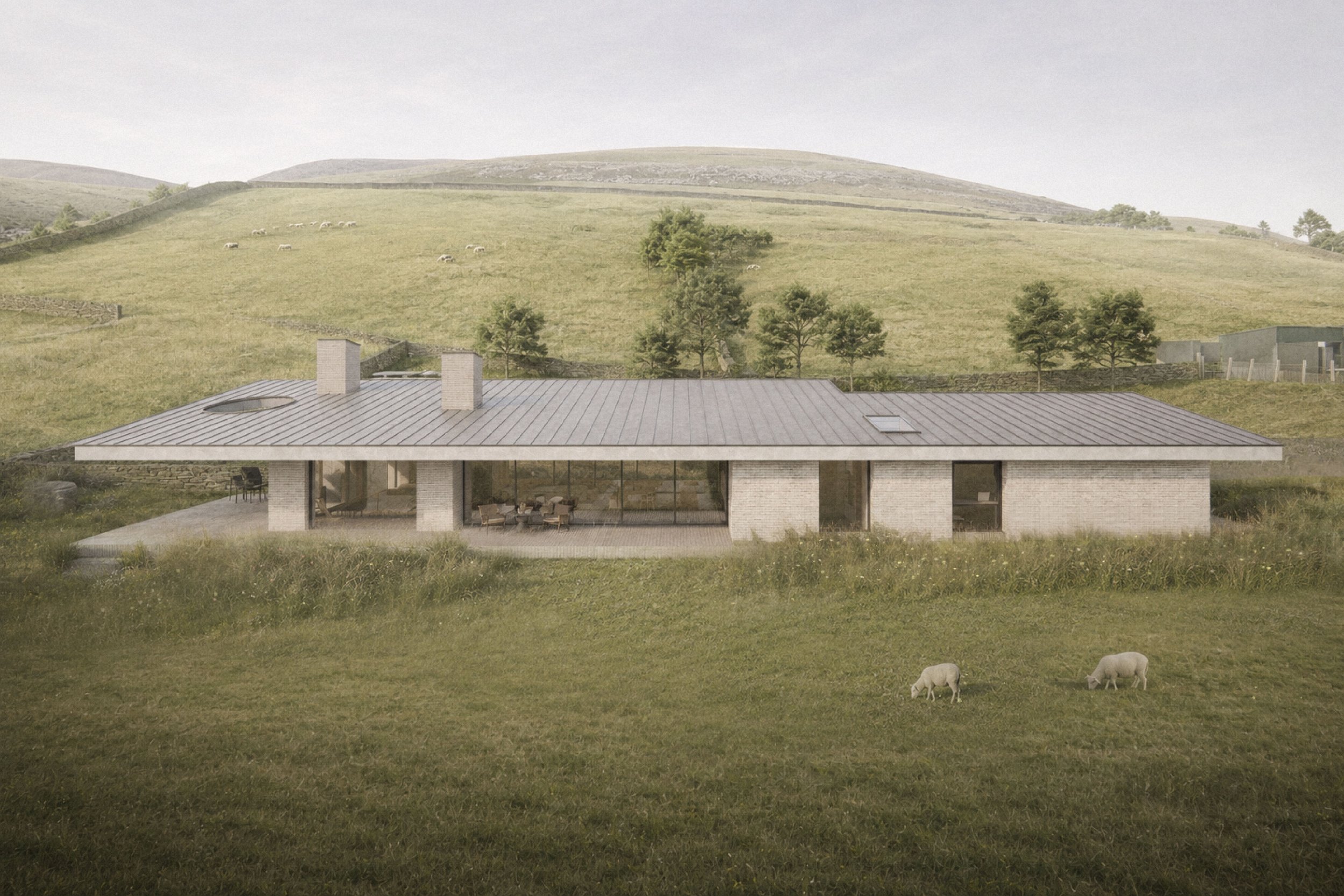
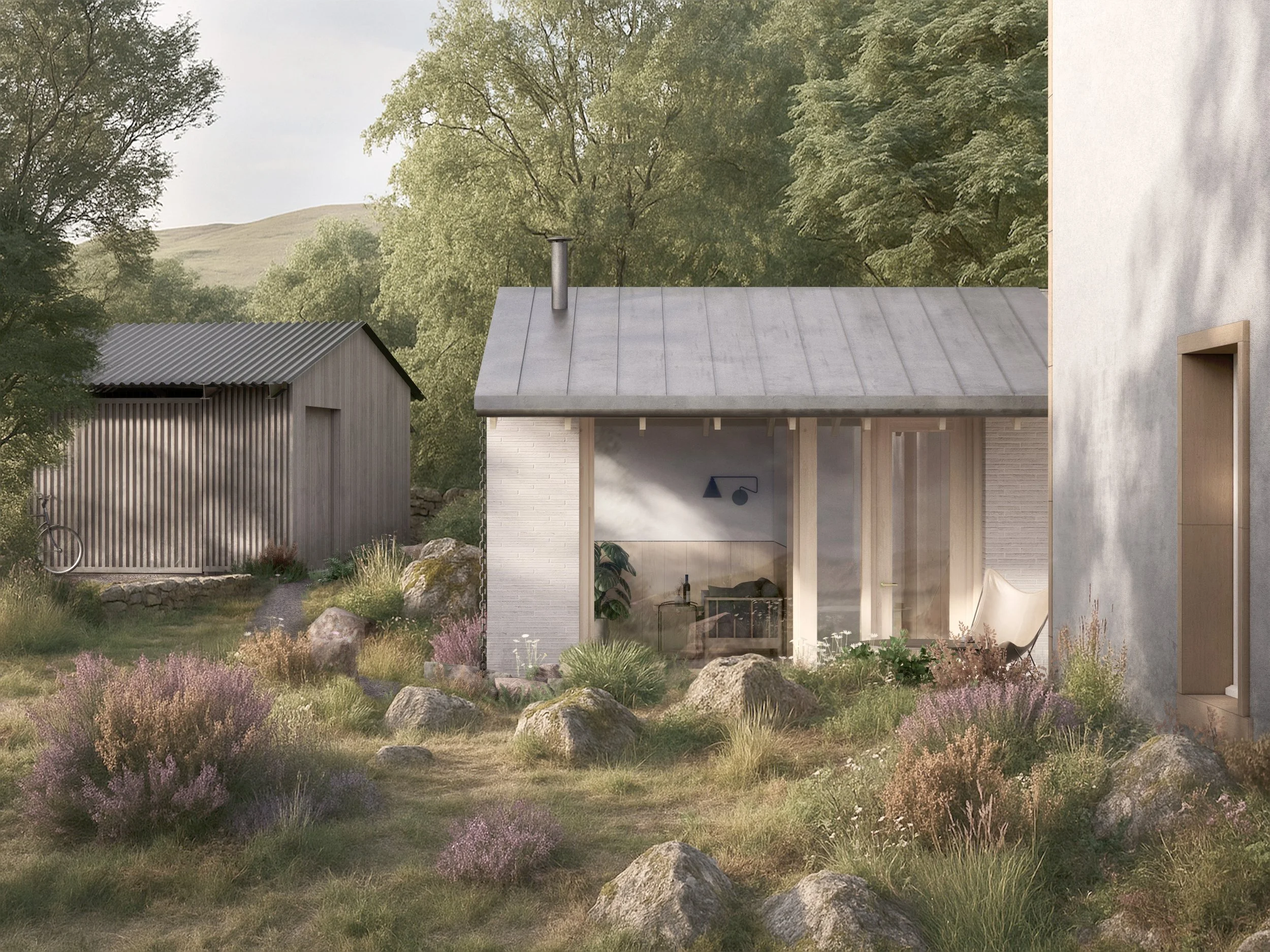
Freixal de Cima Tasting Room
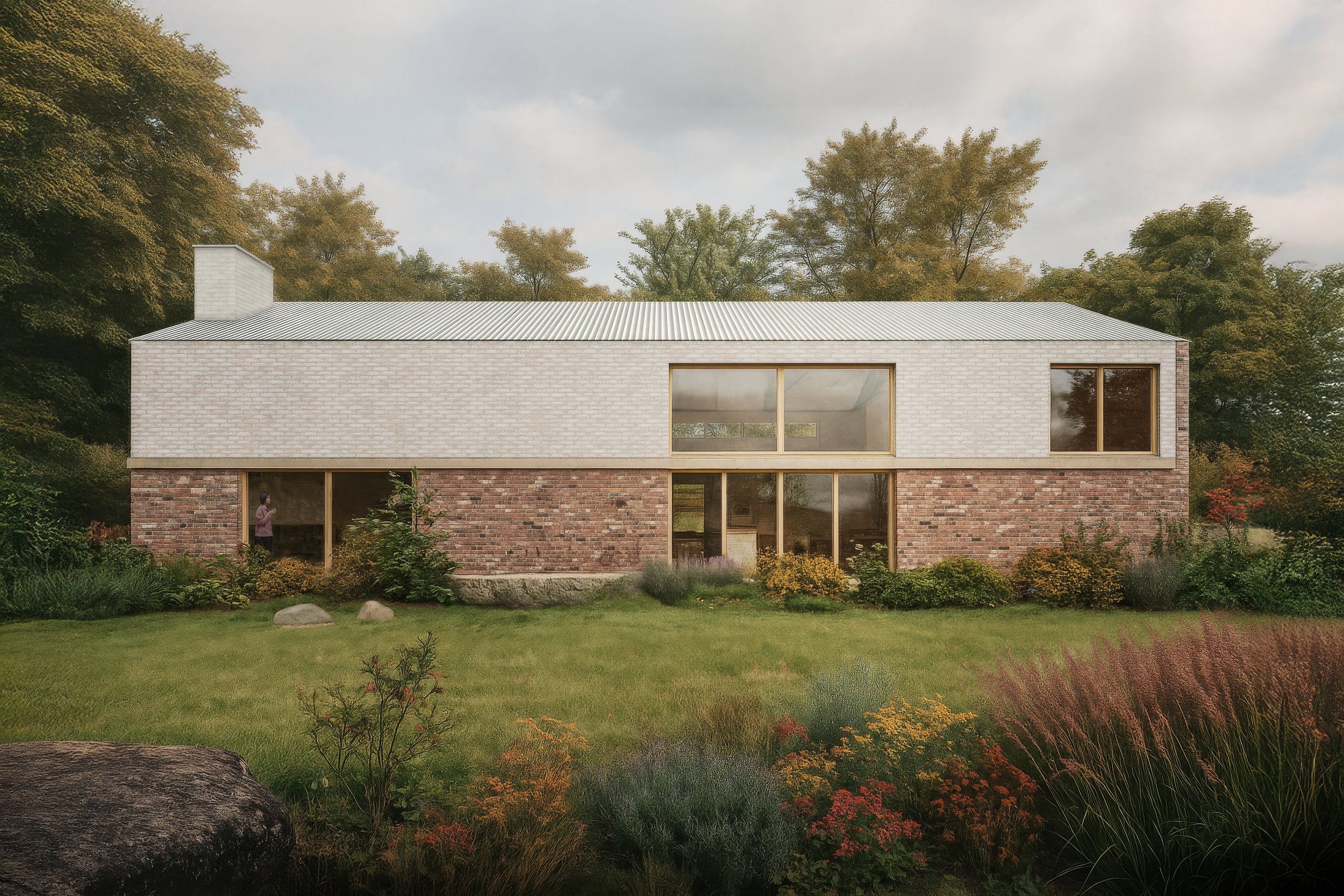
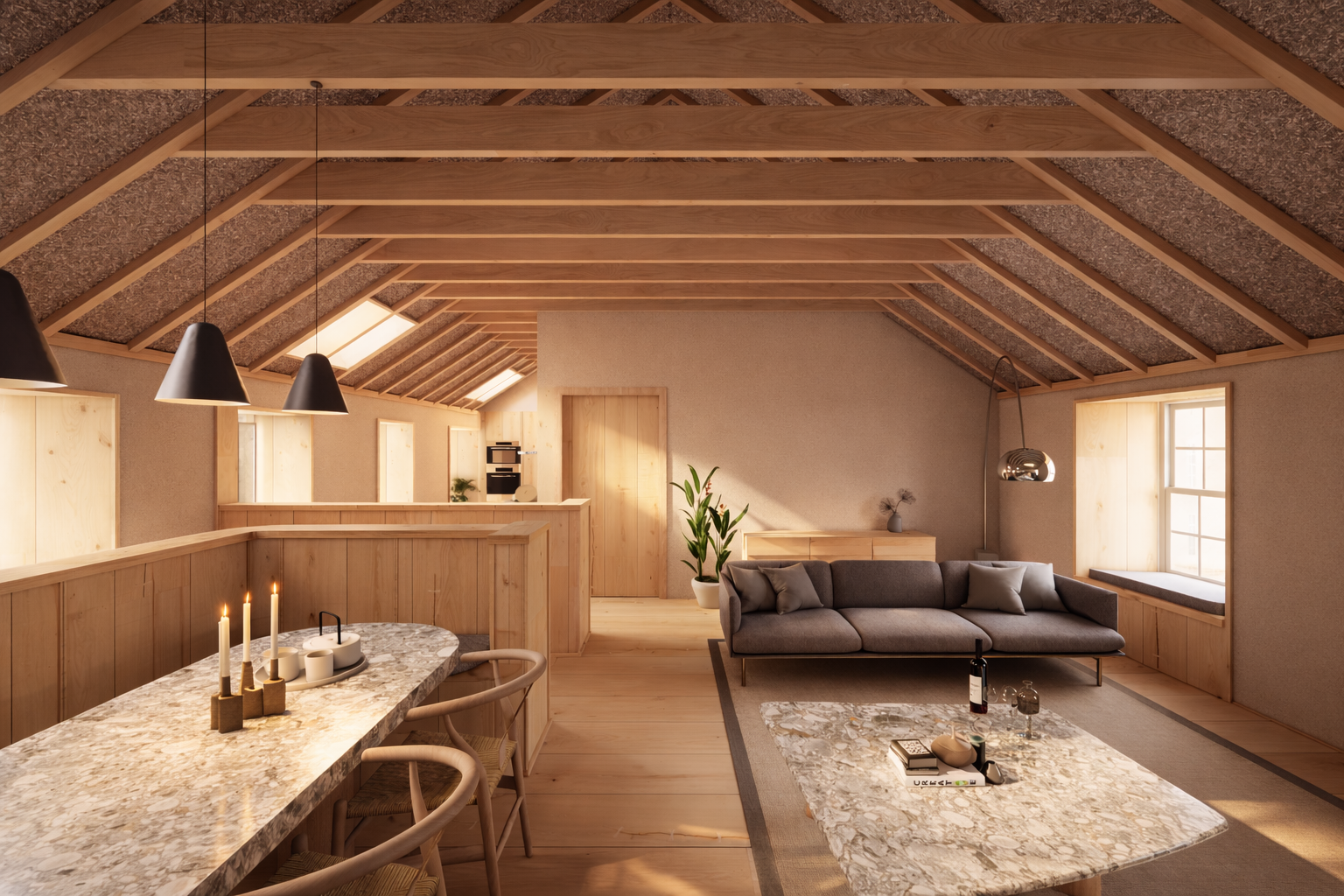
Balerno Barn
Ethos
We believe architecture should provide delight while working seamlessly. Good buildings are memorable, comfortable and practical, creating spaces that support everyday life without becoming obstacles to it.
Our focus is on people. Clients and building users shape the brief, and our role is to interpret their aspirations with care. We test ideas, explain choices clearly, and translate them into architecture that feels both natural and distinctive.
Context matters. Whether urban, rural or historic, each project is shaped by its setting. We value craft and detail: the touch of timber, the texture of stone, the play of light. These are what give a building depth and resonance.
We design for the long term. Our aim is to create buildings that can be maintained, adapted and enjoyed for generations. This means working with robust materials, simple assemblies and sustainable systems that are straightforward to care for over time.
Services
We provide a complete architectural service, from the first conversation through to completion on site. Our work covers new buildings, masterplans and interiors, each approached with the same care and attention to detail.
Architecture
We design both new buildings and the adaptation of existing ones. Each project is tailored to its users and its site, with beauty, function and sustainability as guiding principles.
Masterplanning
Masterplans shape how places grow over decades. We balance vision with deliverability, helping clients, landowners and local authorities to unlock potential with strategies that are ambitious but achievable.
Interiors
Interiors are where buildings are most directly experienced. We design tactile, durable environments for homes, cafés, restaurants and workplaces, selecting materials for their performance, character and longevity.
How we work
Alongside design, we coordinate consultants, manage planning and warrant submissions, and support procurement and delivery. Our role is to make the process clear, reliable and well-managed, giving clients confidence at every stage.
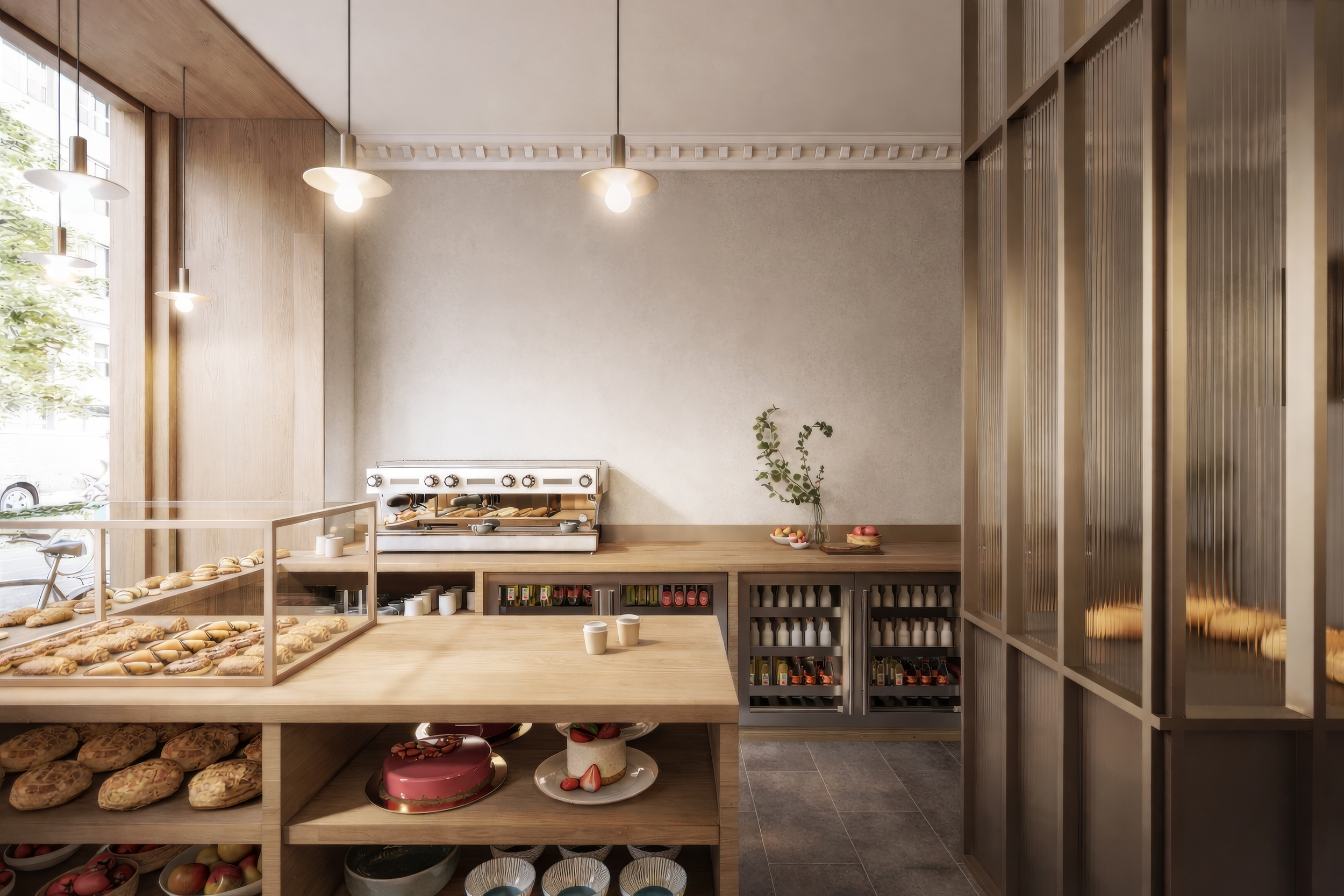
Leith Cafe
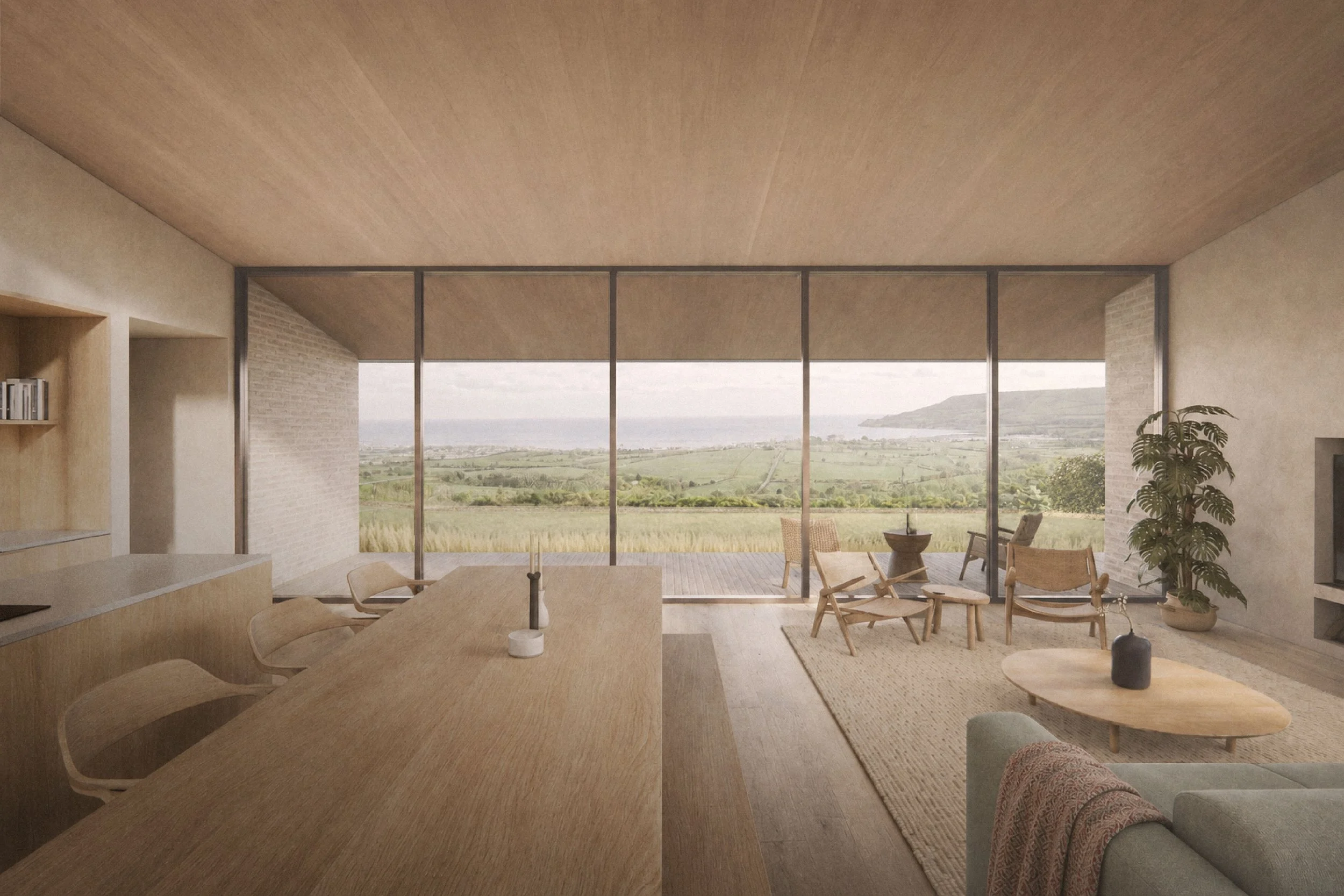
Cheviots Farmhouse
Approach
We approach every project with openness and collaboration, building trust through clear communication and professionalism. Every design grows from dialogue with clients, consultants, contractors and communities, with respect and care at the core of how we work.
Communication
We keep conversations straightforward and consistent. Virtual reality allows clients to step into a project before it is built, while models and drawings help explain ideas to planners, stakeholders and communities.
Collaboration
Architecture is collective. We work closely with engineers, cost consultants and specialists to produce coordinated designs. Three-dimensional modelling helps us share information clearly, reduce risk and ensure that details are resolved before construction begins.
Trust
Technical skill is only part of the process. We are open about cost, programme and constraints, responding quickly to issues as they arise. This balance of communication, collaboration and trust underpins both successful outcomes and long-term relationships.
Sustainability
Sustainability runs through every stage of our work. It shapes the first moves on site, guides material choices, and influences how buildings perform for decades to come. Our aim is to create architecture that is environmentally responsible, economical to operate and built to last.
Passive House
Director Martin Flett has completed specialist training in Passive House design. This rigorous standard reduces energy demand and improves comfort, delivering low-carbon buildings that are economical to run. We apply its principles to both new construction and the upgrading of existing buildings.
Low and zero carbon systems
We integrate photovoltaics, heat pumps, heat-recovery ventilation and, where appropriate, district heating. Each solution is considered in context, balancing performance with maintainability and client priorities.
Re-use and responsibility
The most sustainable building is often the one that already exists. We seek opportunities to re-use and adapt, extending the life of structures and materials, cutting carbon, avoiding waste and retaining cultural value. We also consider embodied carbon and durability, favouring natural materials and simple, repairable assemblies.
Trossachs Estate
Townhouse Renovation, Stockbridge
Conservation
Conservation is an essential part of sustainability, giving historic buildings new life while safeguarding their character and reducing carbon. We believe conserving and adapting what already exists is one of the most responsible forms of architecture.
Experience
We work with listed and locally listed buildings across Scotland and beyond, from modest cottages to significant public structures. Our projects range from careful fabric repairs to extensions that allow historic buildings to meet modern needs while preserving their character.
Expertise
Director Martin Flett is a RIAS Accredited Conservation Architect. Alongside this in-house expertise, we collaborate with specialist consultants and craftspeople to ensure proposals are well informed and carefully made.
Balance
We protect what is significant, adapt where appropriate, and design interventions that are respectful, legible and reversible where possible. Conservation for us is not only about preservation, but about keeping buildings useful and loved, so their stories continue for future generations.
People
Martin Flett
Director
Martin Flett is an architect and the founding director of Ossian Architects. His work is shaped by people and place, with a focus on existing buildings, low-energy design and the balance between conservation and contemporary intervention. He is interested in architecture that feels simple, calm and enduring, while being practical to build, maintain and use.
As an RIAS Accredited Conservation Architect, Martin brings experience in historic buildings and a practical understanding of construction. He has also completed specialist training in Passive House design, which informs his approach to energy use, building fabric and comfort. He works across a wide range of project types and stages, helping to guide projects from early ideas through to completion on site.
Before founding Ossian Architects, Martin worked at respected practices in Scotland and London across a broad range of projects and building types. Outside the studio, he enjoys spending time on the coast and in the countryside with his family.

Ewan Hooper
Associate
Ewan Hooper is an architect with experience in designing and overseeing a wide range of projects. He has a background in residential, commercial, and community architecture with a focus on tackling complex urban sites, turning constraints into creative opportunities. Collaboration is at the core of Ewan’s approach to architecture. He enjoys working closely with clients, consultants and contractors, valuing the input of diverse perspectives and ideas throughout the design and construction process.
Prior to joining Ossian Architects, Ewan worked at several award-winning practices including Sutherland Hussey Harris, Feilden Clegg Bradley Studios, Hoskins Architects and O’DonnellBrown. In his spare time Ewan enjoys getting outdoors especially to explore the Scottish roads and landscape by bike.

Grigor Brown
Associate
Grigor is an architect with experience across a wide range of project types, including cultural, leisure, workplace, residential and civic projects. As a native of Edinburgh, he is particularly passionate about projects that balance conservation with contemporary architecture, showcasing quality through natural materials, thoughtful details and craft.
Before joining Ossian Architects, Grigor worked at award-winning practices including Haworth Tompkins in London, Helen Lucas Architects in Edinburgh, and Barozzi Veiga in Barcelona. Grigor studied at the Mackintosh School of Architecture and participated in an exchange semester at the Accademia di Architettura di Mendrisio, Switzerland.
Outside of work, Grigor has a keen interest in travel and food, enjoying the discovery of new places, landscapes and cultures.

Charlotte Sörenson
Architect
Charlotte Sörenson is an architect with experience across a wide range of scales and sectors, including residential, commercial, workplace, hospitality and masterplanning. She has a keen interest in sustainability and working within historic buildings, aiming to sensitively re-purpose and preserve buildings stemming from an understanding of heritage, and promoting co-existence between the built and natural environment.
Outside of work, Charlotte engages in craft and design stretching from ceramics and furniture to interior design influenced by her Scandinavian and South American heritage and enjoys exploring natural landscapes and cities. Prior to joining Ossian Architects, Charlotte worked at HAUS Collective and Mott MacDonald.

Tim Khoo
Architect
Tim is an architect with a background in cultural, heritage, and residential architecture, working with both new and existing listed buildings. Passionate about modest structures that speak of vernacular traditions and a sense of craft, Tim brings a thoughtful and detail-oriented approach to his work.
Prior to joining Ossian Architects Tim gained valuable experience at award-winning practices including Hoskins Architects in Glasgow and MentahMatter in Malaysia. Growing up in Malaysia, he was exposed to a culturally rich and diverse environment which has enabled him to appreciate and draw upon a wide range of cultural influences.
Outside of his professional work, Tim enjoys cooking, photography and sketching - often utilising these as a tool to communicate and test out ideas in and outside of architecture.

Projects

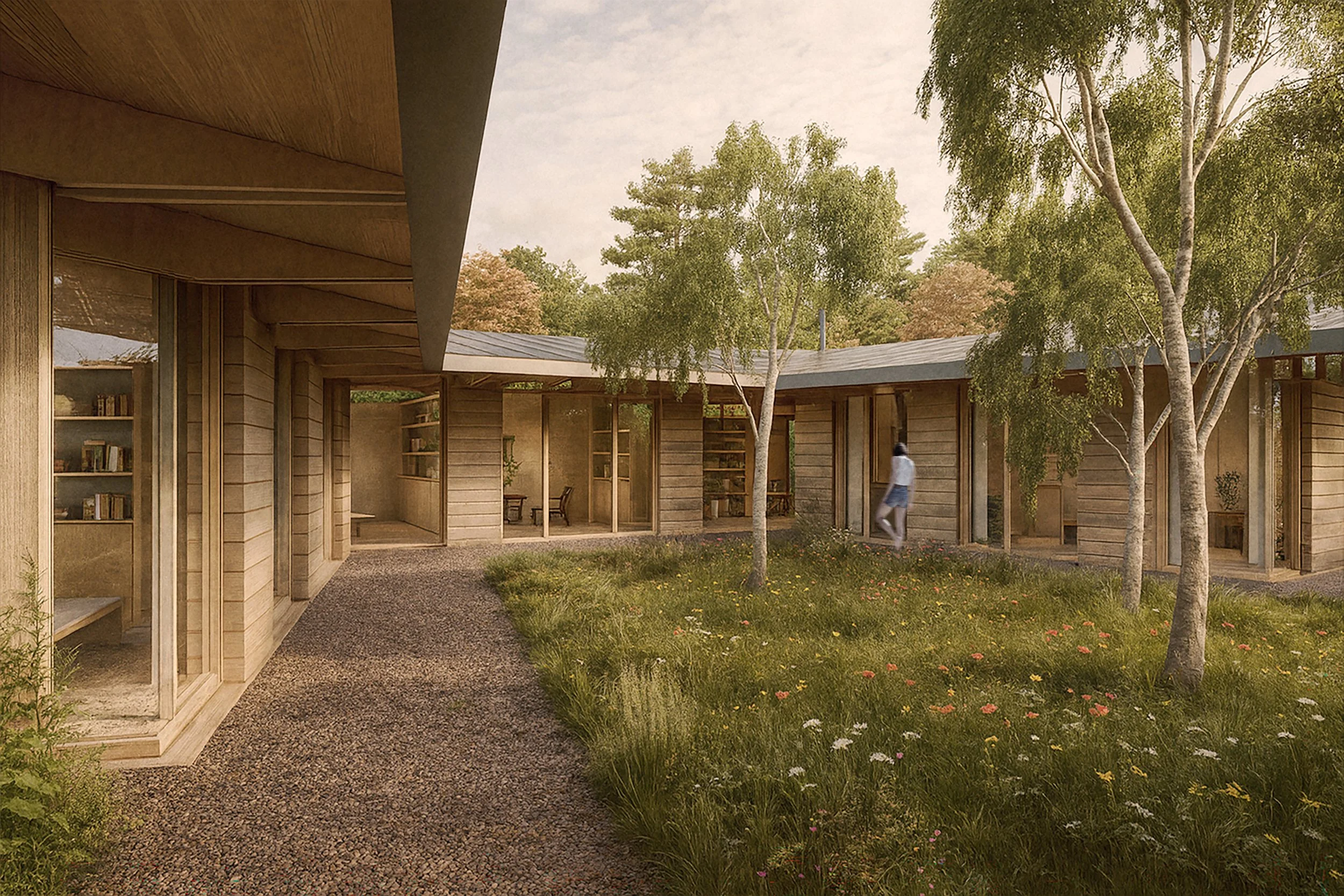
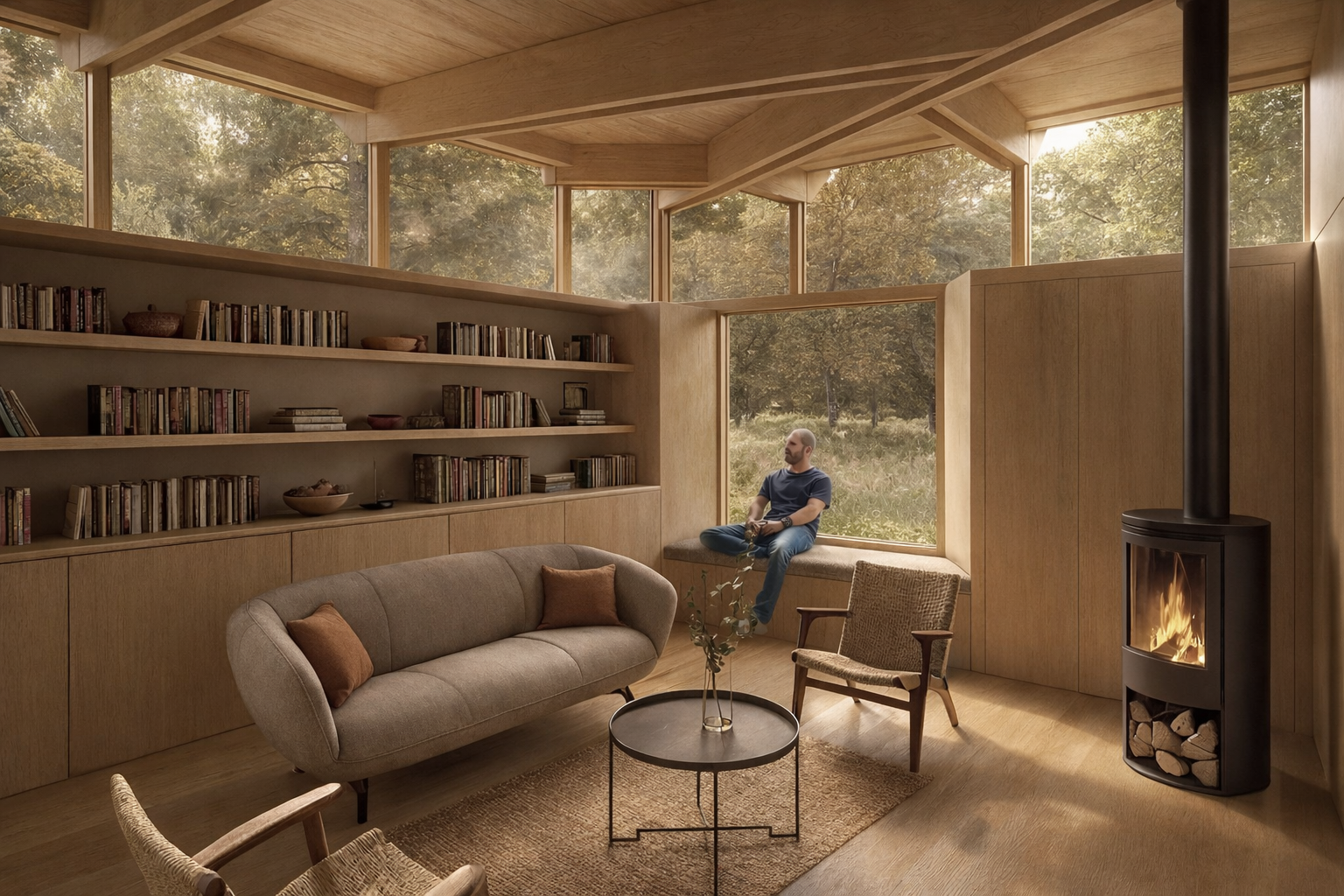
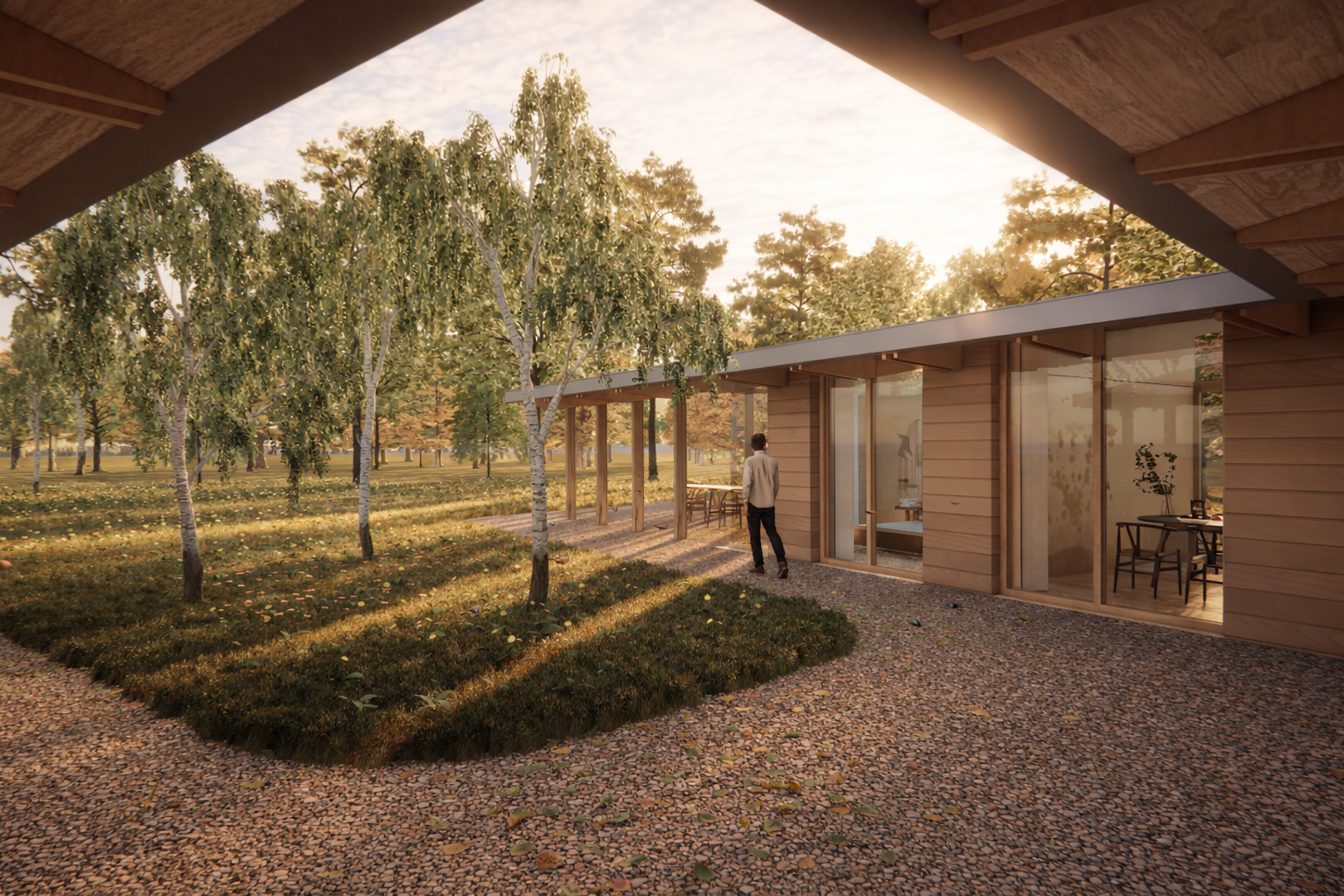
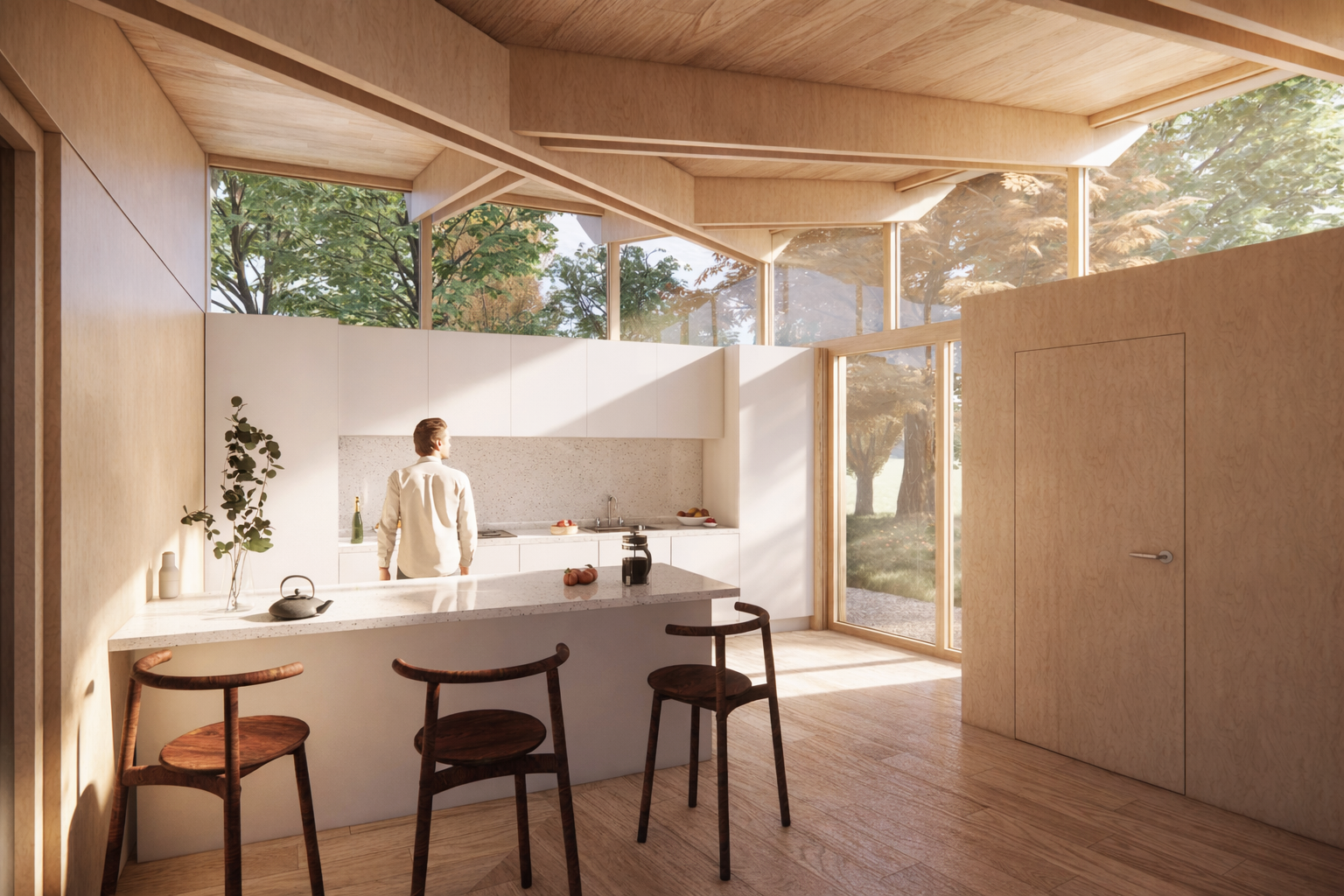
A new courtyard house for a young family near Alford in Aberdeenshire.
The house takes its form from a particular Aberdeenshire steading type, where buildings are arranged to form a courtyard that is open at one end. This creates a sheltered internal garden while maintaining a strong relationship to the wider landscape. The arrangement gives the house a clear orientation, balancing enclosure and openness while allowing it to sit comfortably within its rural setting.
Rooms are organised so each can open directly onto the courtyard, allowing daily life to extend easily outdoors. In warmer months, the house can be opened up to form a continuous relationship between interior and garden. The courtyard becomes the centre of the home, bringing light and outlook into the plan while creating a protected external space that is usable throughout the year.
A lightweight timber structure and timber cladding reduce embodied carbon and allow the building to sit lightly on the land. Photovoltaics and an air source heat pump support a low-energy approach, ensuring the house performs efficiently while remaining closely connected to its landscape.
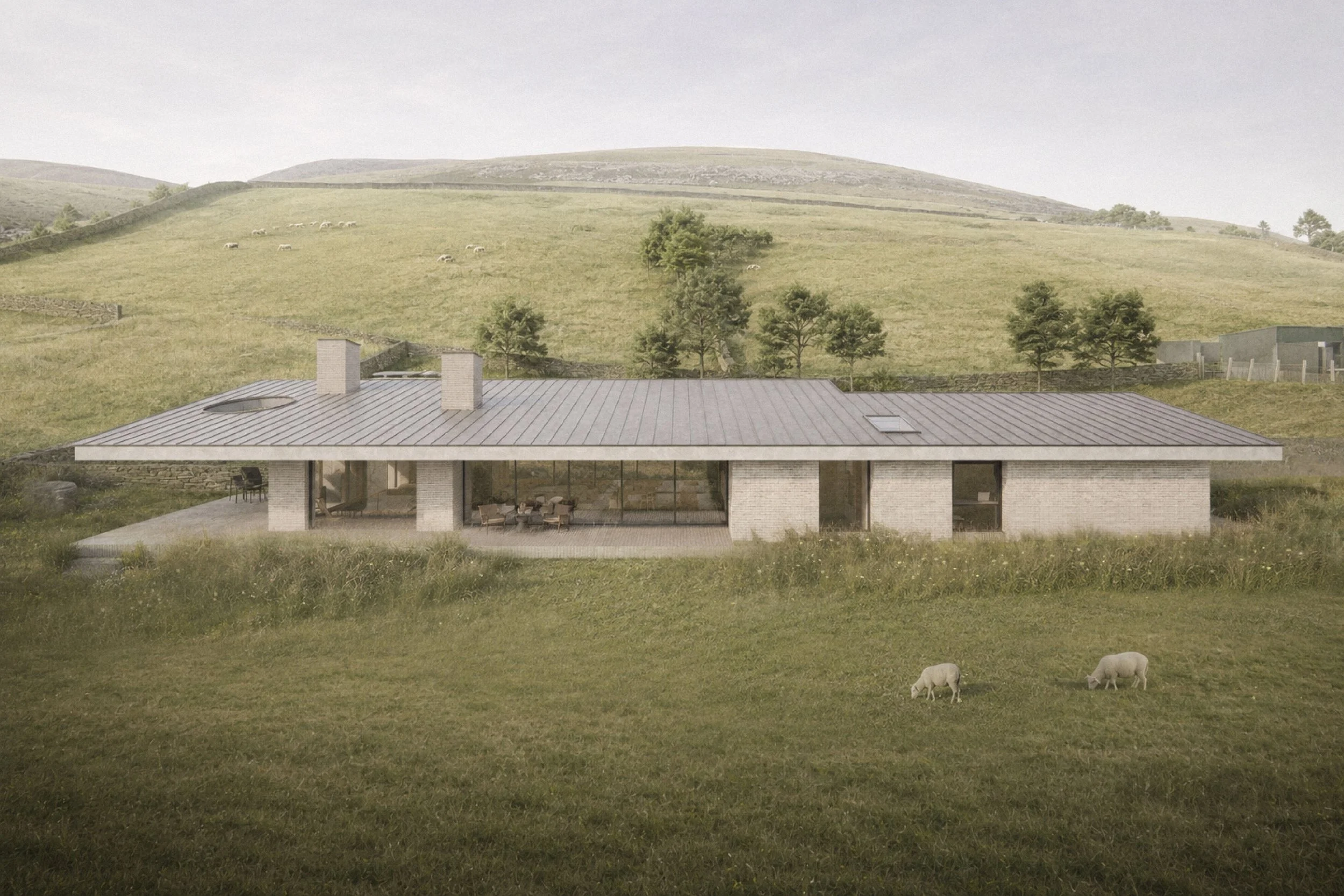
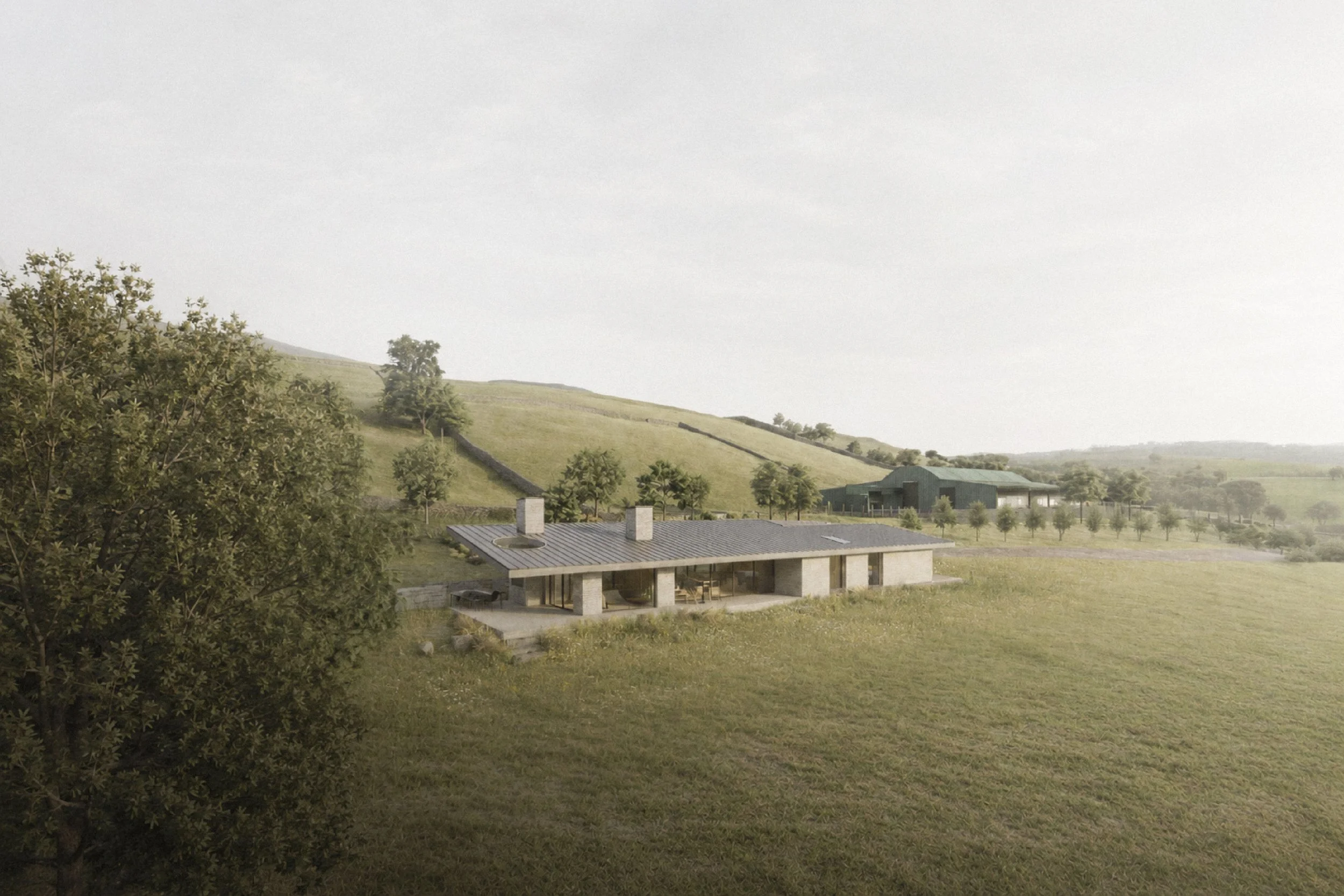
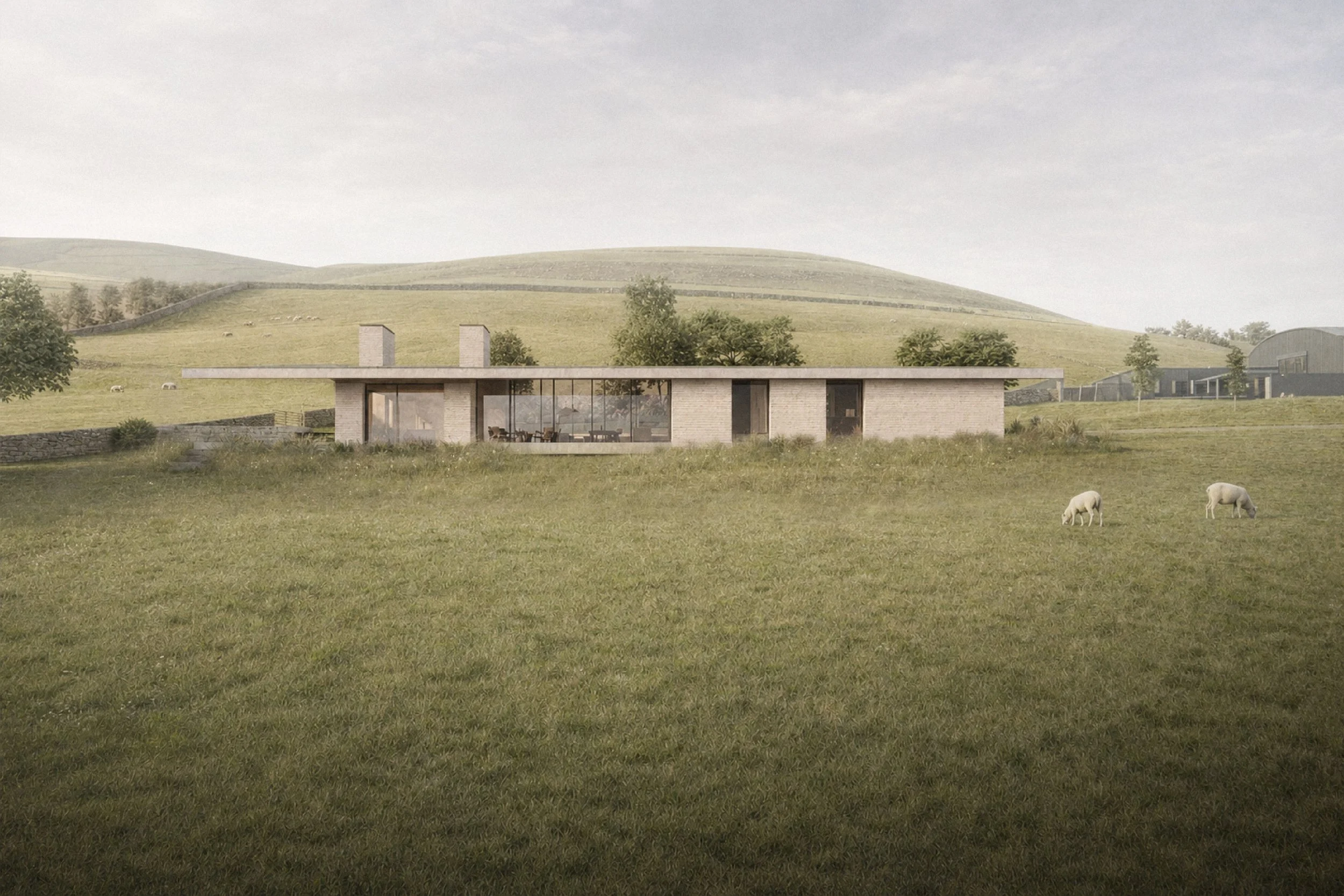
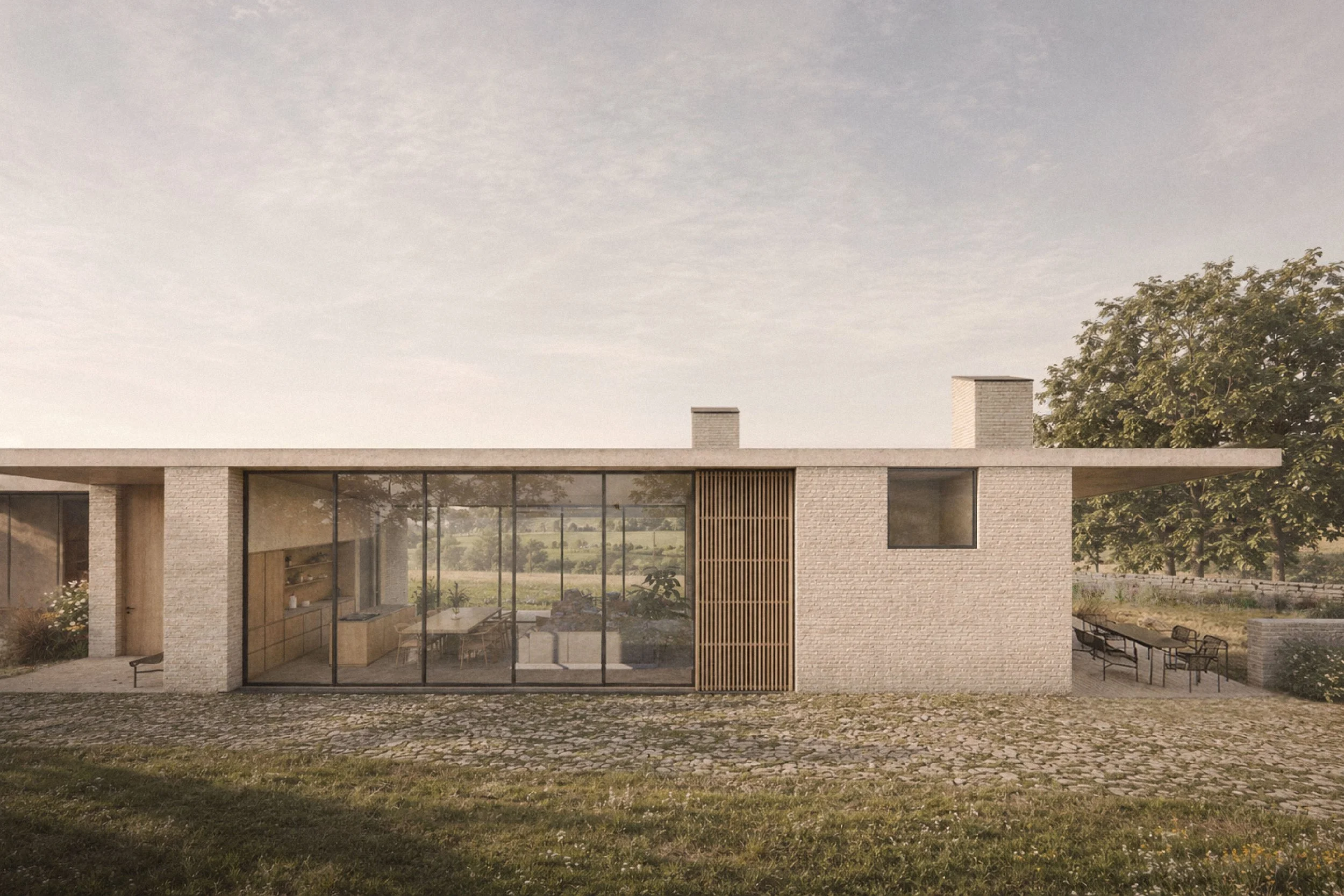
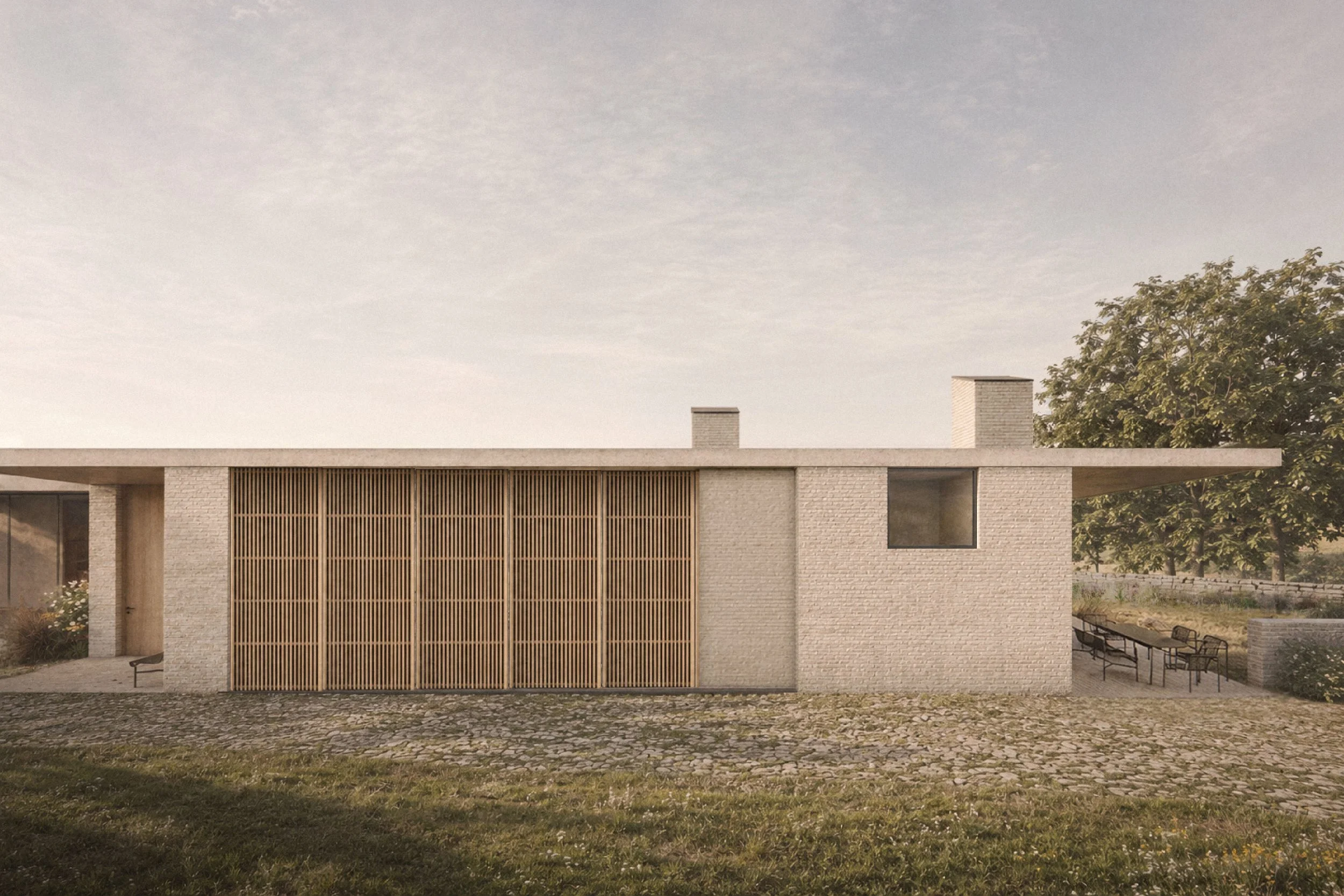
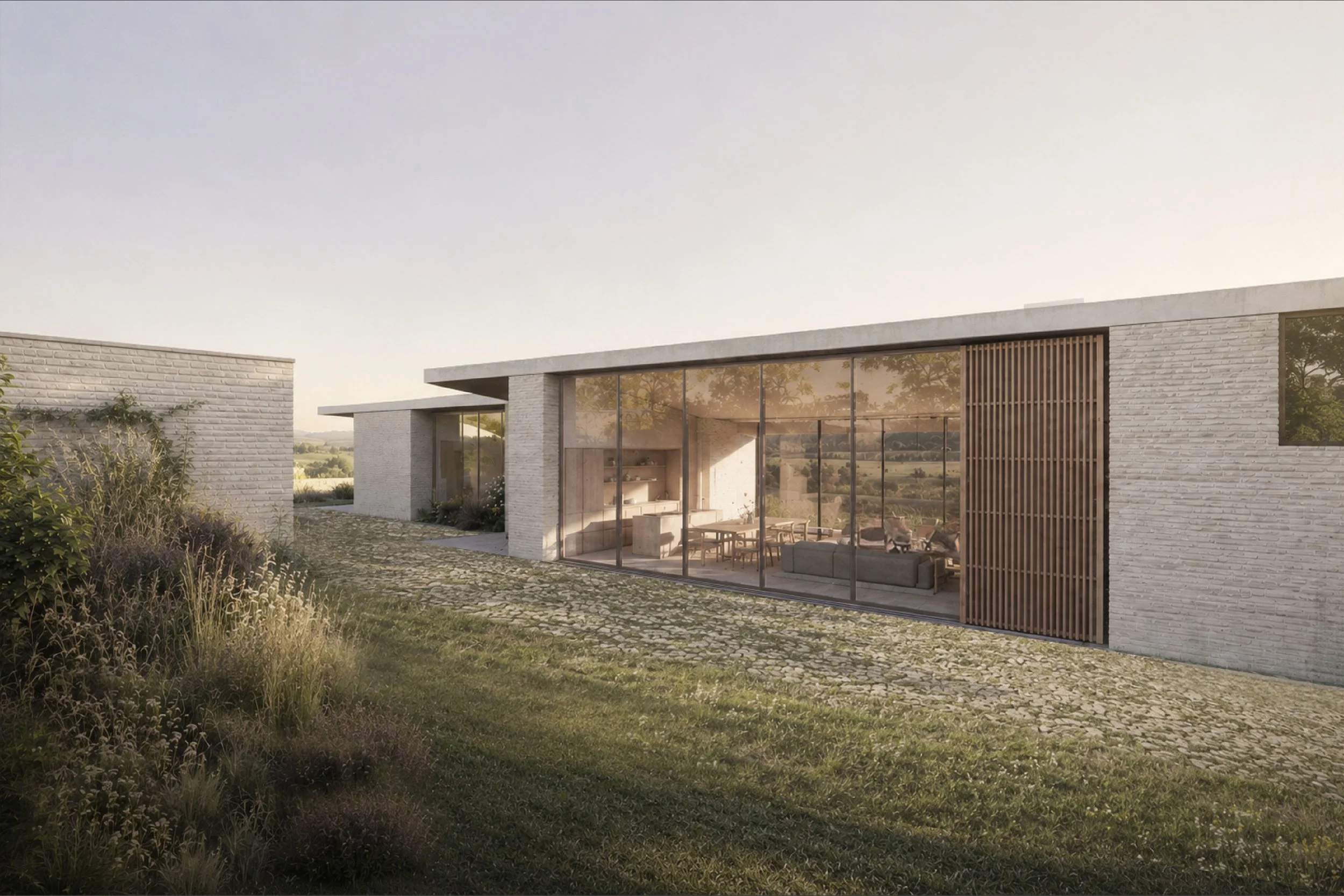
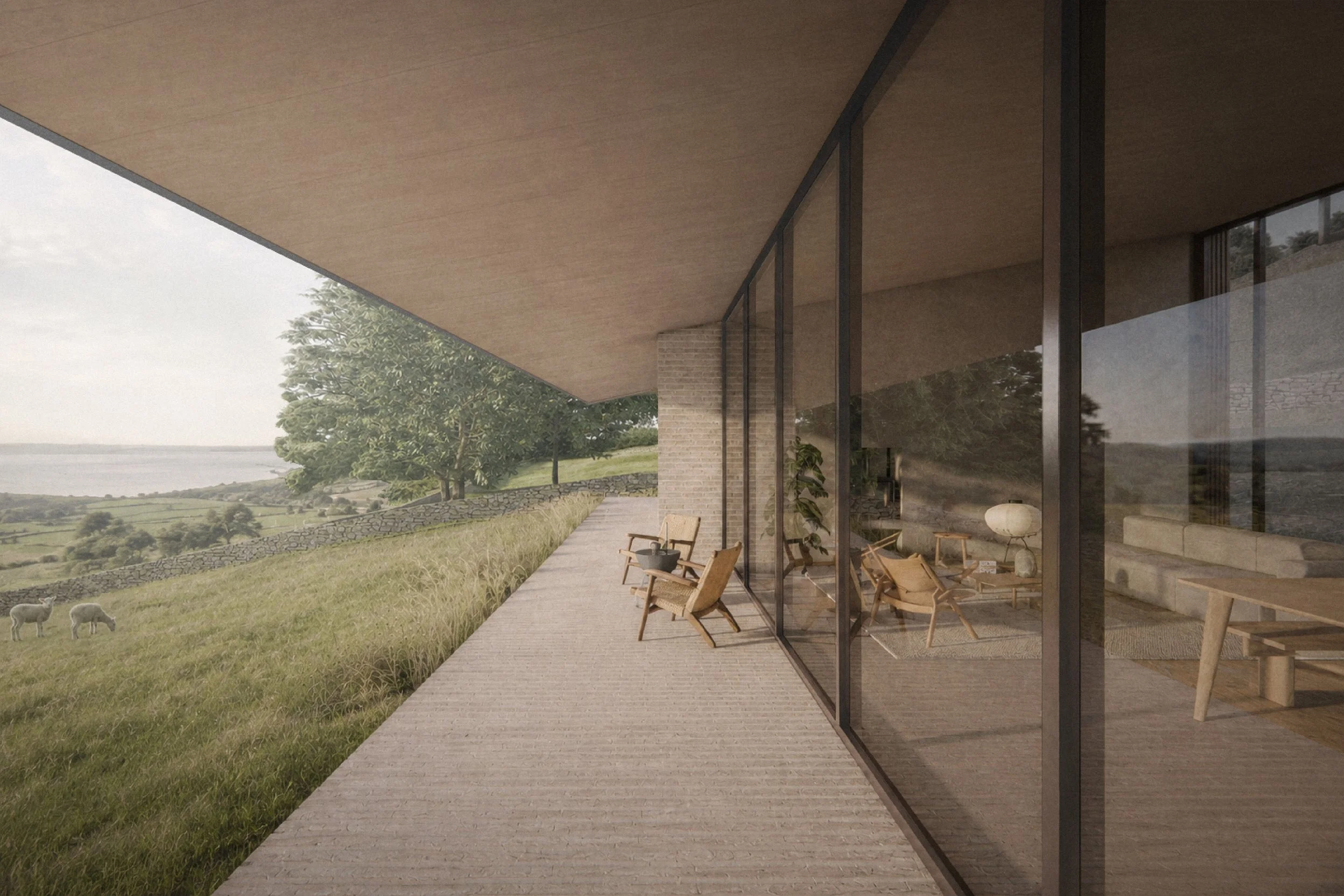
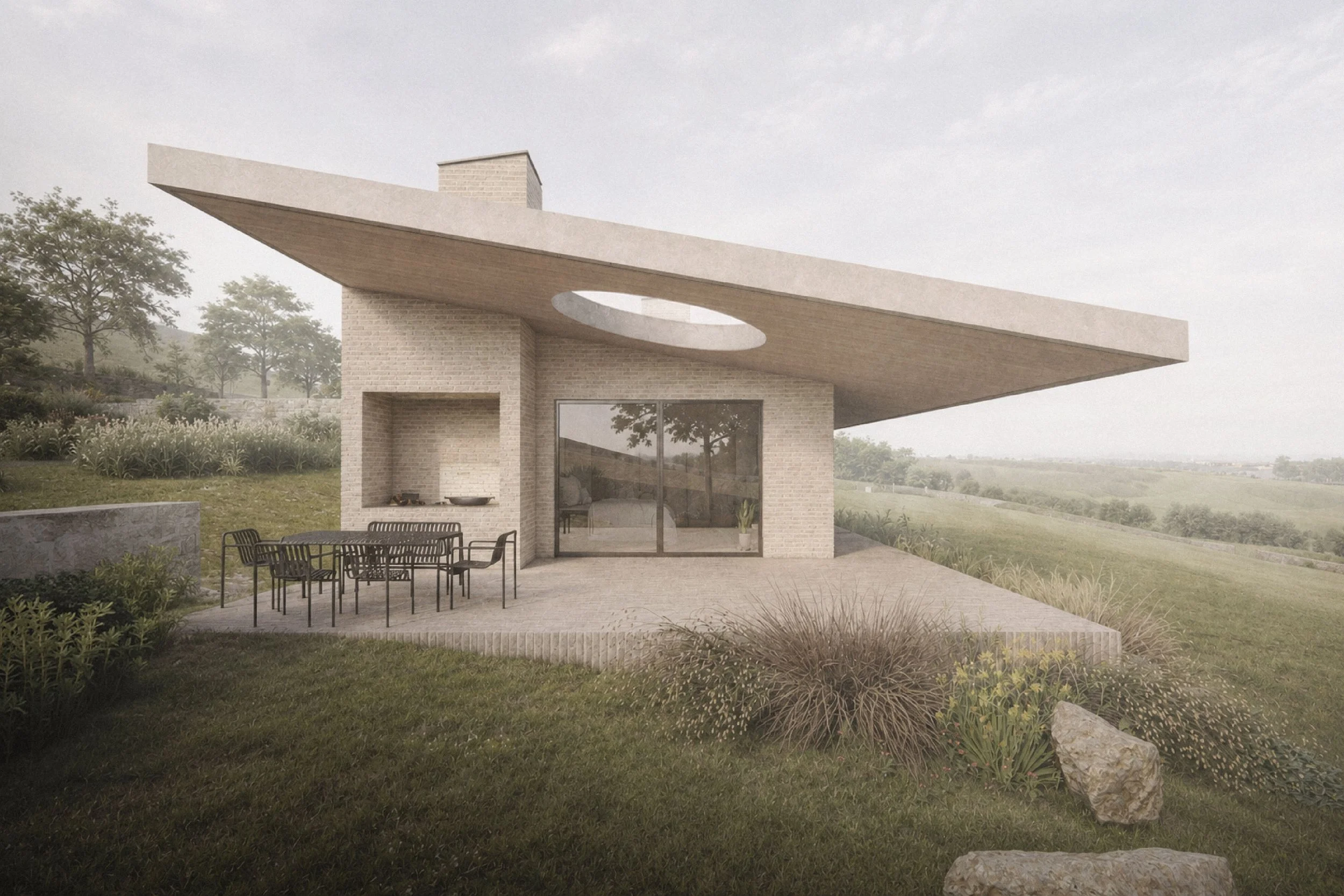
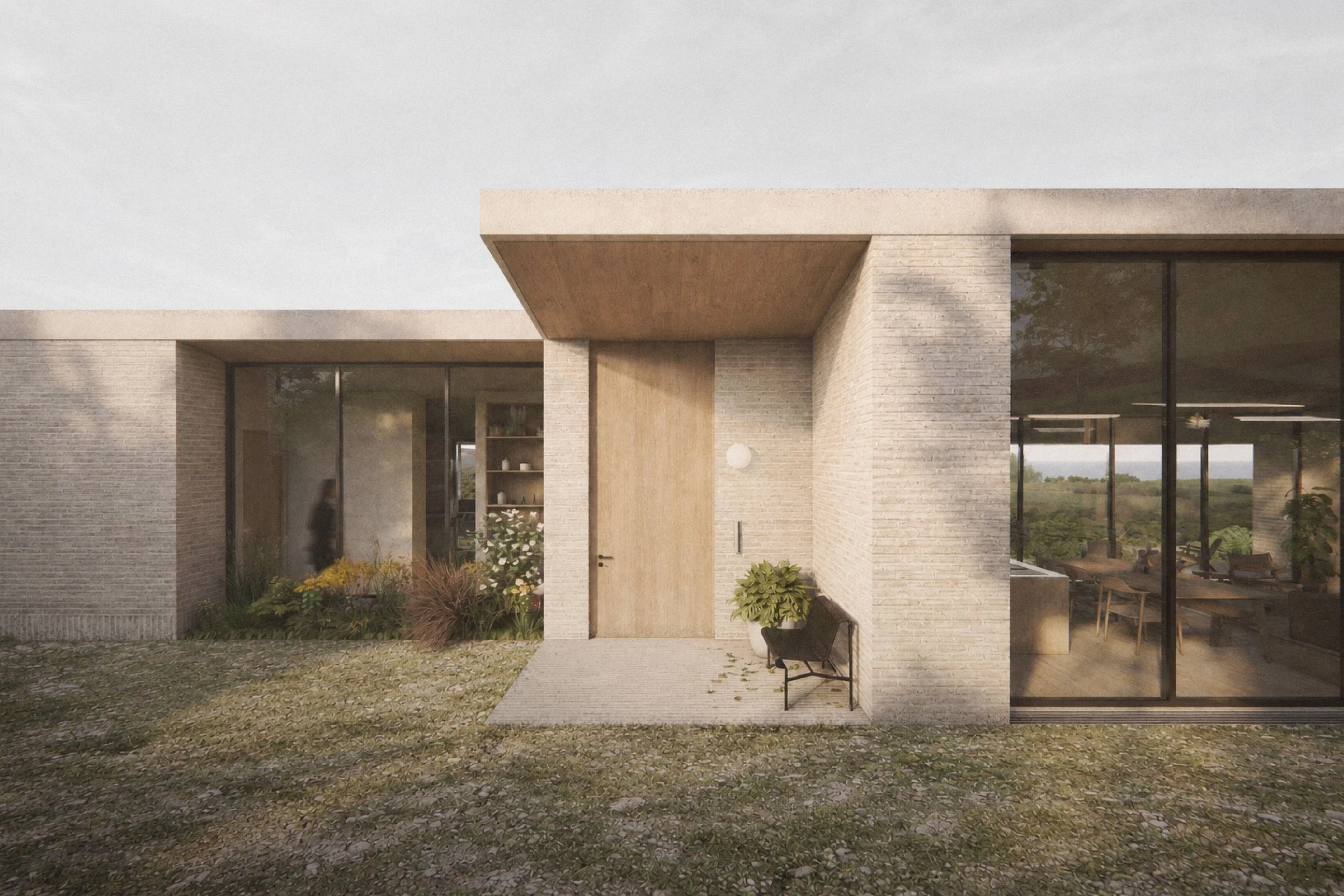
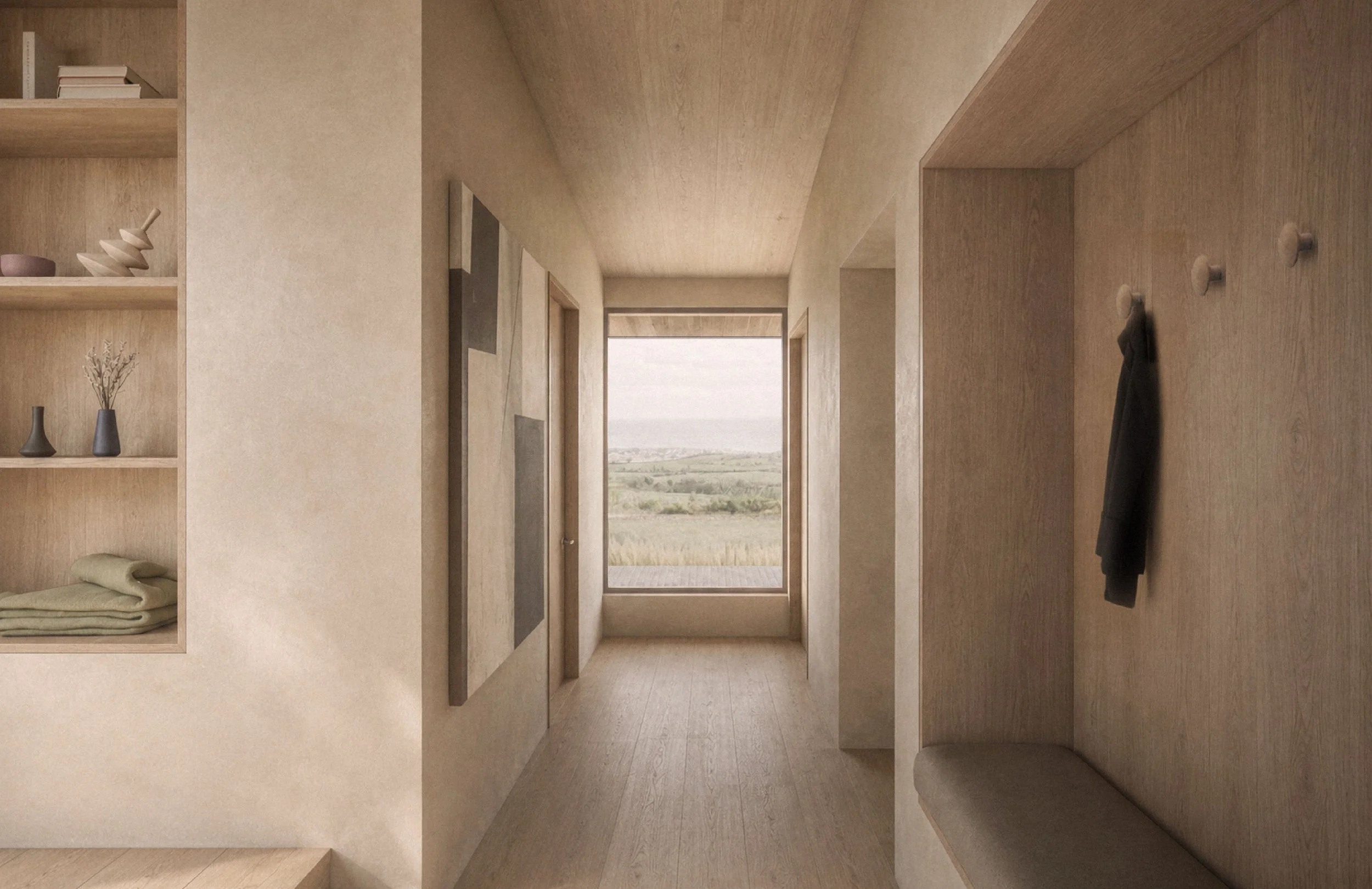
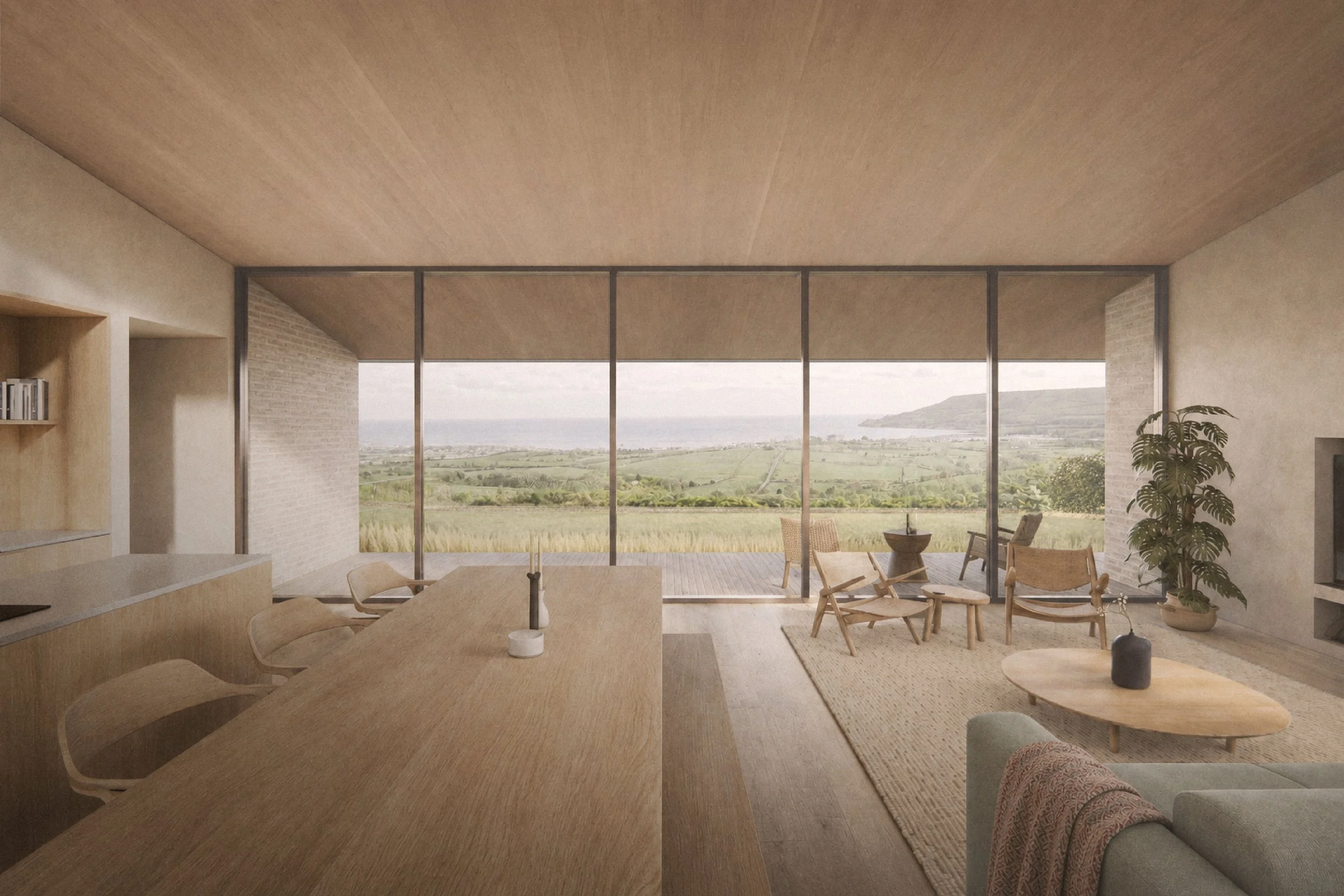
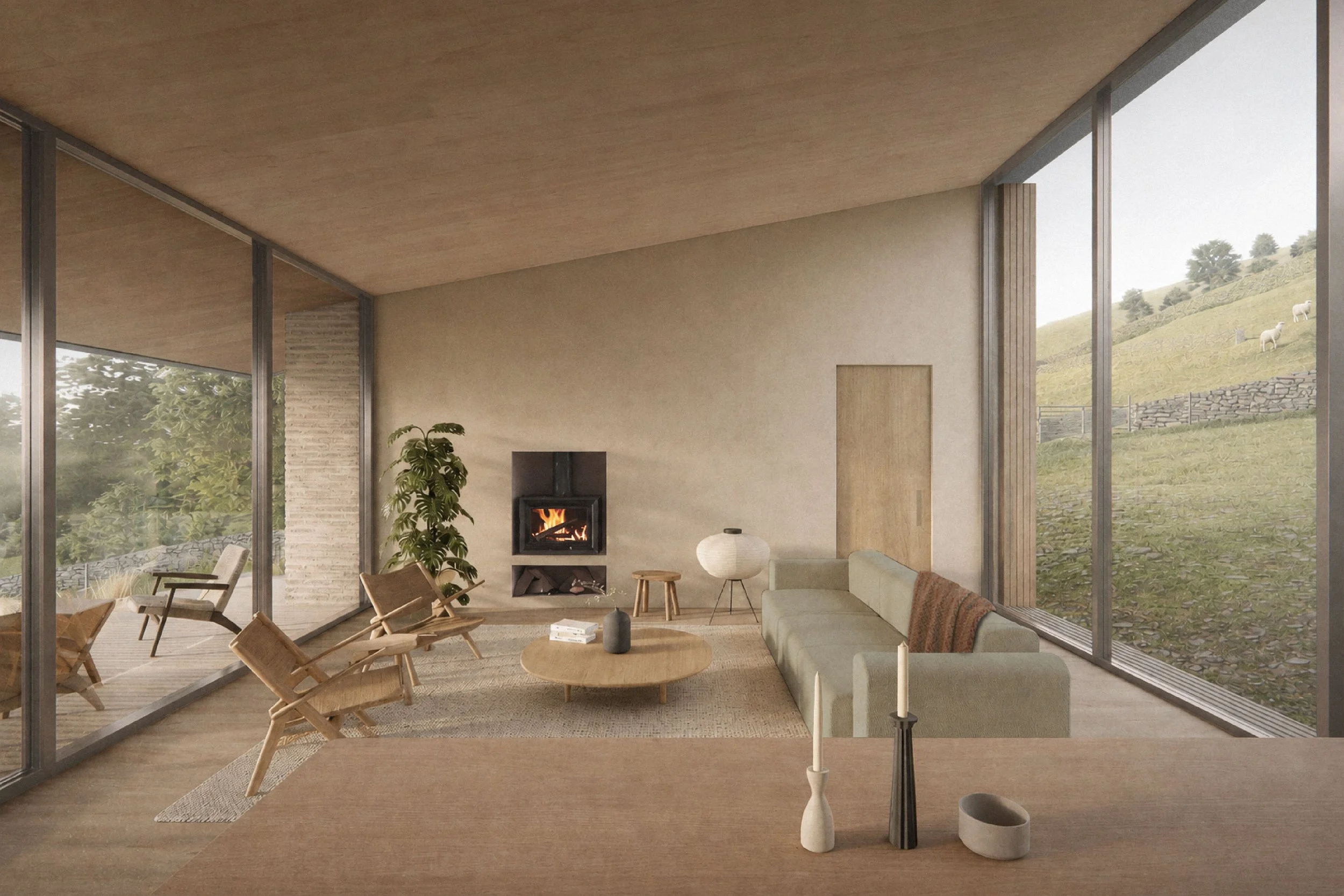
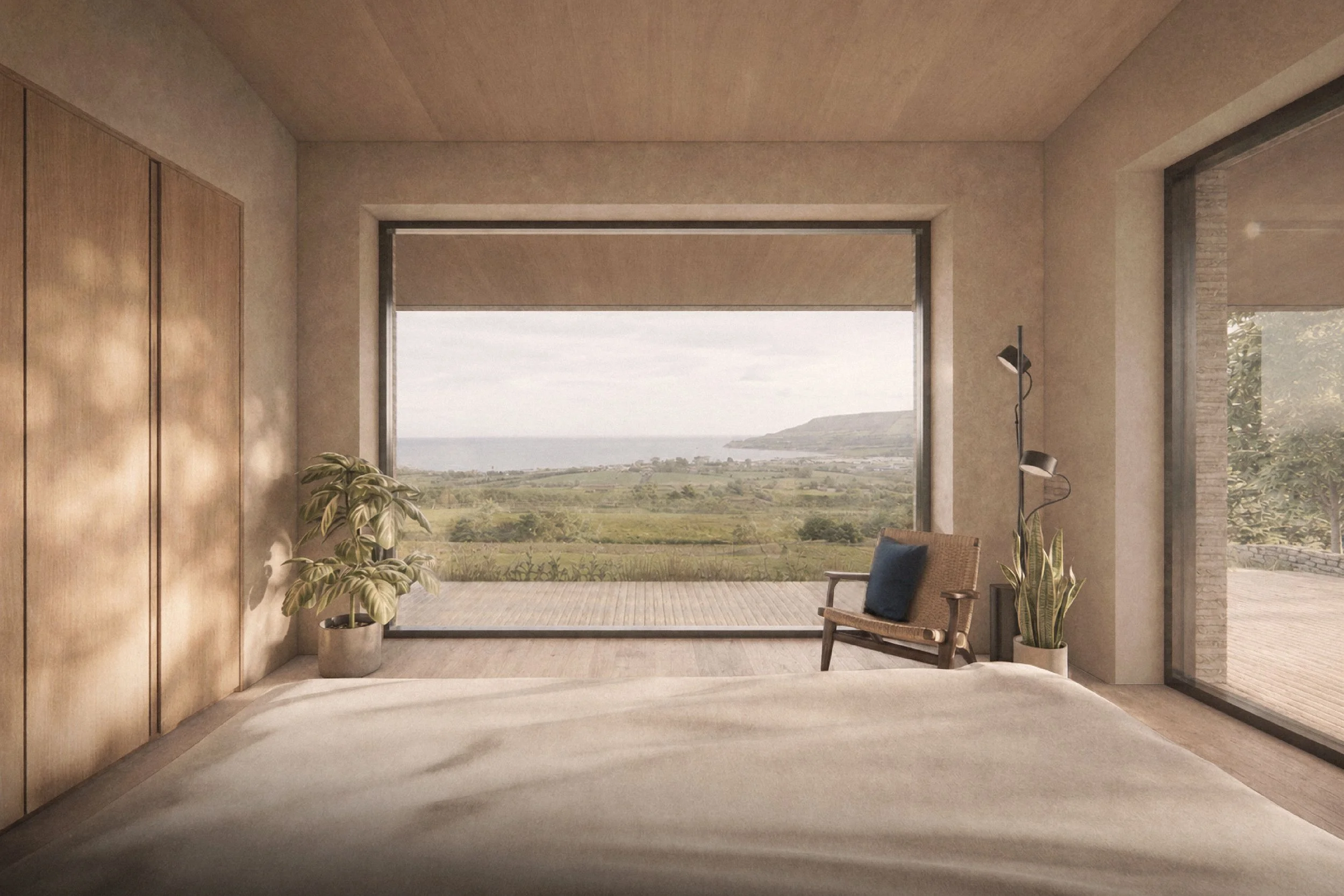
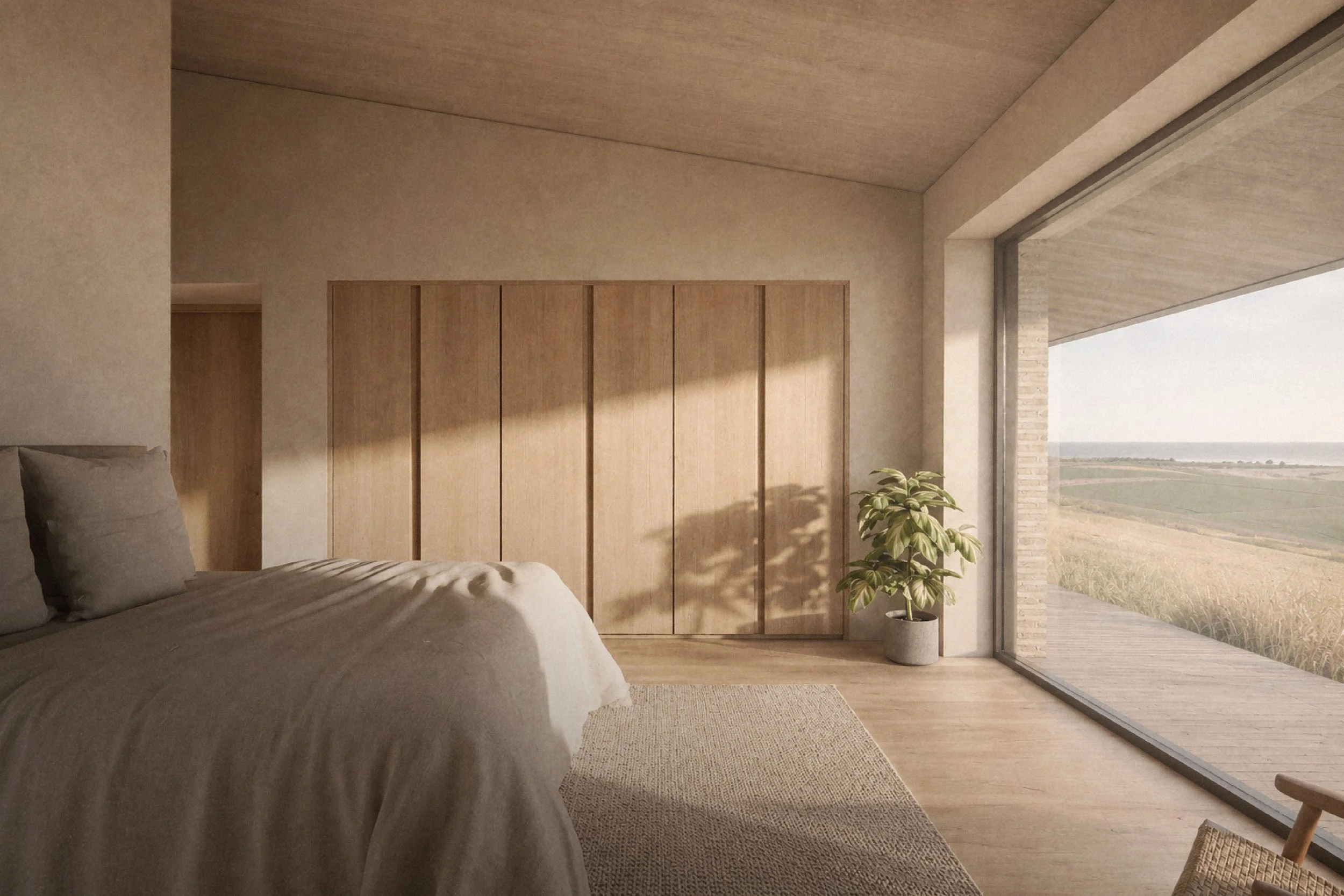
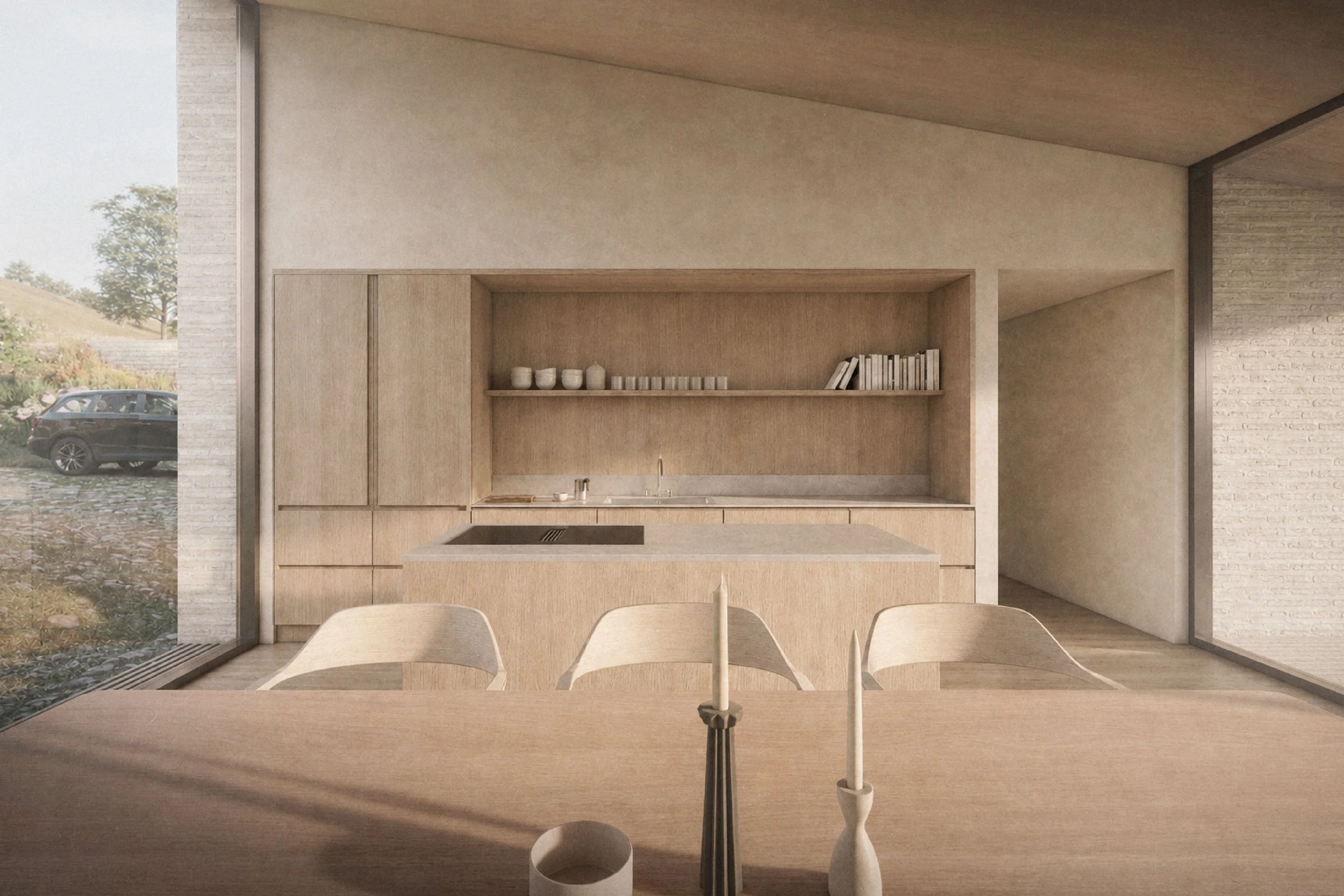
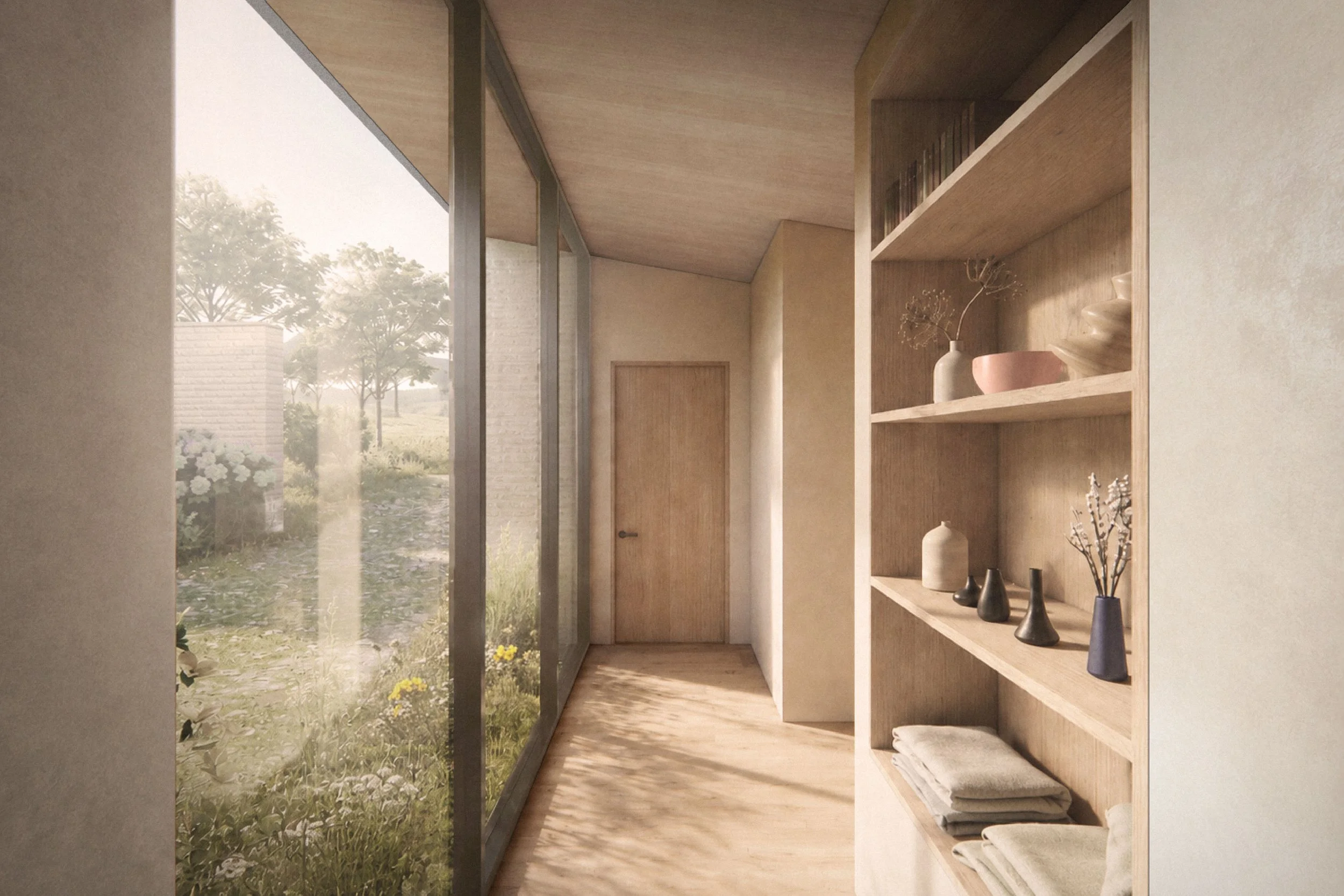
A new rural house overlooking the Antrim Coast.
Set within a working agricultural landscape of open fields, stone boundaries and gently folding terrain, the house responds to its elevated setting with long views east across the coastline and towards the sea beyond. The design is shaped by the relationship between hill, field and coast, taking cues from the adjacent farmyard, with its simple roof forms, corrugated textures and working buildings gathered over time.
Arranged as a low, linear single-storey form, the building follows the natural fall of the land. A mono-pitched roof gives the house a calm horizontal emphasis, allowing it to sit within the larger rhythm of the landscape. The internal arrangement steps gently with the contours of the site, with living spaces positioned to frame views across the fields and towards the coast.
The material palette is robust and restrained, with muted brickwork, zinc roofing and timber elements chosen for their tone, texture and ability to weather naturally. Existing stone boundaries are retained, established vegetation protected, and native planting introduced to strengthen screening and support biodiversity. Orientation, openings and shading respond to light, views and solar gain, with an efficient envelope, ground source heat pump and photovoltaic panels supporting a low-energy home within its rural setting.
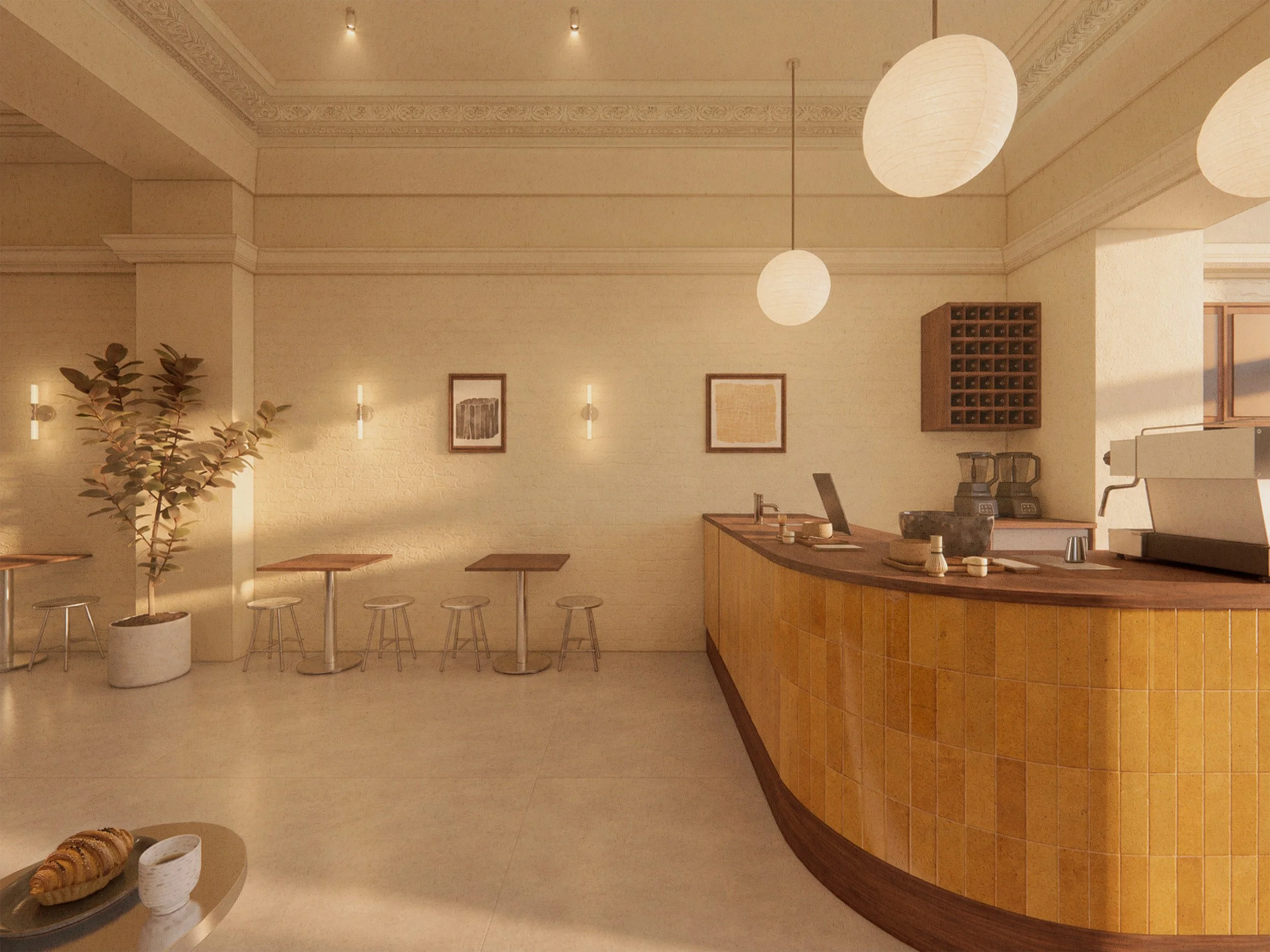
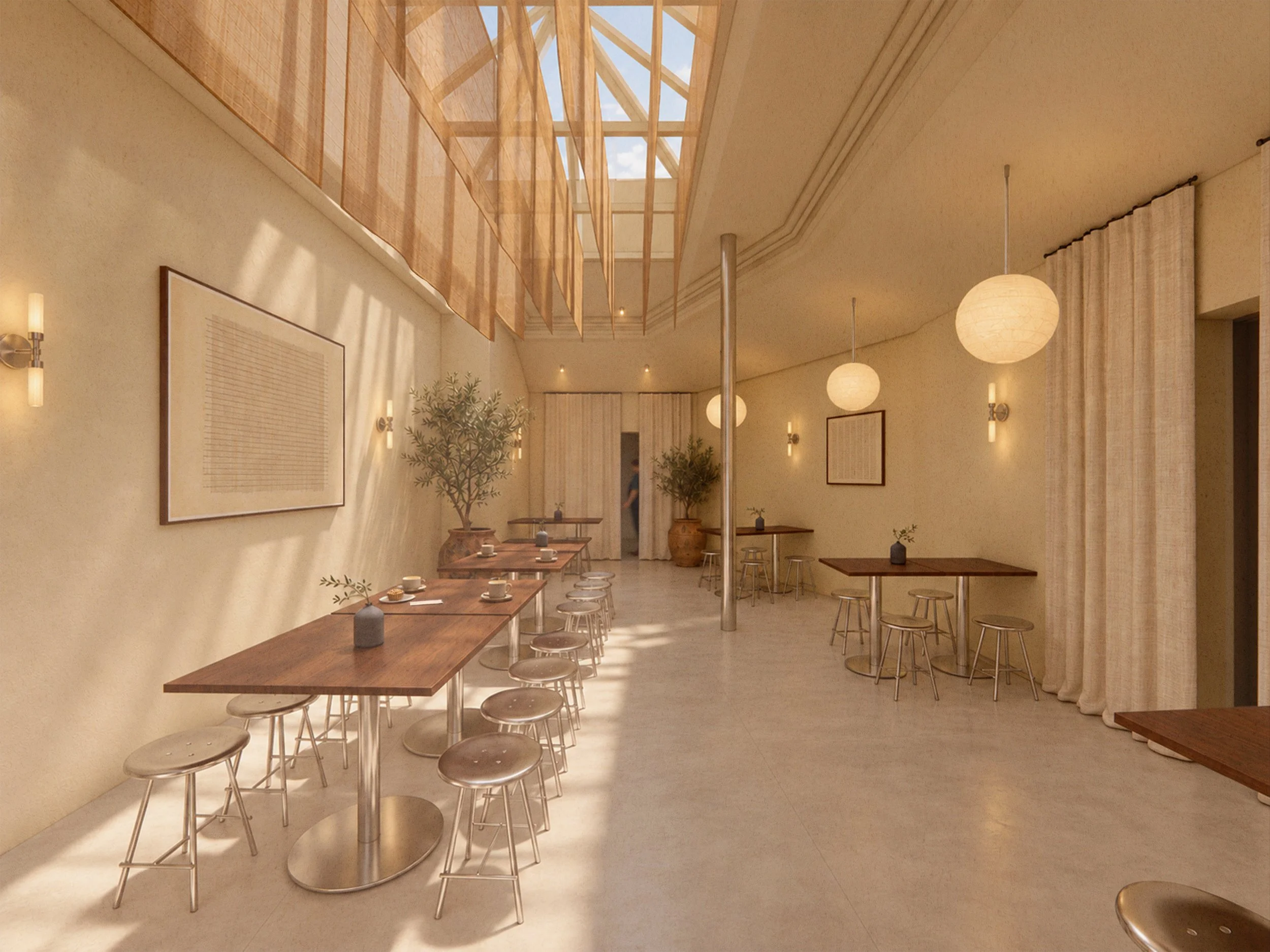
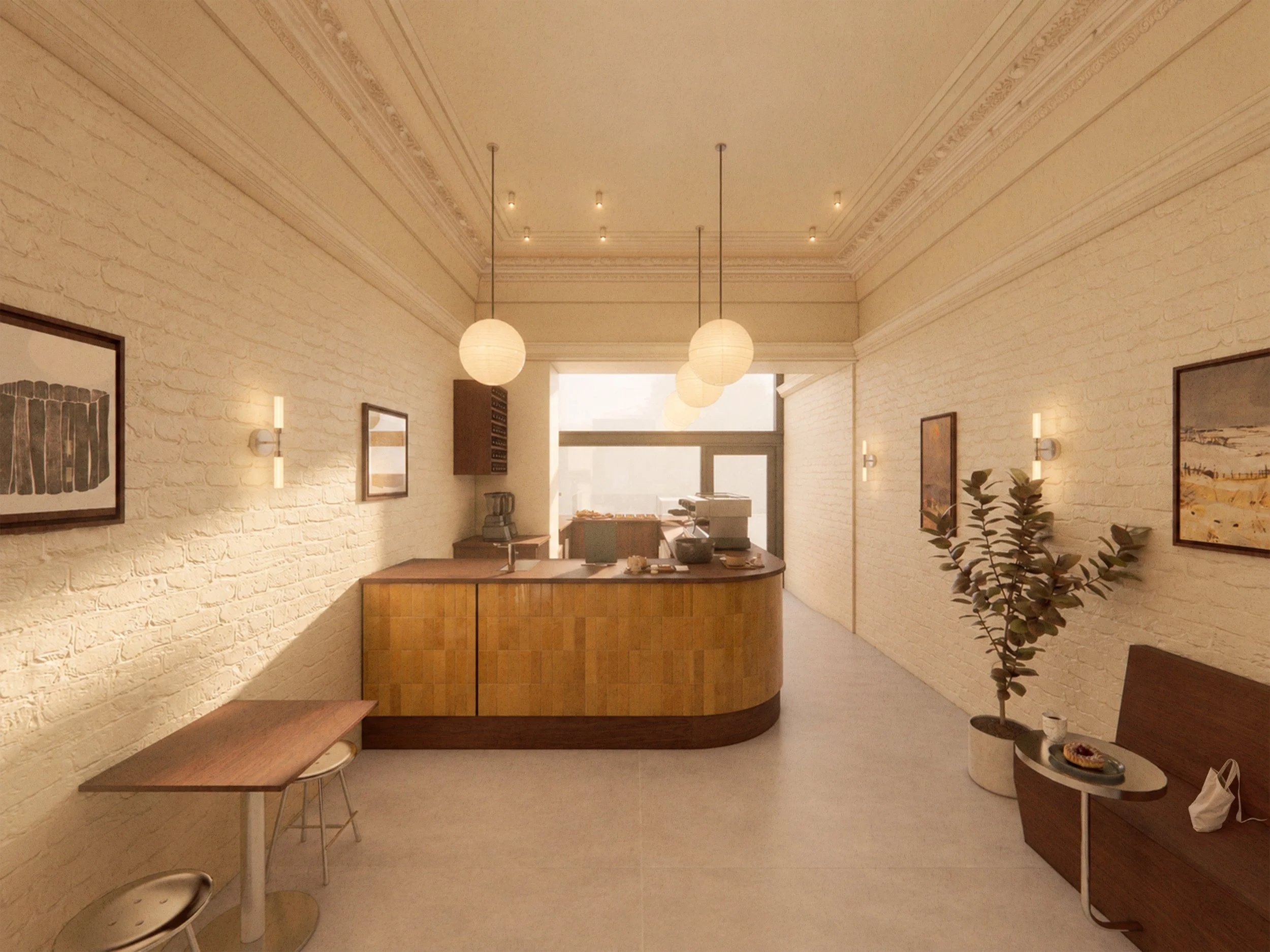
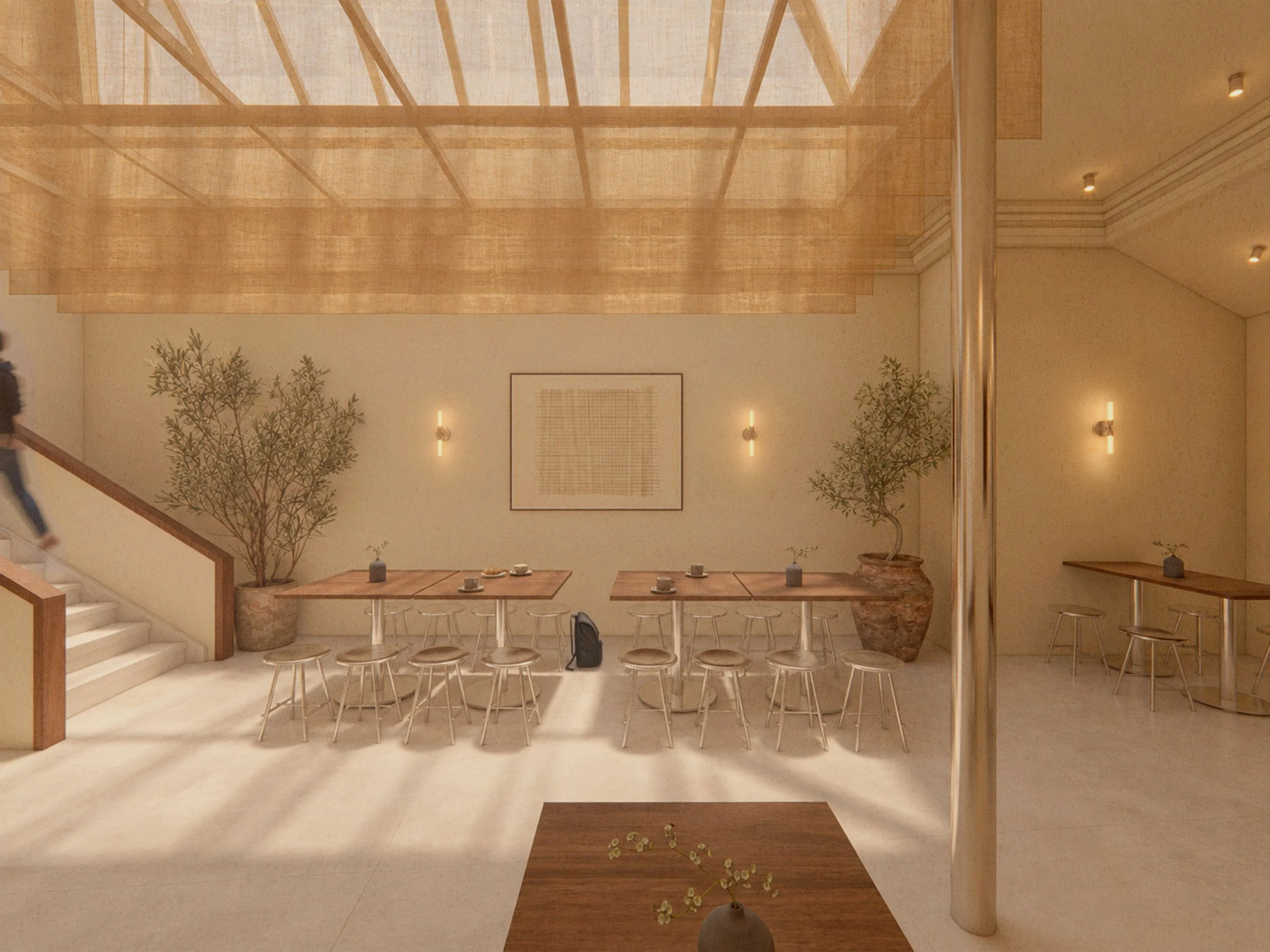
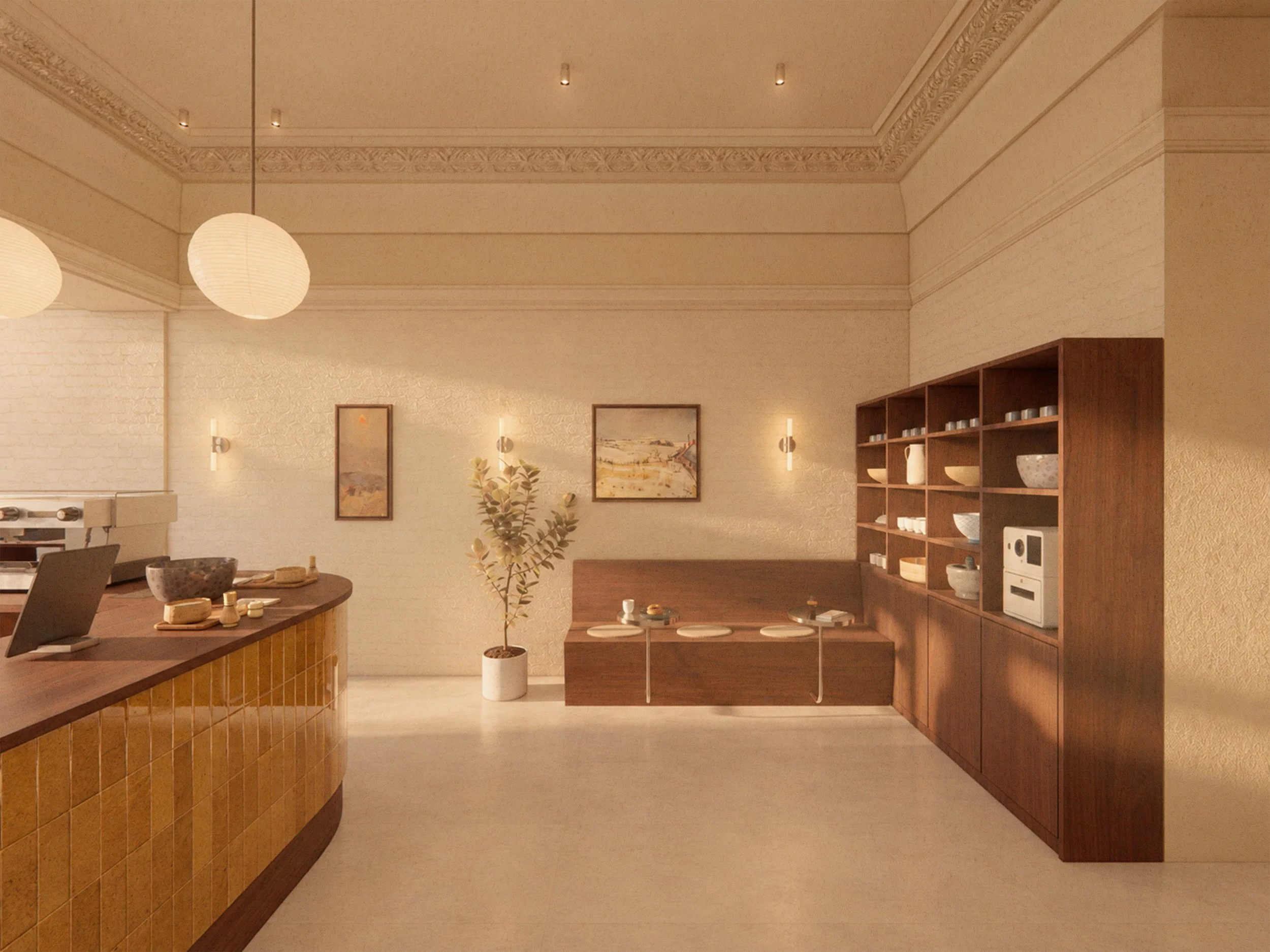
A new café interior within an existing listed building, developed around a split-level plan and a series of spaces with different ceiling heights and volumes.
At the front, a curved walnut counter brings together coffee making, display, storage and retail within a single piece of joinery. Walnut is used across the counter, shelving, banquettes and tables, alongside glazed tiles and stainless steel. Existing cornices, painted masonry and warm lighting help bring the old and new elements together.
Further back, the character changes beneath an existing rooflight. Suspended translucent fabric panels filter the daylight and soften the taller volume without closing it off, while loose tables, stools and curtains allow the space to remain flexible.
Throughout, the design has been developed around both the qualities of the existing building and the practical requirements of the café, from the layout of the counter and equipment to seating, lighting, materials and storage.
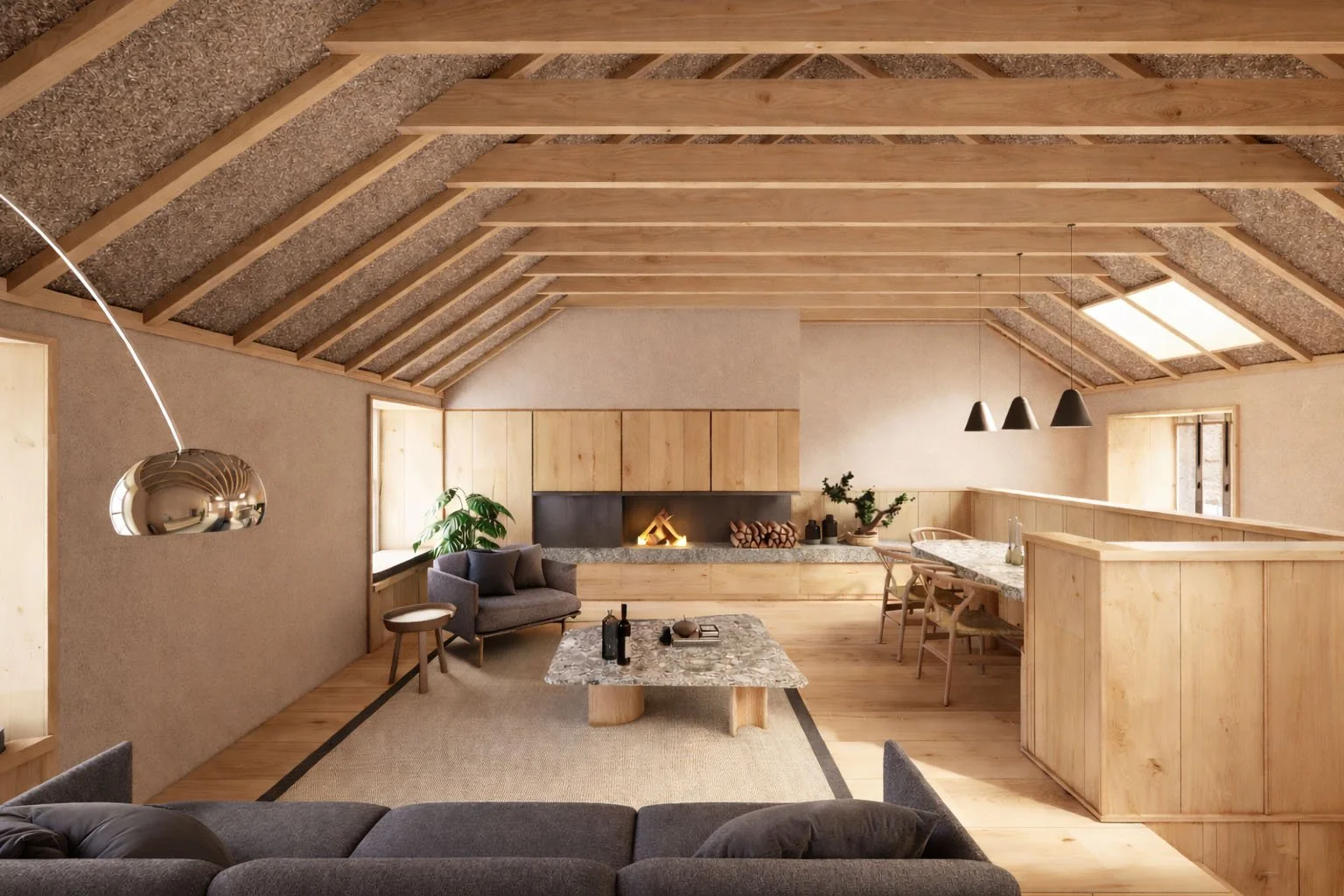
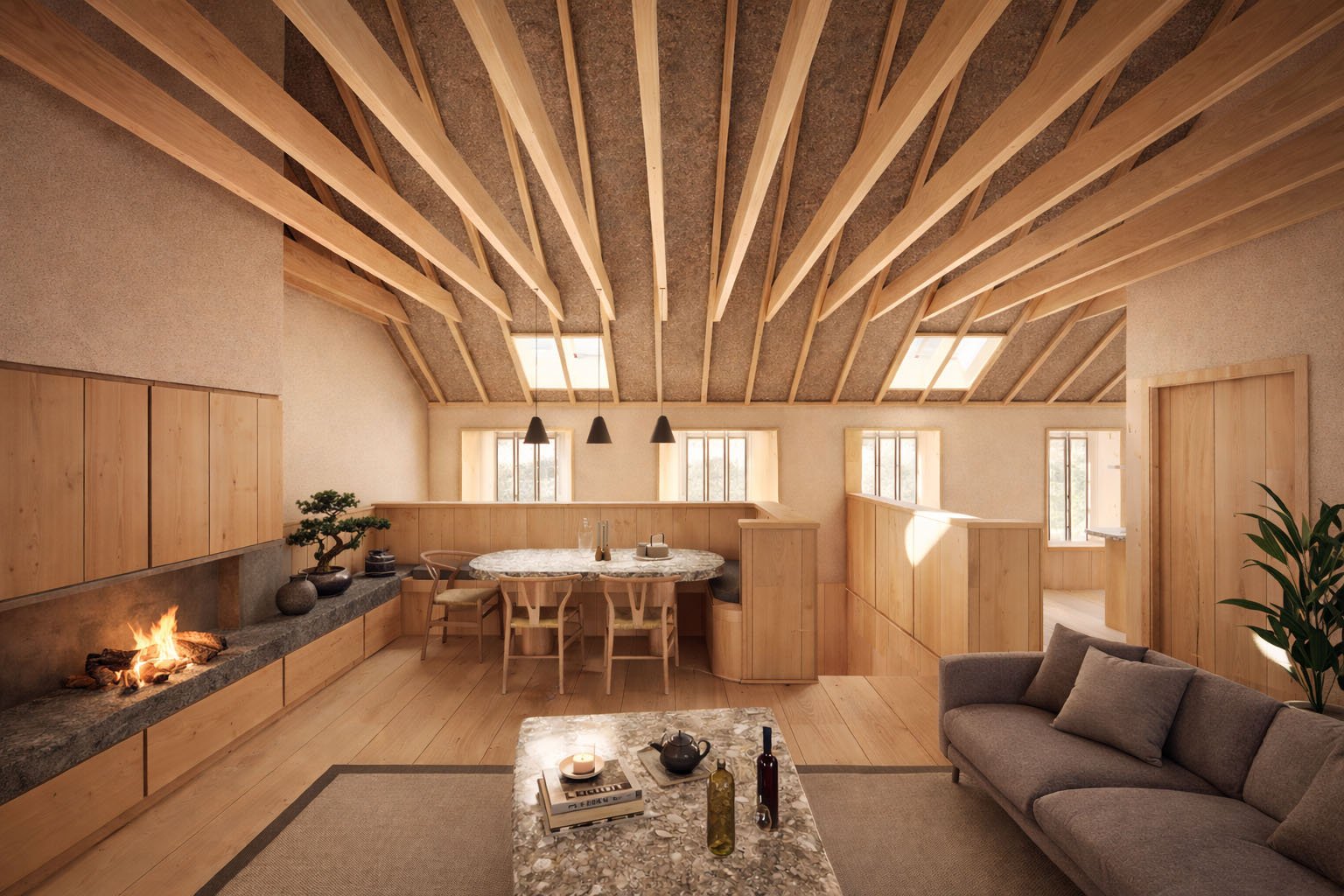
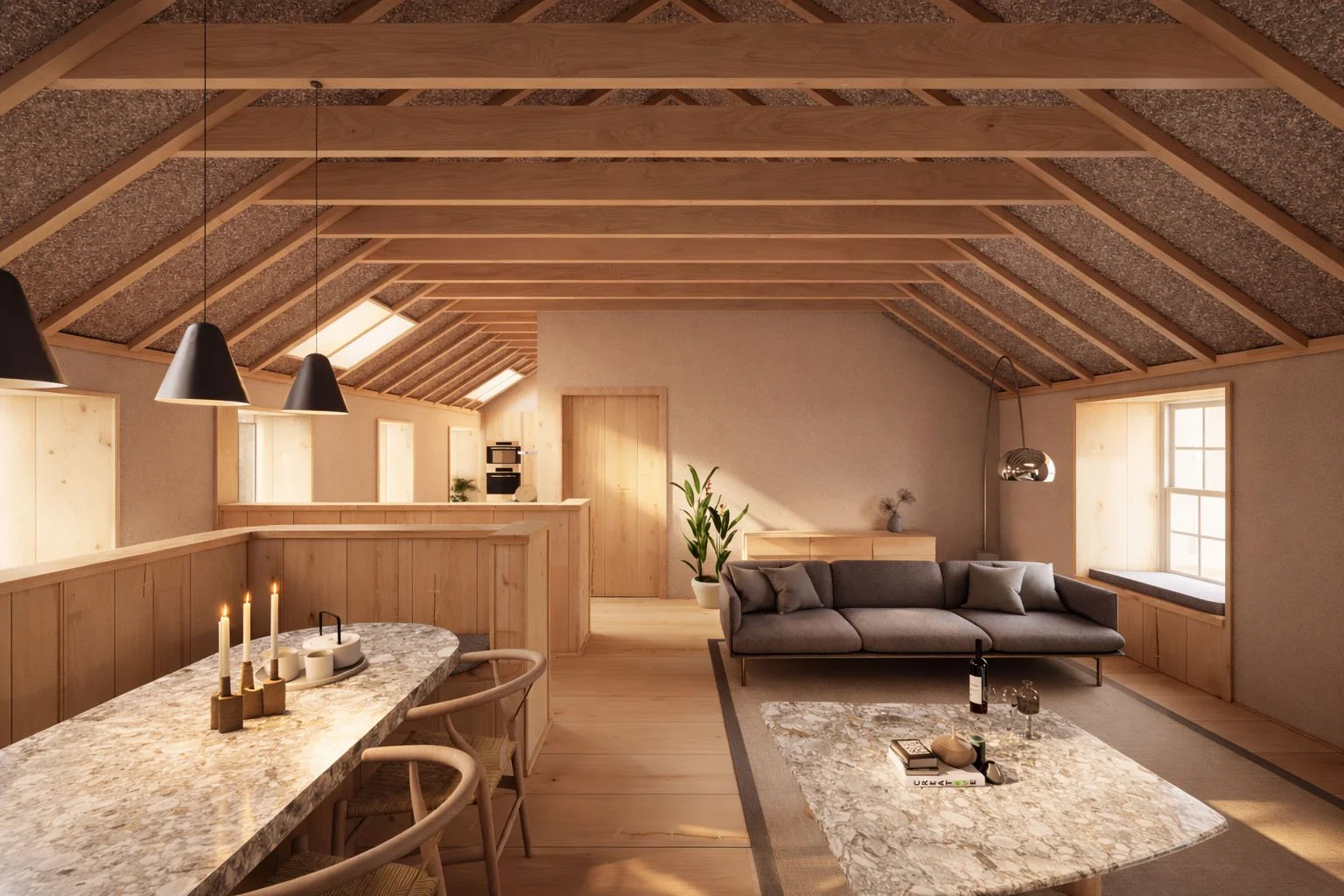
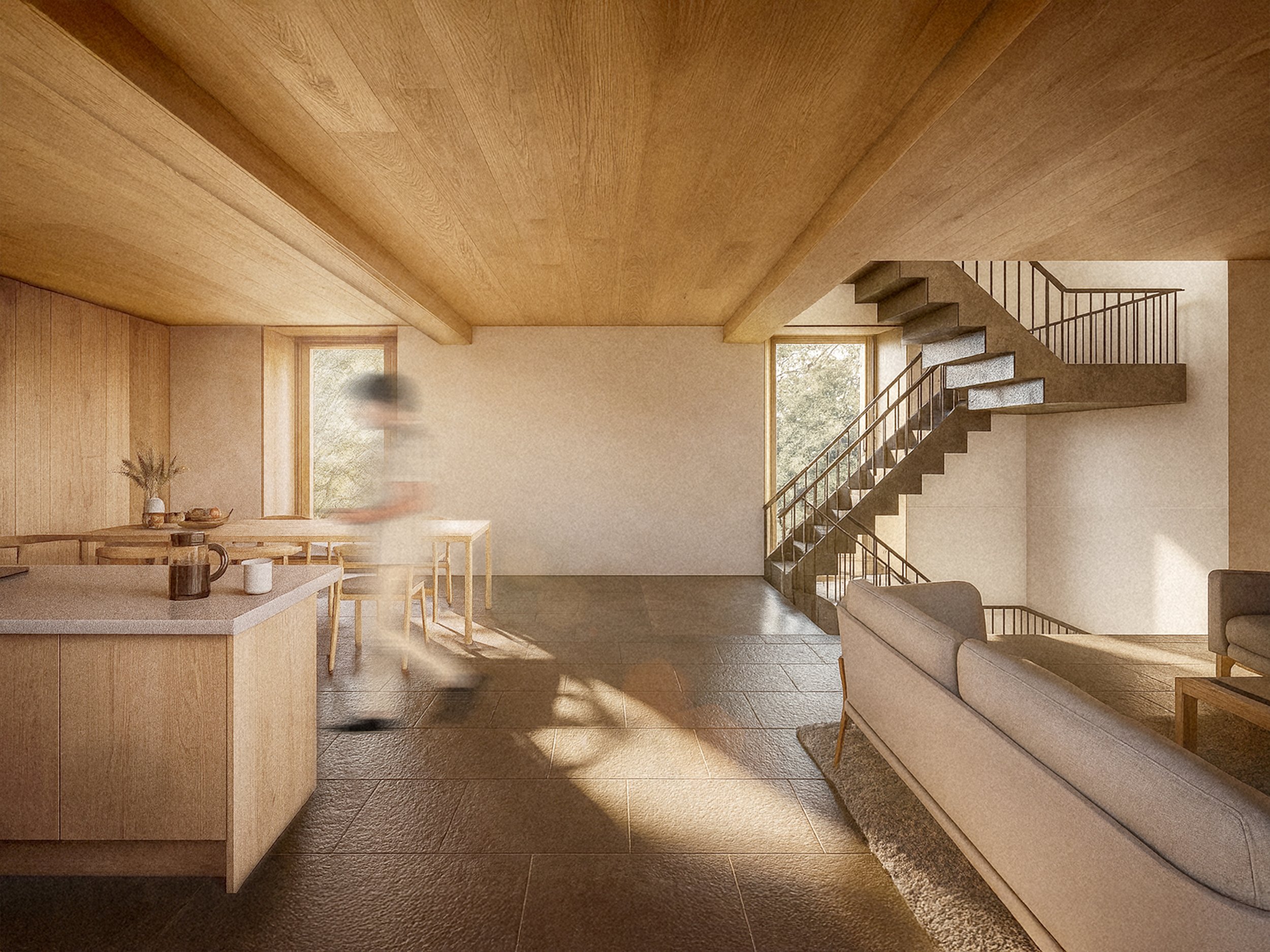
The reworking of a Category A listed mews house in Edinburgh’s New Town.
The building forms part of the working back of a Second New Town block, where the modest character of the mews contrasts with the more formal architecture of the principal townhouse. The project builds on this distinction, developing a quieter architectural language in which character comes through material, craft, light and texture rather than applied decoration.
The compact historic mews, already adapted for residential use, is reworked to create a more generous and carefully ordered home. A key move is the reorganisation of the first floor as the principal living level, with kitchen, dining and sitting spaces arranged within a single inhabited roof volume. The stair is relocated to improve connection through the house, while rooflights and exposed timber structure bring light, warmth and scale to the interior.
The material approach brings together exposed timber, natural plasters, timber floors and joinery, natural stone surfaces and textured acoustic linings, creating a calm and tactile interior. Alongside the spatial work, the project includes a fabric-first upgrade to improve insulation, comfort and long-term performance, with low-energy servicing developed around a ground source heat pump.
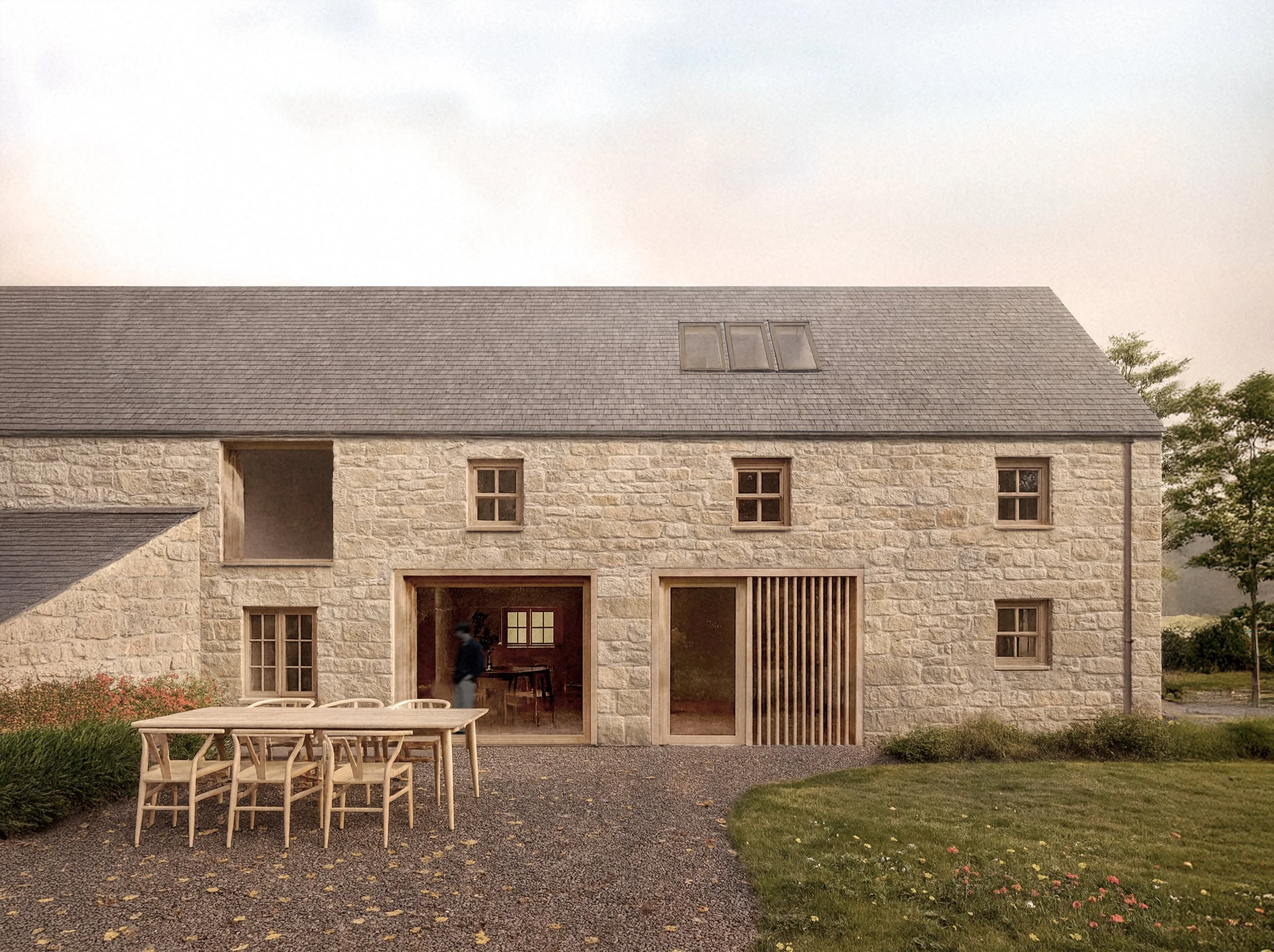
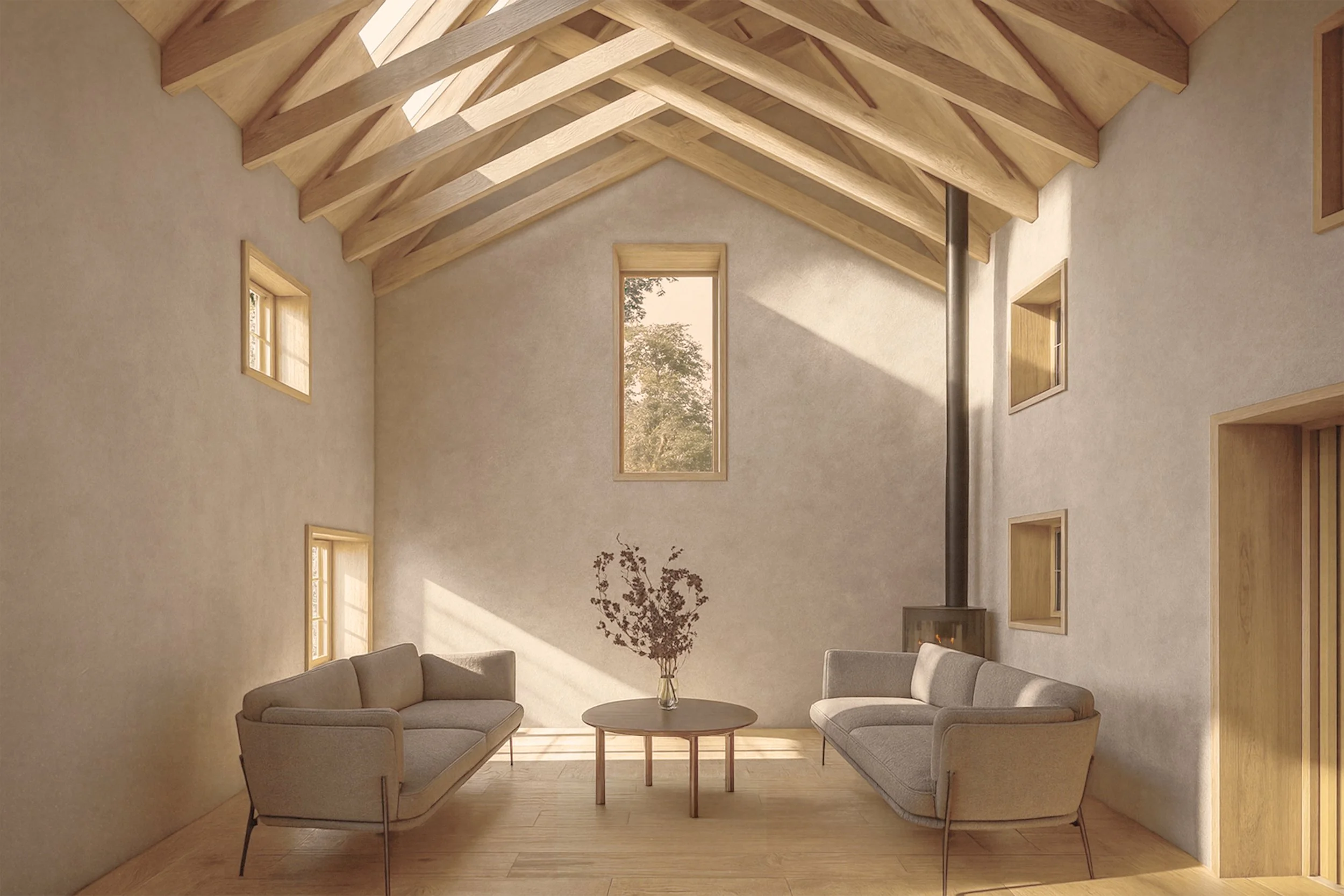
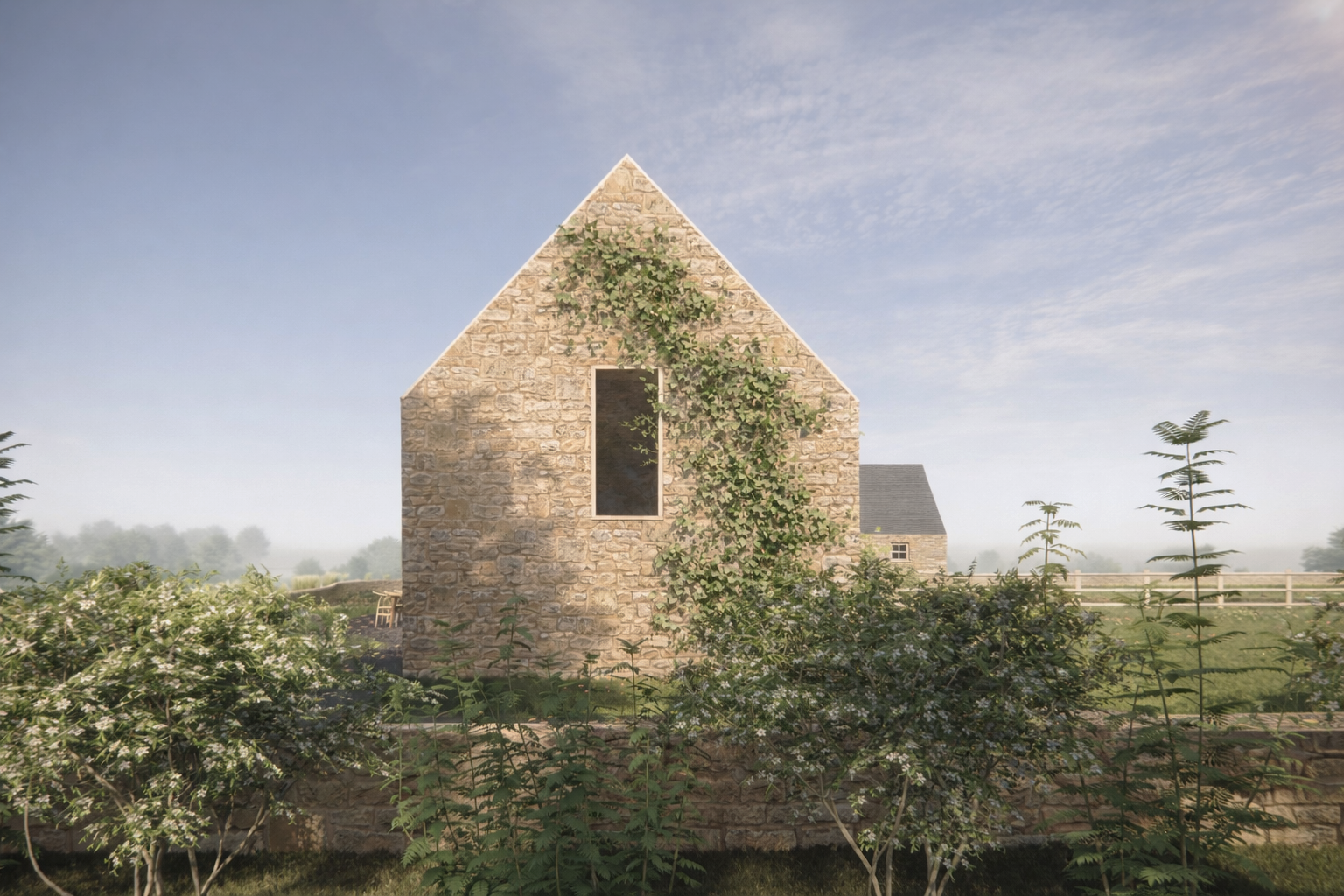
The conversion of a dilapidated steading in Angus into three apartments.
The project works within the existing stone shell, retaining its agricultural character through light-touch intervention. The aim is to preserve the robust, utilitarian quality of the building while adapting it for a new use that sits comfortably within its form. New elements are introduced in a measured way, allowing the original structure and its irregularities to remain legible.
A new slate roof is supported by timber scissor trusses, referencing traditional rural construction. Internally, natural materials define the spaces, including rough-sawn timber flooring, breathable clay plaster finishes and exposed rubble stone walls where possible. Openings are carefully positioned to bring light into the depth of the plan and to frame views across the surrounding landscape, giving each studio a clear relationship to its setting.
Thermal upgrades are achieved through breathable construction, with sheep’s wool insulation to the walls and wood fibre insulation to the roof. These measures improve performance while allowing the building to manage moisture effectively, creating a durable and comfortable interior suited to its rural context.
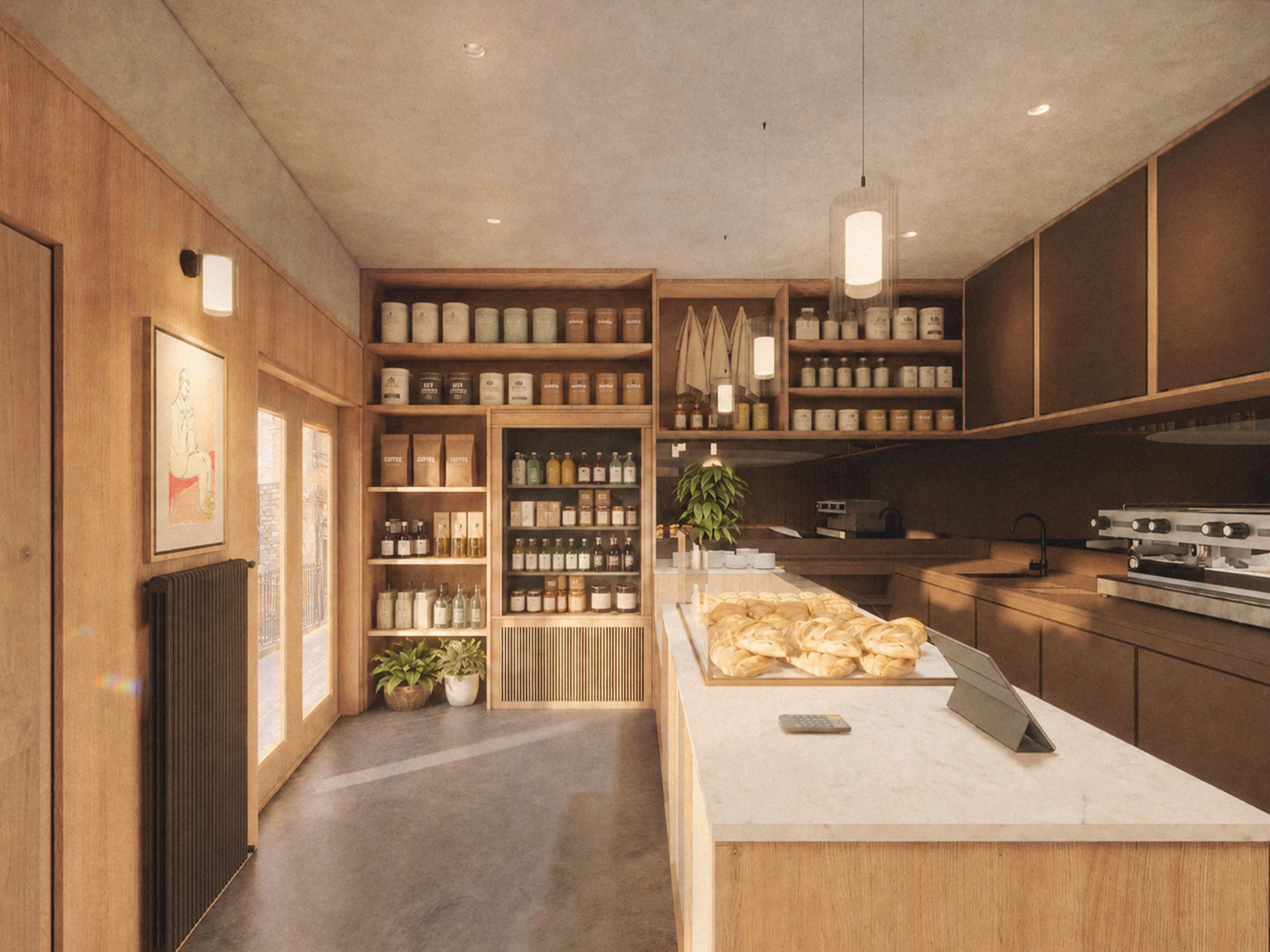
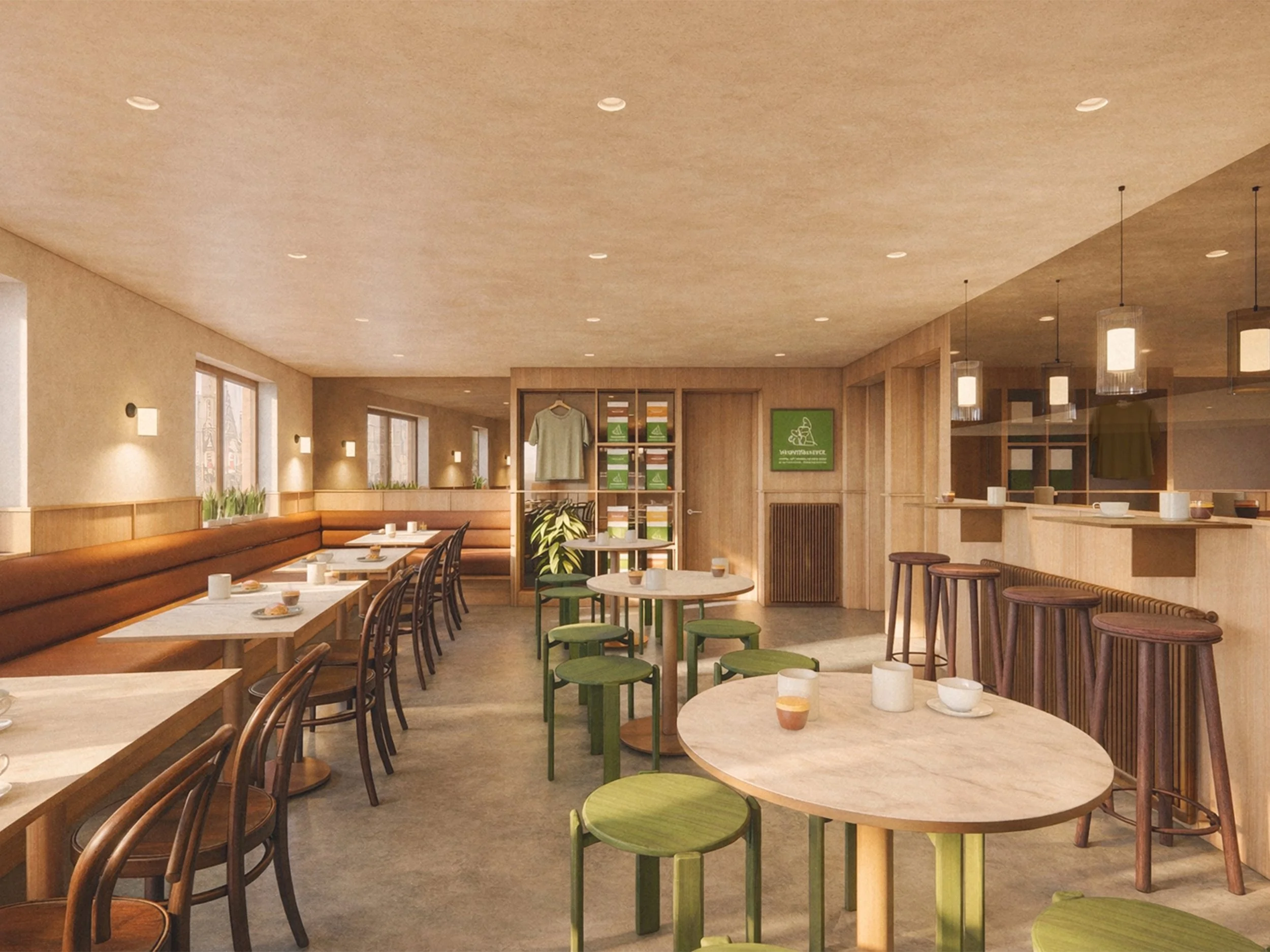
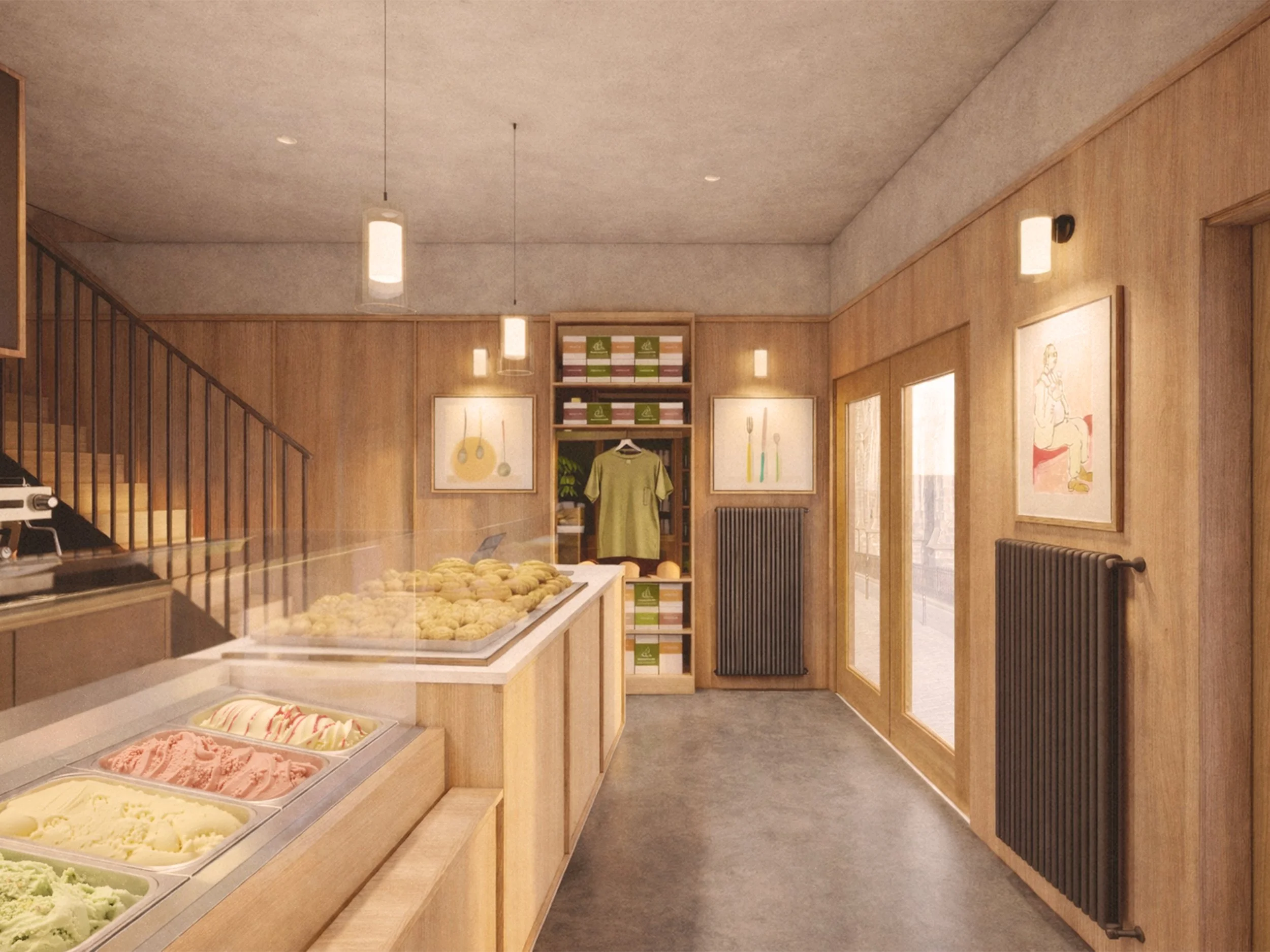
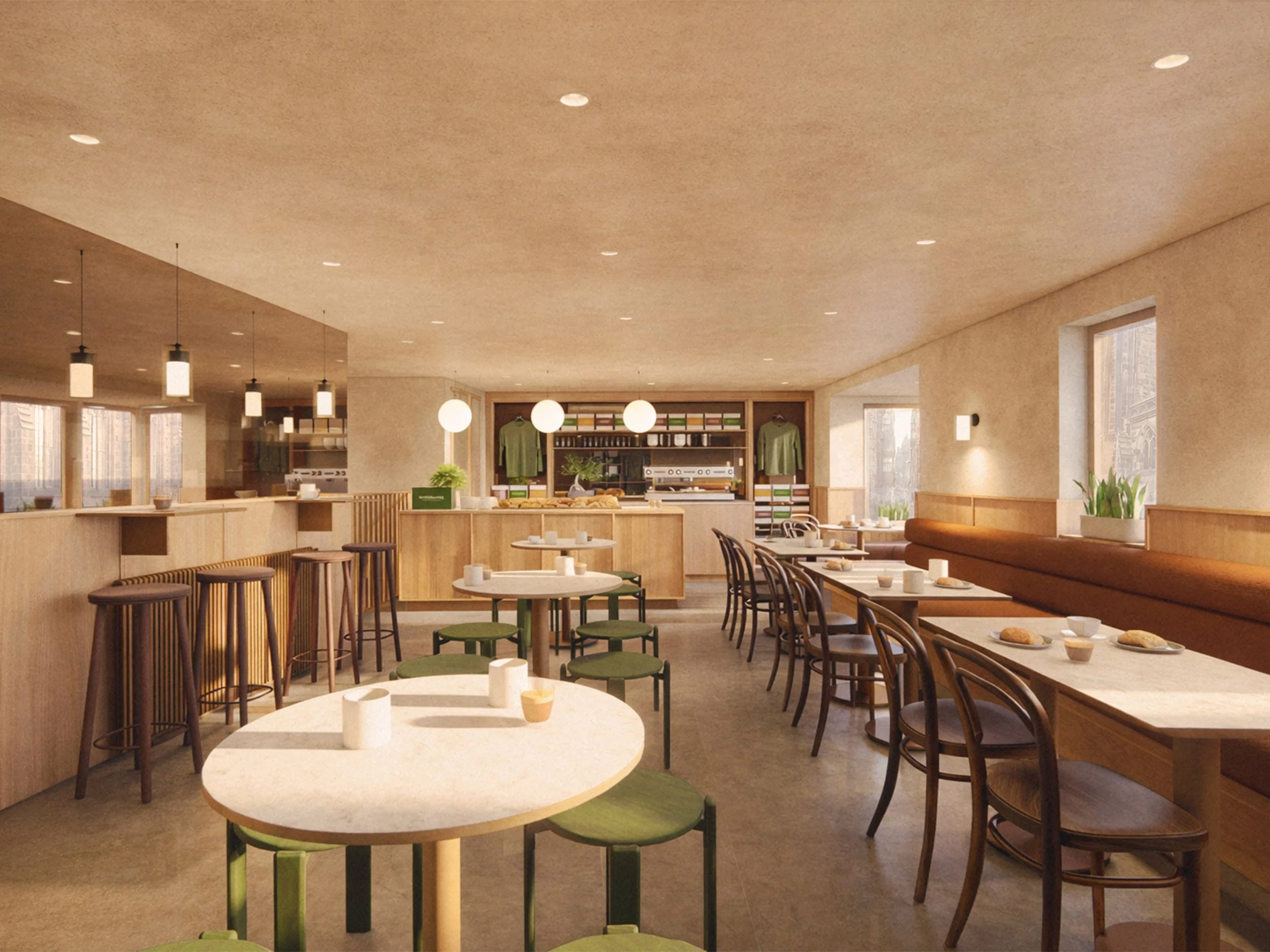
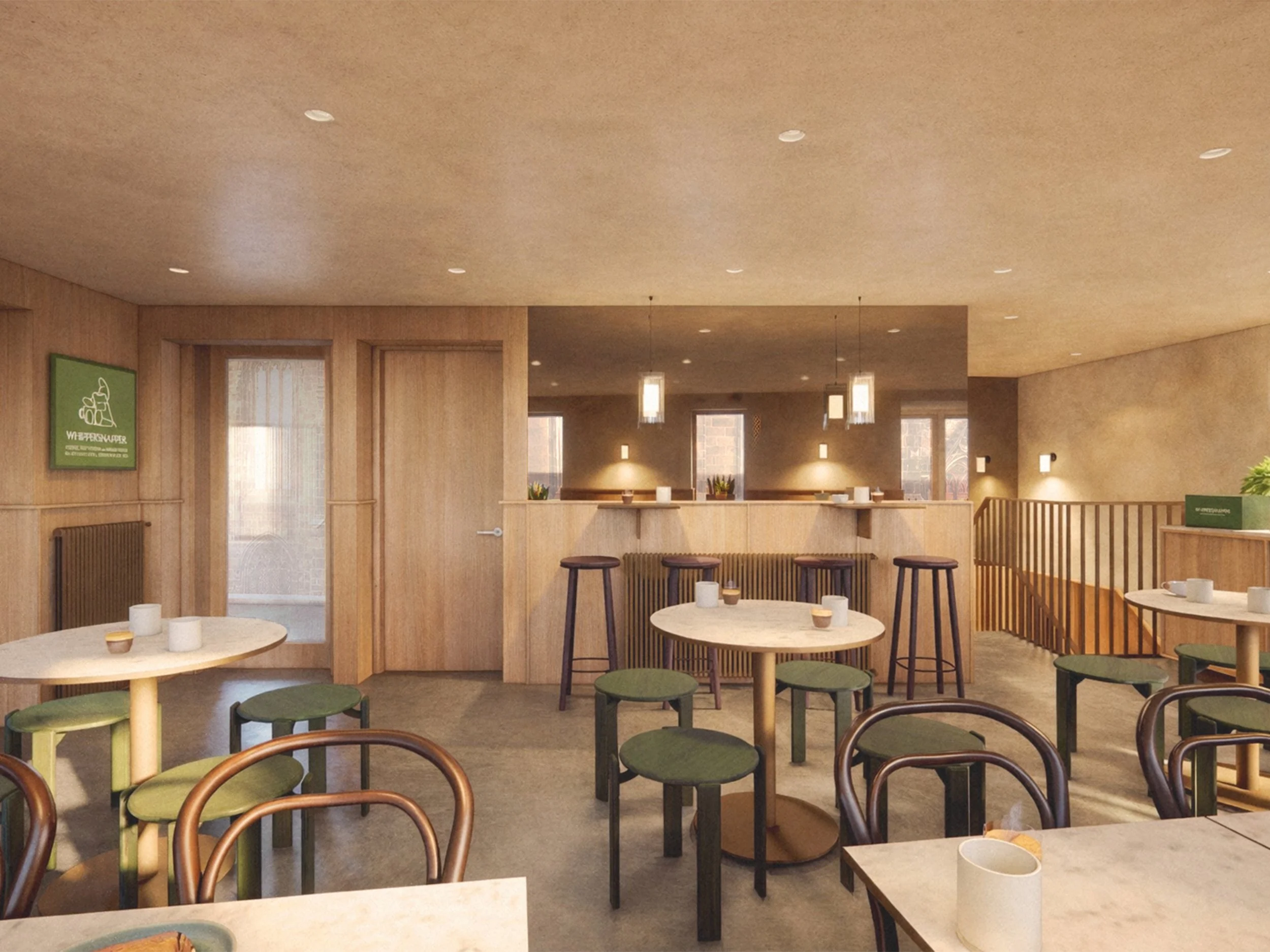
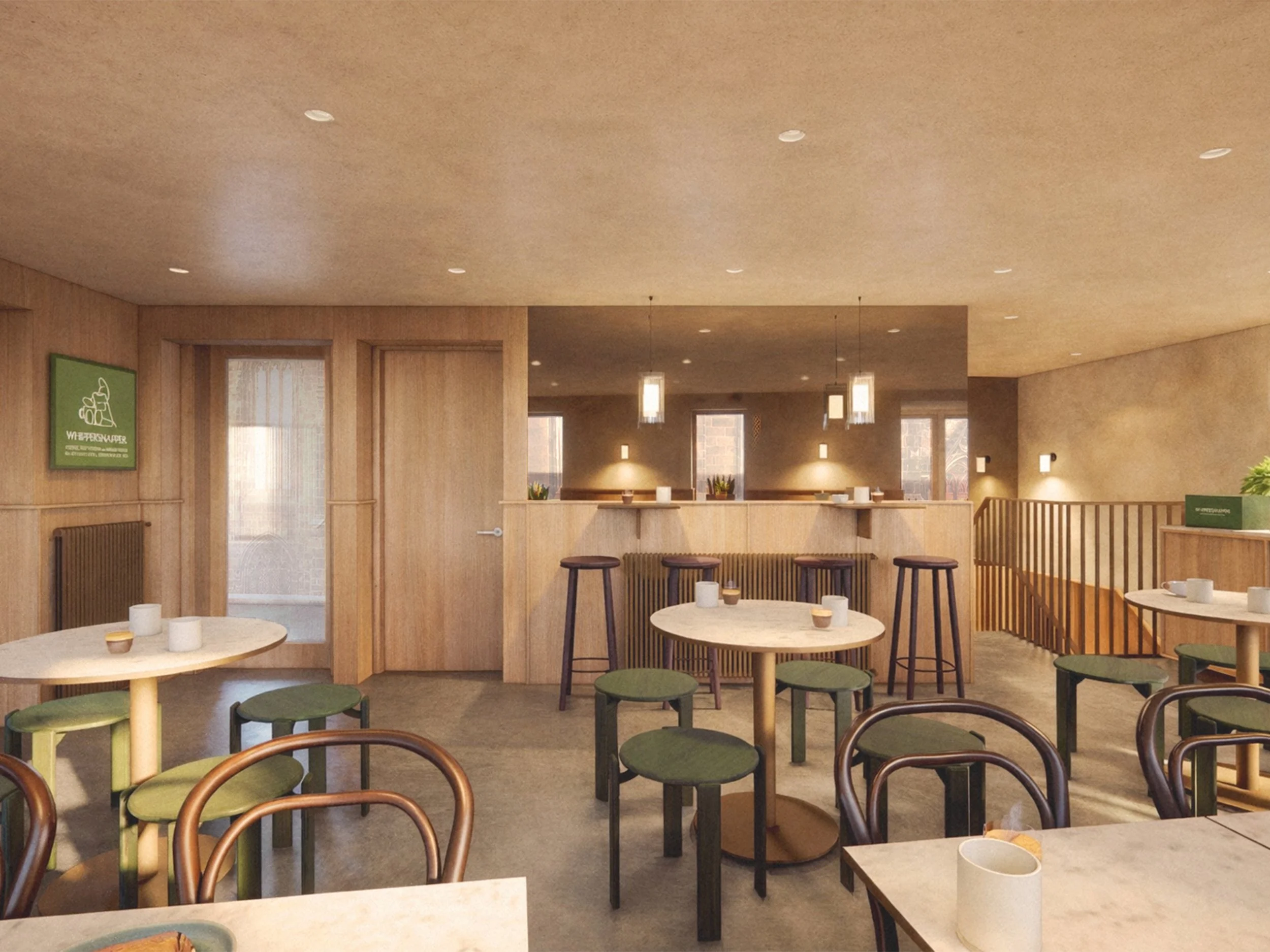
A new café set across two floors of an existing building on Edinburgh’s Royal Mile.
Whippersnapper is a café on Castlehill, at the upper end of Edinburgh’s Royal Mile. The compact ground floor is organised around the counter and display, serving coffee, soft serve, pastries, sandwiches and ice cream. Upstairs, a quieter sit-in space combines banquette seating, smaller tables and places to sit at the bay window and bar.
The design takes its cues from traditional Old Town rooms and interiors. Timber panelling, decorative details, crafted metalwork, tiled surfaces and marble are used in a contemporary way, giving the café a warm and slightly playful character grounded in its setting.
Materials were selected for a busy city-centre café. Textured paint, tile, marble and hardwearing floor finishes sit alongside built-in shelving and display areas, allowing products to form part of the interior without crowding the relatively narrow rooms.
The approach to the frontage was deliberately restrained. New paintwork, signage and graphic elements establish Whippersnapper’s presence while sitting comfortably within the Royal Mile streetscape.
Ossian developed the interior design and spatial planning alongside the new brand identity, signage and graphic design by Touch. Bringing these elements together from the outset allowed the two floors to work as a coherent whole, supporting both quick visits and a more relaxed sit-in experience.
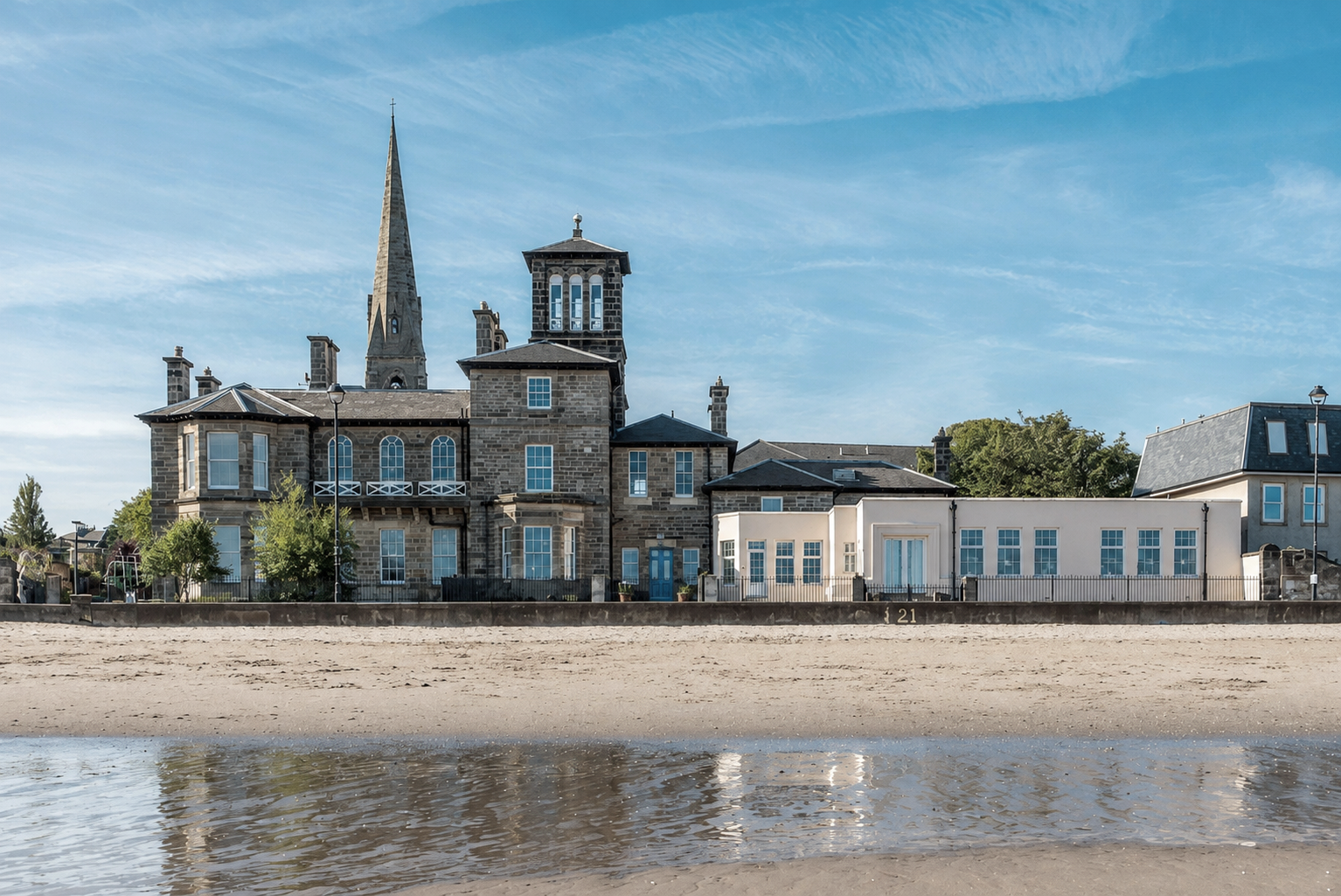
The reunification and remodelling of two homes within a Category B listed villa in Portobello.
Two adjoining properties within the former Hamilton Lodge Hotel are being reunited to form a single family home. The building stands on the Promenade in Portobello and began as a mid-19th-century Italianate villa, before being extended and later divided for residential use.
The project reconnects a four-storey property with the neighbouring two-storey house. At ground level, new openings establish a clearer route between the two parts. The revised plan creates a generous kitchen and dining room, improves its connection with the existing living room and adds a utility room with direct access from the rear.
On the first floor, partitions and a later staircase are removed to form an open principal bedroom suite. These changes allow the different parts of the building to work as one home again, while making better use of rooms shaped by successive alterations.
Work to the exterior is limited. Existing doors on the south-west elevation are replaced with glazed doors, windows facing the Promenade are extended to floor level, and a small number of rooflights bring daylight into the principal bedroom suite.
The proposals concentrate change within previously altered areas, retaining the character and distinctive form of Hamilton Lodge while adapting it for contemporary family life.
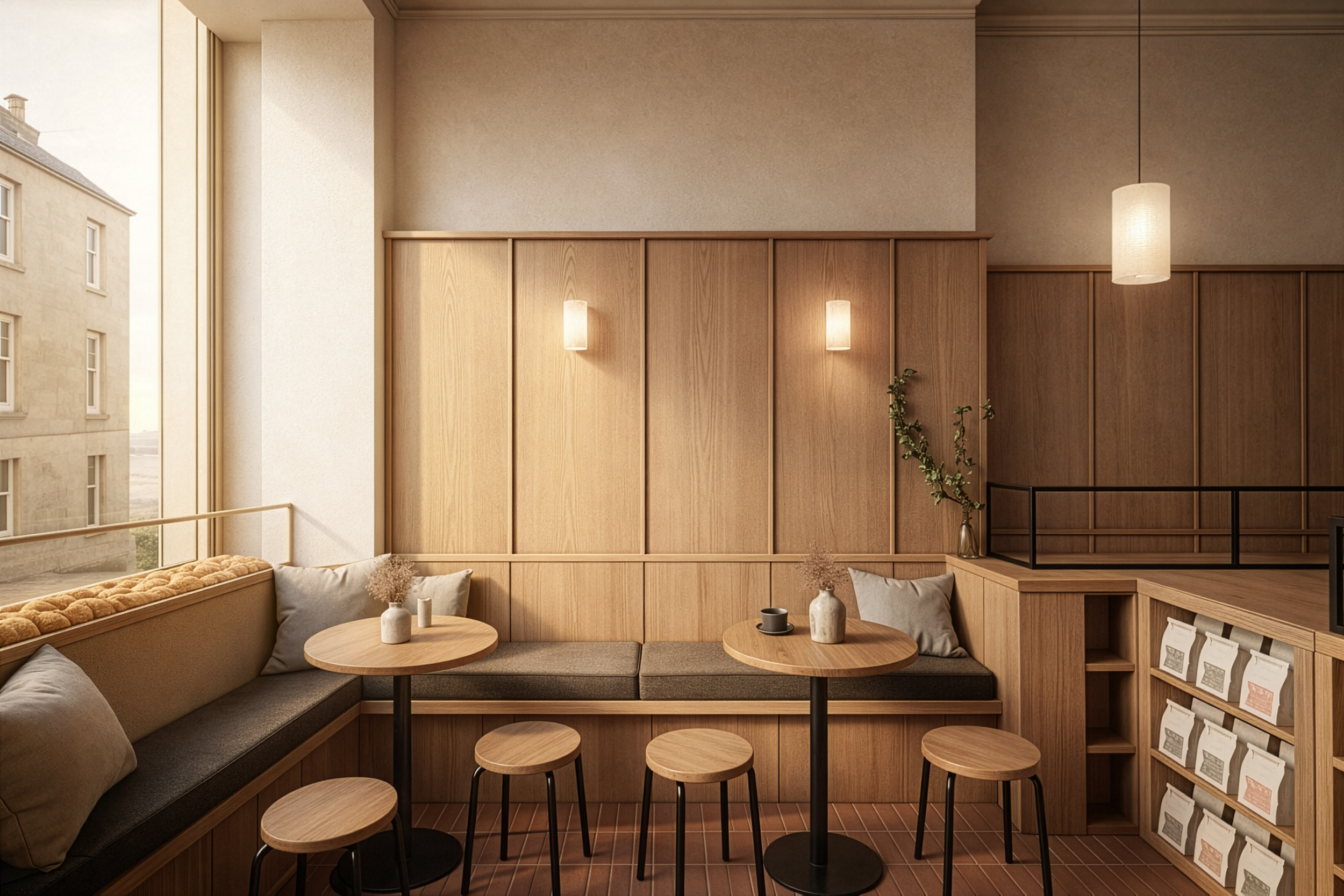
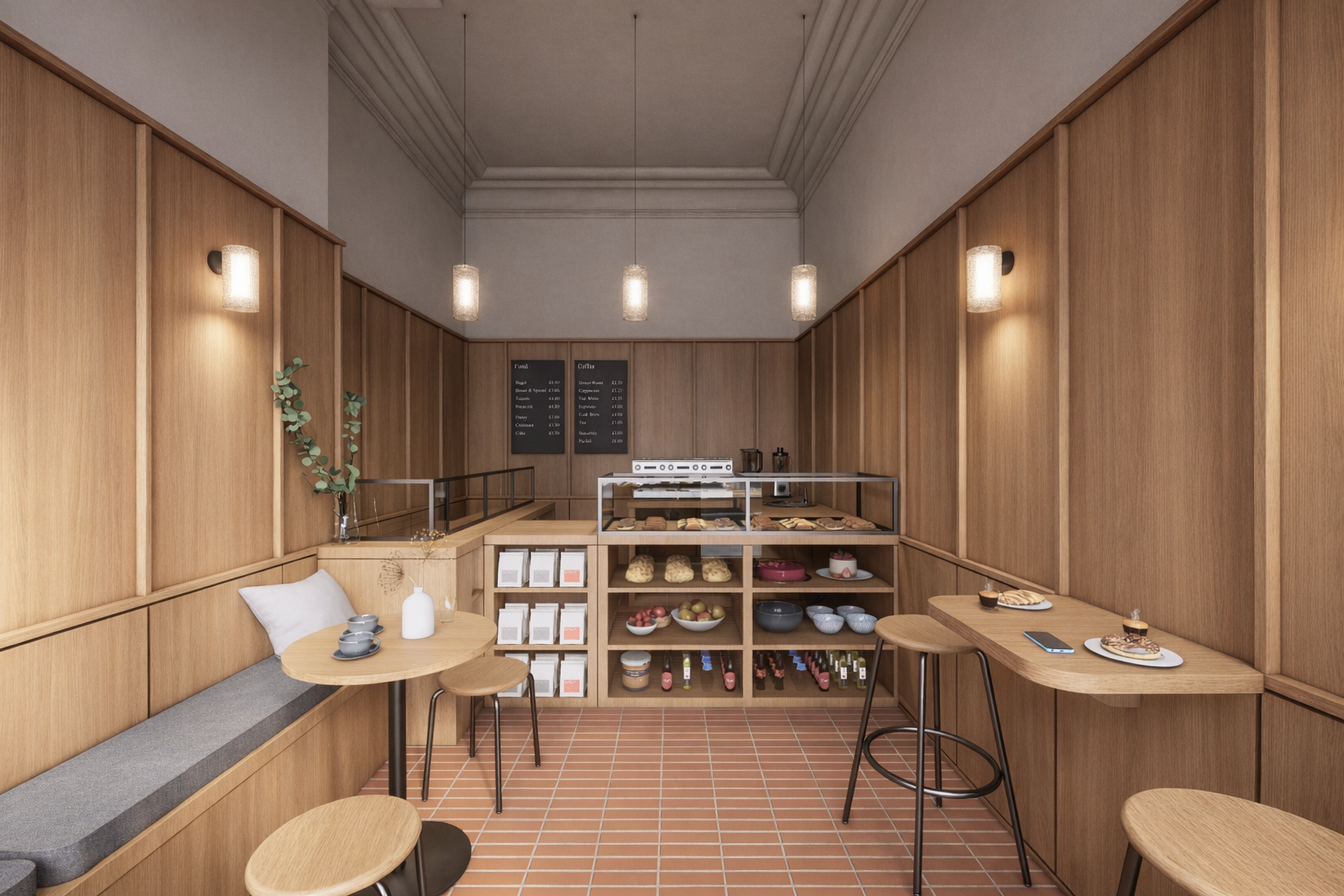
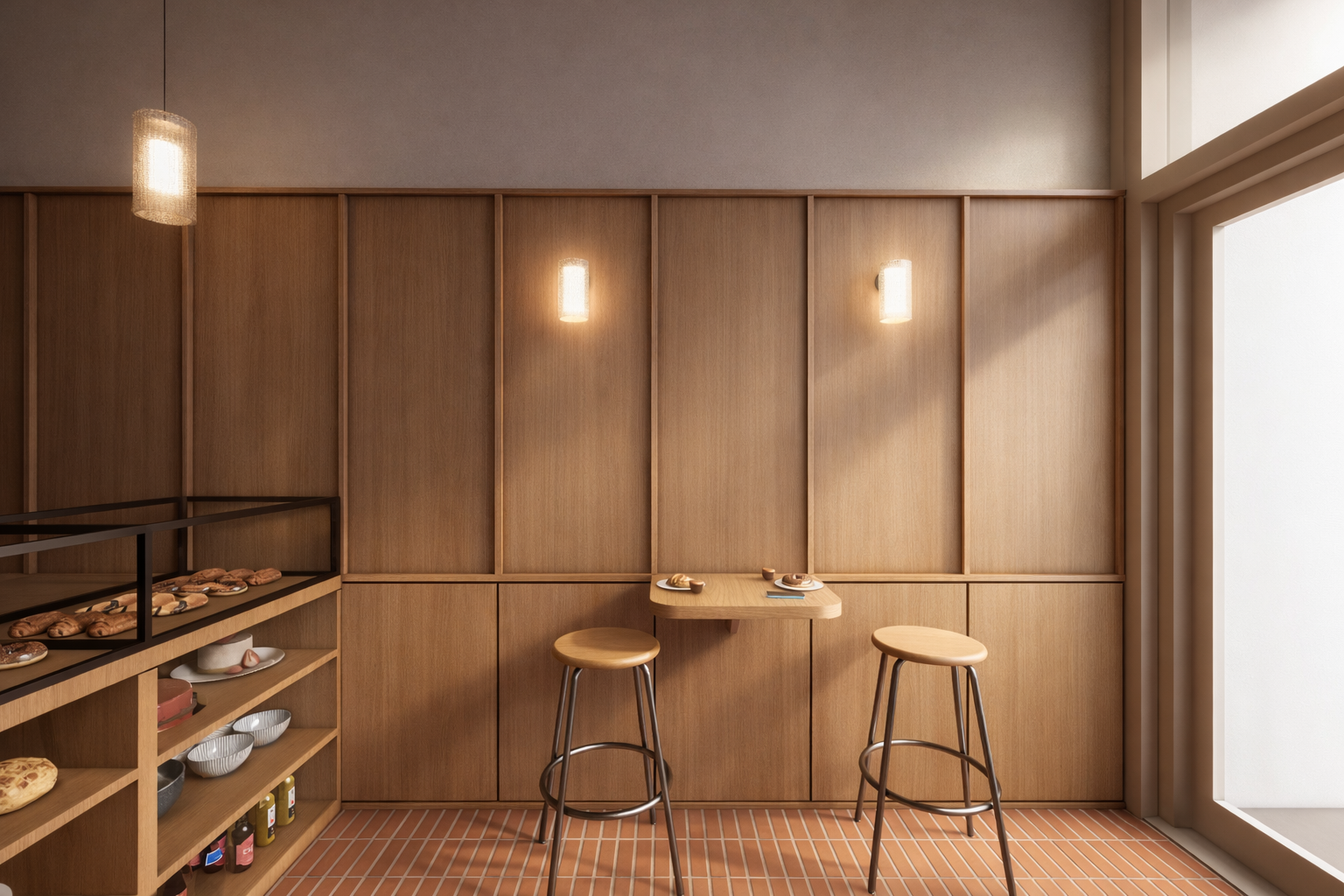

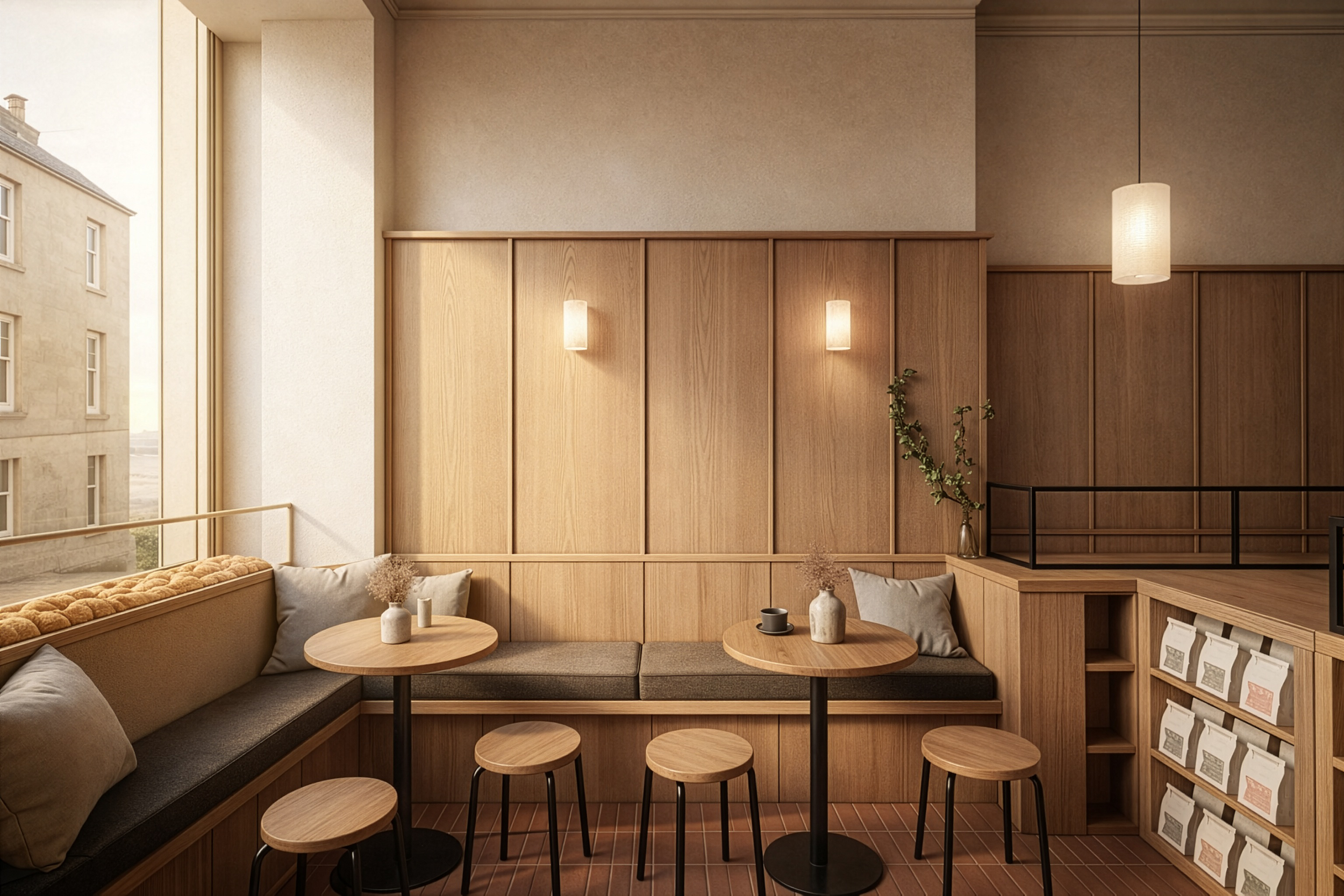
A new café in Leith, informed by traditional Edinburgh interiors and the building’s former use as a tobacconist.
The design draws on the warm, timber-lined character of historic tobacconists, where display and atmosphere were closely linked. This is combined with references to traditional Edinburgh café interiors to create a space that feels rooted in its context. Existing features, including cornices, are uncovered and restored, then paired with simple contemporary interventions that sit comfortably within the existing shell.
Timber wall panelling forms a continuous lining to the interior, creating a calm backdrop to the activity of the café. Steel-framed display elements and fluted glass lighting introduce a lighter layer, while built-in furniture and bench seating make efficient use of the compact footprint. The arrangement allows for a high level of seating within a modest space, maintaining a clear and comfortable layout.
Externally, the existing stonework is refurbished using breathable finishes, with the shopfront carefully reworked to suit its new use. The retained ‘Cigar Box’ lettering anchors the café within its history, maintaining a clear connection between the building’s past and its current life on the street.
Project page


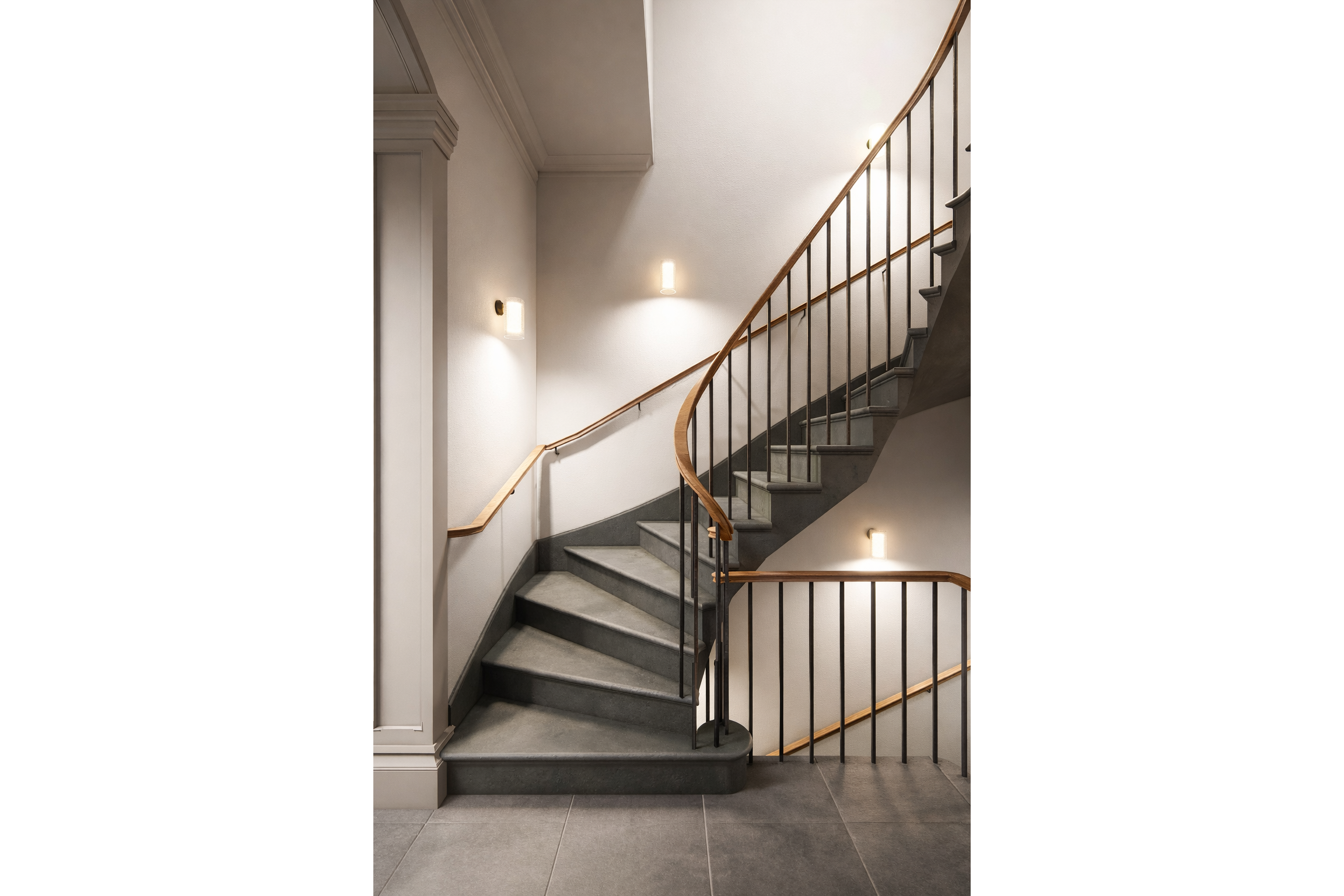
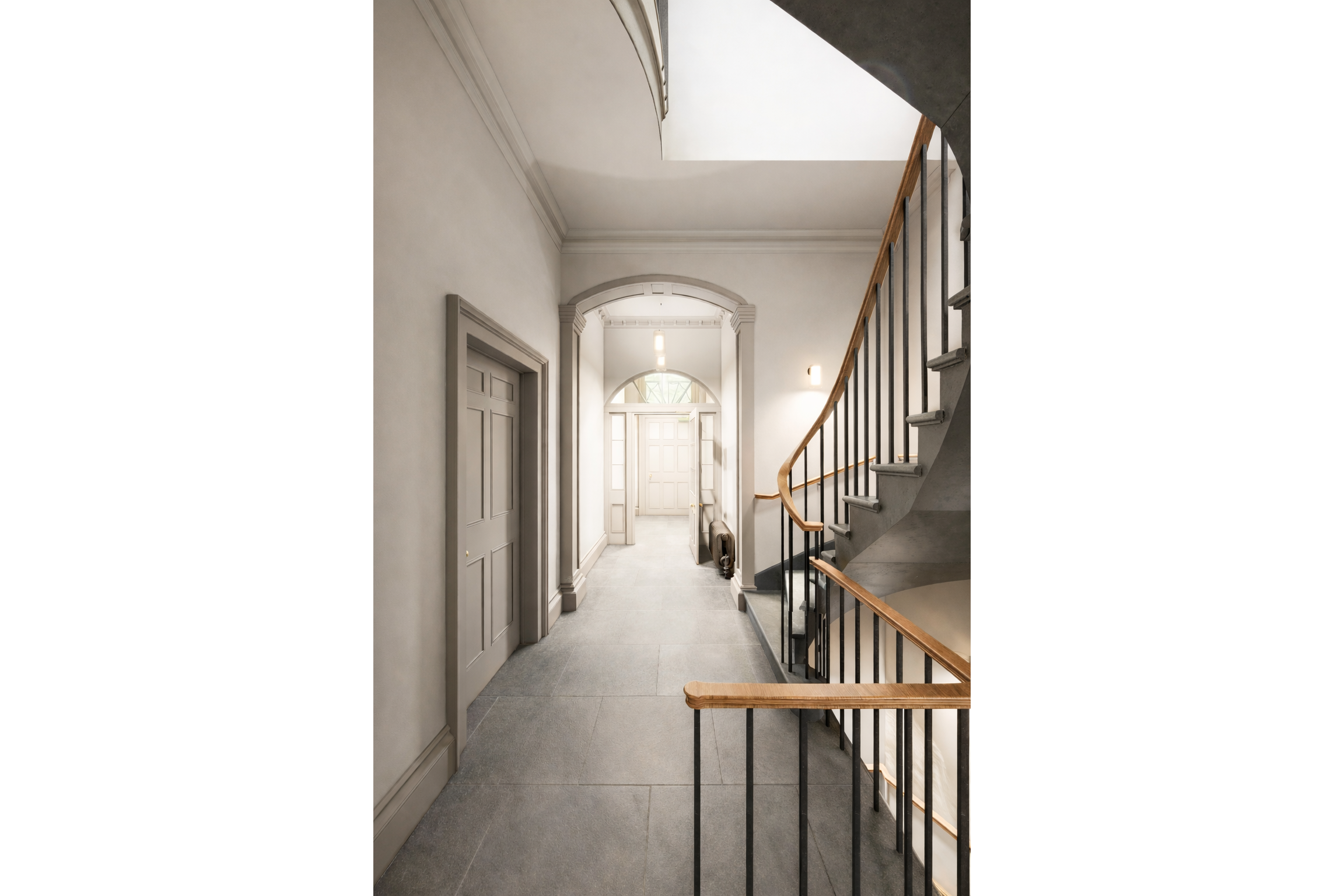

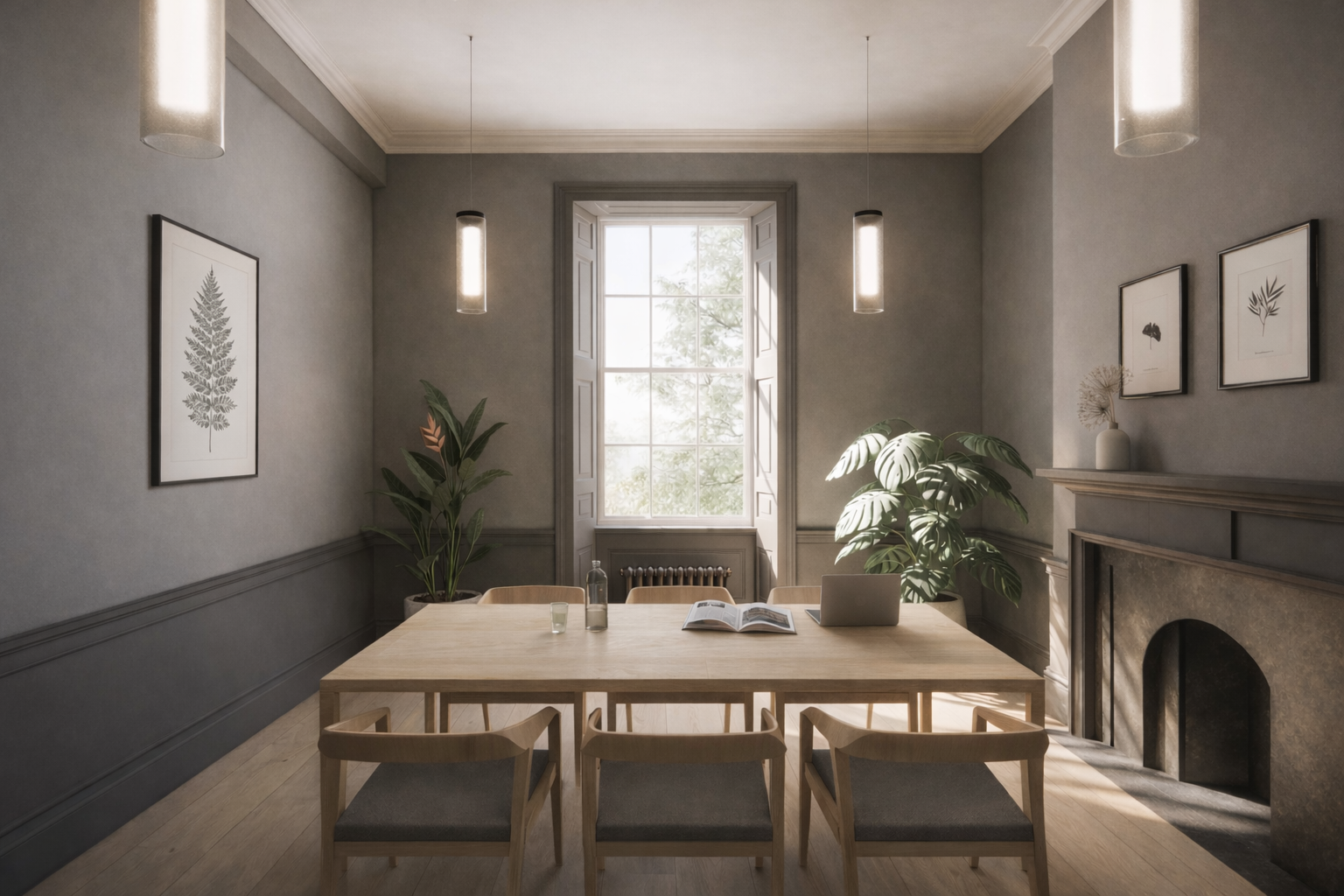
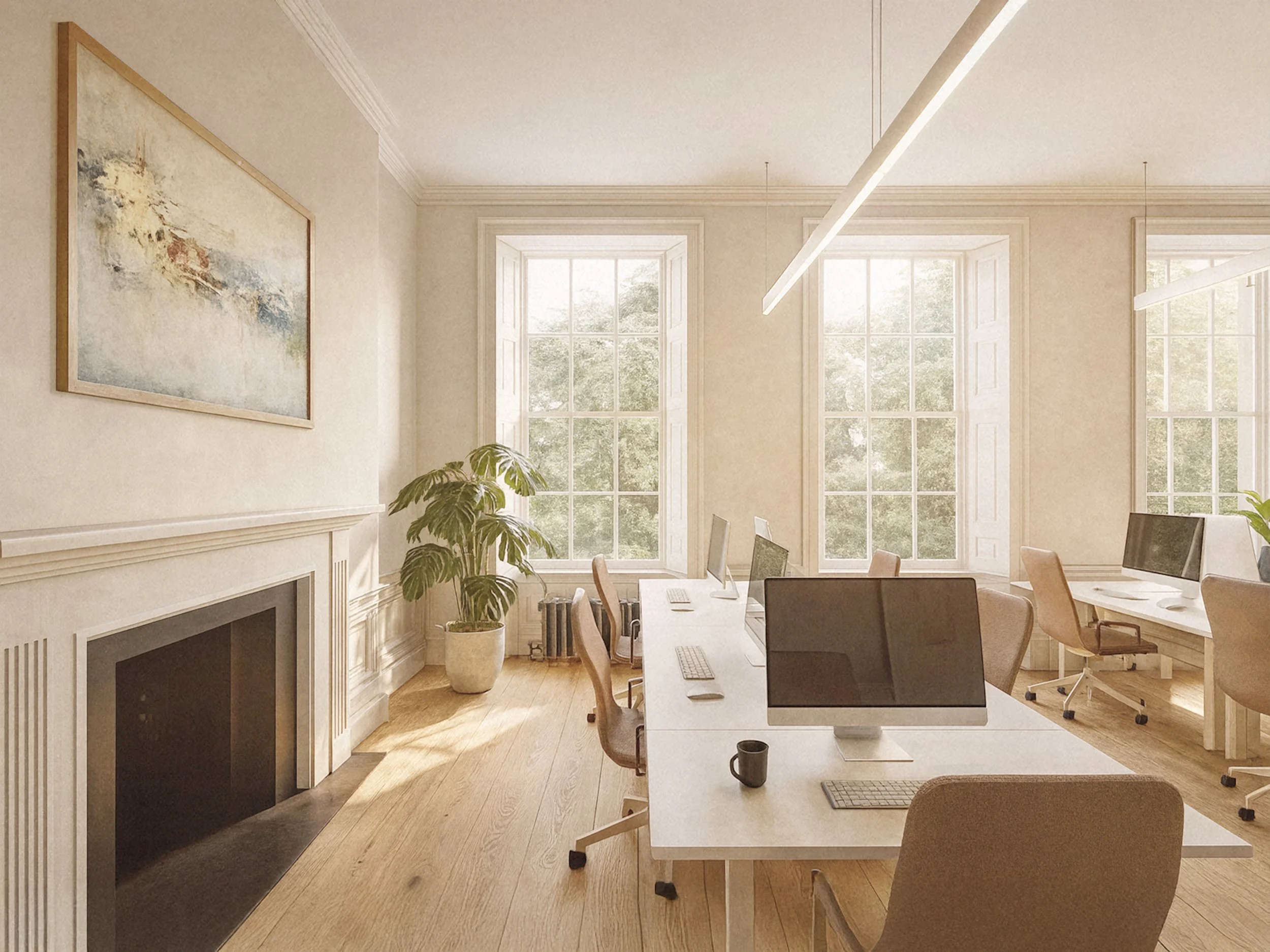
The refurbishment of a townhouse office in Edinburgh’s New Town to create a calm and flexible workspace.
The building is reworked to provide a sequence of spaces that support both focused work and collaboration. Rooms are arranged to accommodate a range of uses, from quiet individual workspaces to larger meeting rooms, allowing the building to adapt to different patterns of occupation throughout the day. The existing cellular structure is retained and clarified, giving the interior a legible and ordered arrangement.
Targeted fabric upgrades improve comfort and reduce operational energy demand, with insulation introduced where appropriate and building services renewed to contemporary standards. Electrical and communication systems are integrated carefully within the existing fabric, supporting modern working requirements while respecting the constraints of the Category A listed building.
A restrained palette of durable materials is used throughout, allowing the proportions and detail of the existing townhouse to remain prominent. The result is a workspace that is clear, robust and adaptable, with a calm internal character suited to everyday use.
Project page
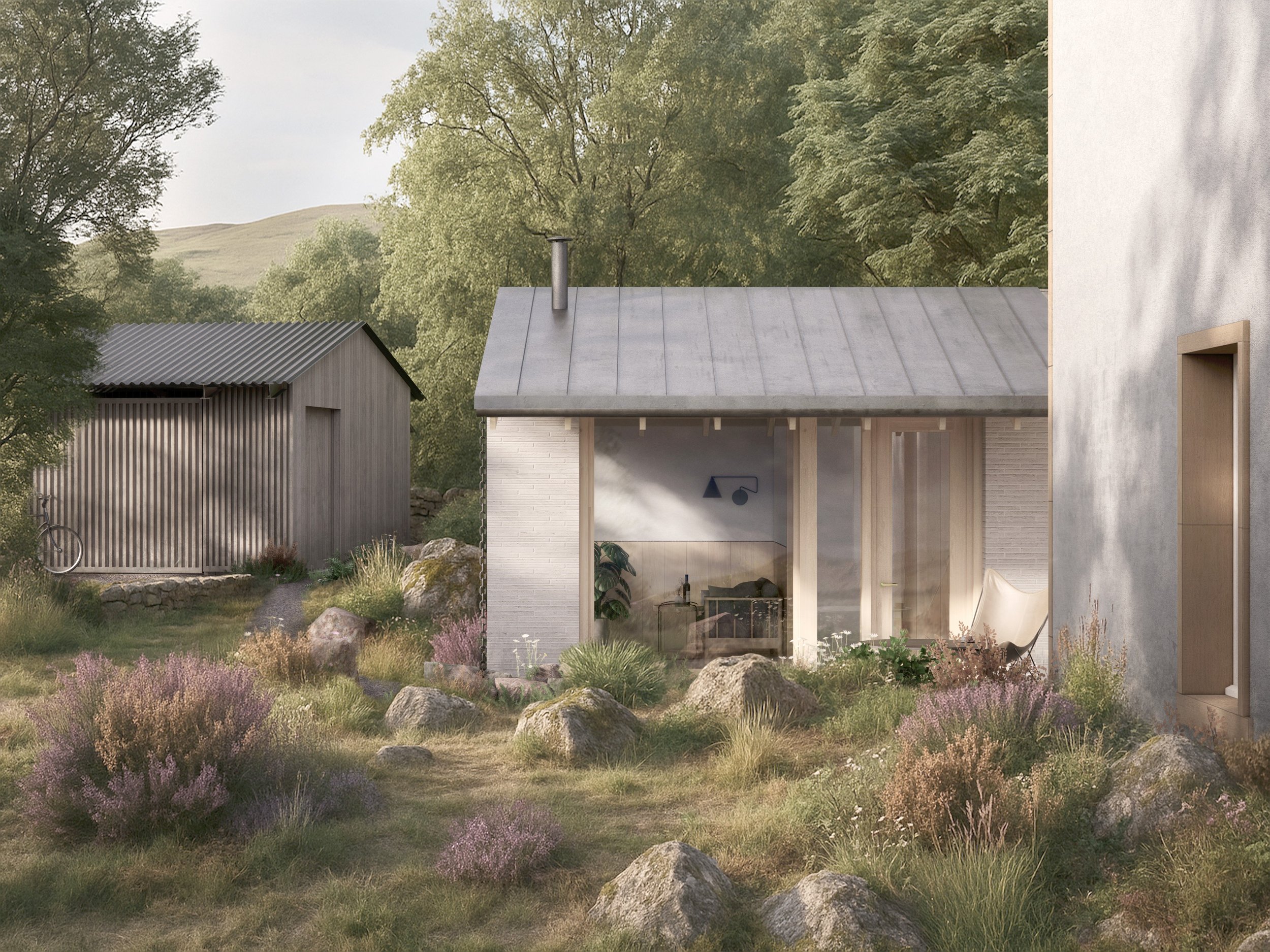


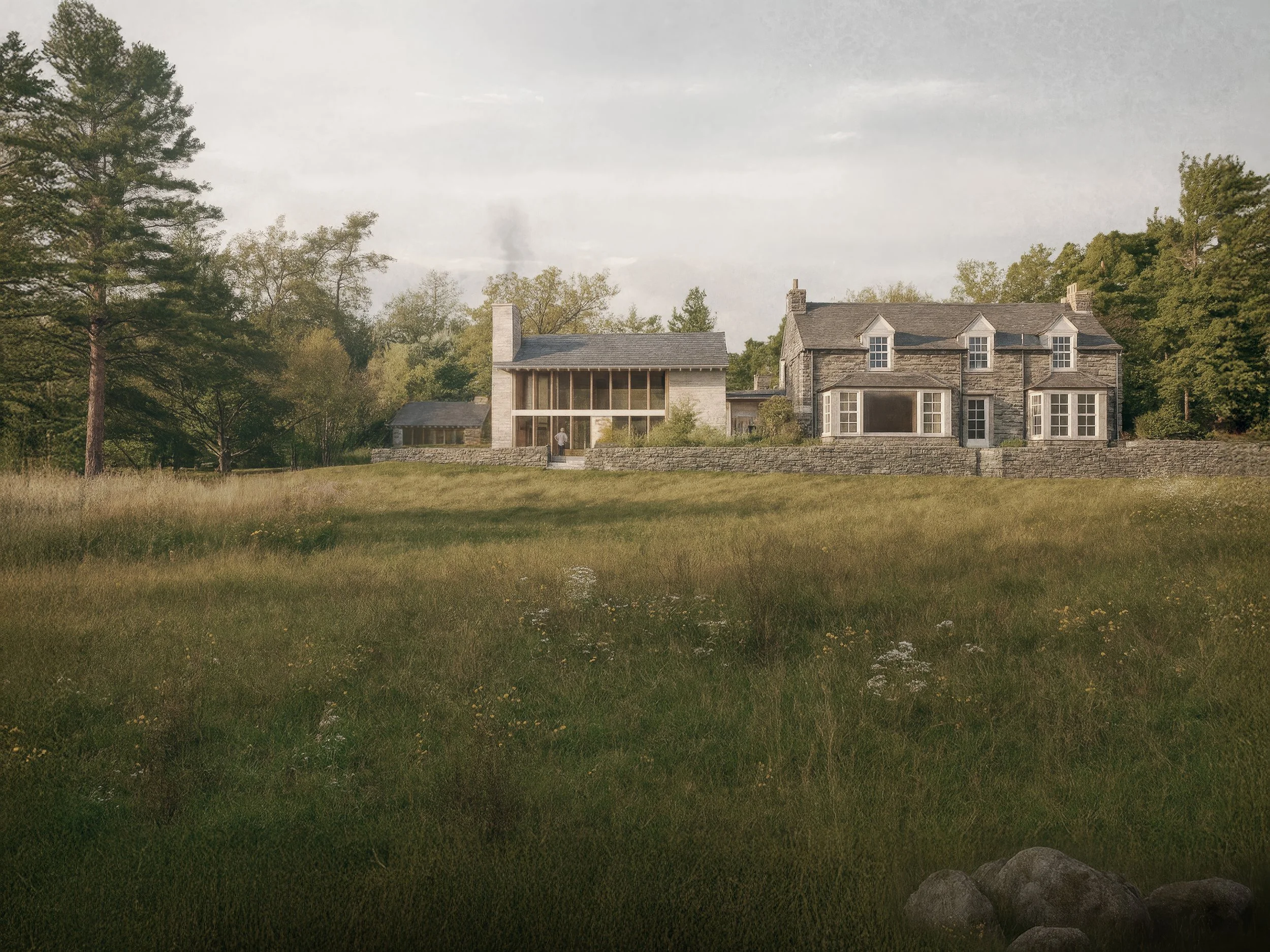
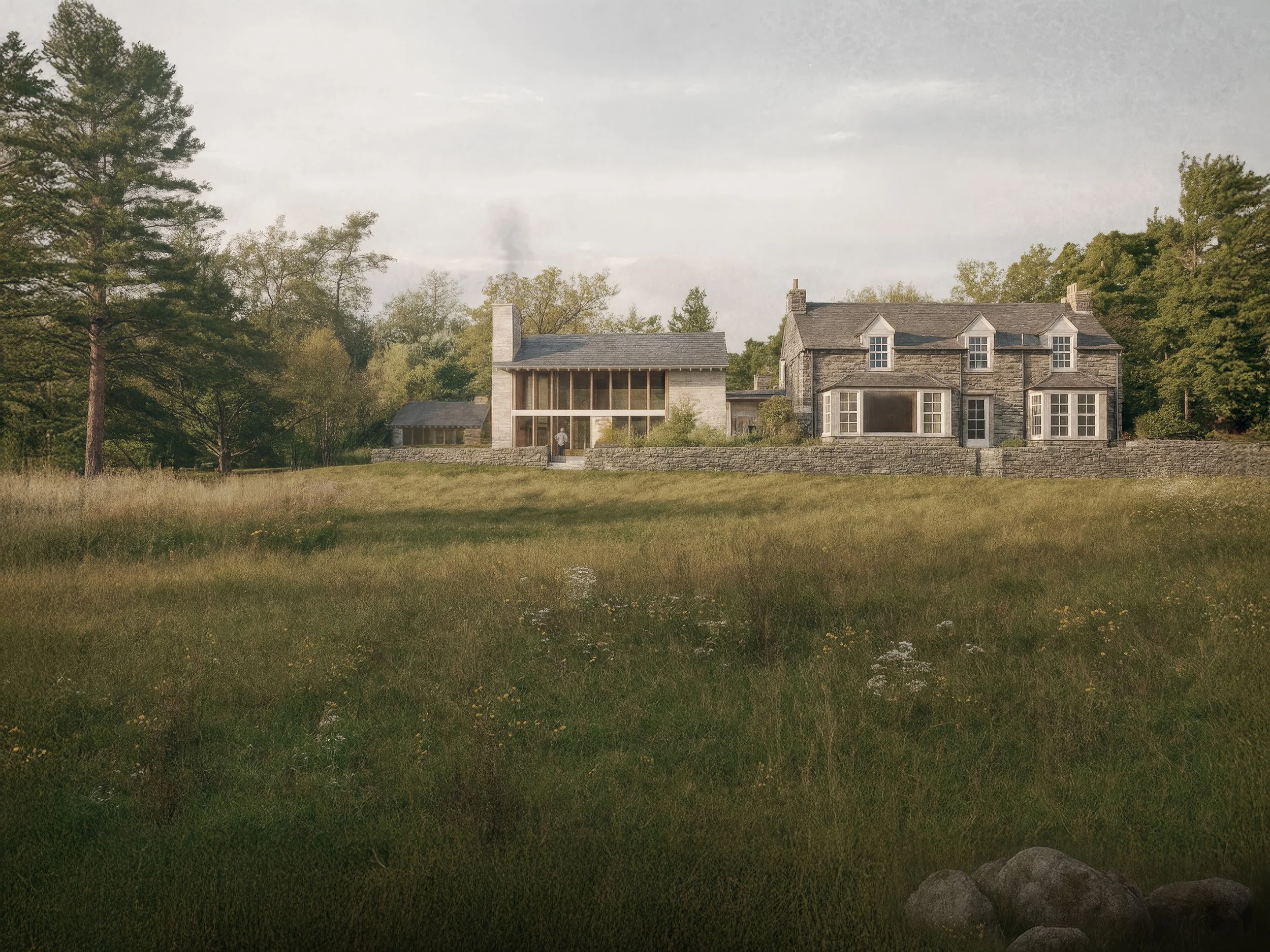
The refurbishment and extension of a farmhouse in the Cheviot Hills.
The project strengthens the relationship between the house and its landscape, introducing a new extension that captures views of the surrounding hills while forming a sheltered courtyard to the rear. The extension is arranged to frame the garden and create a series of protected external spaces, allowing the house to engage more directly with its setting.
Oversailing roofs provide shelter and define outdoor areas that can be used throughout the year, extending daily life beyond the internal rooms. A separate garden building incorporates a store and double garage, its form and materiality responding to nearby agricultural structures. Within the existing house, period elements including doors, shutters and joinery are retained and refurbished, with measured alterations improving flow and supporting modern living.
The building is comprehensively upgraded, with insulation introduced to walls, floors and roofs and an air source heat pump providing low-carbon heating. Natural materials are used throughout, ensuring the house performs efficiently while maintaining a close and consistent relationship to the surrounding landscape.
Project page
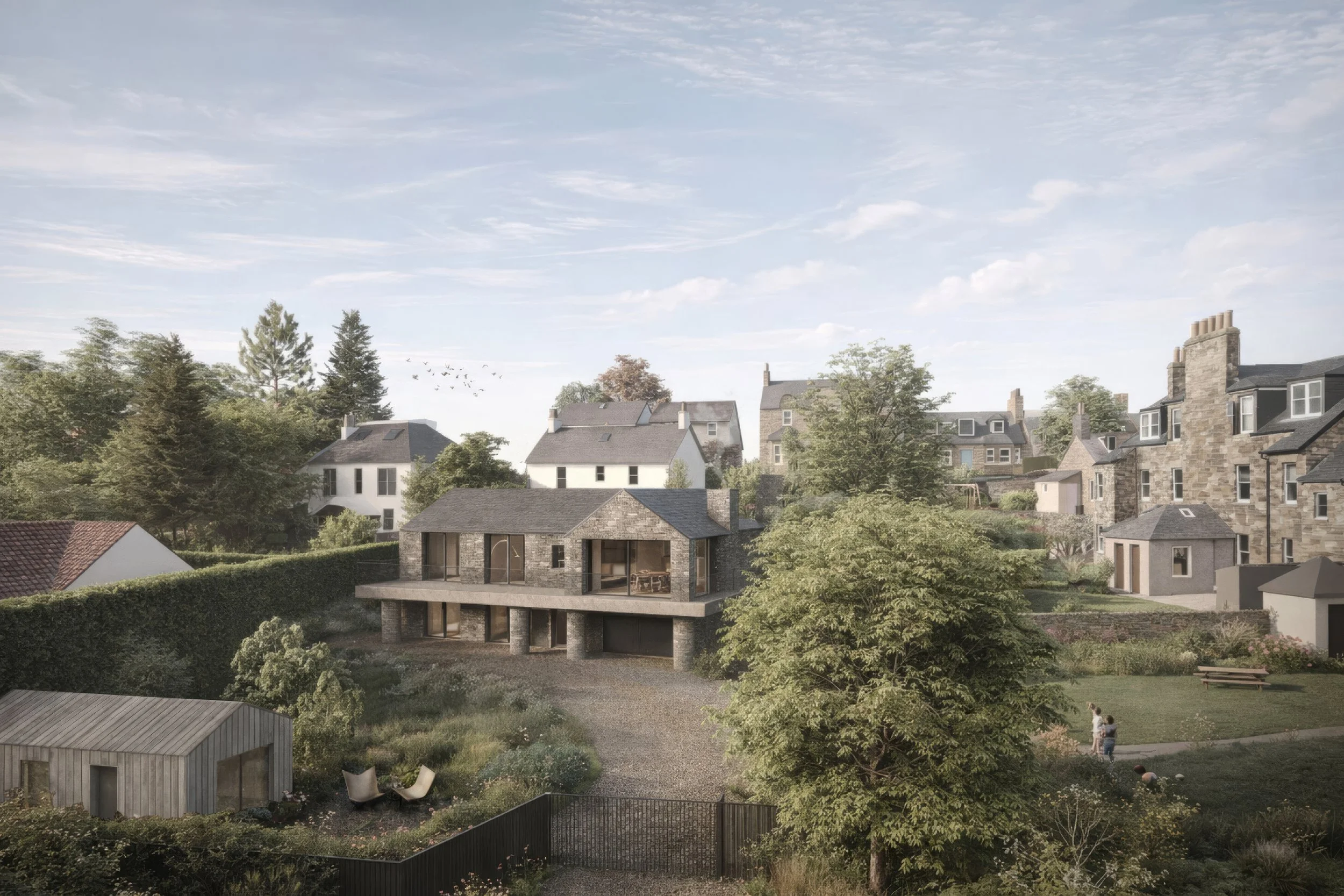
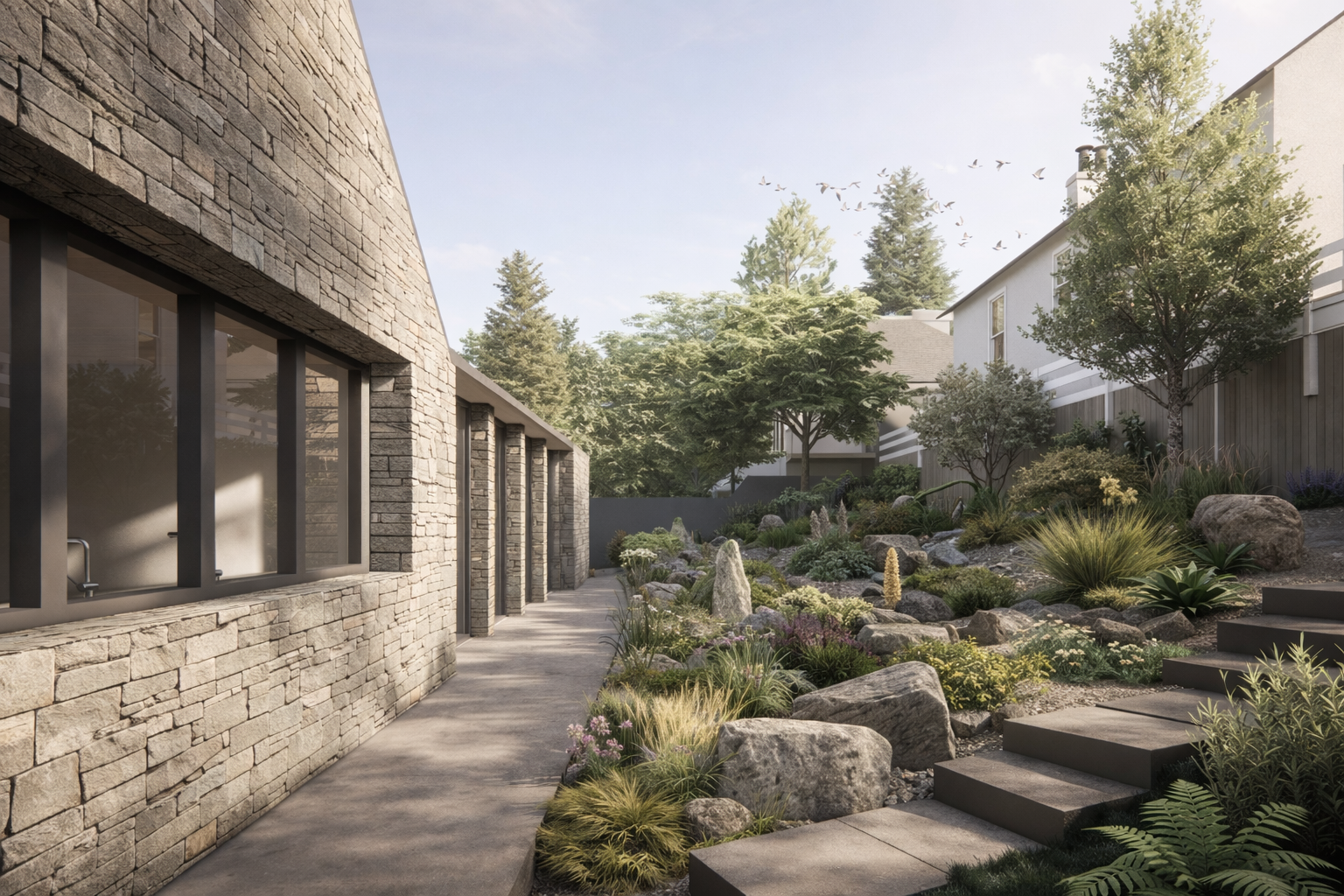
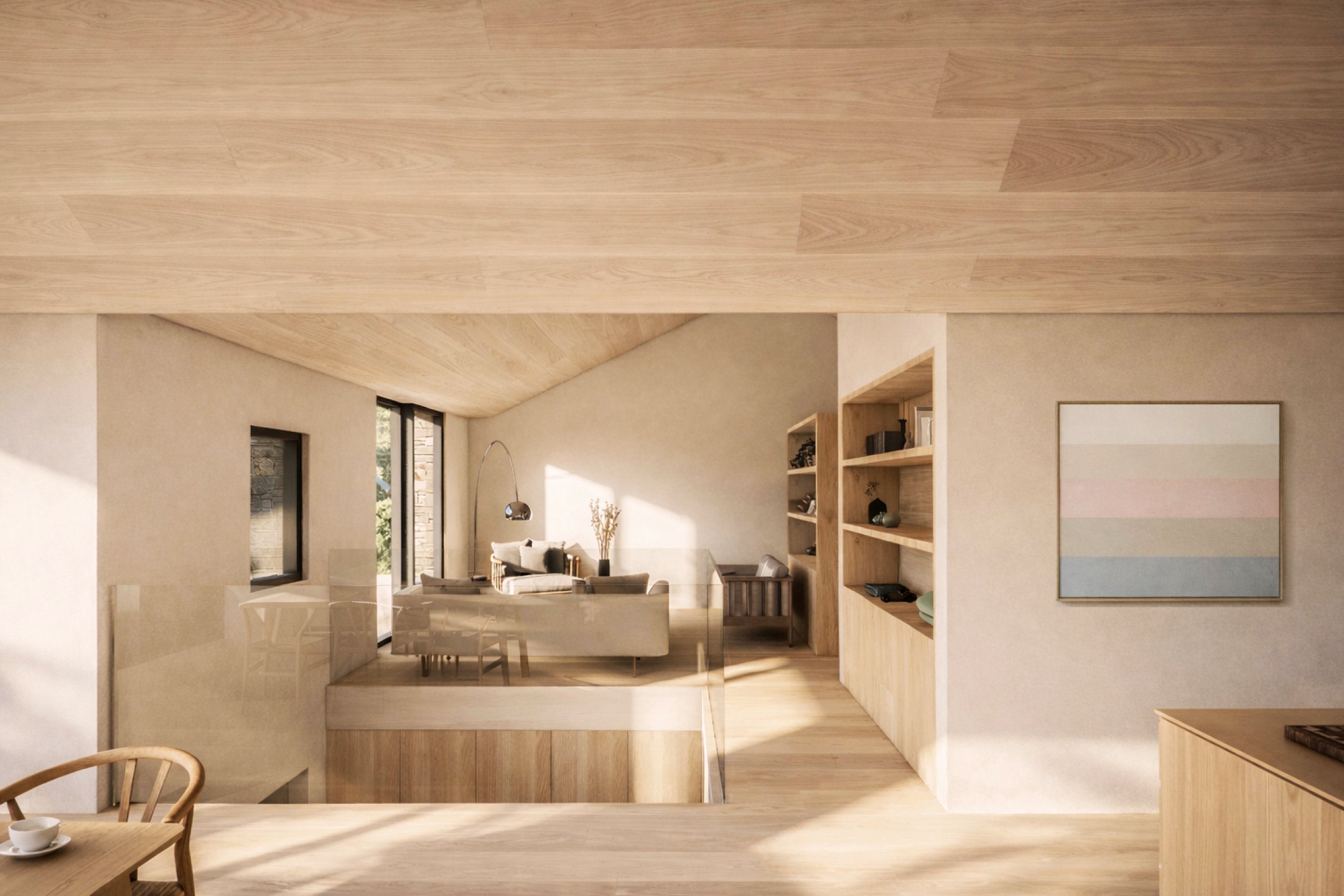
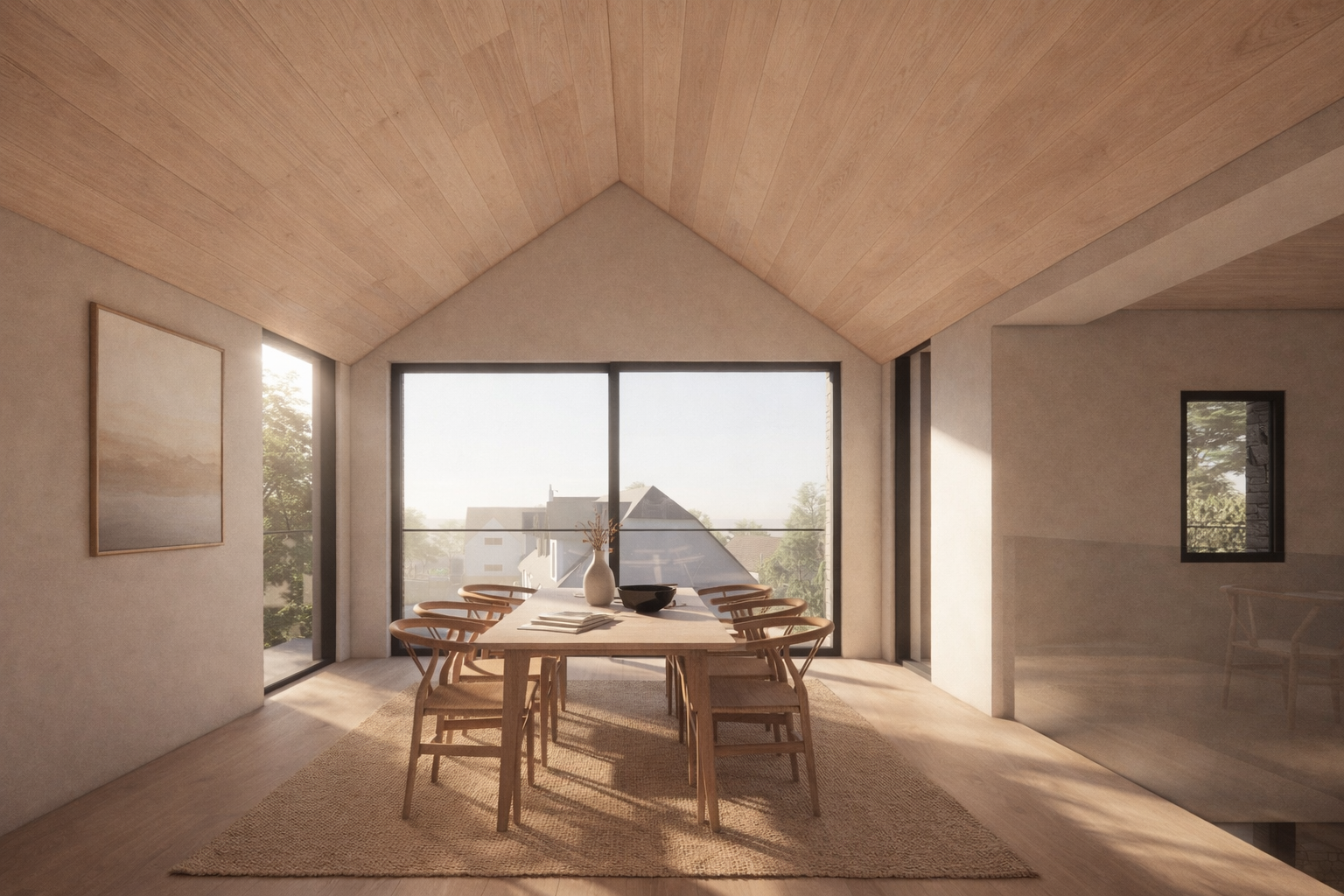
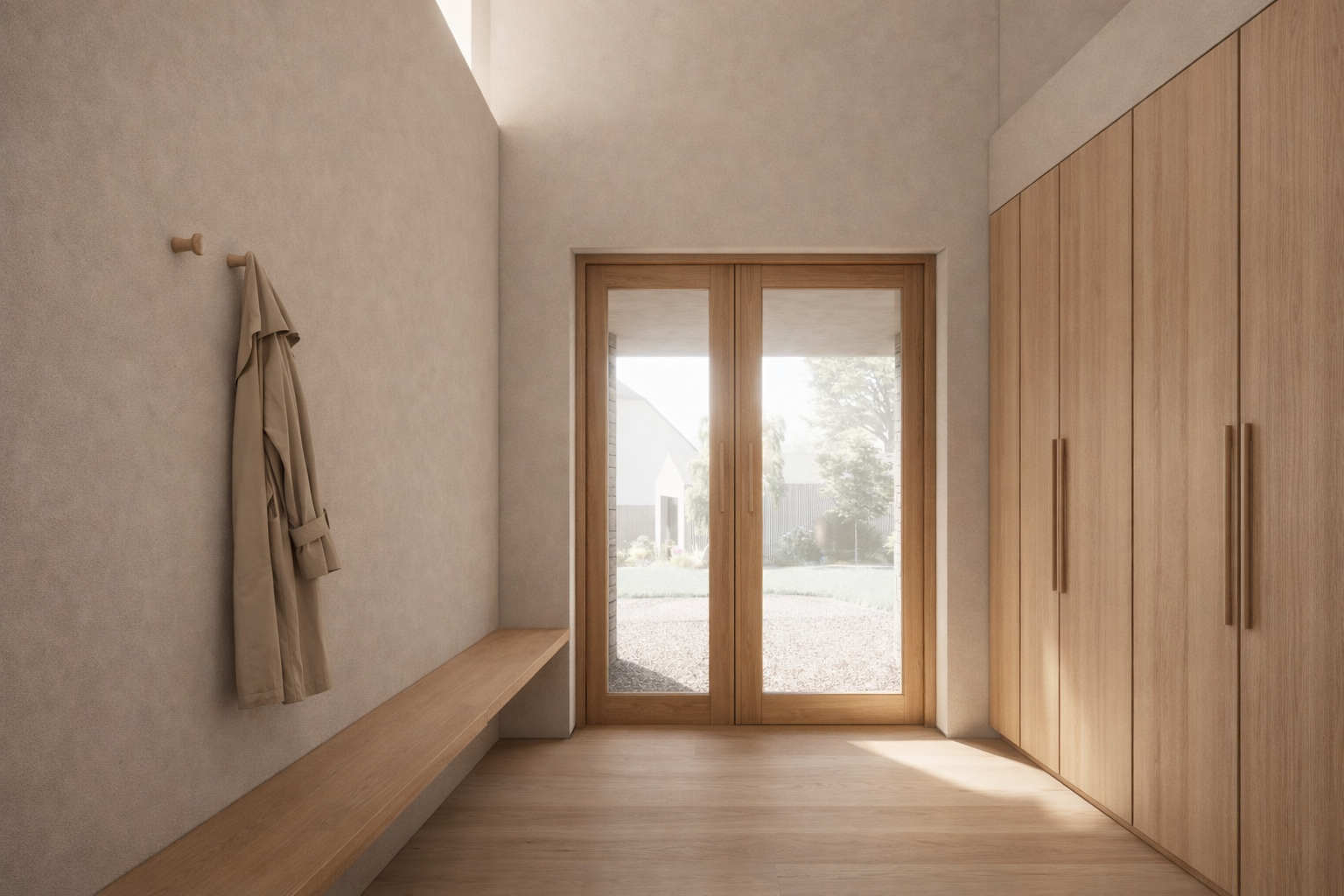
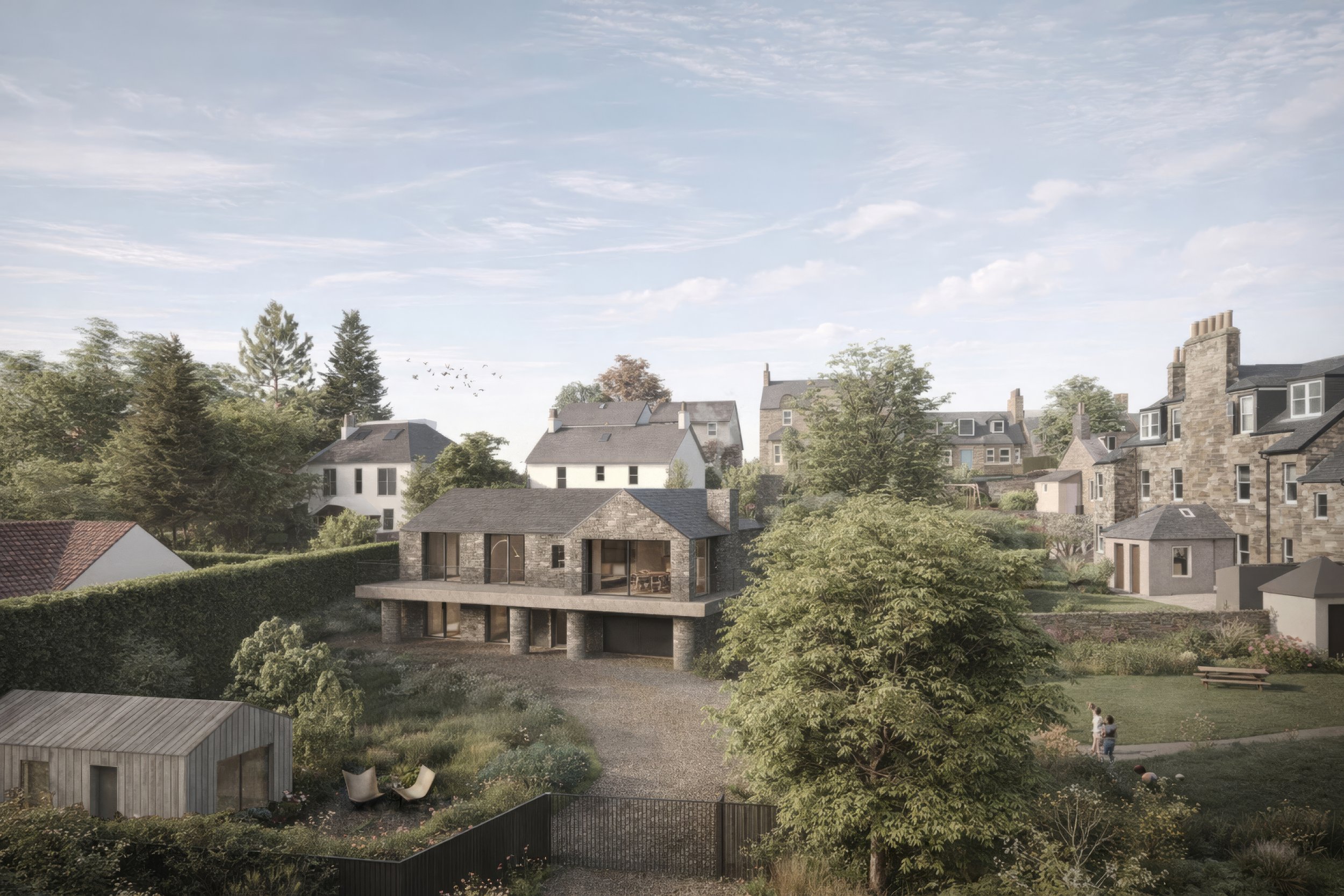
A new family home on a south-facing site beside Lade Braes Walk in St Andrews.
The house replaces a twentieth-century building overlooking the Kinness Burn and is set into the sloping site using a cut-and-fill approach. This forms a robust stone base, expressed as a rubble-like plinth that anchors the building within the terrain while limiting excavation. The building reads as a single storey from Lade Braes Walk and as a two-storey house from below, responding directly to the topography and conservation setting.
Arrival is at lower level, where cylindrical columns define a sheltered threshold beneath a projecting terrace. This undercroft mediates between garden and interior before the house opens to the principal living level. At first floor, a south-facing terrace runs the length of the plan, organising daily life and opening views across the garden and towards the hills beyond.
Secondary bedrooms and service spaces are set below, partially embedded within the hillside and opening onto sheltered garden areas. A palette of rubble stone and timber gives the building a grounded presence, with openings drawing light into the plan and maintaining a close connection to the landscape.
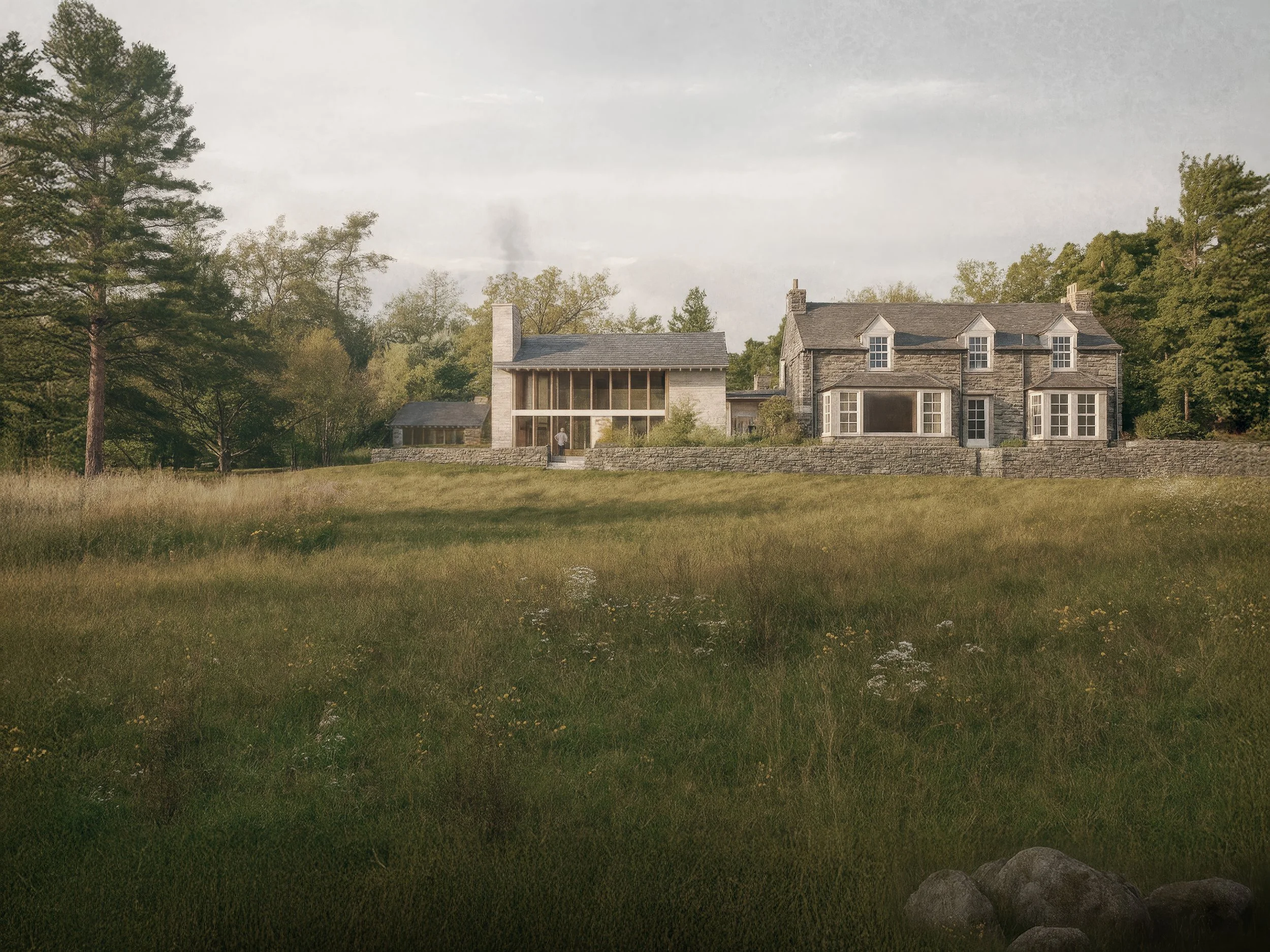
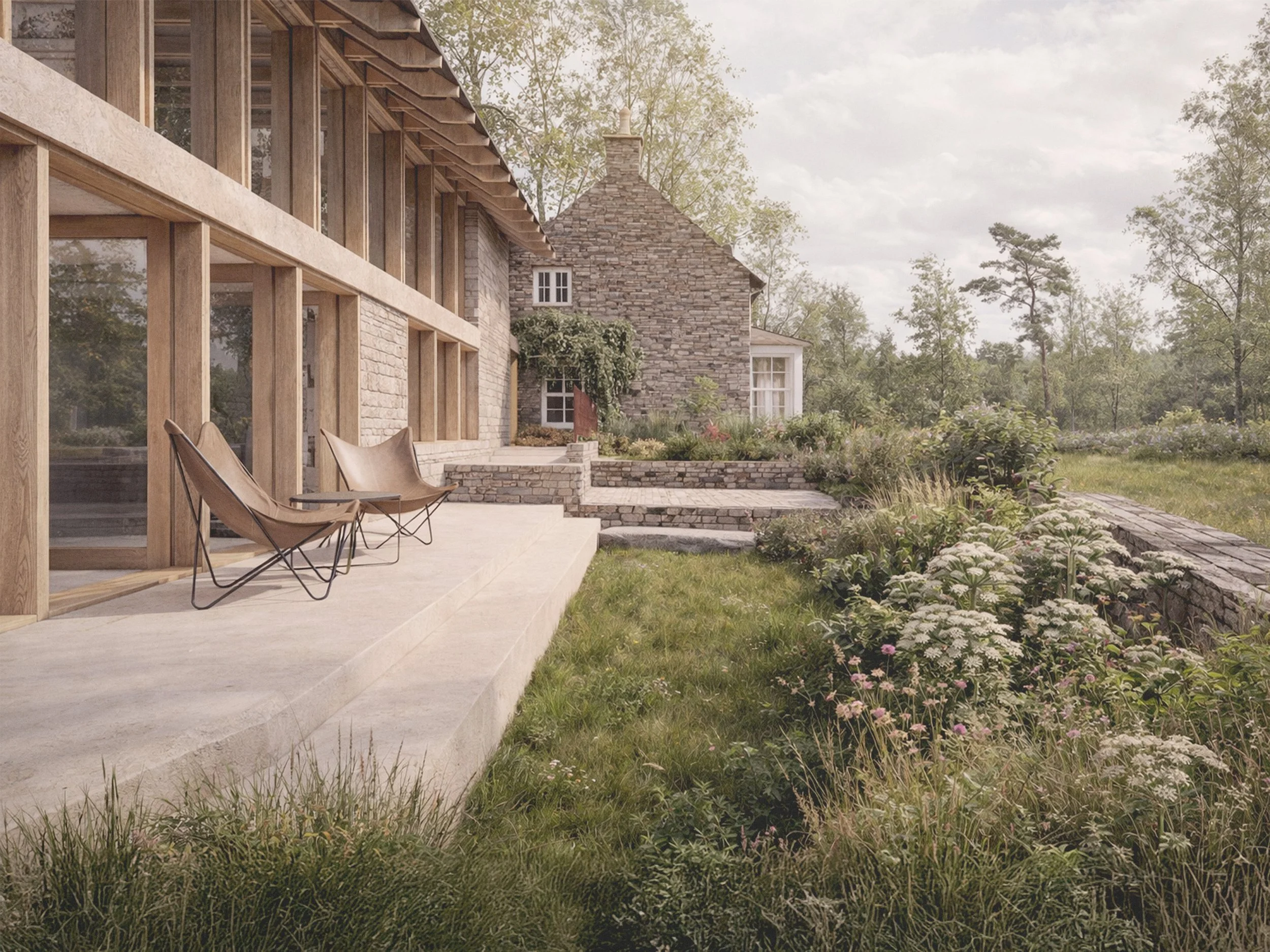
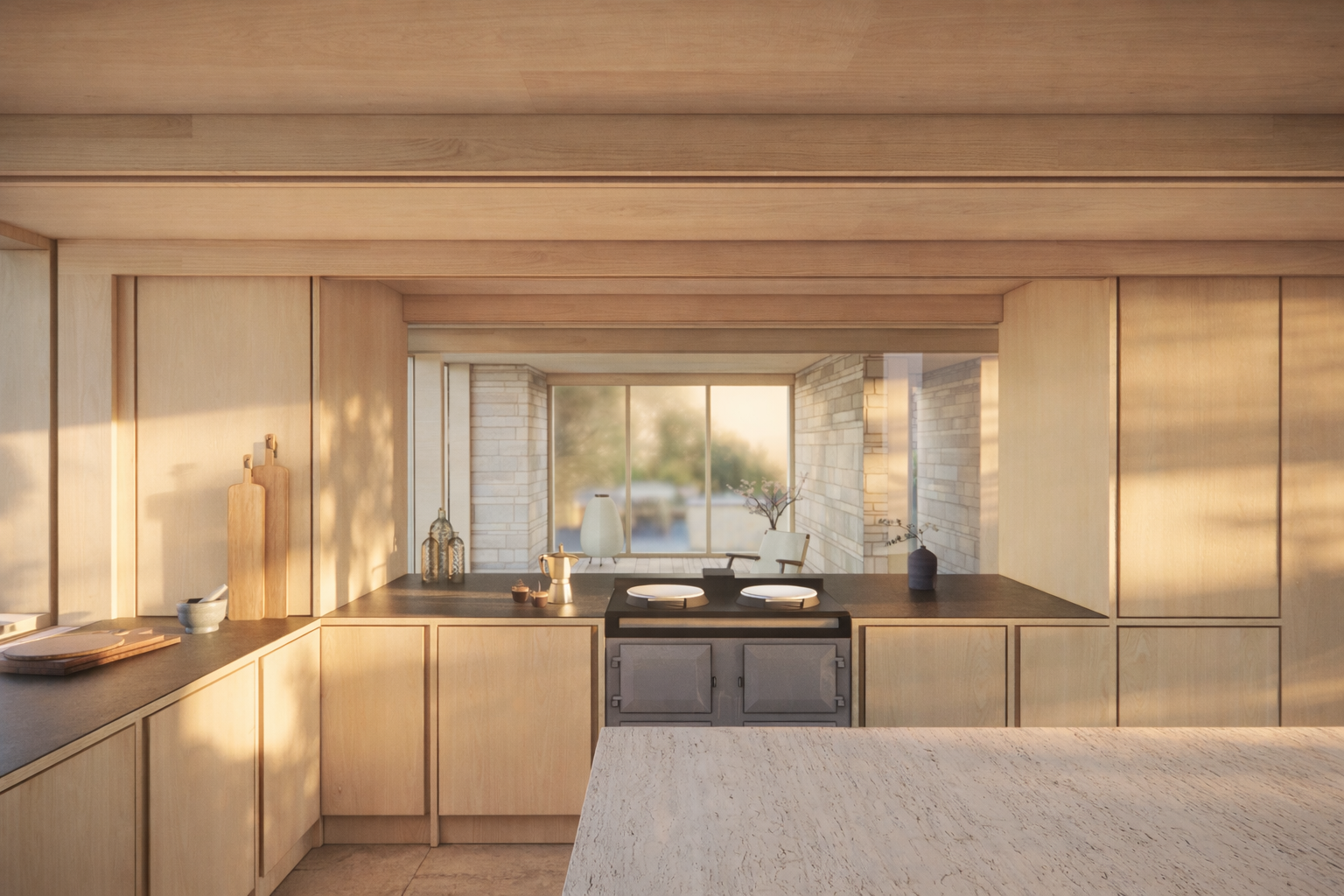
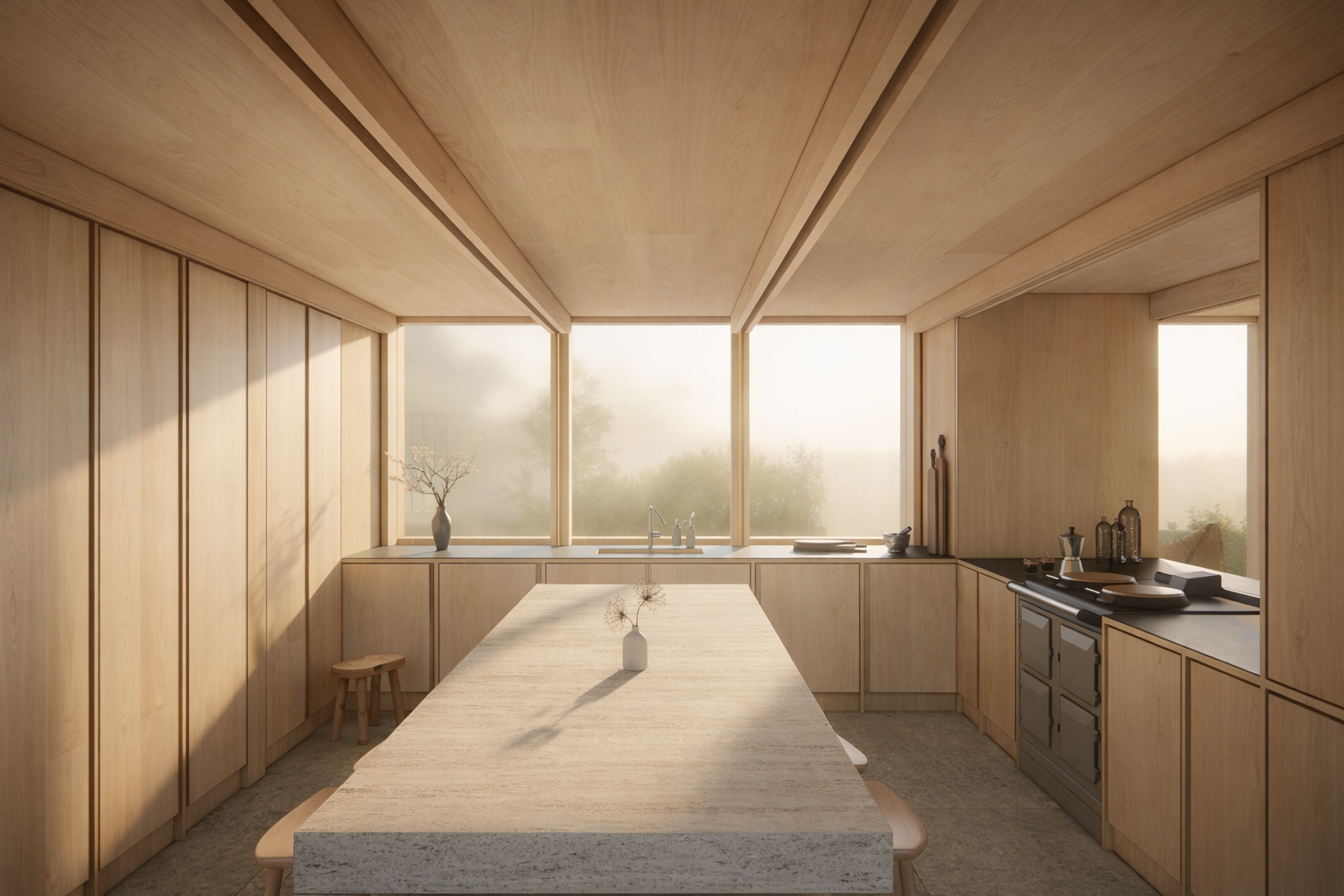
The restoration and renewal of a rural estate near Aberfoyle in the Trossachs.
The project brings together the refurbishment, extension and adaptation of a number of existing buildings, including a Victorian hunting lodge, cruck-frame barn, stables, boathouse and a series of ancillary structures. Each is approached in response to its condition and significance, with the aim of bringing the estate back into coherent and long-term use. New work is introduced in a measured way, allowing the character of the original buildings to remain prominent.
Repairs follow established conservation methods, with careful attention to stonework, roofing, joinery and lime-based materials. Fabric upgrades improve comfort and performance, including additional insulation, new floor build-ups and conservation double glazing where appropriate. These interventions are integrated to support continued use while retaining the integrity of the existing fabric.
The estate is supported by a transition to low-carbon systems, including heat pumps, photovoltaics and battery storage. Together, these measures ensure the buildings remain durable and adaptable, supporting a working estate that is closely connected to its landscape.
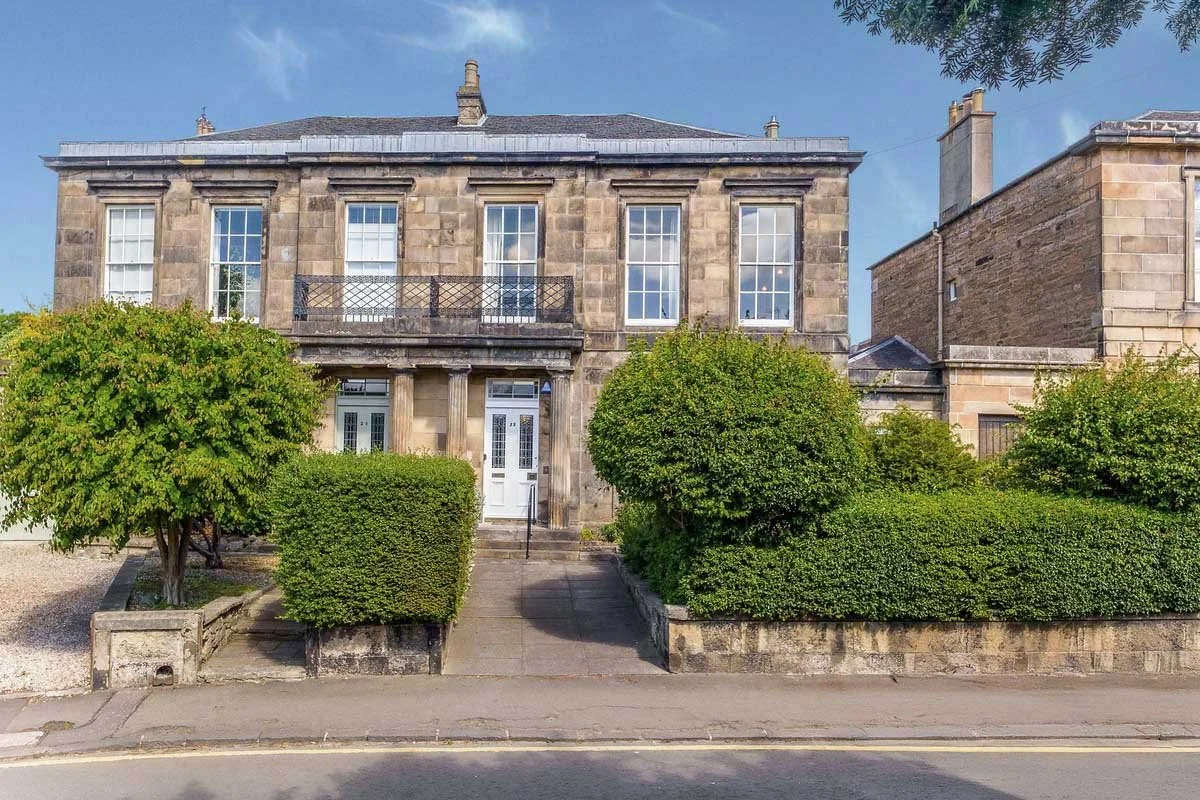
The repair and careful upgrading of a Category B listed house in Edinburgh’s Blacket Conservation Area.
This early nineteenth-century semi-detached house sits within Edinburgh’s Blacket Conservation Area. The project repairs and upgrades the Category B listed building to support its continued use as a family home, improving its comfort and performance while retaining its original character.
The main work is concentrated at basement level, where prolonged damp and water ingress have left the rooms unsuitable for use. Later linings, services and fittings are removed so that the underlying fabric can be repaired. A specialist waterproofing system, new floor construction and internal finishes allow the basement to provide a bedroom, sitting room, shower room and a small kitchenette reinstated in the original kitchen location.
Elsewhere, limited internal alterations make the house easier to use. A new opening creates a larger dining space at ground level, while the removal of later additions restores clearer relationships between rooms and floors.
External work is similarly restrained. Timber sash and case windows are repaired and upgraded with slimline double glazing. An unsafe balcony at the rear is removed and its door opening reused for a new sash and case window, bringing greater coherence to the elevation. Localised stone repairs, lime mortar repointing and like-for-like slate repairs complete the conservation work.
The project addresses long-standing defects while retaining the scale, hierarchy and architectural character of the house.
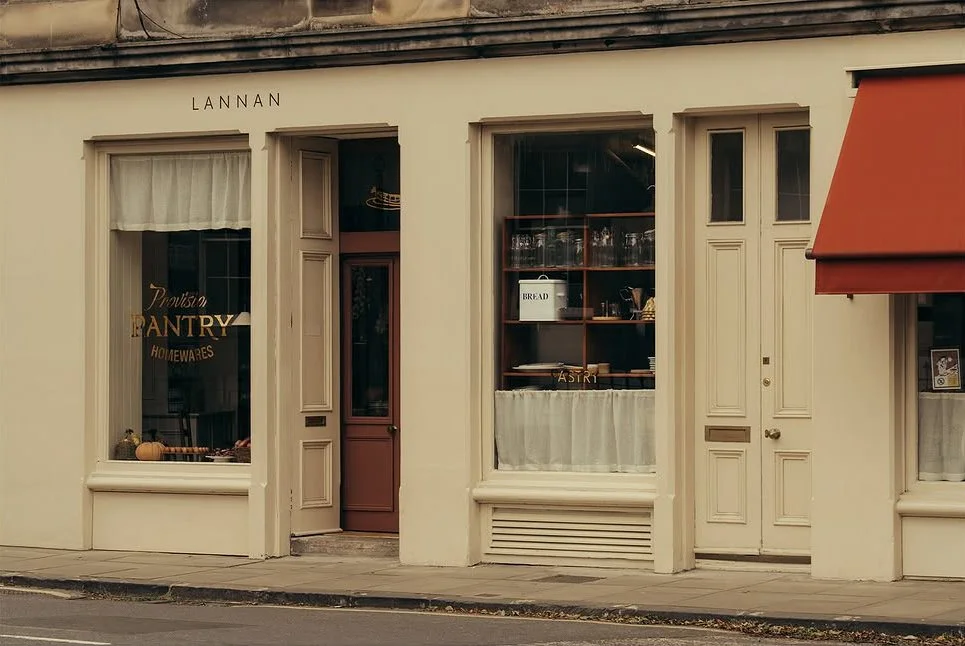
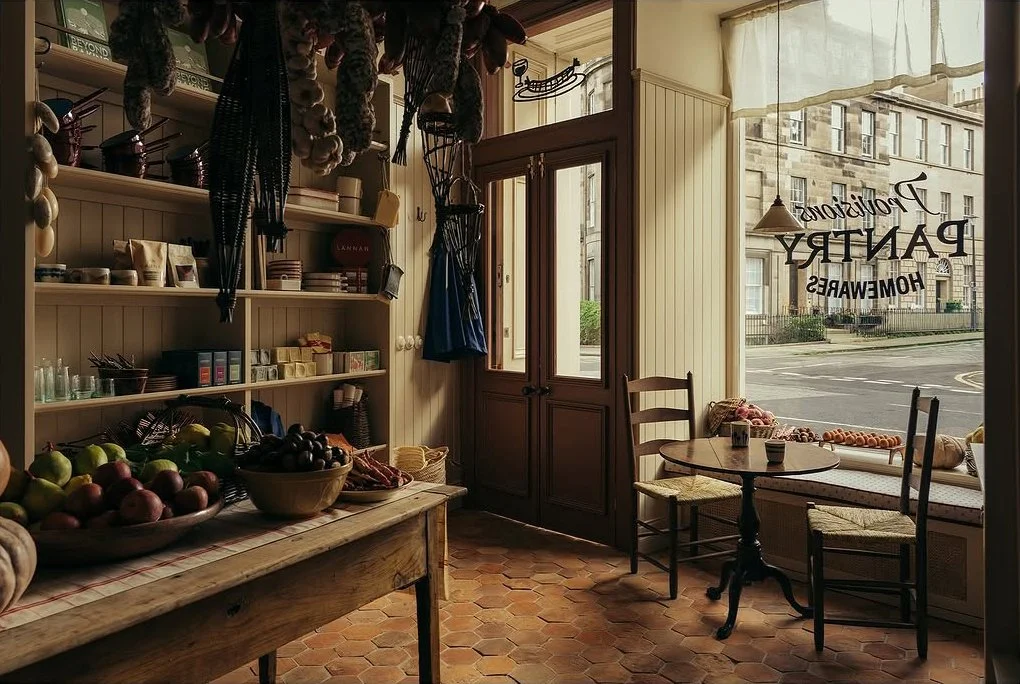
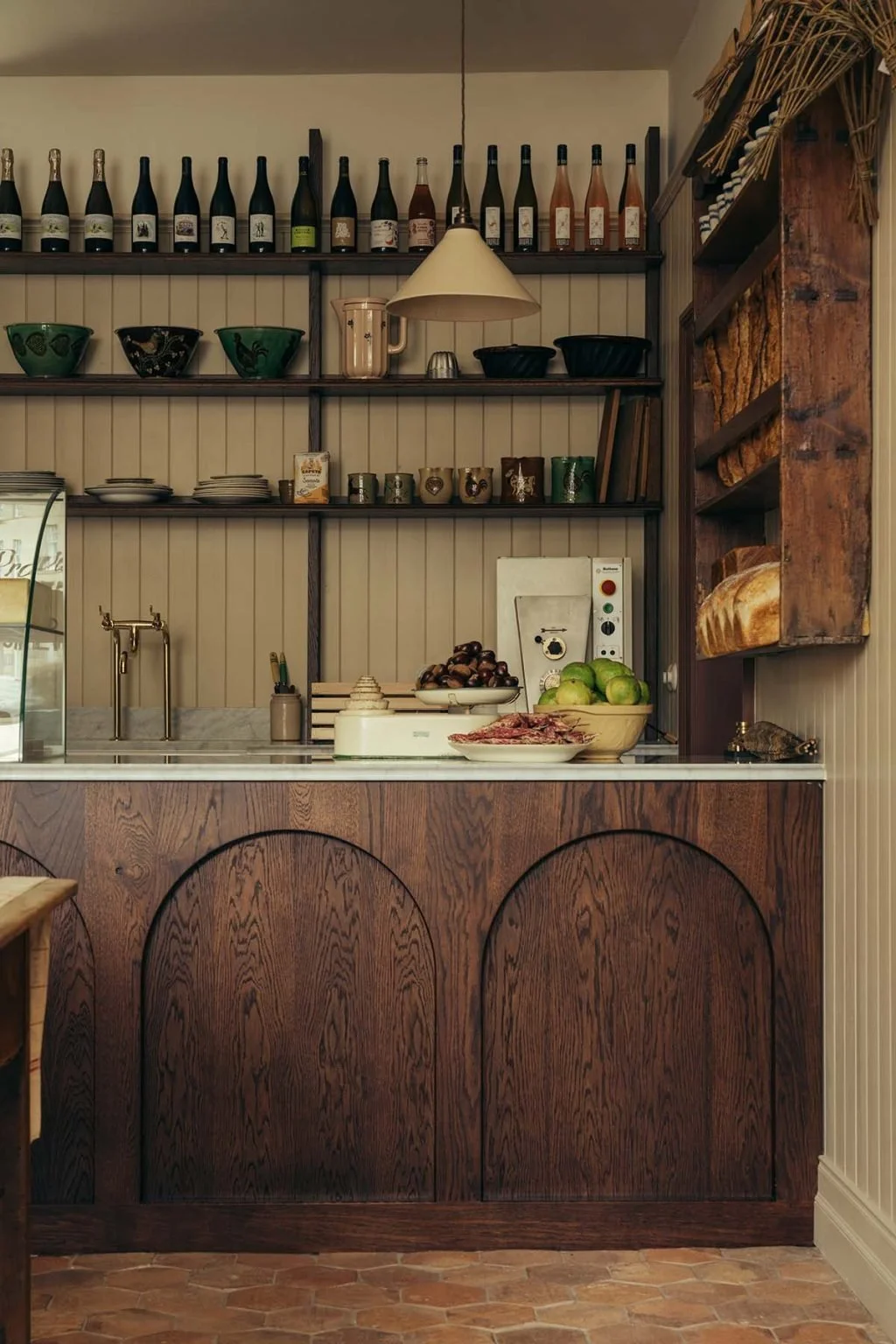
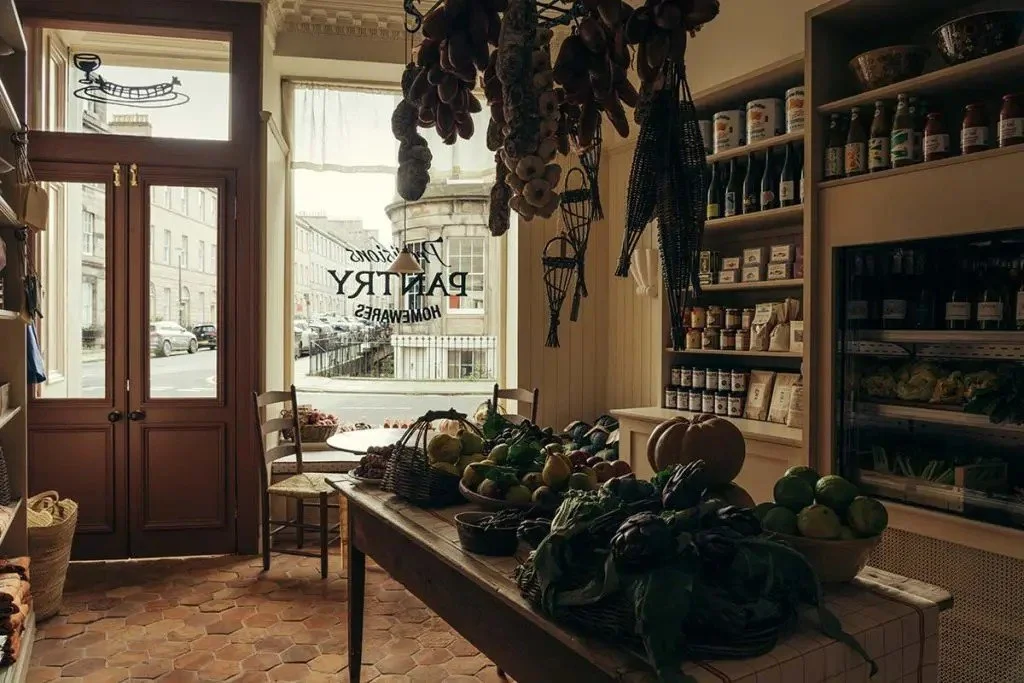
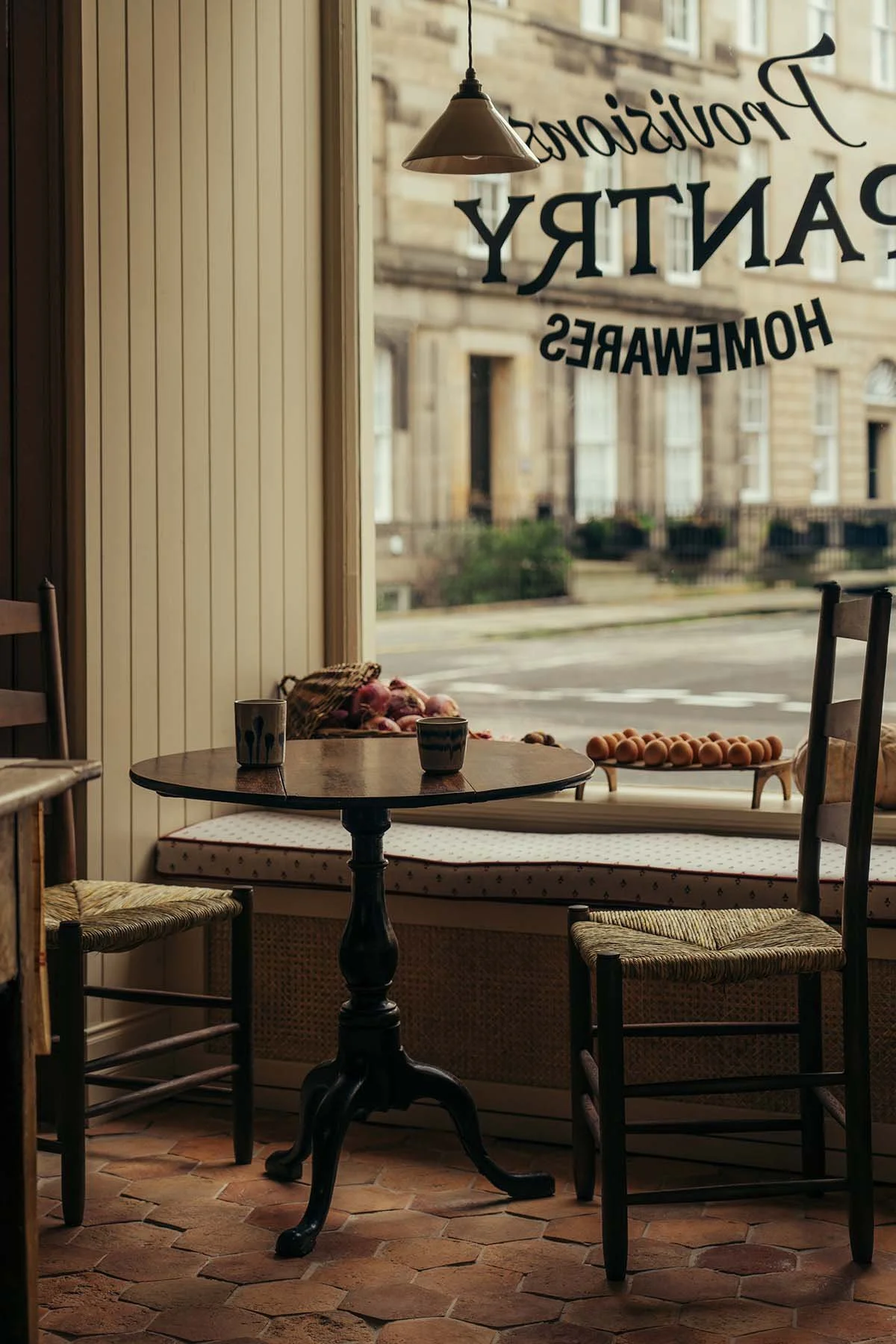
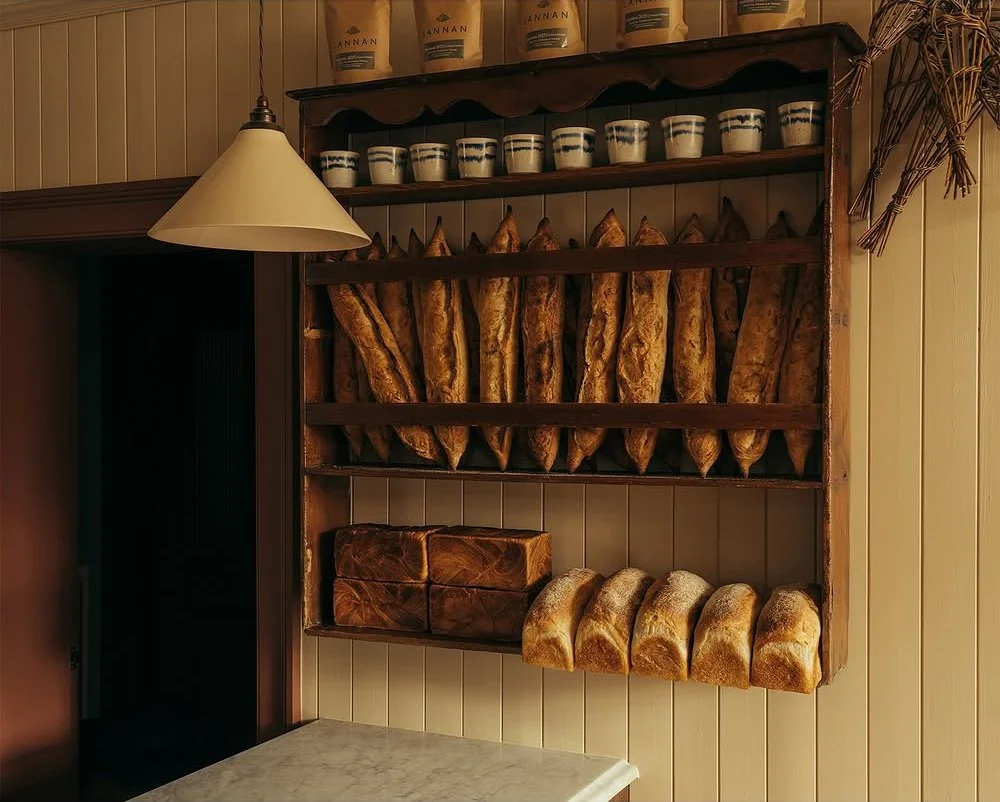
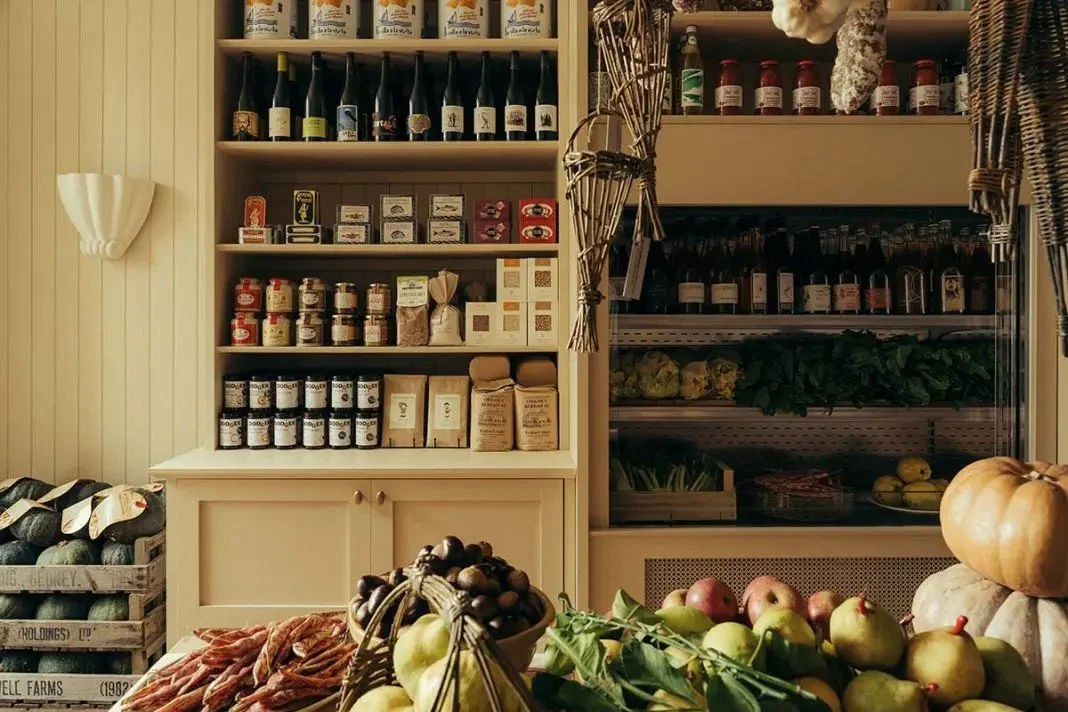
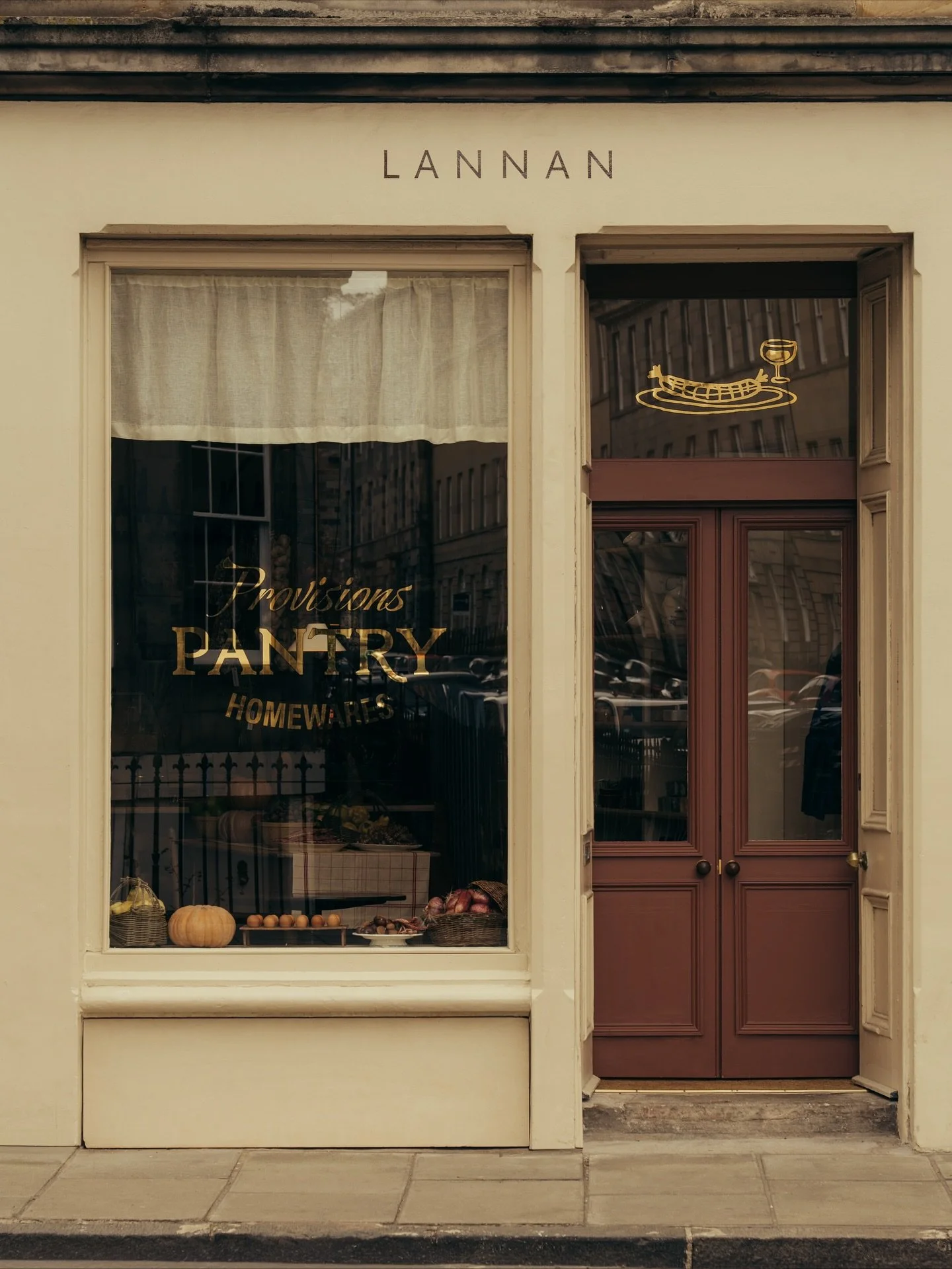
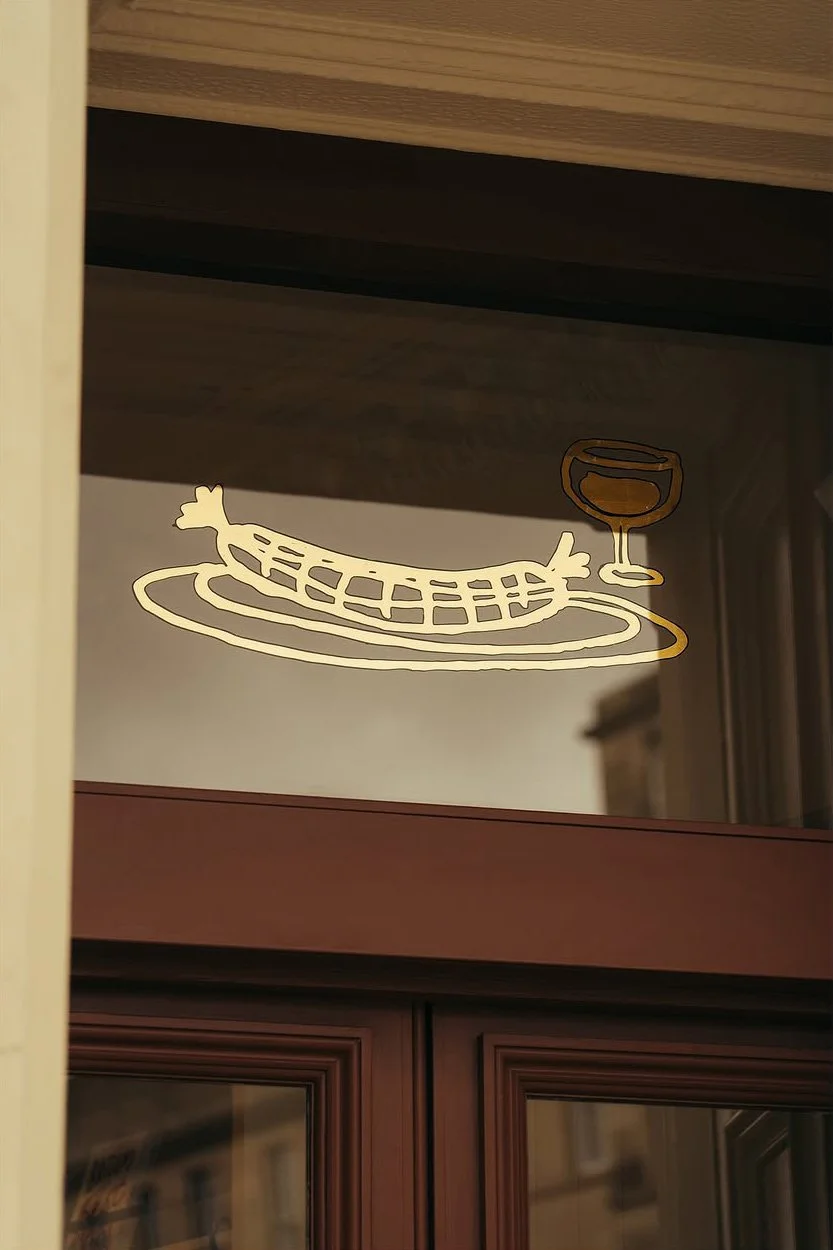
Planning and building warrant support for a new pantry and shop beside Lannan Bakery in Stockbridge.
Lannan Pantry occupies a shop unit on Hamilton Place, next door to Lannan Bakery. Created by proprietor Darcie Maher, the space brings together provisions and homewares from selected producers across the UK, France and beyond. It also provides a setting for events and a collection point for bakery pre-orders.
Ossian supported the project through the planning and building warrant stages, working alongside the wider team to secure the statutory consents needed for the new use and fit-out.
The interior was designed by Rodi & Cécile Studio and delivered by Splintr. A palette of timber, stainless steel, patterned flooring and deep red surfaces gives the pantry a warm and informal character. Display shelving and counters are integrated throughout, allowing food, tableware and other objects to fill the space without losing the clarity of the interior.
Chairs were commissioned by Darcie from The Marchmont Workshop. Branding and typography are by Fed & Watered, illustrations by Hannah Robinson and gilded window signage by Thomas Payne. Structural engineering was provided by Elliott & Company.
Photography by Stephen Lister.
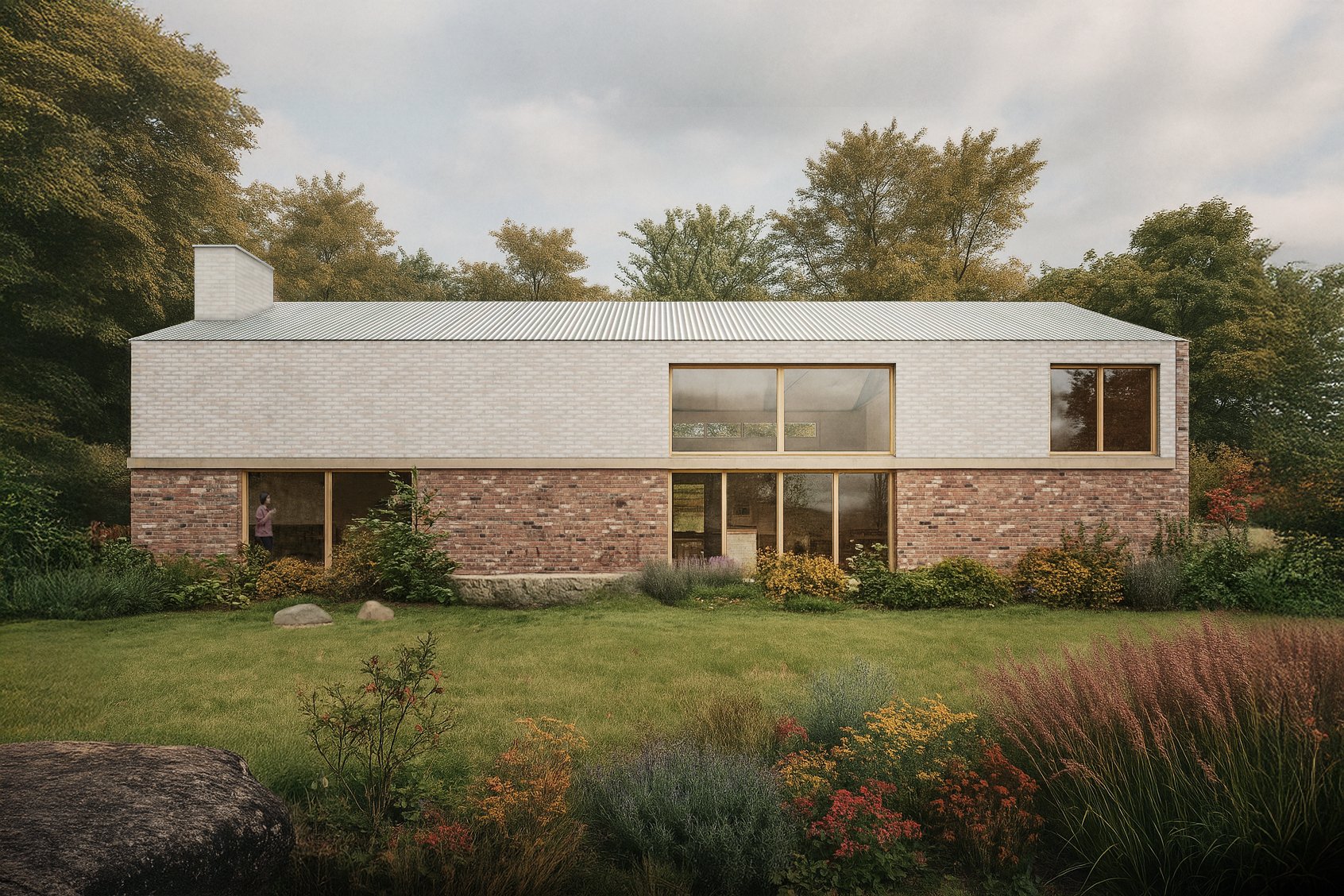
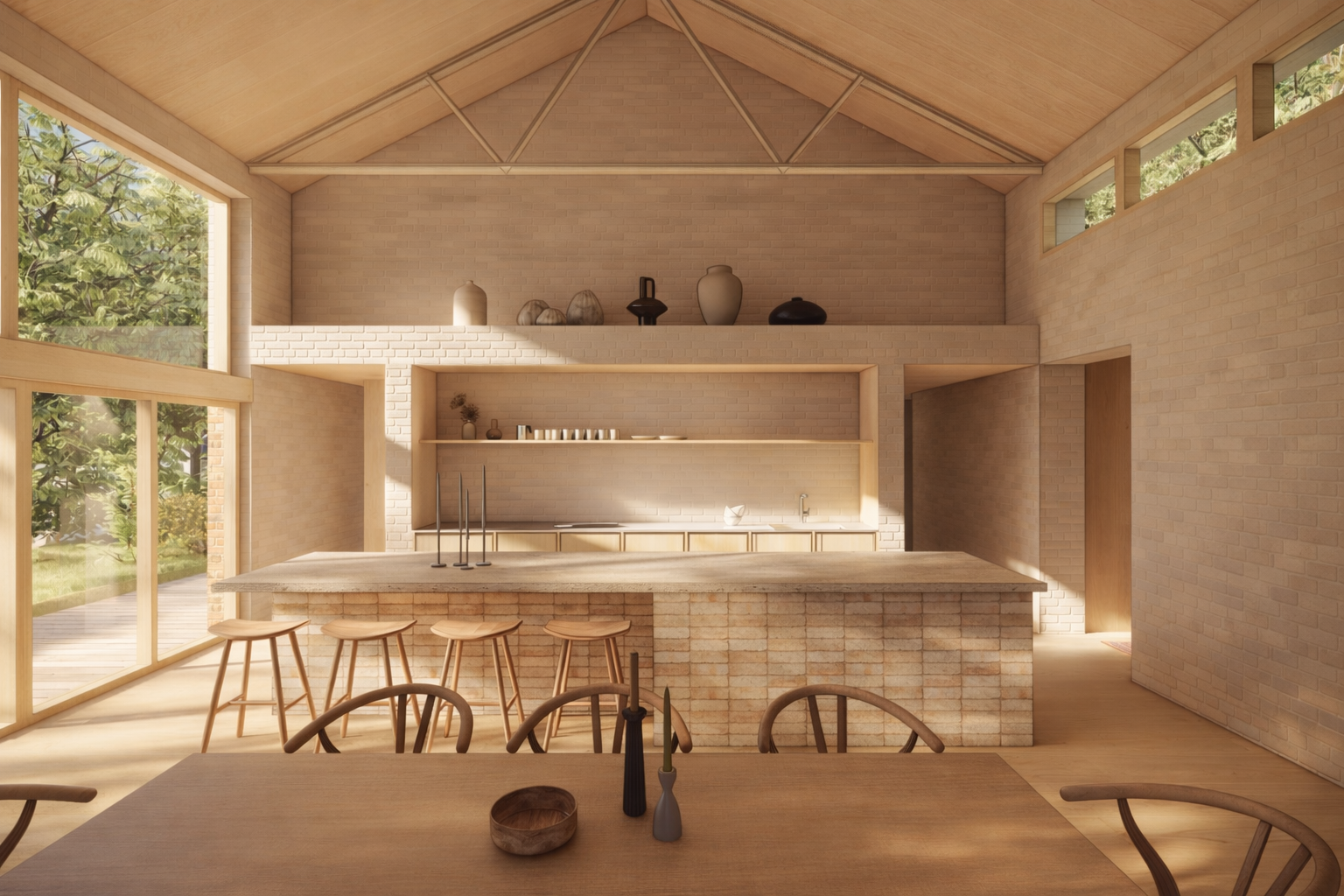
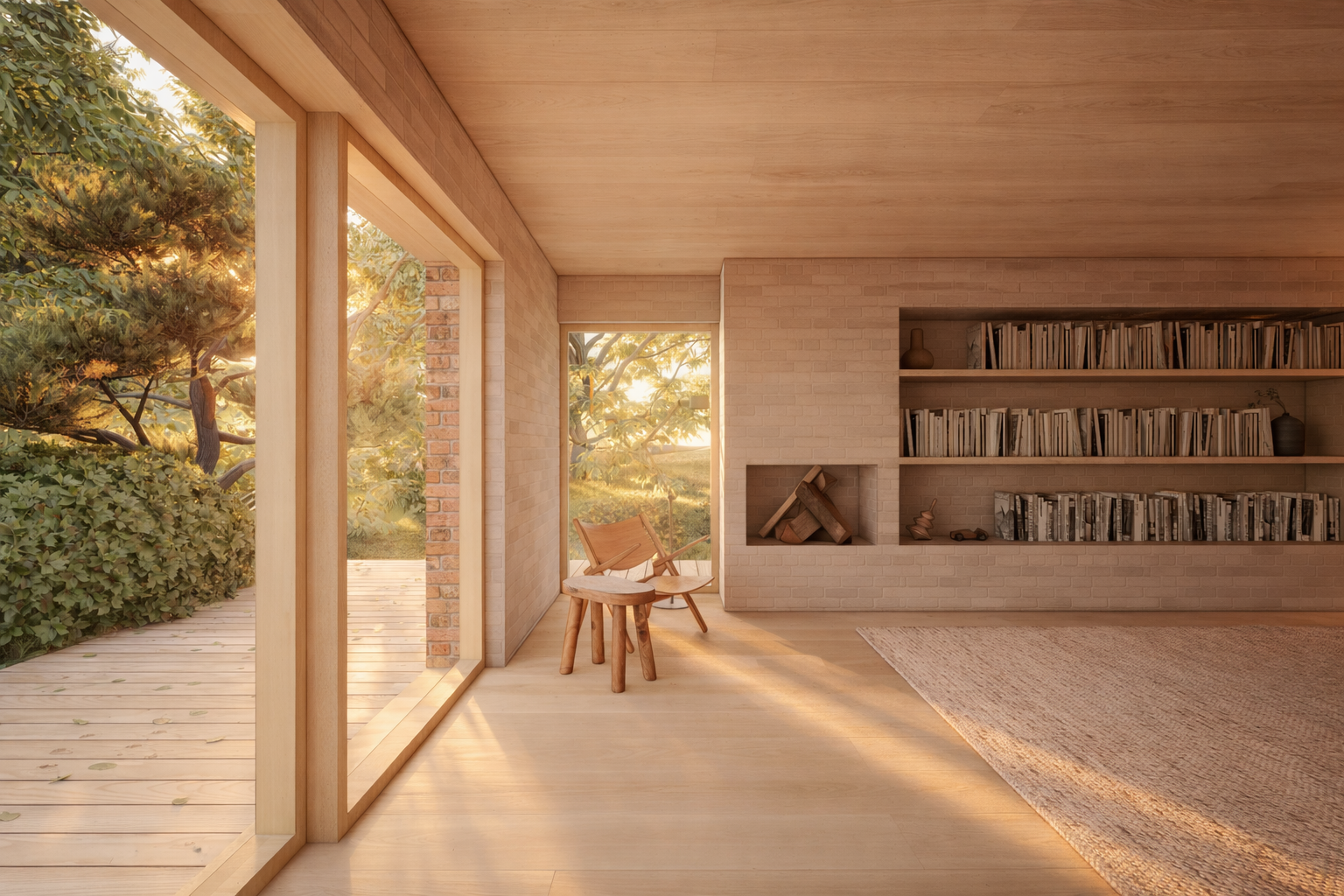
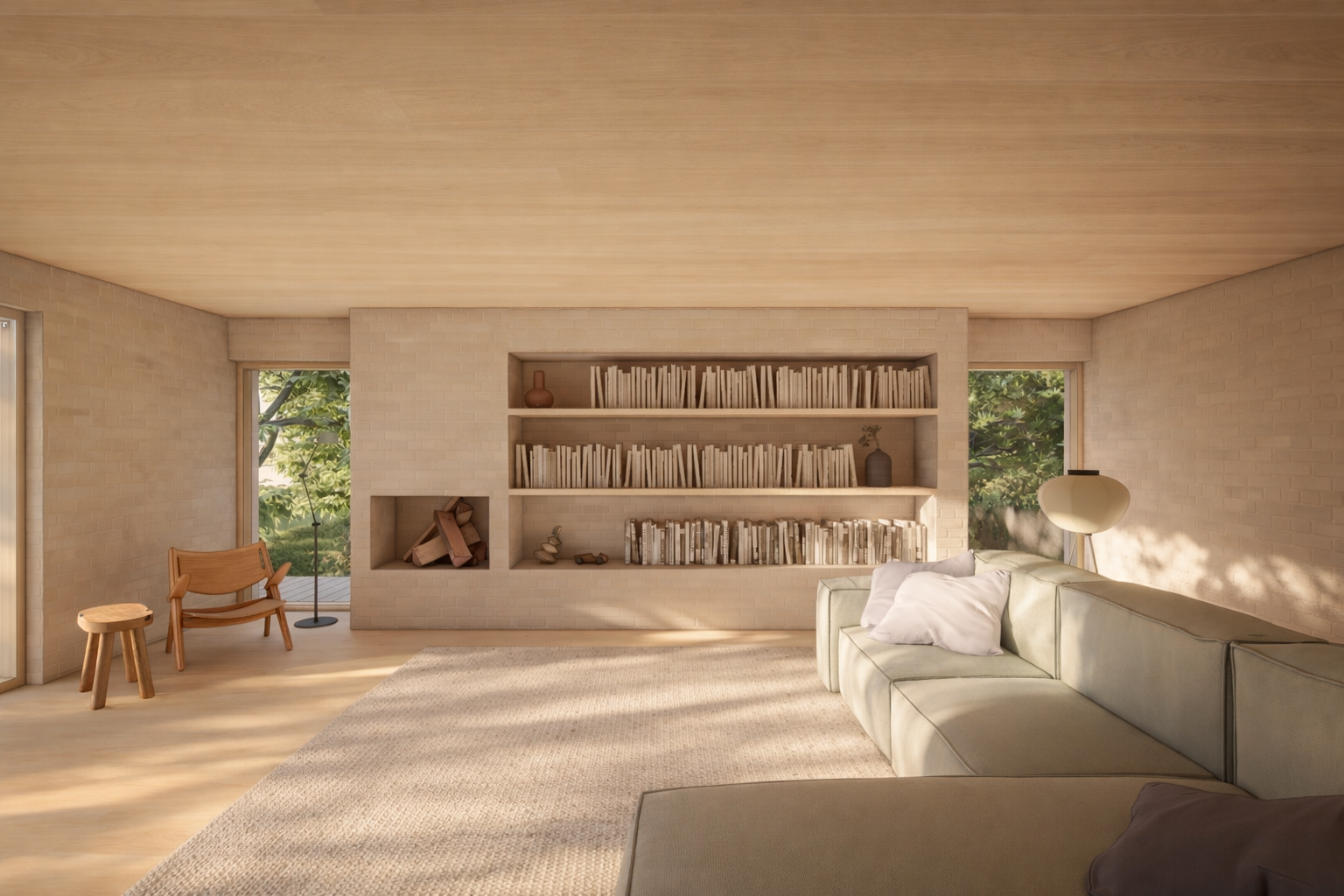
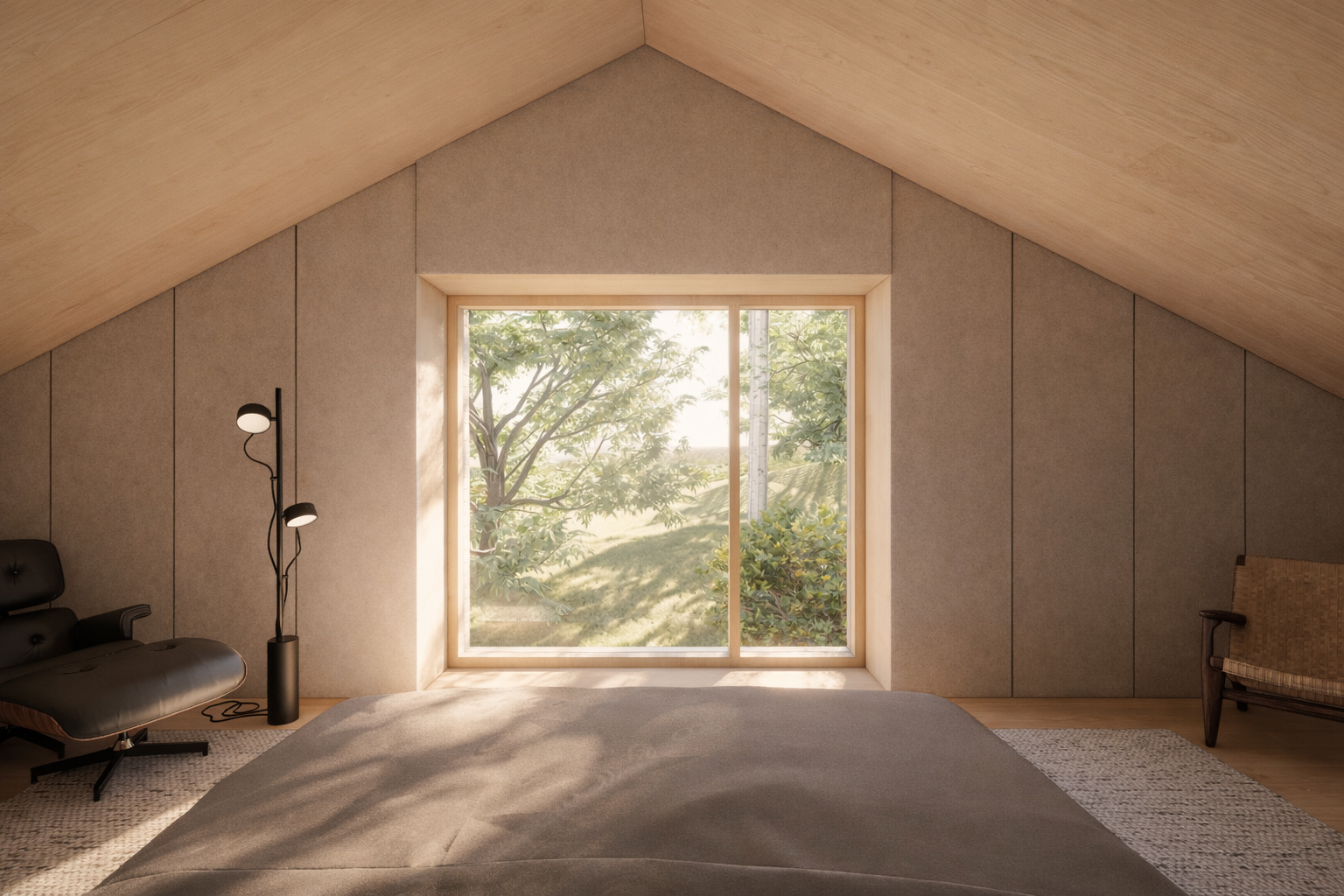
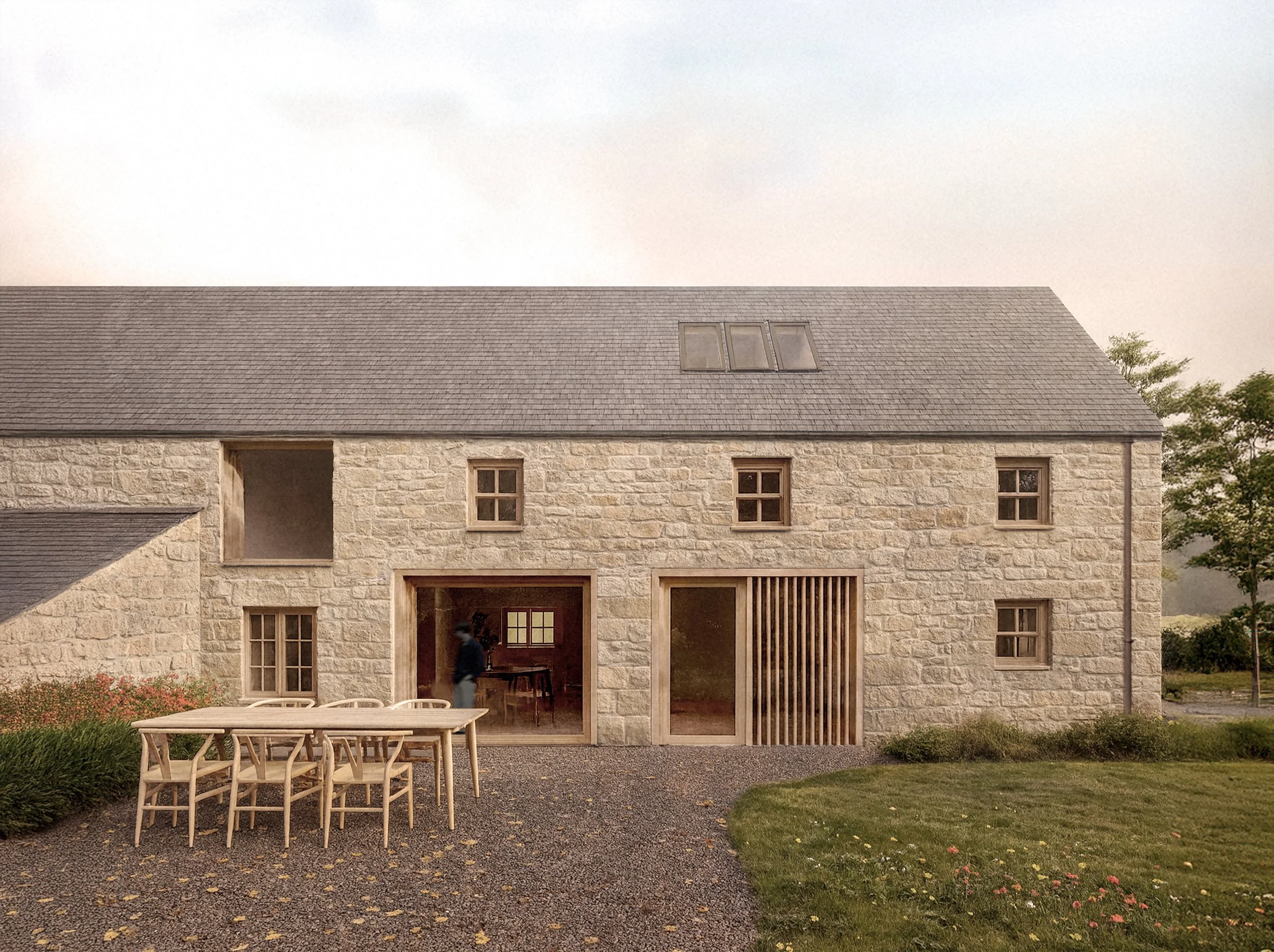
The conversion of an agricultural barn into a family home on the edge of Edinburgh.
The project retains the form, footprint and character of the existing building, adapting it for contemporary living while allowing its agricultural origins to remain legible. The simple geometry of the barn is preserved, with new openings introduced selectively to bring light into the plan and establish a stronger relationship to the surrounding landscape.
Internally, a double-height kitchen and dining space forms the centre of the house, paired with a more enclosed living area. Bedrooms are arranged within the existing lean-to footprint, with a principal suite set within the roof above. The plan balances openness and enclosure, creating a clear sequence of spaces that support everyday family life.
A fabric-first approach underpins the project, with insulation introduced to walls, floors and roof using natural materials. The existing brickwork is retained and repaired, while new elements are introduced in a restrained palette. Landscape interventions, including native planting and a rain garden, extend the house into its setting and support biodiversity.

The retrofit and conversion of a former care home into a family house in North Berwick.
The building is a substantial historic house within the North Berwick Conservation Area. Formerly used as a care home, it is being converted back into a single family home, with planning permission and building warrant approval secured for the work.
The project takes a retrofit-first approach. New insulation and replacement sash and case windows improve the performance of the building fabric, while an air source heat pump reduces reliance on fossil fuels. Discreet photovoltaic panels and electric vehicle charging are also incorporated into the proposals.
Internally, the accommodation is reorganised to create a comfortable and coherent home for a young family. The changes respond to the altered fabric and institutional use of the building while retaining its domestic scale and established character.
External interventions are kept modest. New work is designed to sit quietly alongside the existing house and preserve its contribution to the conservation area. Where possible, alterations are reversible and concentrated in areas that have already been changed.
The house forms part of the leafy western expansion of North Berwick, an area characterised by substantial Victorian, Edwardian and Georgian houses set within mature gardens. The project brings the building back into domestic use while improving its energy performance and securing its long-term future.
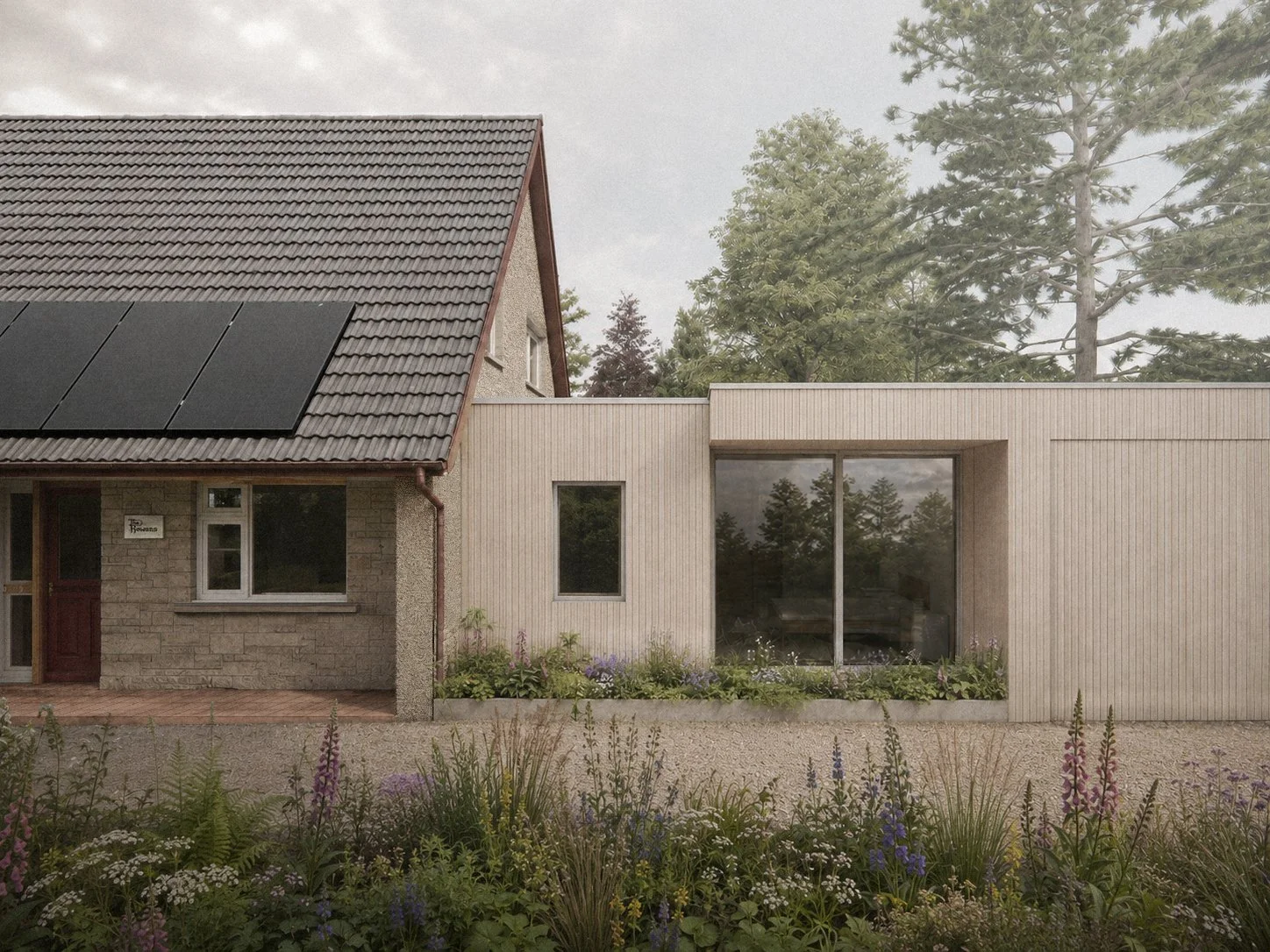
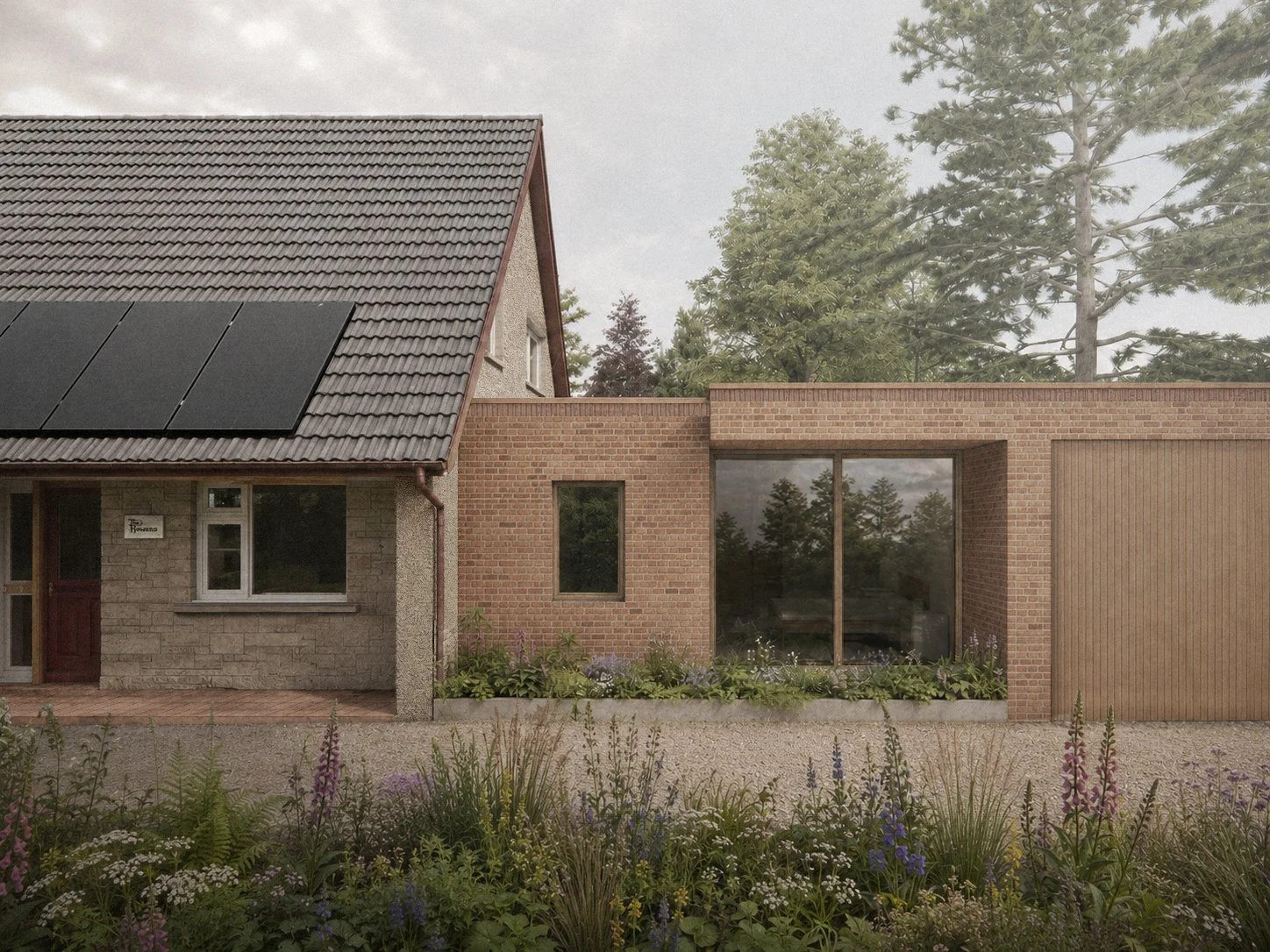
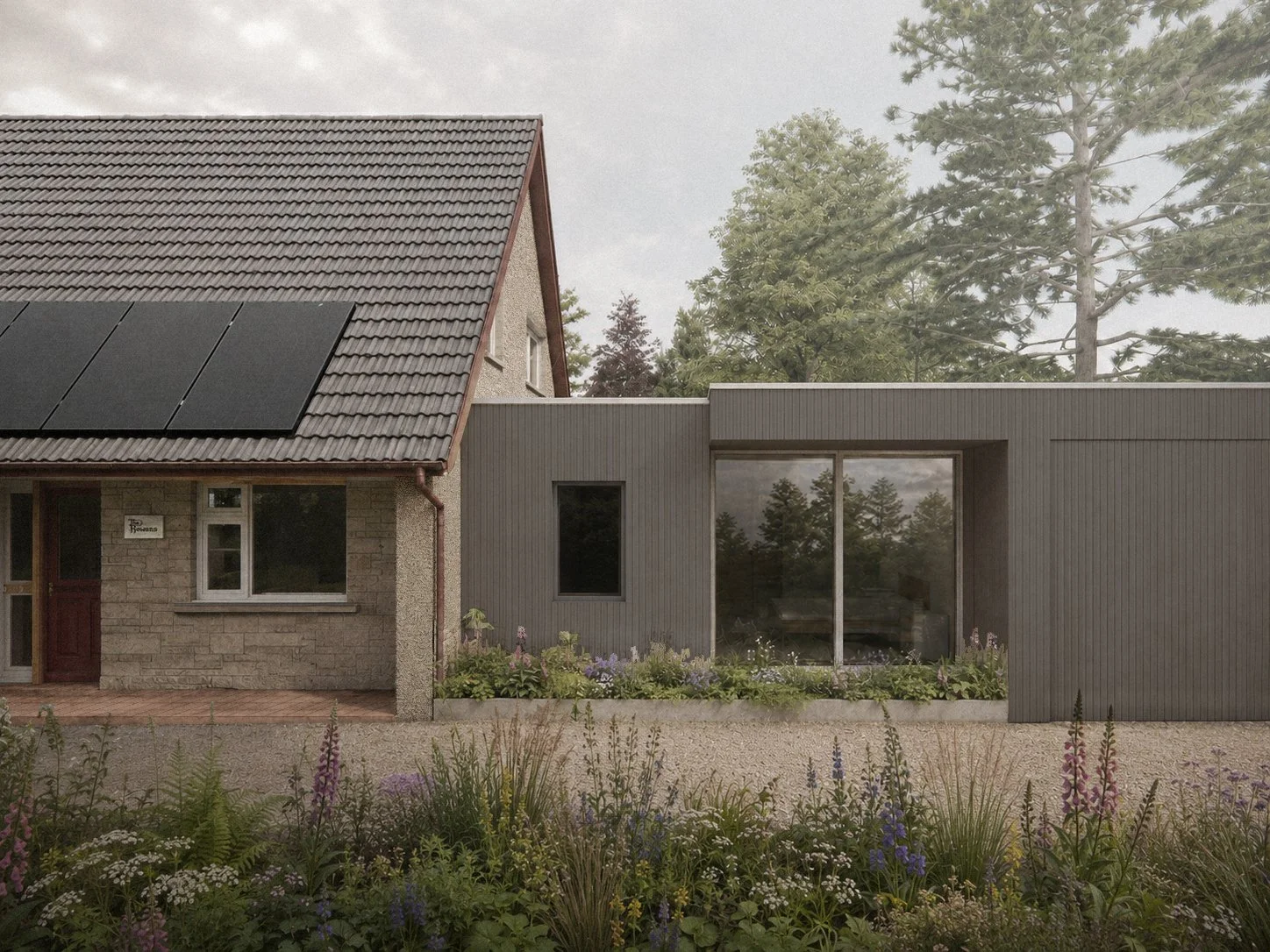
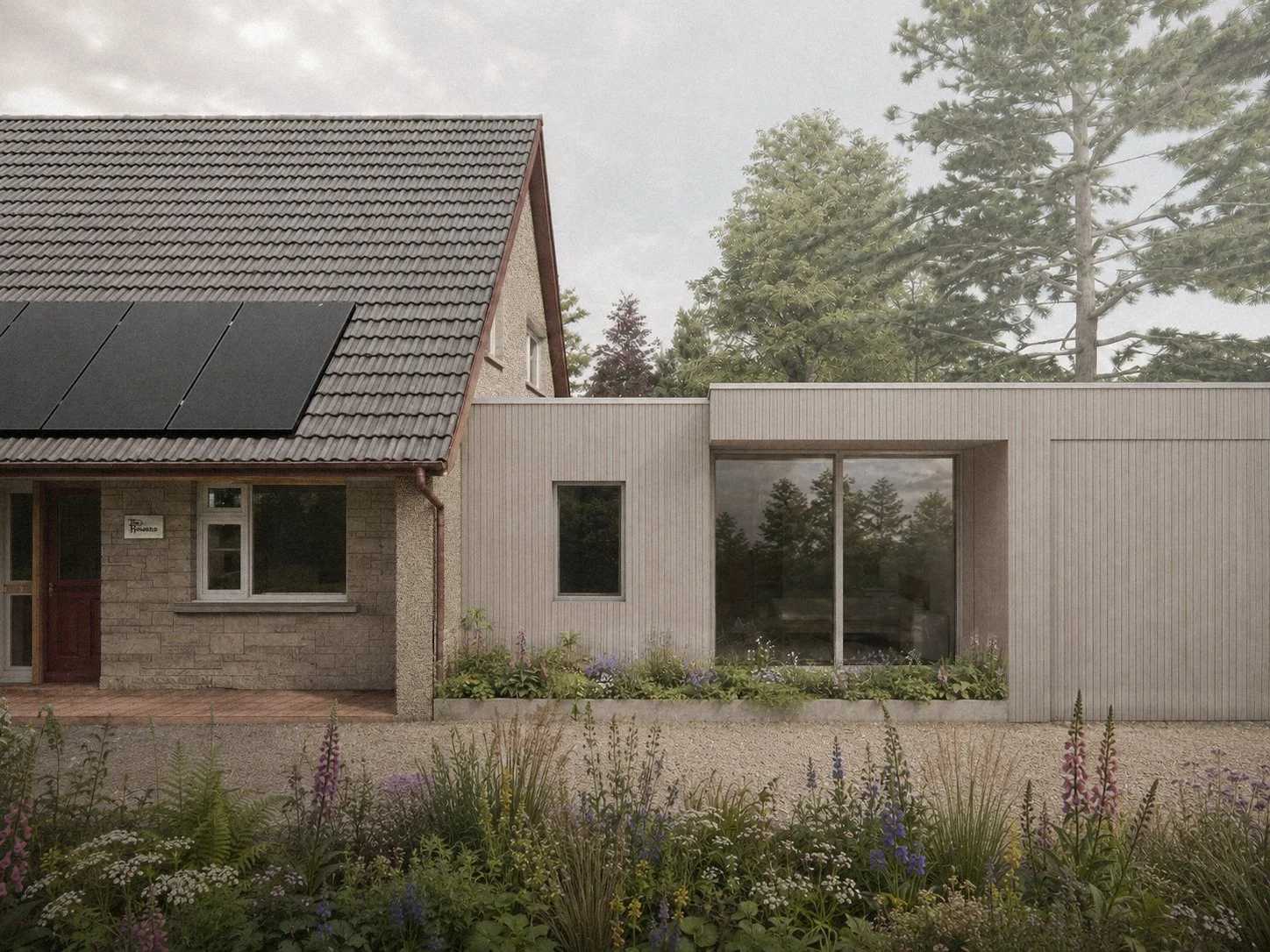
A feasibility study for the extension and reorganisation of a family home in Perth and Kinross.
This feasibility study explores the extension and reorganisation of an existing family house in Perth and Kinross. The house sits within a mature garden, set back from the road with established trees and long views towards the Ochil Hills.
A series of fragmented additions is replaced with a clearer arrangement of spaces between the original house, new utility areas and the garden. The proposals provide additional accommodation while improving everyday circulation and giving the family a more practical route through the house.
A garage and workshop form an important part of the brief. Rather than treating these as secondary service spaces, the design recognises making, maintenance and repair as part of daily life. Storage, laundry, muddy boots, play and visiting family are considered together, allowing the house to adapt as the family’s needs change.
The extension is kept deliberately secondary to the existing house. Its pitched form responds to the roof of the original building and helps establish a closer relationship with the garden and surrounding rural landscape.
The early studies test several external materials, including natural and dark-stained timber cladding and brick. Each option gives the new volume a different character while retaining the same simple form and arrangement. The study provides a basis for choosing an approach that feels appropriate to both the existing house and its setting.


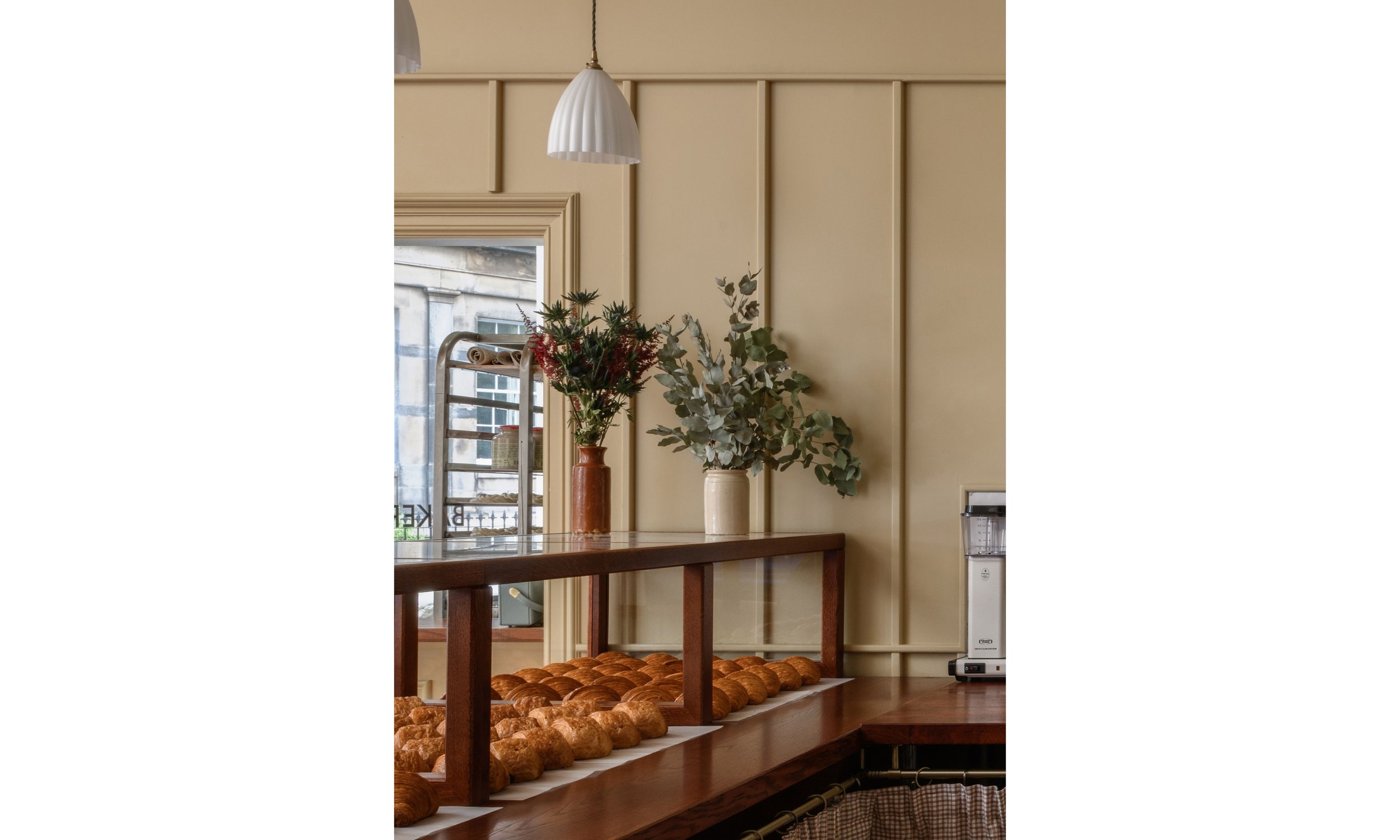
A bakery and shop in Stockbridge, Edinburgh. Design led by Darcie Maher with support from Nicholas Taggart and Ossian Architects.
Situated on the ground floor of a Category B listed tenement at the corner of Hamilton Place and Saxe Coburg Street, Lannan Bakery has a distinctive corner entrance and front of house with natural light and views out on three sides. The project converts a former beauty salon into a bakery and shop, with a newly designed front of house and commercial kitchen in adjoining rooms. The kitchen is connected to and visible from the main space, allowing the process of baking to form part of the experience.
The interior is deliberately restrained, with decorated timber panelling lining the space and a simple palette of durable materials including clay quarry tiles, iroko timber and brass metalwork. Existing features are retained and restored, informing the design and maintaining continuity with the character of the building. Structural intervention is limited to strengthening the floor to support bakery equipment.
Externally, the shopfront is given a clear identity through a simple palette, with new gold gilt lettering, a projecting sign and awnings. These provide solar protection to the south-facing windows and shelter at street level, reinforcing the bakery’s presence within its setting.
Project page


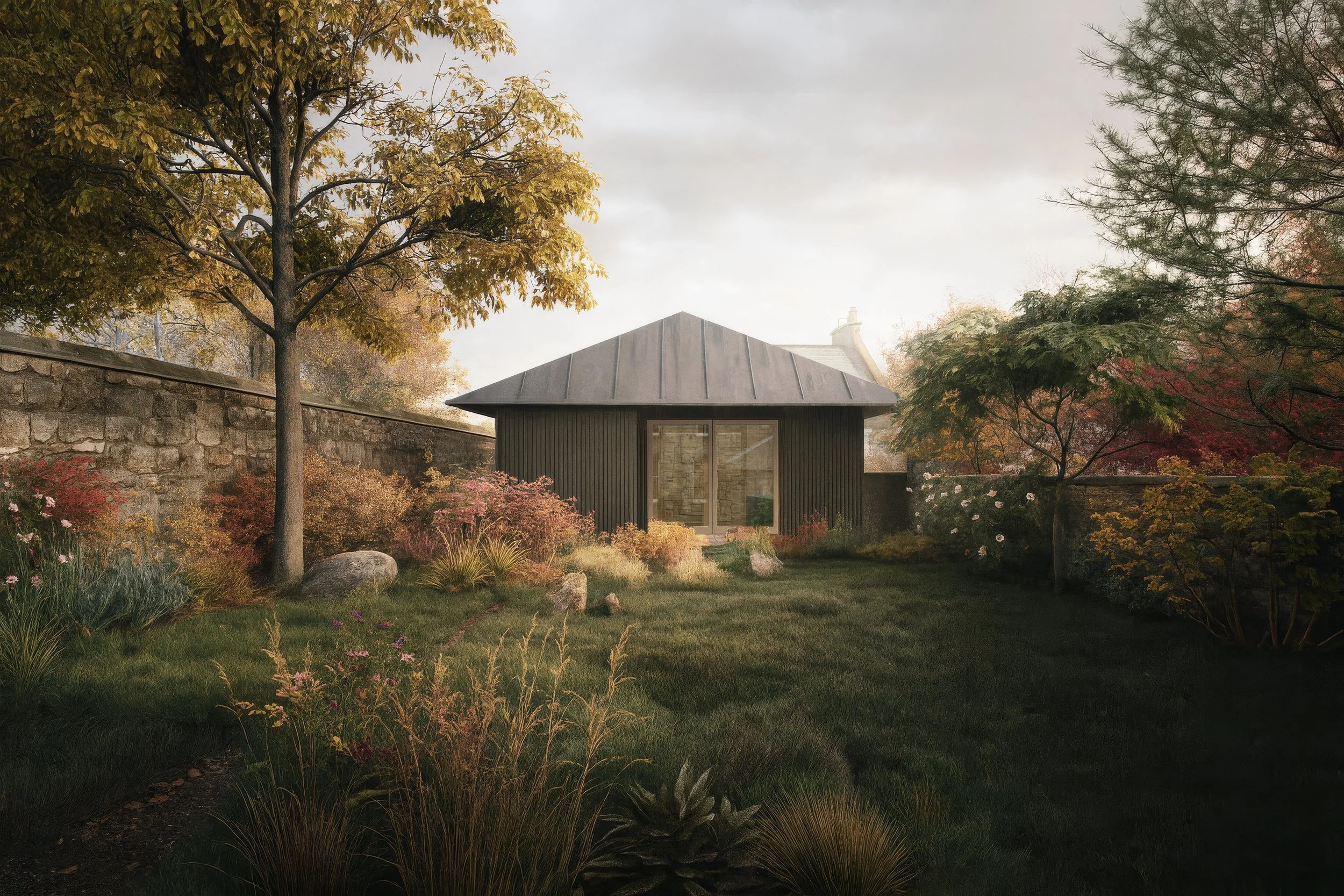
The refurbishment and extension of an Edwardian house in the Newhaven Conservation Area, with a new garden studio.
The house is reconfigured to support modern family life, with the ground floor opened up to form a generous kitchen and dining space connected directly to the garden. Rooflights and new openings bring daylight deep into the plan, while circulation is simplified to create a clear and functional layout. Upstairs, bathrooms are rationalised and services upgraded to improve comfort and efficiency.
Targeted fabric upgrades improve energy performance, including slimline double glazing in keeping with the conservation area, alongside natural insulation, underfloor heating and a ground source heat pump. Essential repairs to the roof, chimneys and rainwater goods ensure the building’s long-term durability, allowing the house to perform efficiently while retaining its character.
At the end of the garden, a former garage is converted into an artist’s studio with an adjoining sauna. Conceived as a timber-clad pavilion with a hipped zinc roof and generous overhangs, it provides a bright workspace and a more secluded retreat. Rainwater is allowed to disperse from the eaves, reinforcing the connection between building and garden.

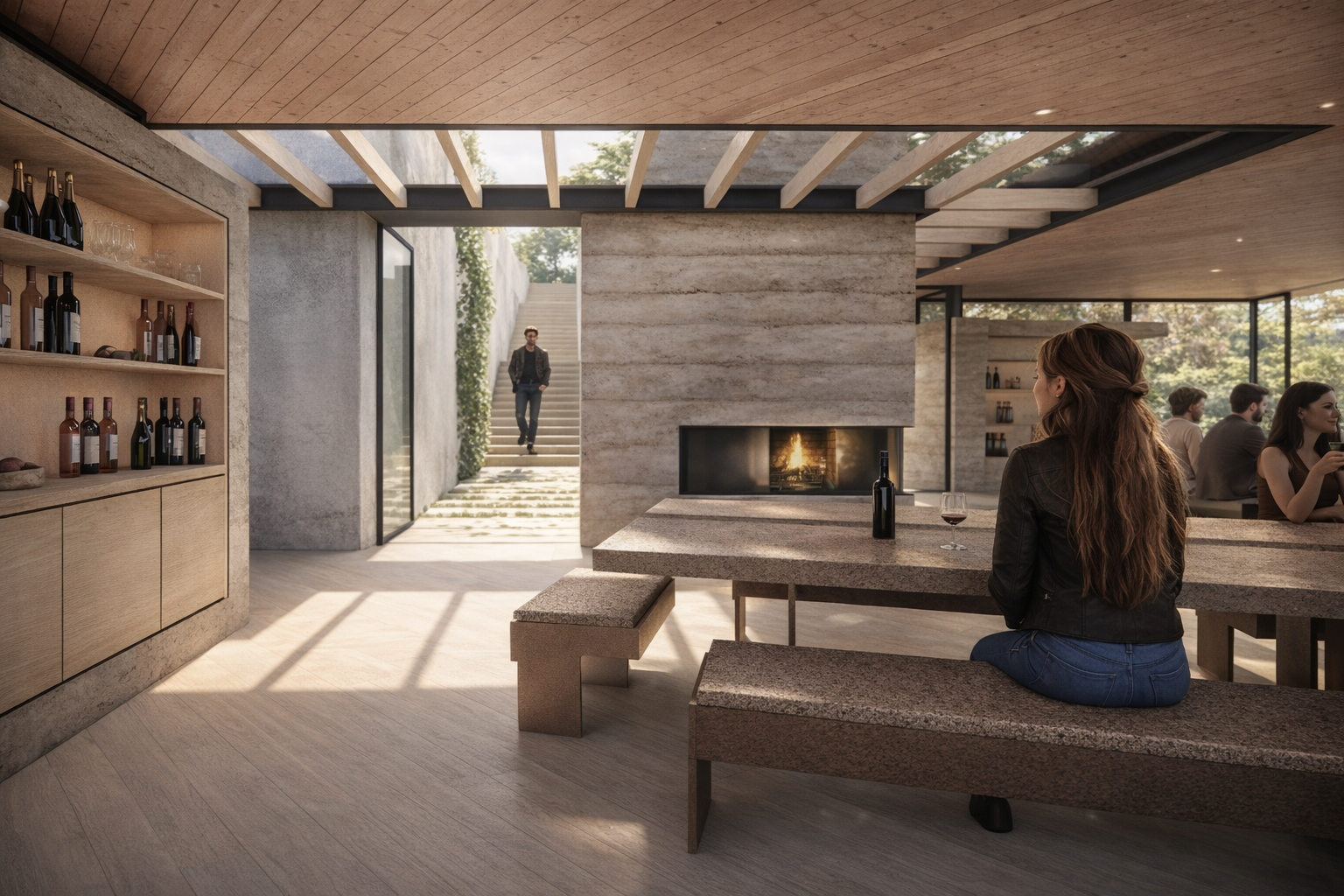
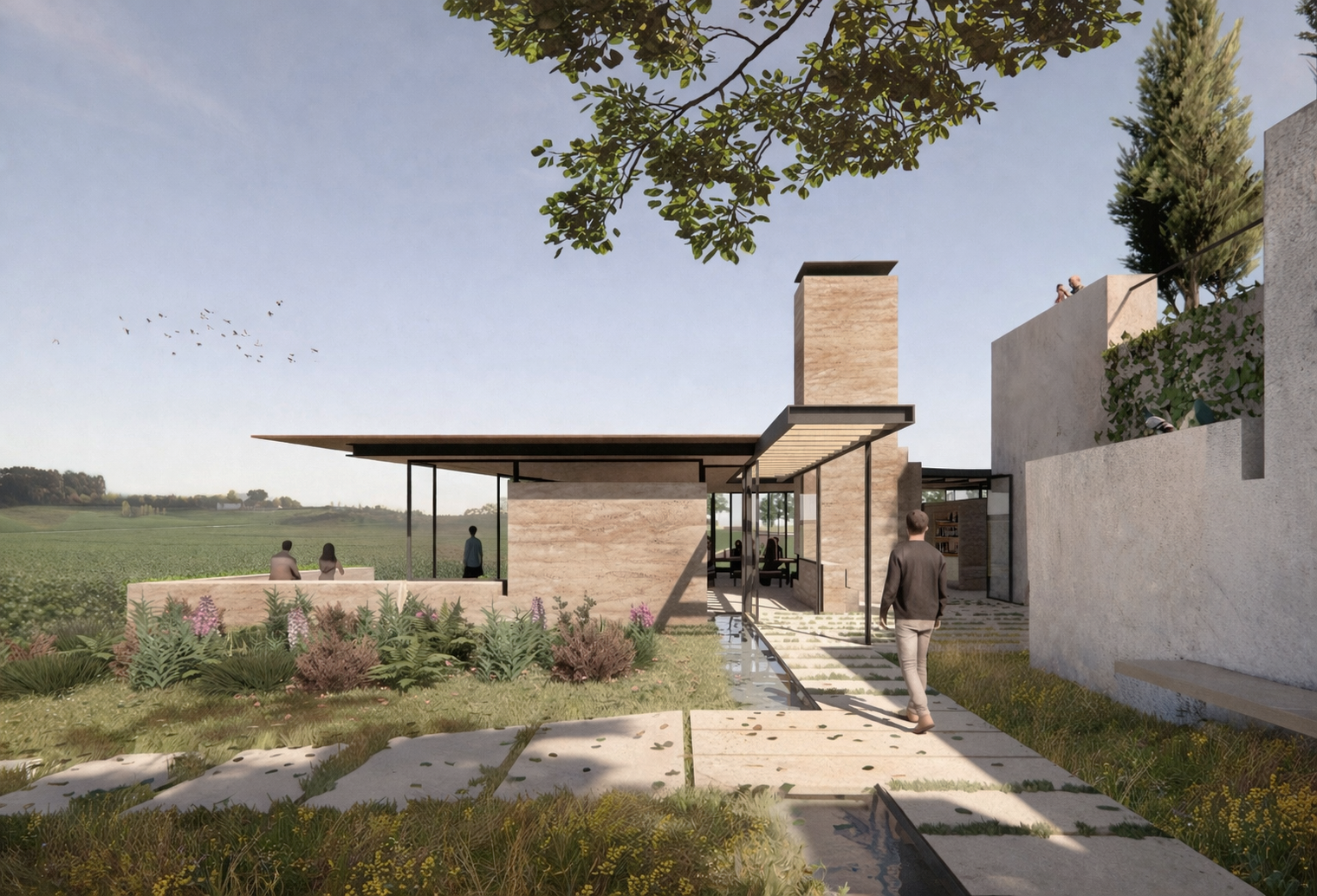
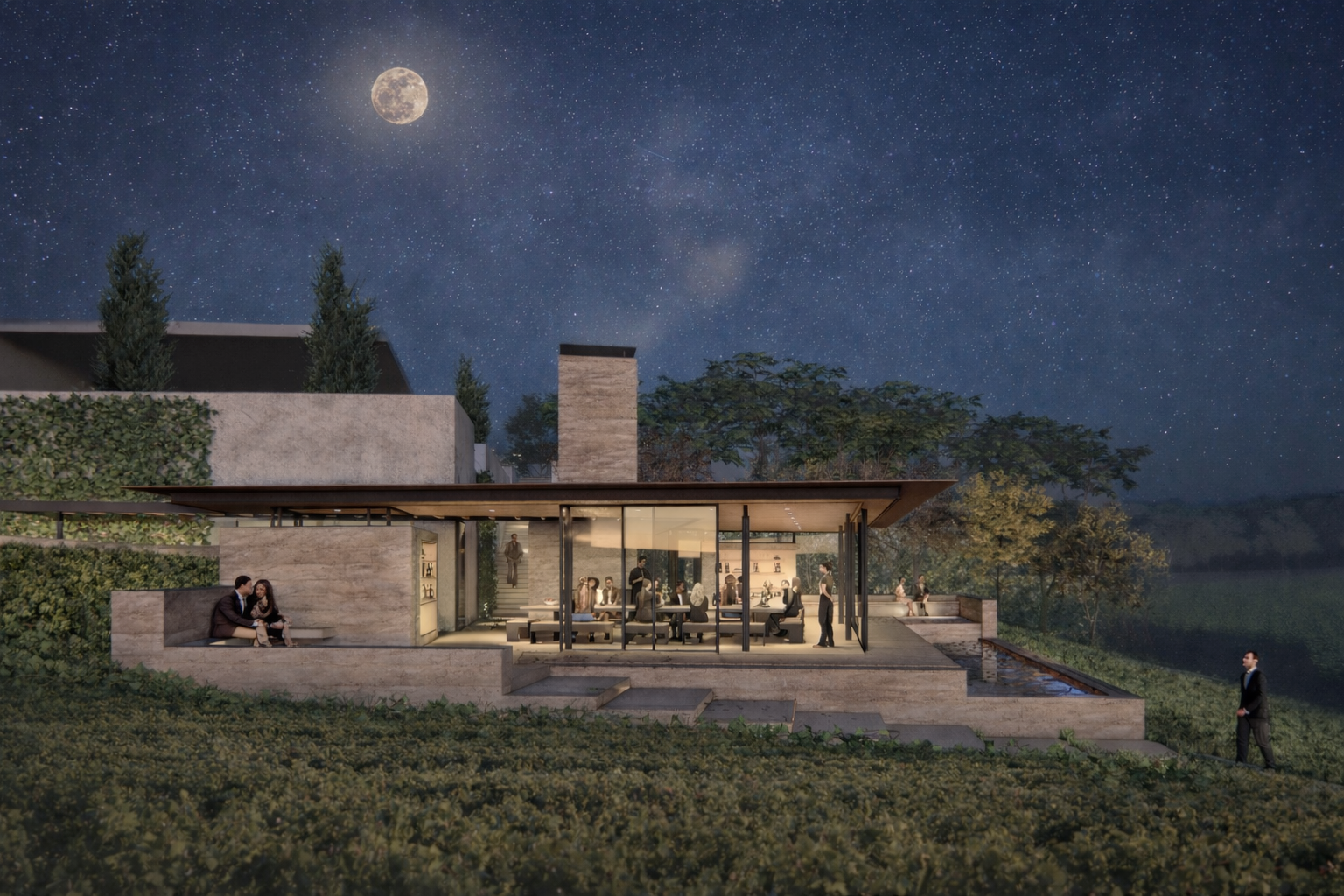
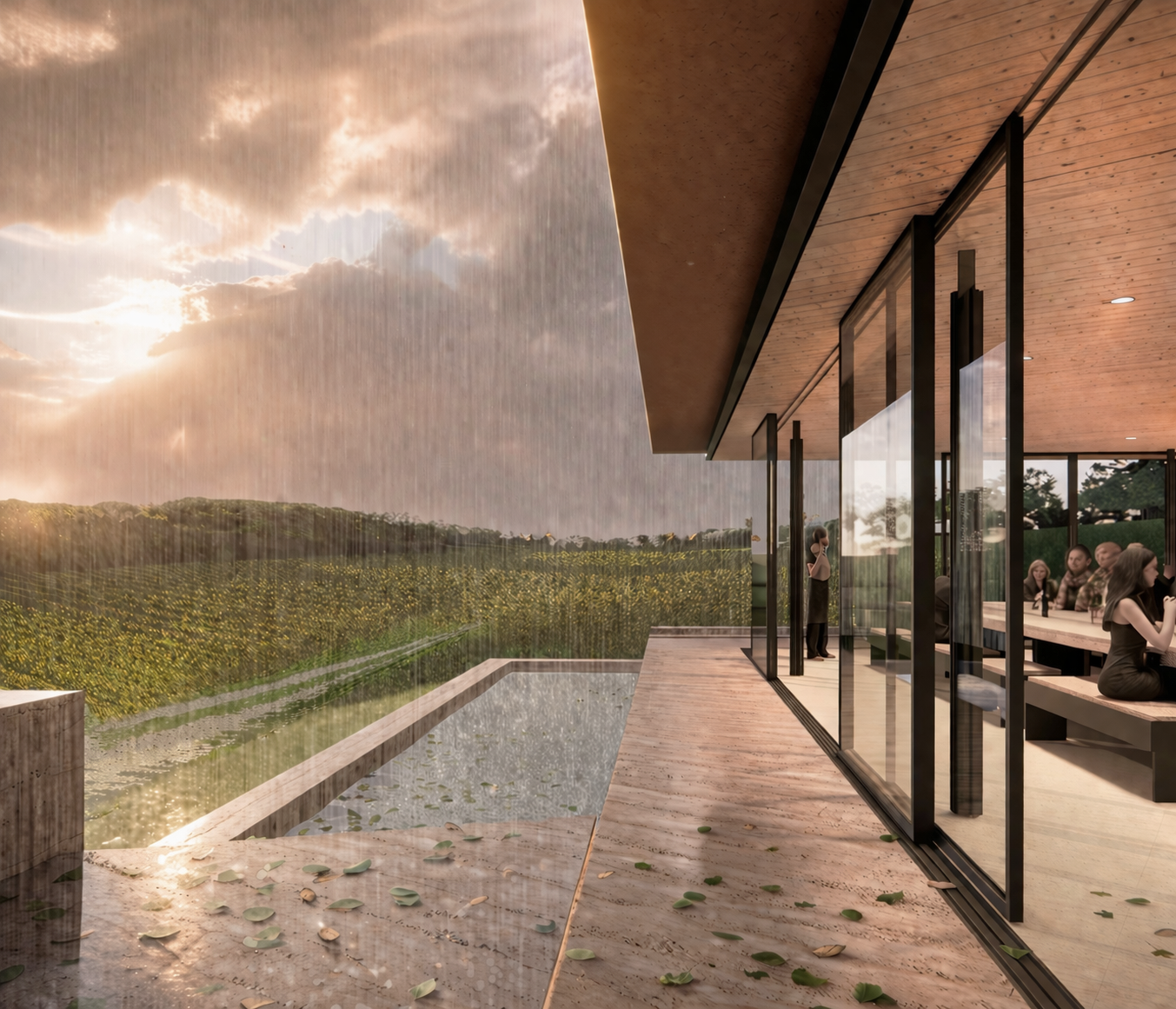
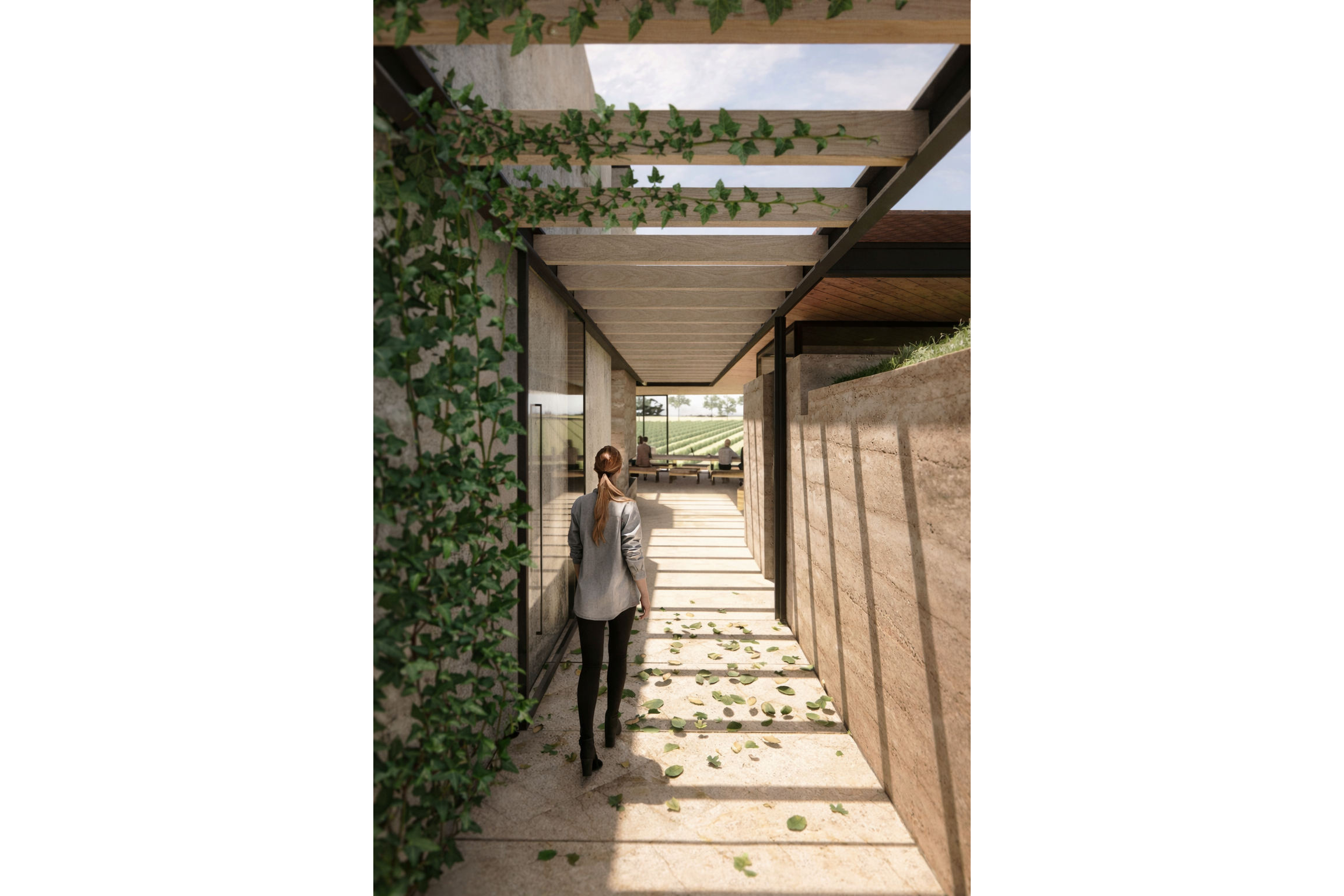
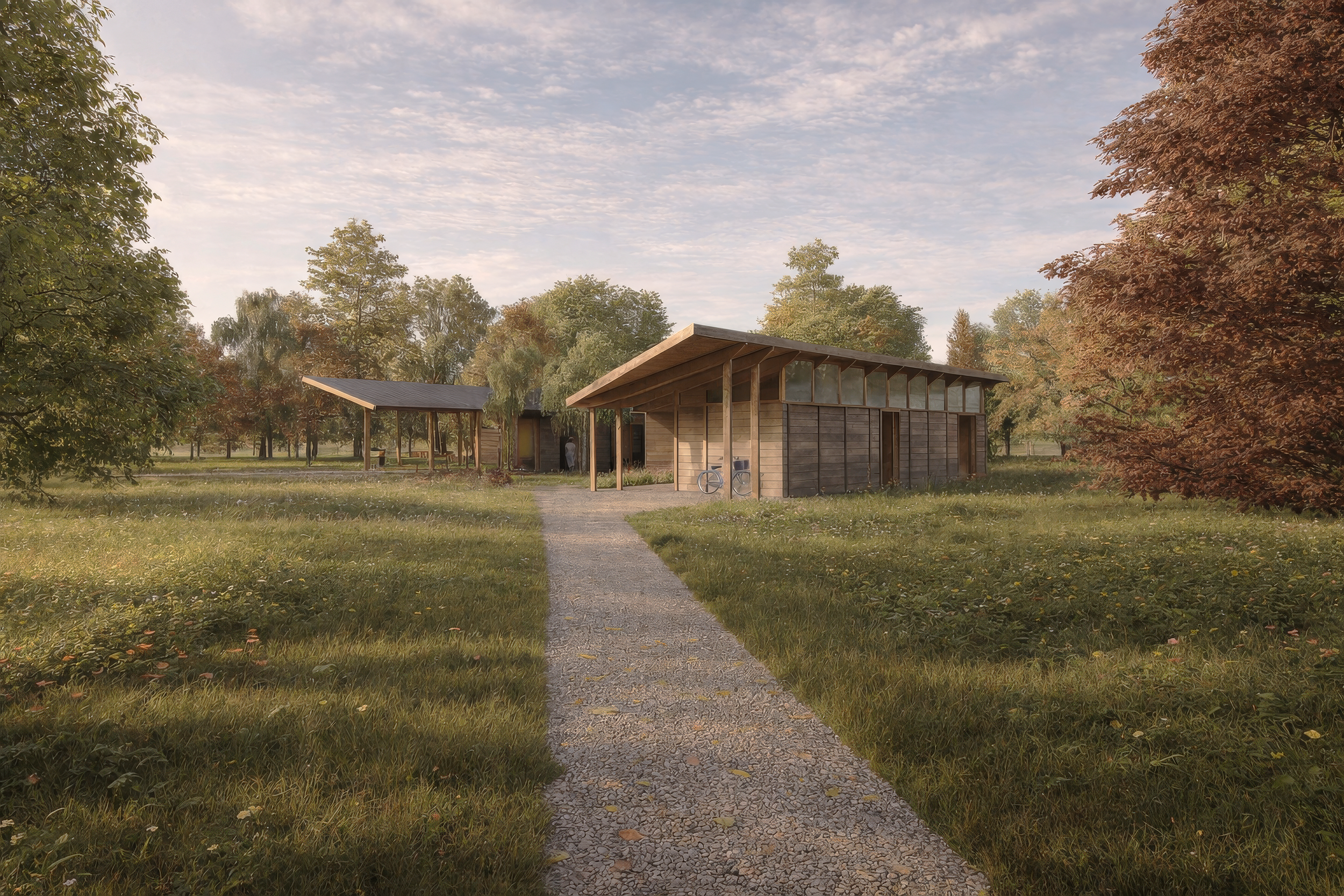
A competition proposal for a wine tasting room at Quinta do Monte D’Oiro in Freixial de Cima, Portugal, developed in collaboration with Studio Boyd.
The building is set into the ground adjacent to the vines, establishing a direct relationship between the experience of tasting and the landscape that produces the wine. Its low, embedded form allows the surrounding vineyard to shape the atmosphere of the space, creating a sequence of sheltered interiors that open outward to the rows of vines.
Materials are drawn from the site and its context, with rammed earth walls formed from the vineyard soil, paired with limestone floors, oak joinery and compressed cork elements. This palette reinforces the connection between building and ground, giving the interior a tactile, grounded character that reflects the process and materiality of wine making.
The wider landscape forms an integral part of the proposal, with a sensory garden, fruit trees and water rills extending the experience beyond the building. Planting is selected to reflect the character of the wine and the seasonal cycle of the vineyard, creating a setting that supports biodiversity while remaining closely tied to the rhythms of the site.
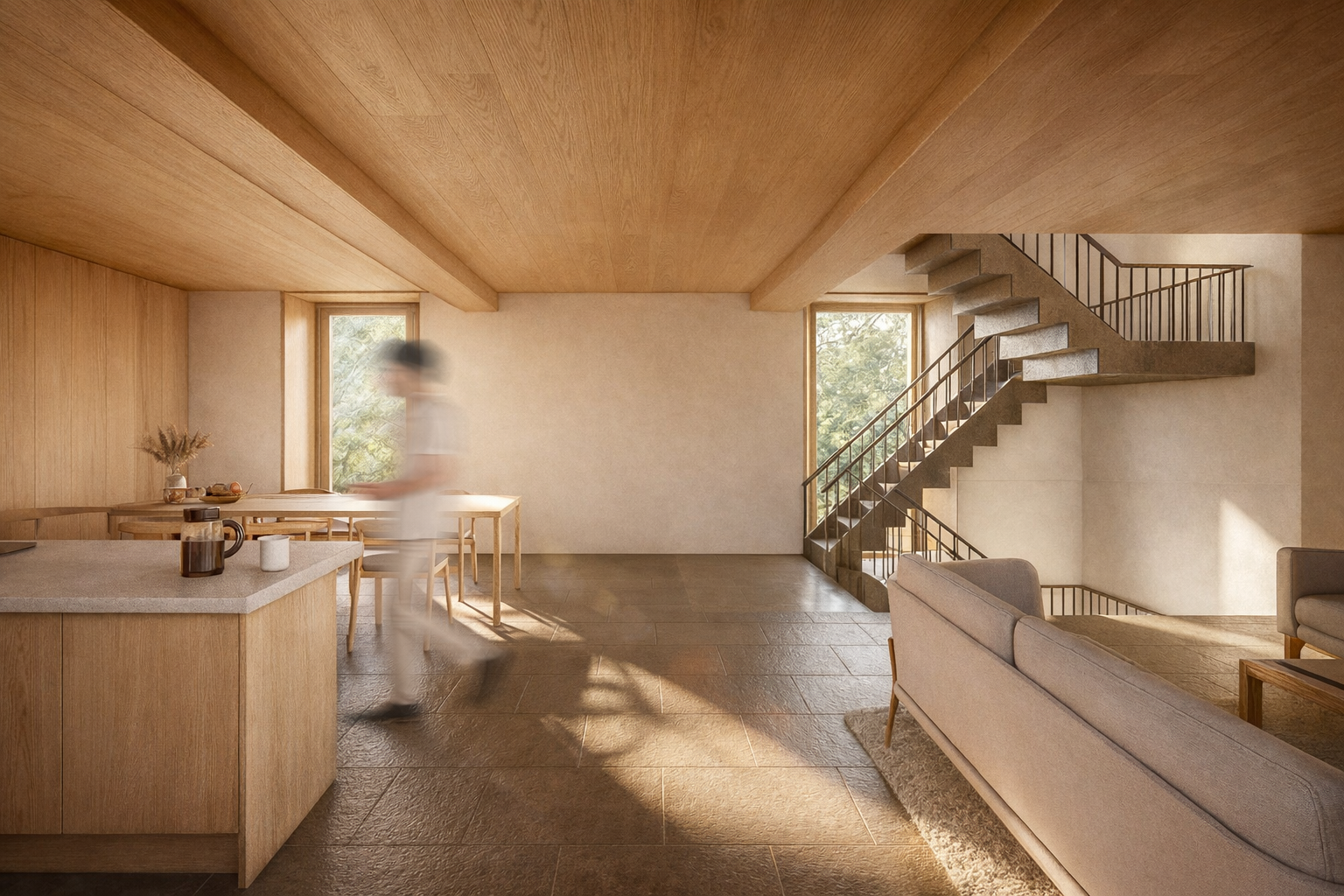
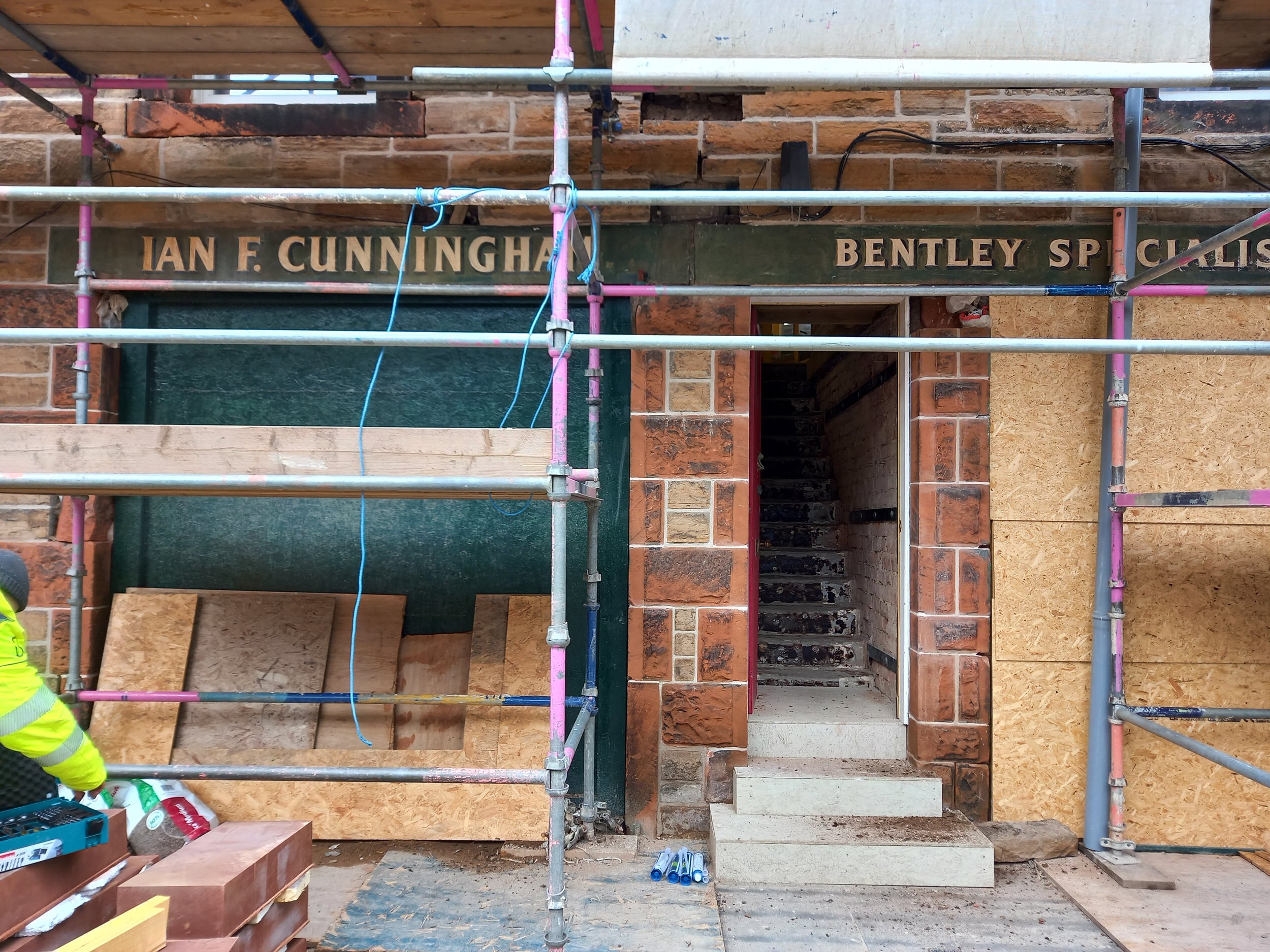
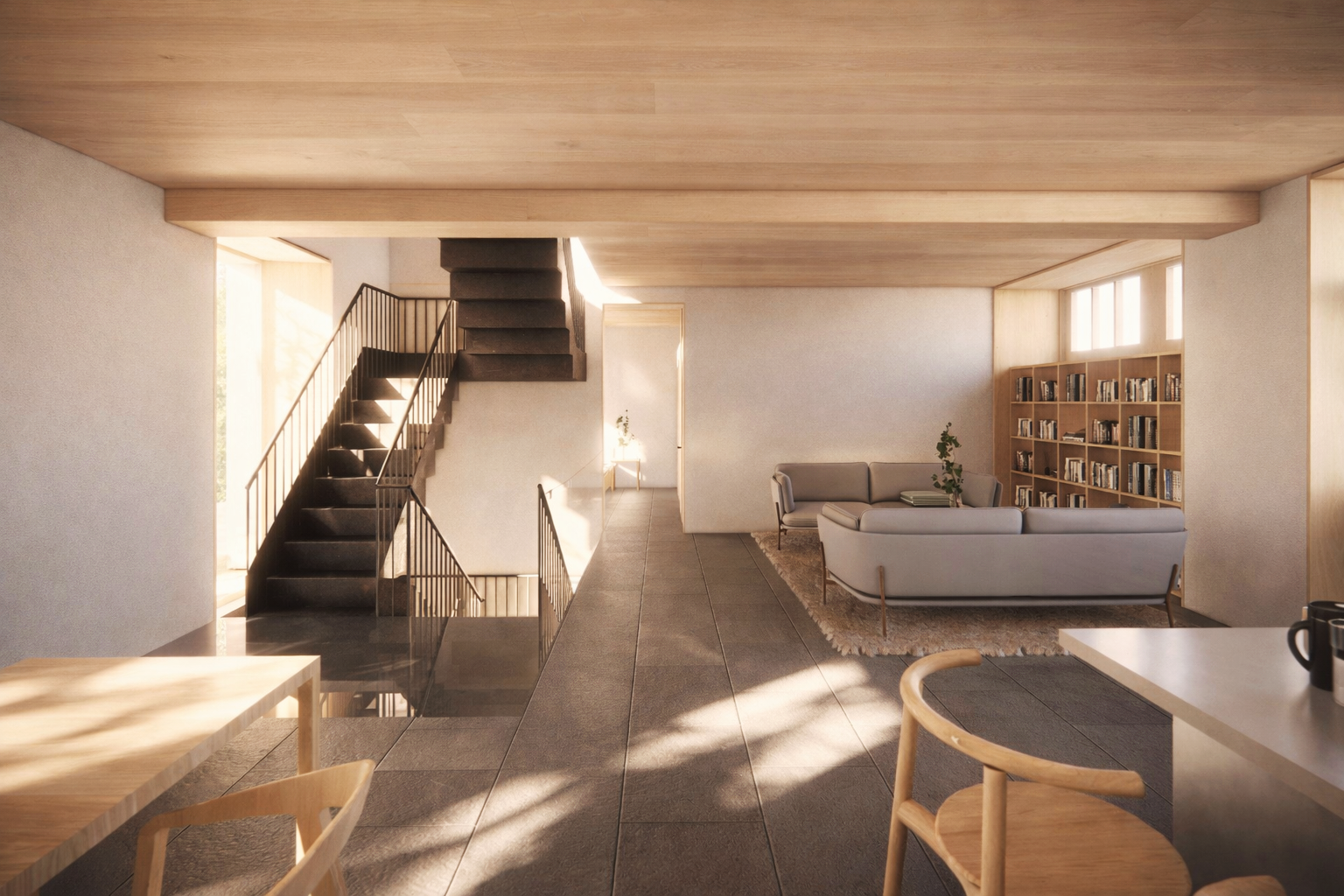
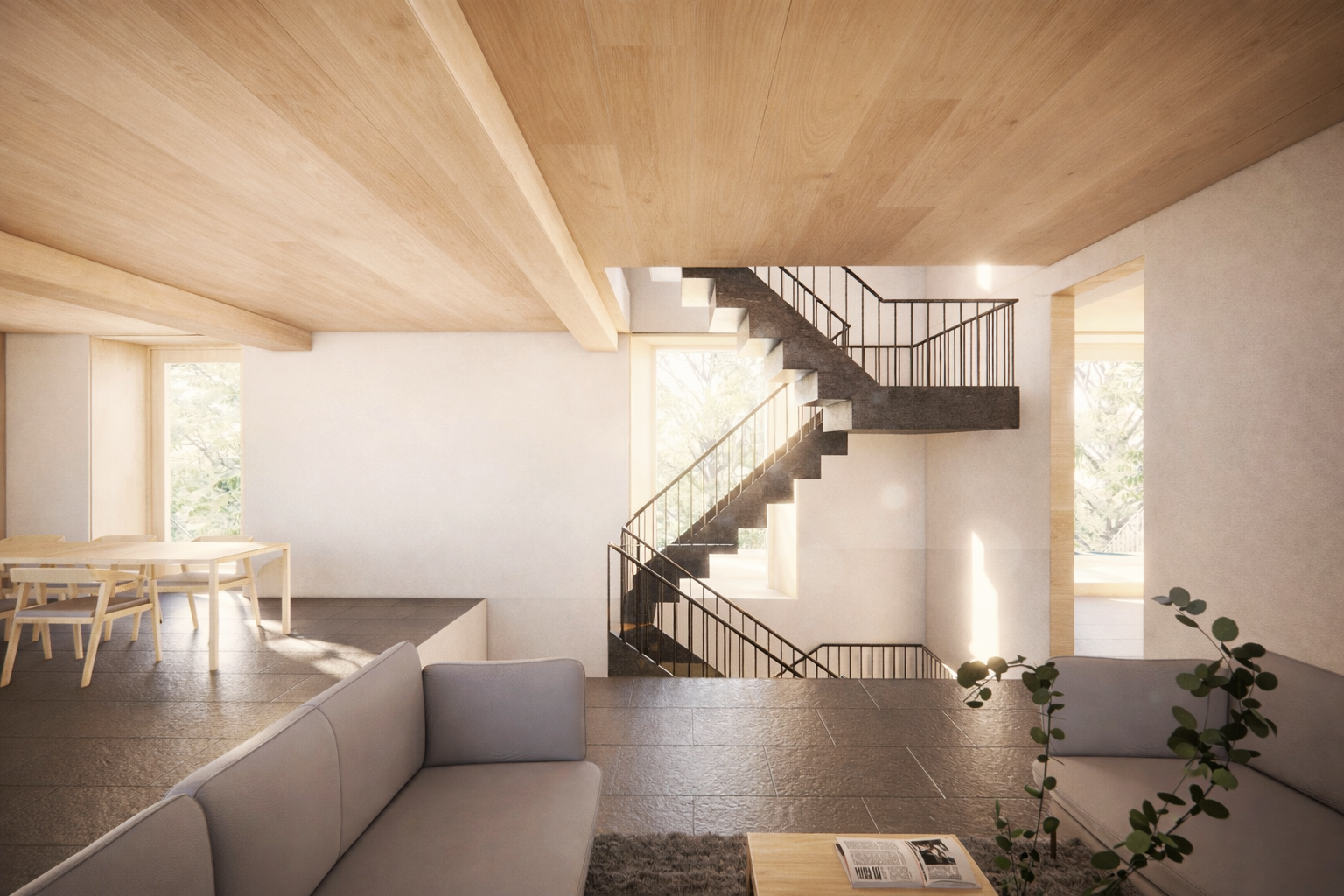

The conversion of a mews property in Dean Village, Edinburgh into a family home.
The existing building, currently in commercial use, is reworked to support long-term residential living while retaining the quiet character of its setting. The plan is opened up to improve light, outlook and spatial flow, creating a clearer internal arrangement suited to everyday use. The aim is to form a calm and durable interior that sits comfortably within the grain of the mews.
Natural materials define the spaces, including Caithness stone floors, timber wall and ceiling linings, breathable clay plasters and a new staircase in exposed mild steel. The palette is deliberately restrained, allowing material quality and structure to give the interior its character. Underfloor heating is introduced throughout, providing a consistent and efficient source of heat.
The building fabric is upgraded using natural, breathable insulation including sheep’s wool and wood fibre boards, improving performance while maintaining moisture balance. A ground source heat pump, mechanical ventilation with heat recovery and rainwater harvesting support a low-energy approach, ensuring the house performs efficiently within its historic setting.
Project page
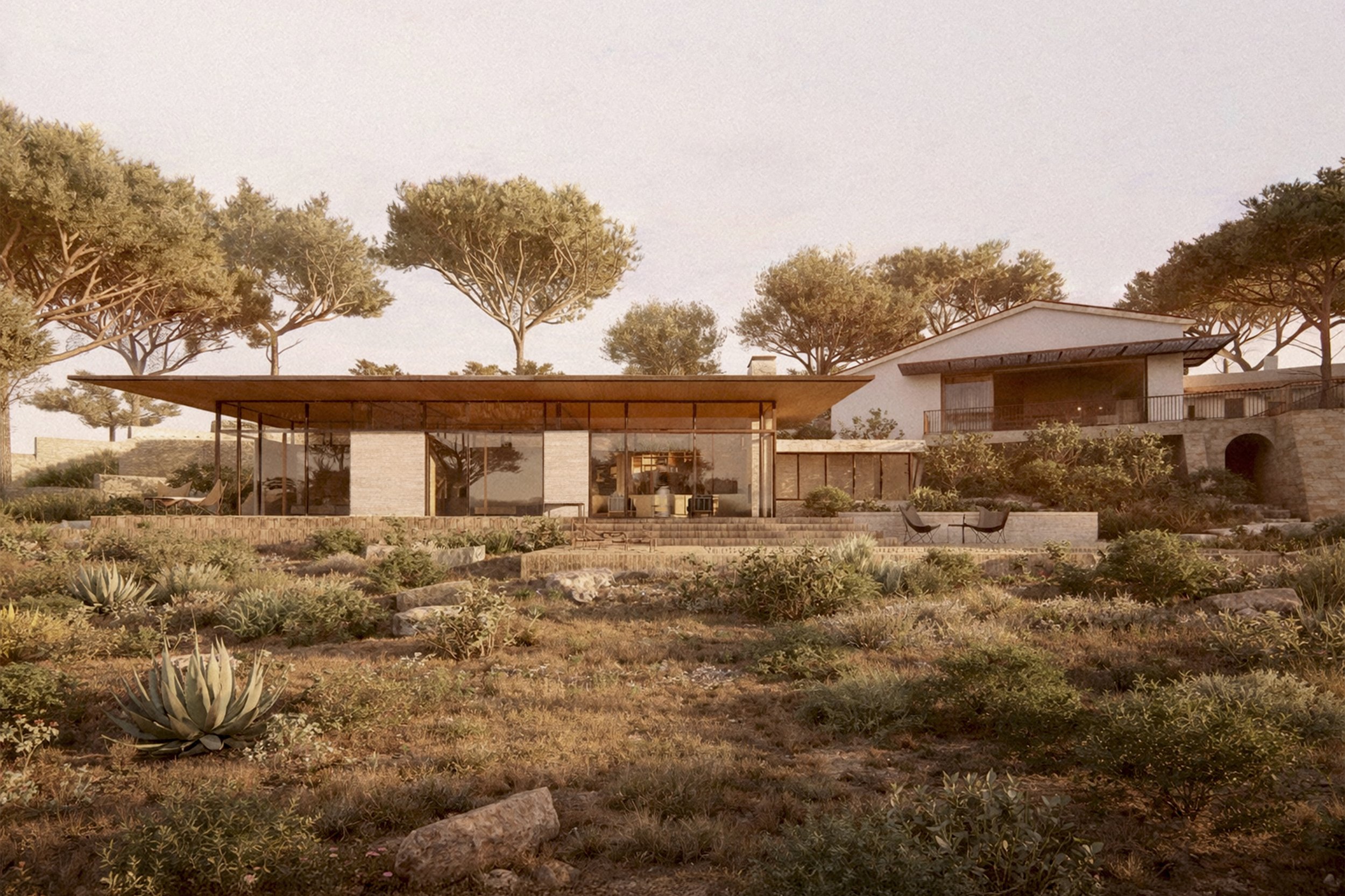
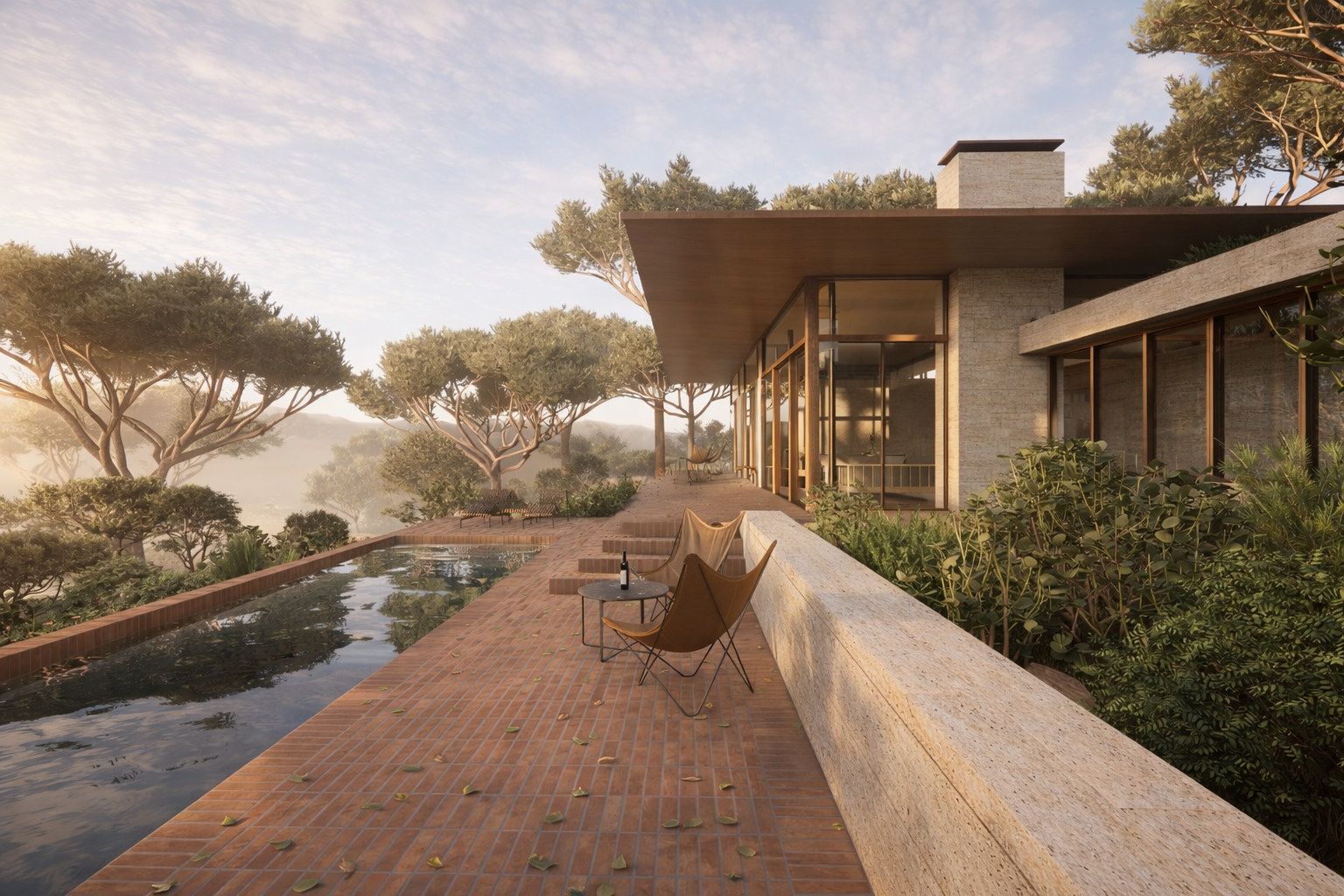
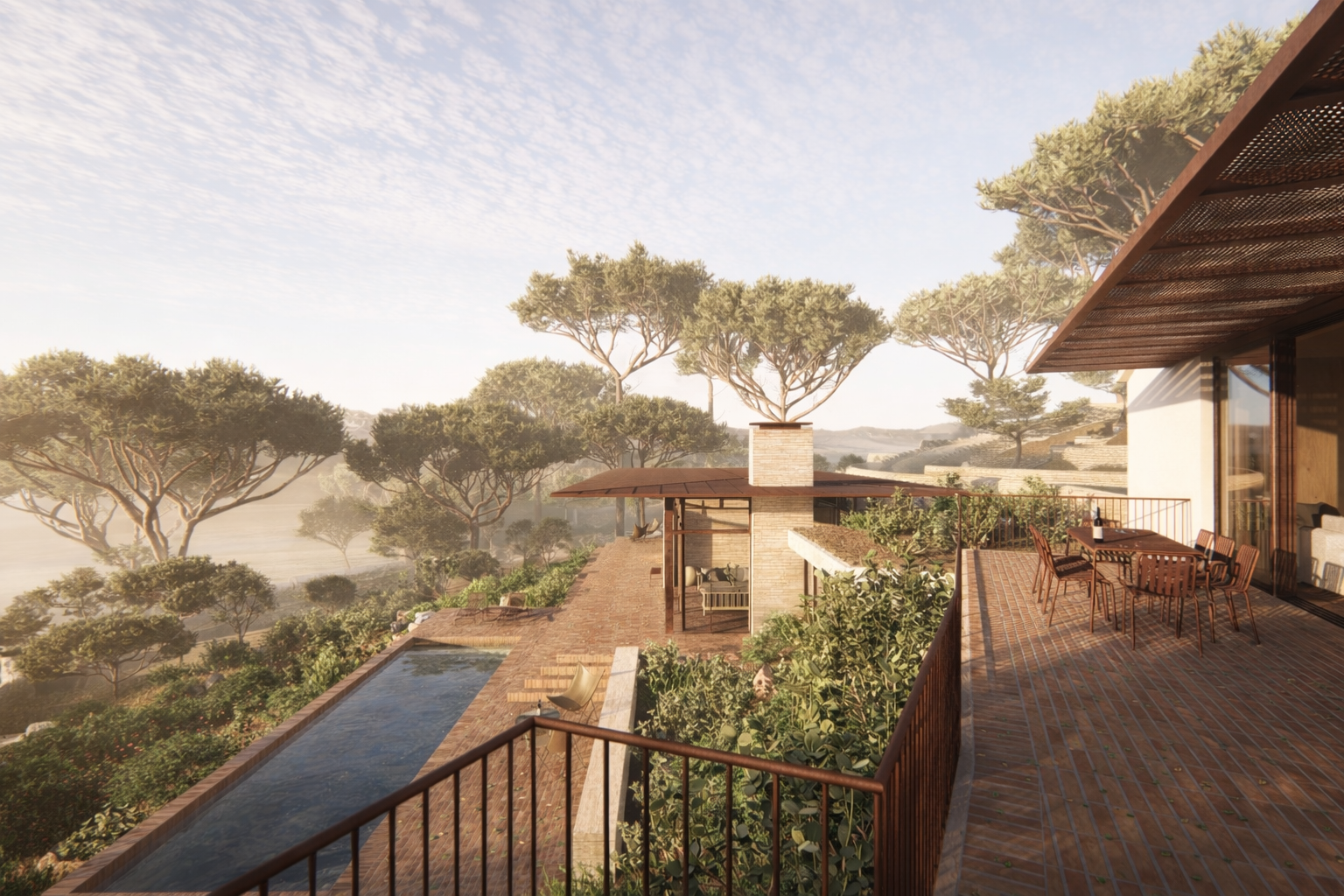
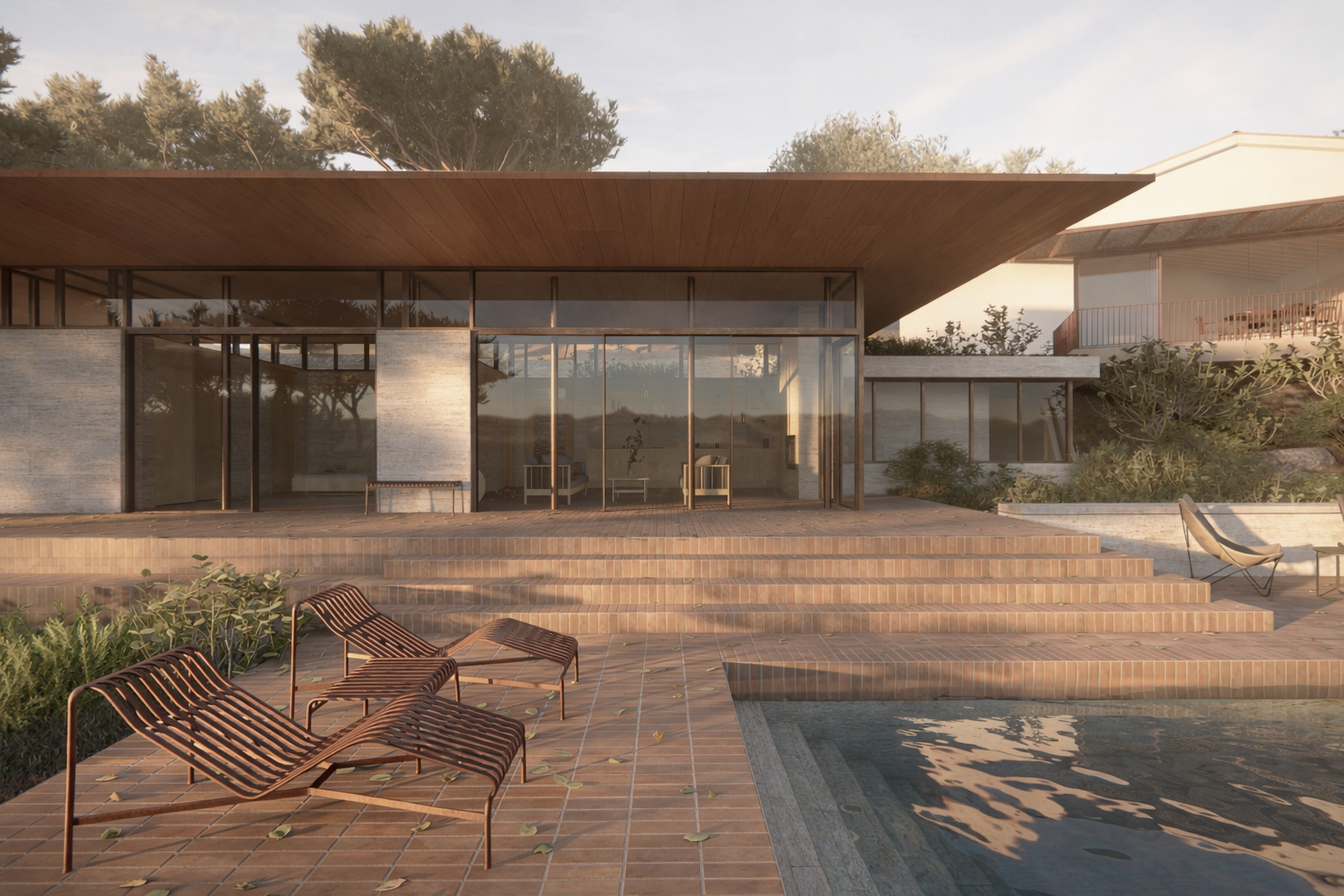
The restoration and extension of a rural estate in the hills above Loulé in the Algarve.
The project brings together the refurbishment of several ruined houses with the introduction of a new dwelling set on a plateau below the existing buildings. The aim is to re-establish the estate as a coherent place, balancing the repair of historic structures with carefully placed new elements that sit comfortably within the landscape and reinforce the existing settlement pattern.
The existing buildings are restored using natural materials, including clay tiles, clay plaster and timber, retaining their character while adapting them for contemporary use. A new house is introduced as a quieter counterpart, positioned to take advantage of views across the surrounding hills and towards the Atlantic. A series of terraces extends across the slope, connecting the buildings and forming a sequence of outdoor spaces that follow the natural topography.
Low-impact systems are integrated throughout, including well-sourced water, ground source cooling, photovoltaics and battery storage. Together with a fabric-first approach, these measures support a low-energy strategy, ensuring the estate is durable, adaptable and closely connected to its setting.
Project page
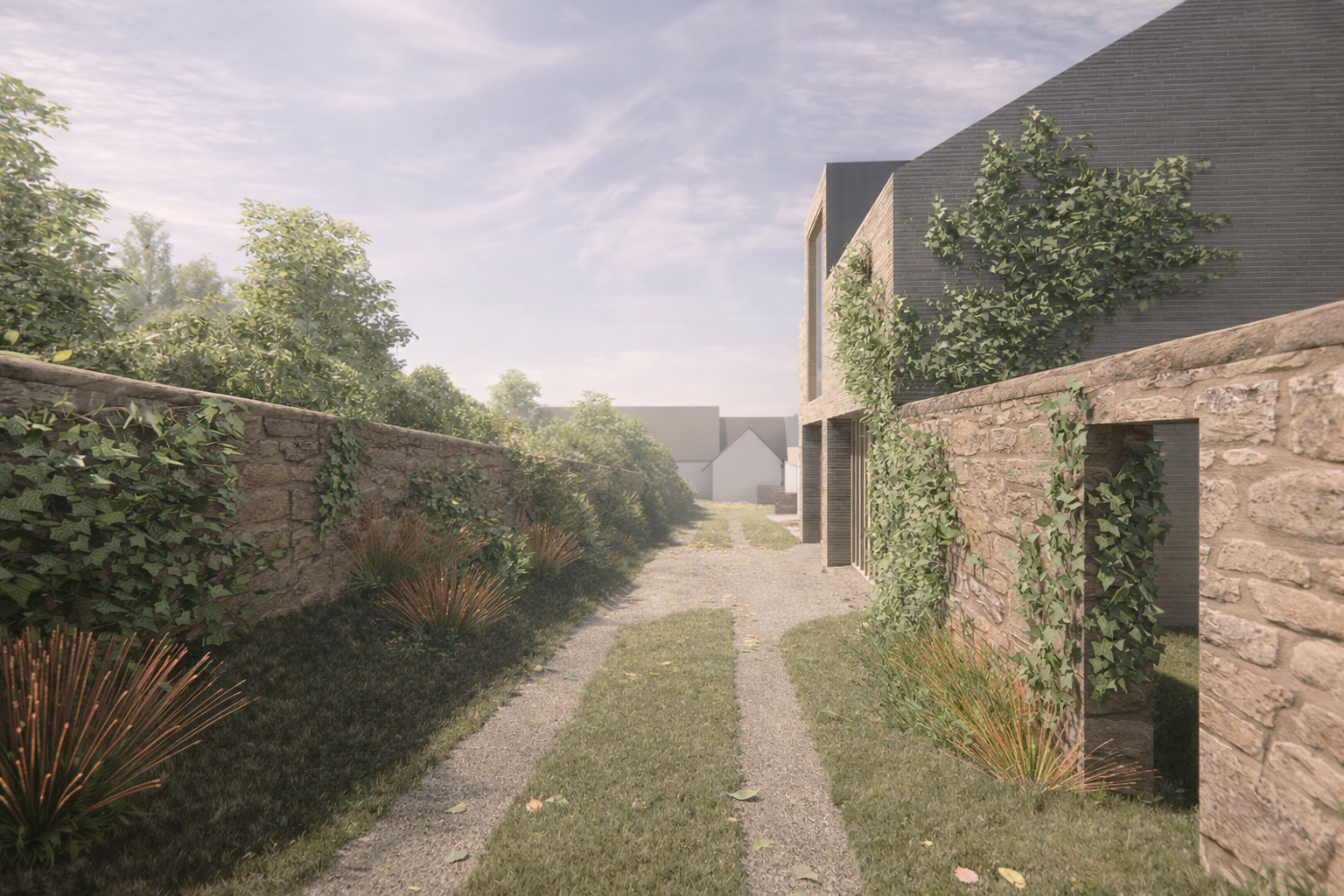
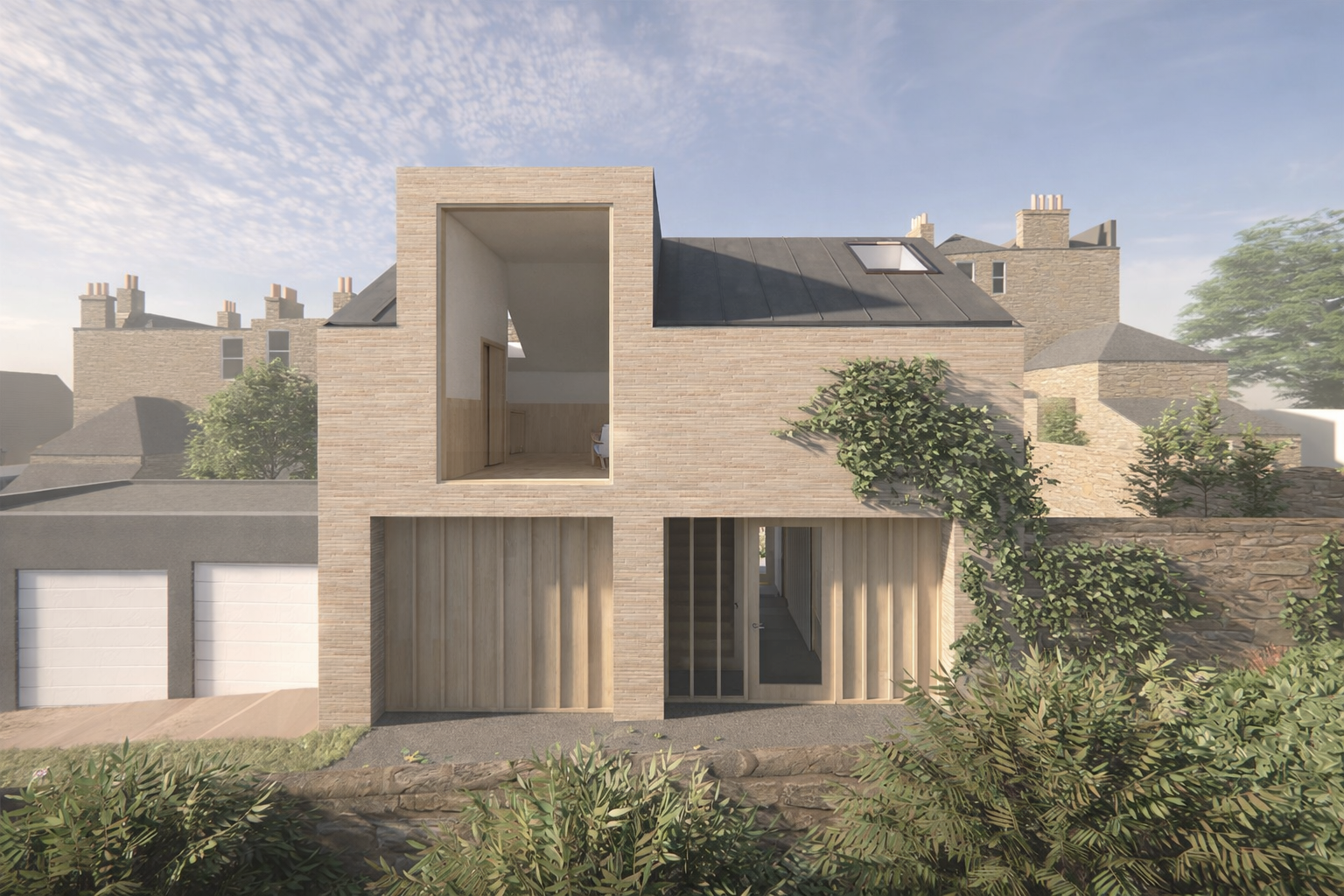
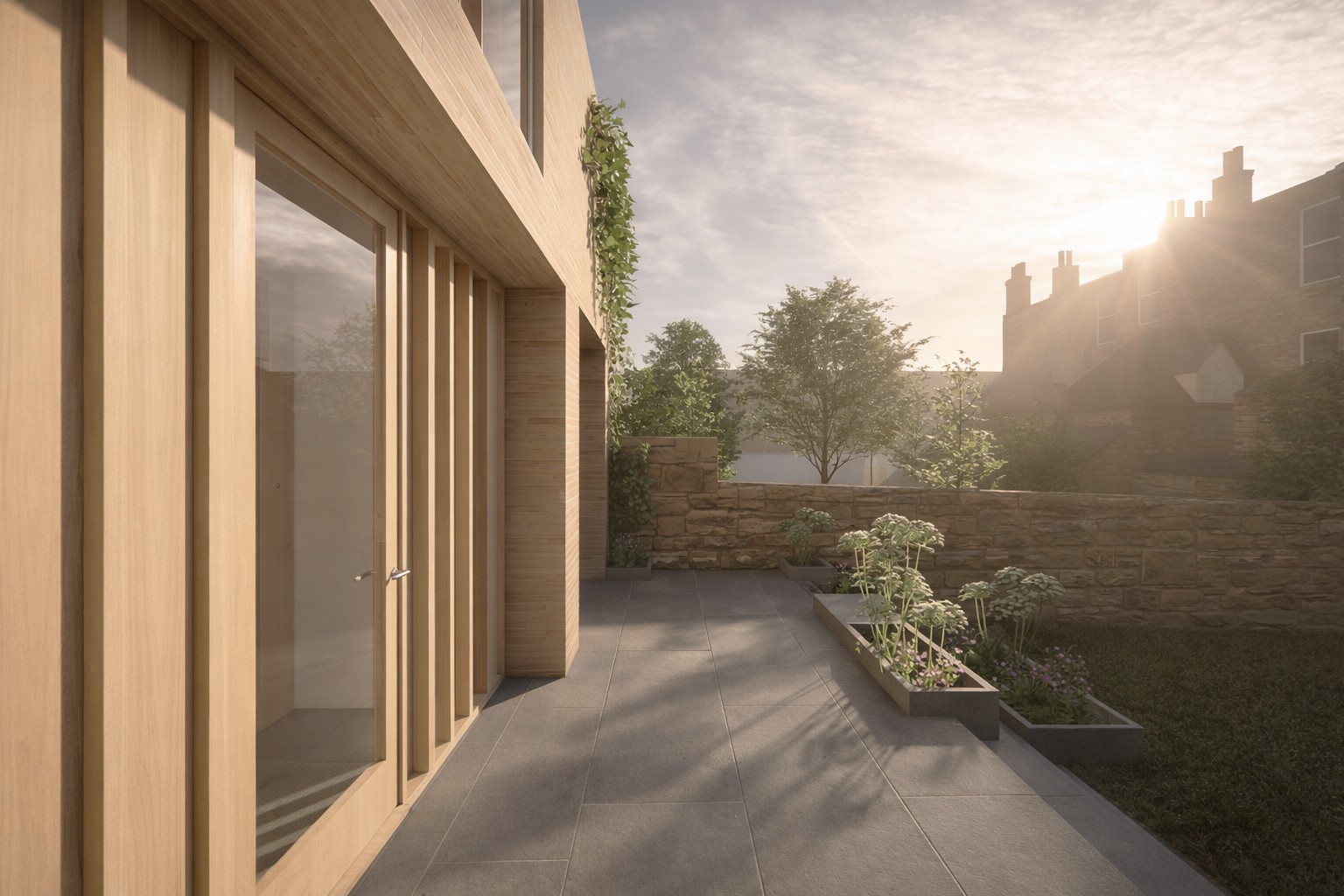
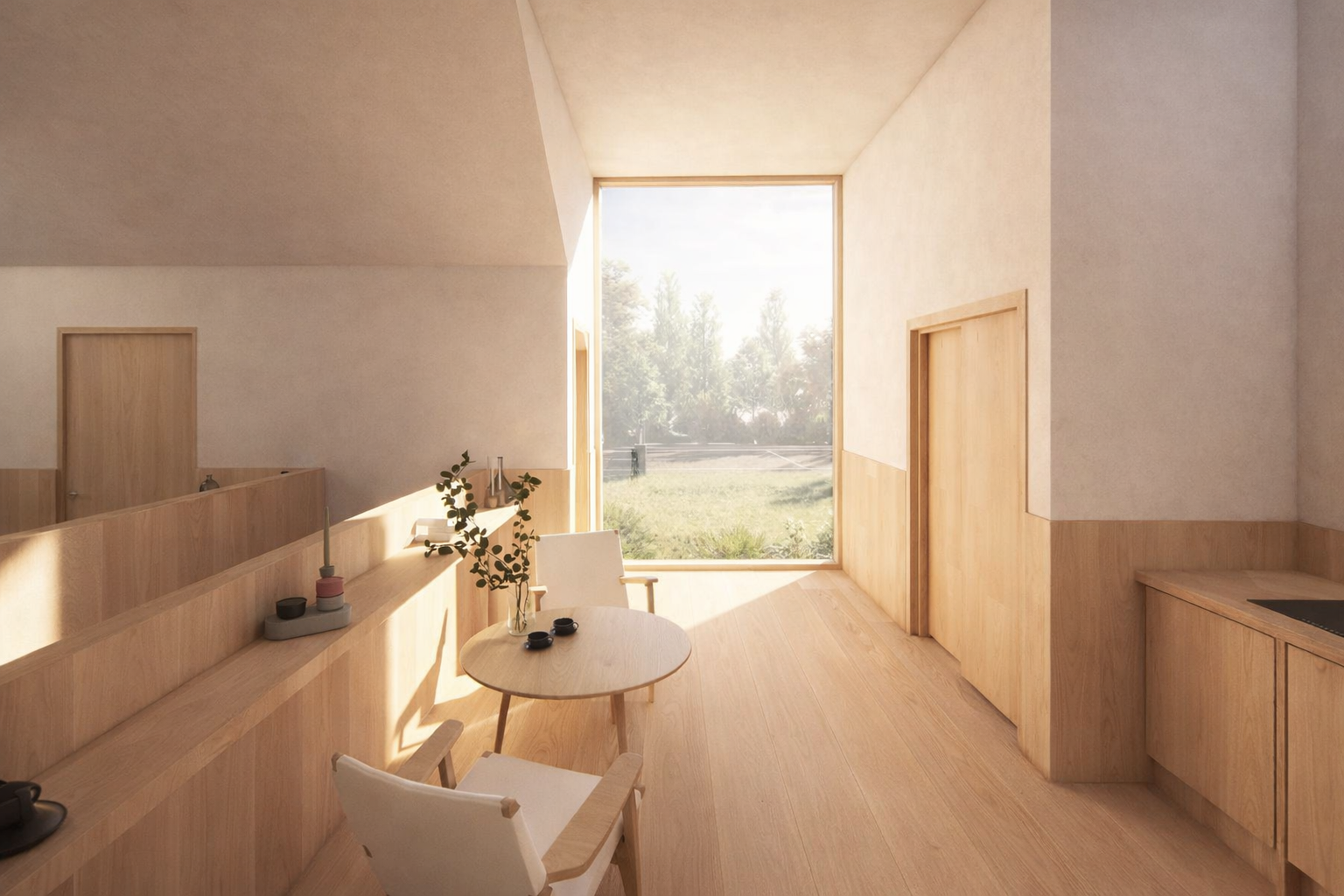
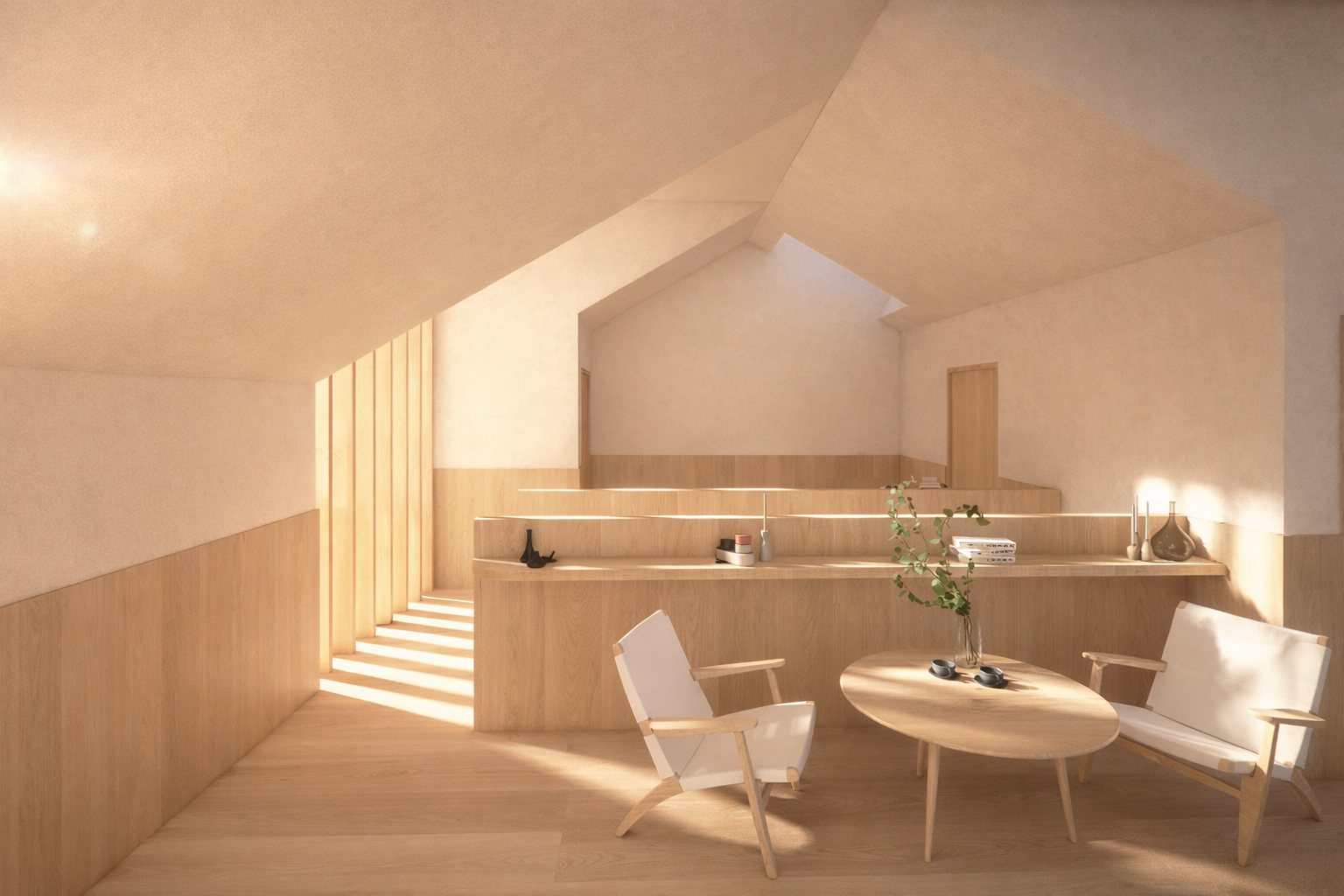
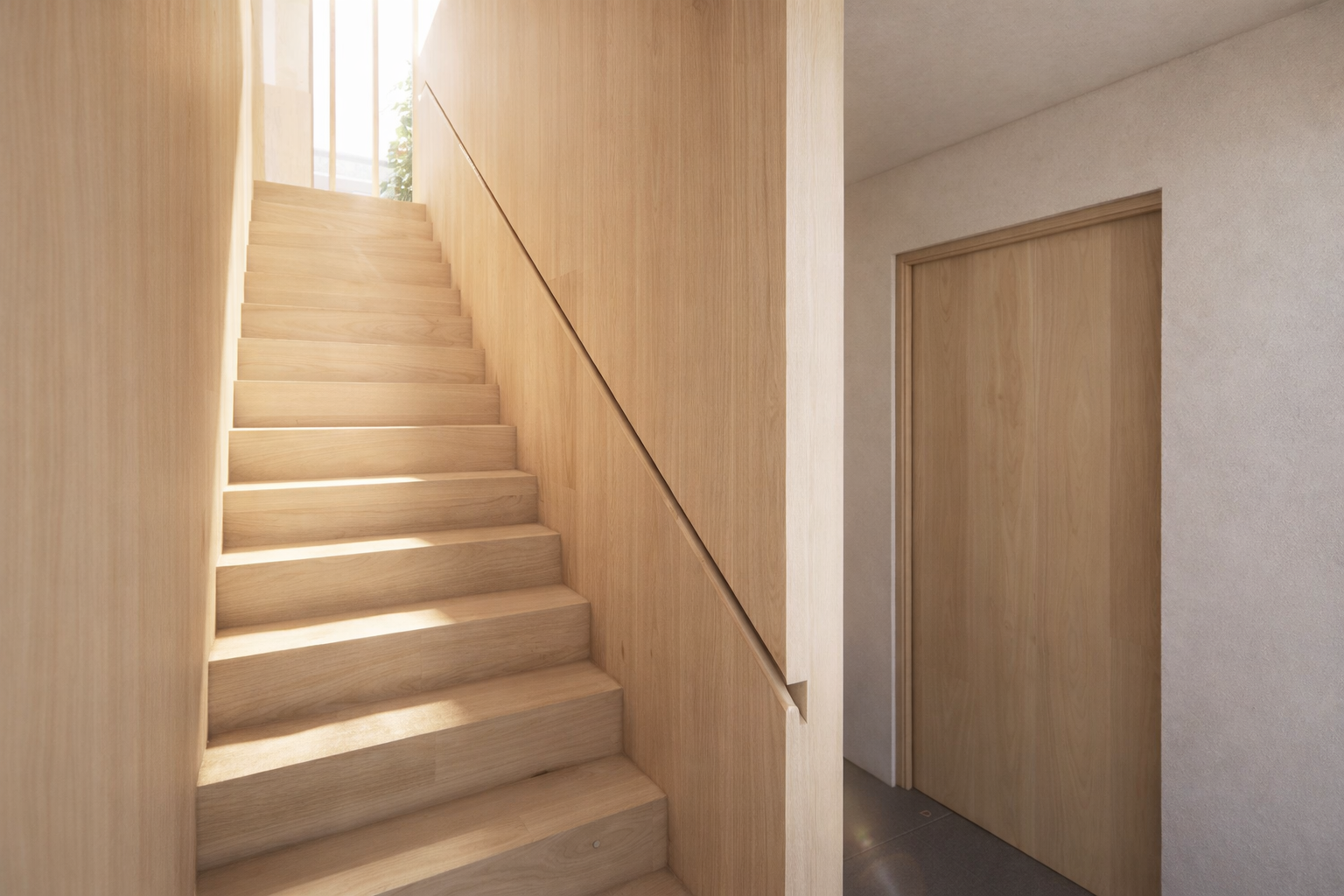
A new mews building in Murrayfield within the Coltbridge and Wester Coates Conservation Area.
The building is set within the rear garden of a townhouse and provides ancillary accommodation including garaging and utility spaces at ground level with habitable rooms above. Its scale and form respond to the surrounding mews context, sitting discreetly within the existing urban grain while maintaining a clear relationship to the main house.
Externally, a simple palette of buff brick and a slate-grey zinc roof reflects the tonality of the surrounding buildings, where buff sandstone and grey slate predominate. The composition is deliberately restrained, allowing the building to read as a natural extension of the mews environment. At first floor level, large pivoting timber louvres provide privacy to the living spaces while introducing a dynamic external element that responds to light and outlook.
Internally, materials are robust and understated, including timber panelling, doors and flooring, with limestone to the utility areas and plaster finishes to walls and ceilings. The plan is arranged to make efficient use of the compact footprint, creating a calm and practical set of spaces suited to everyday use.
Project page
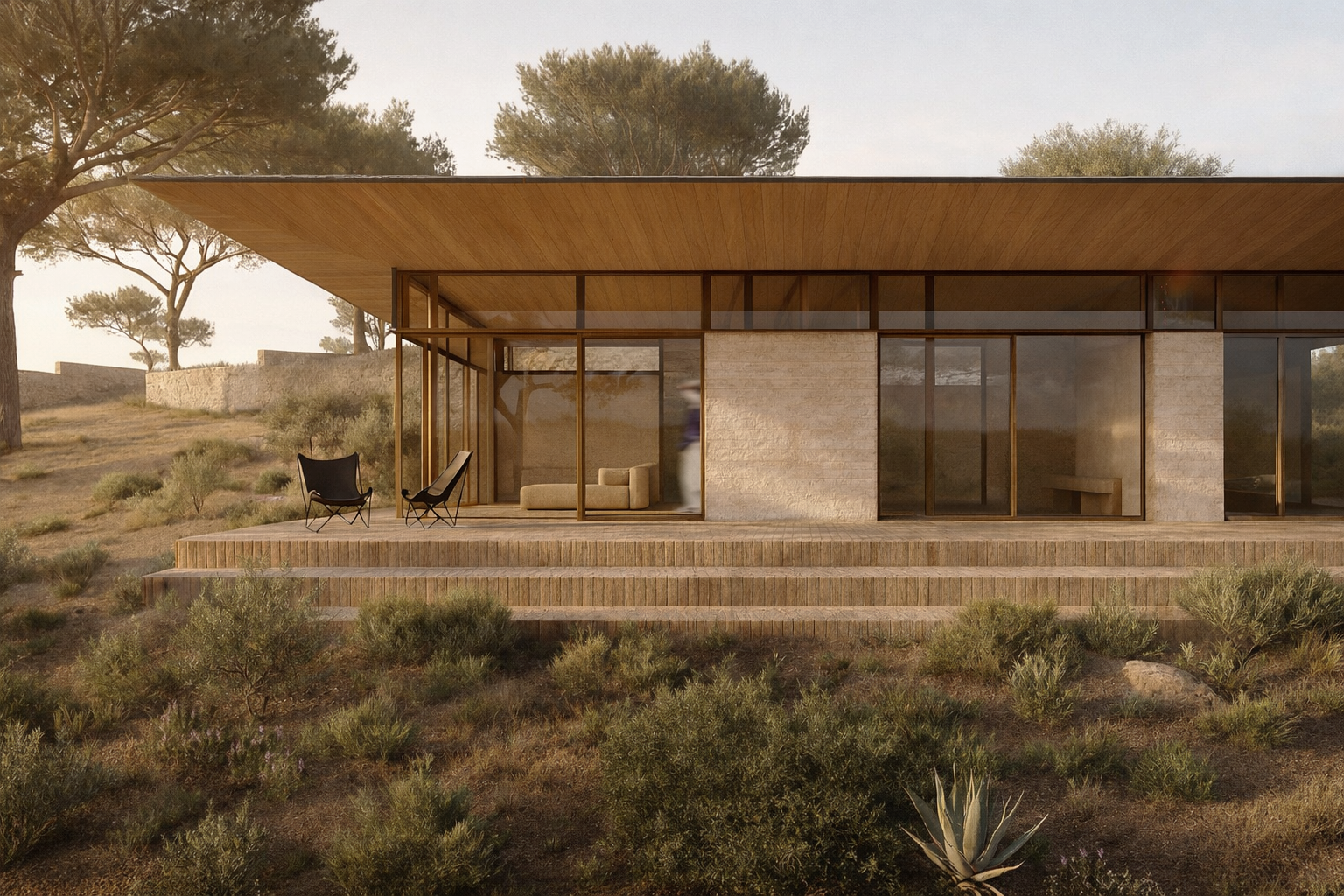
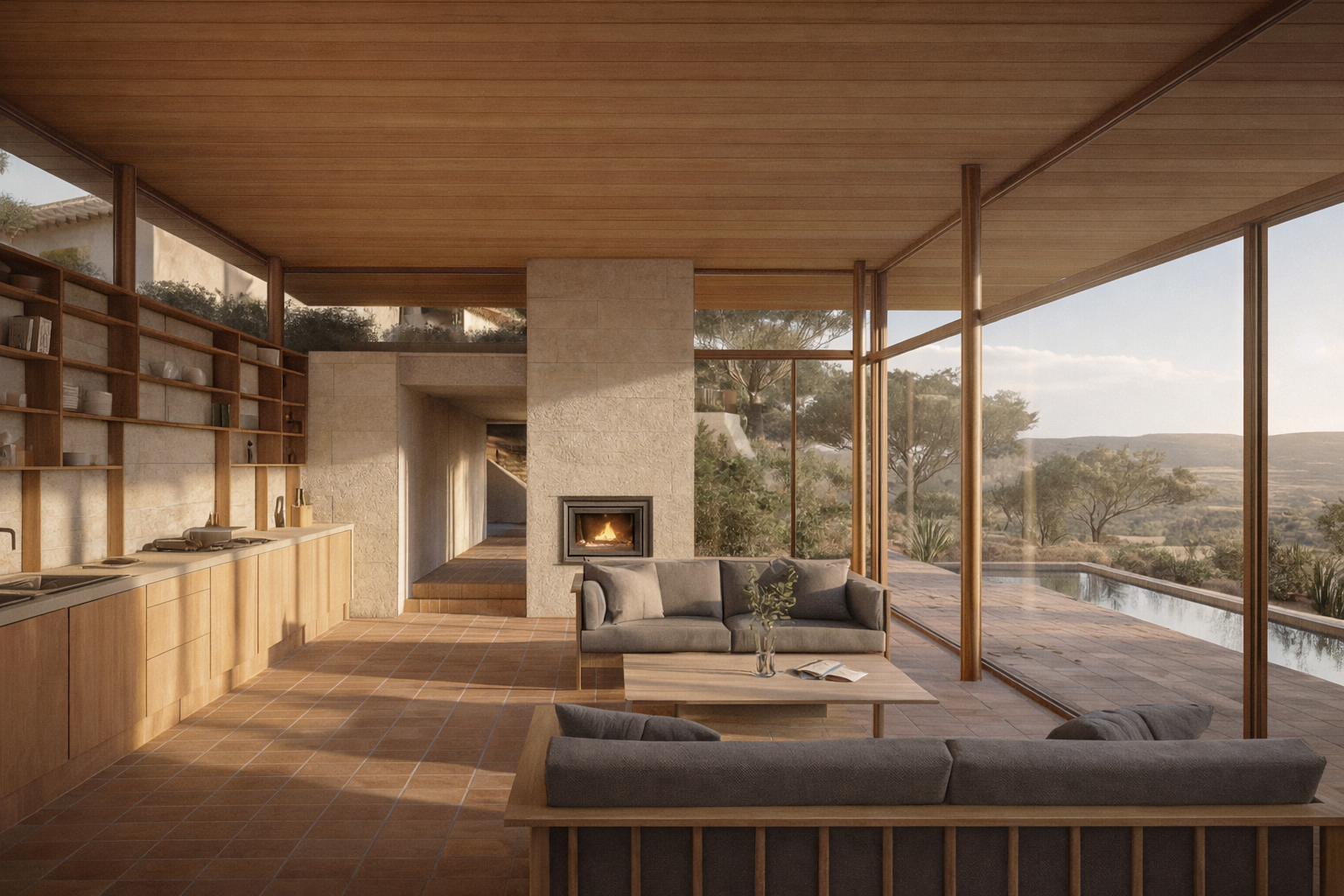
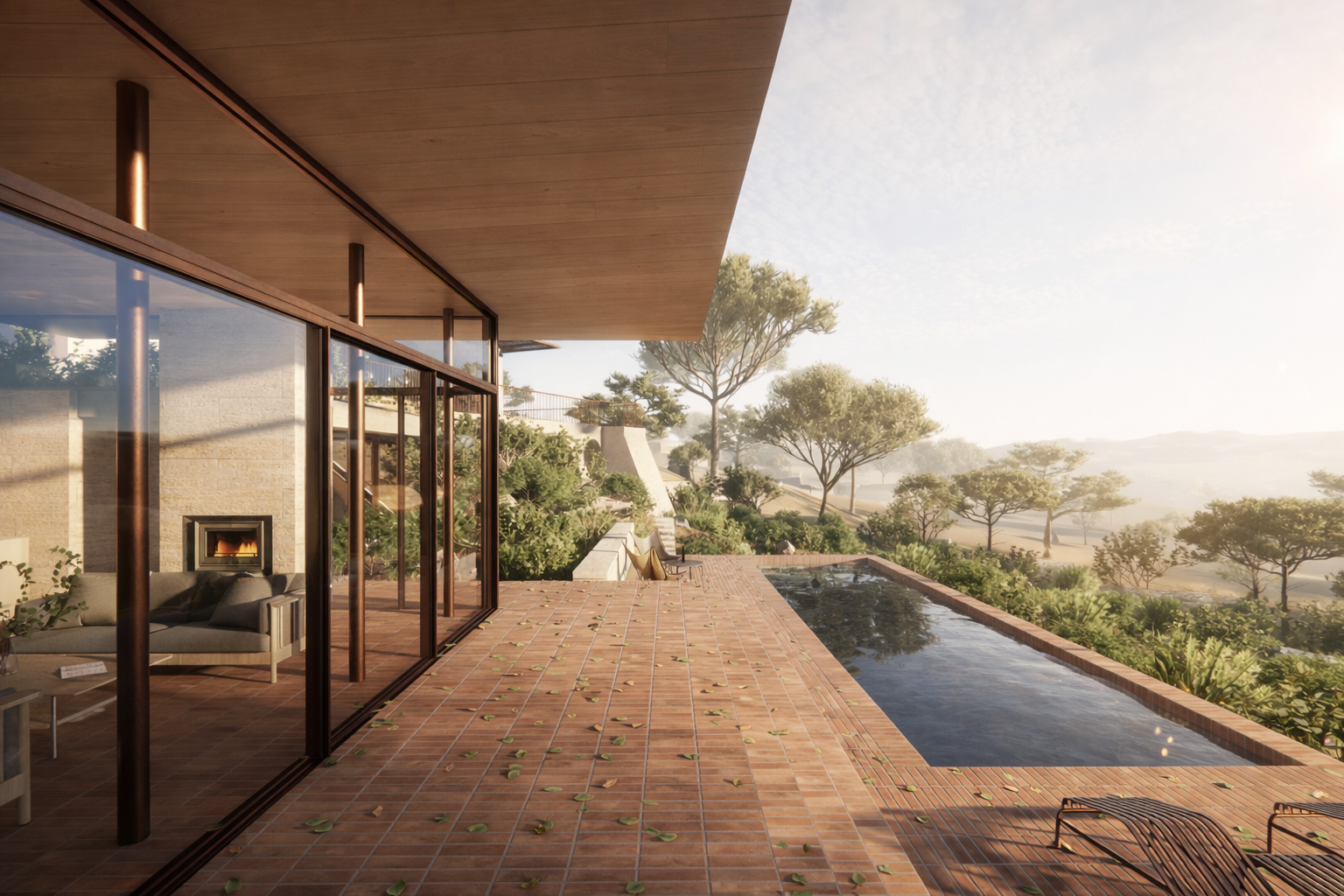
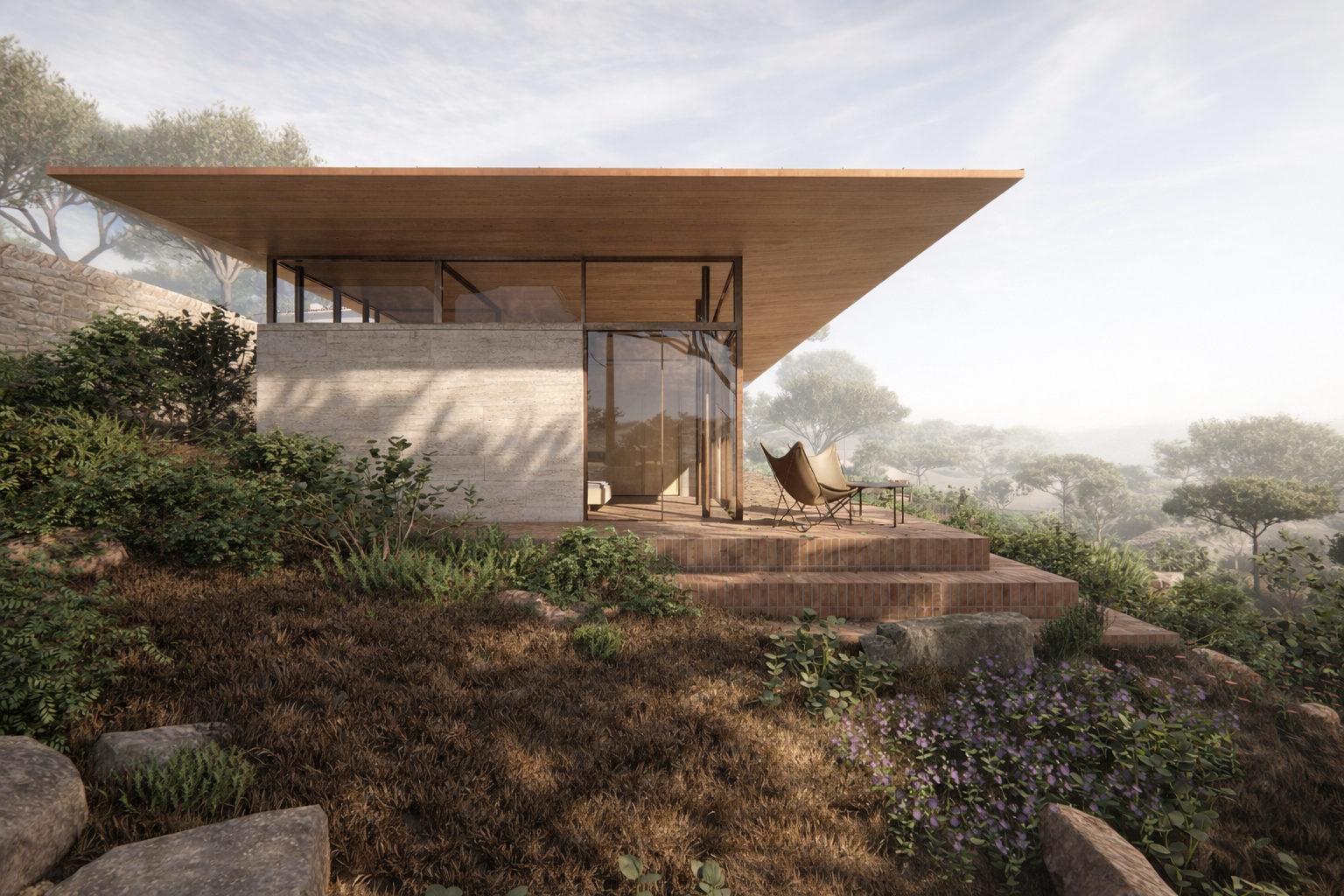
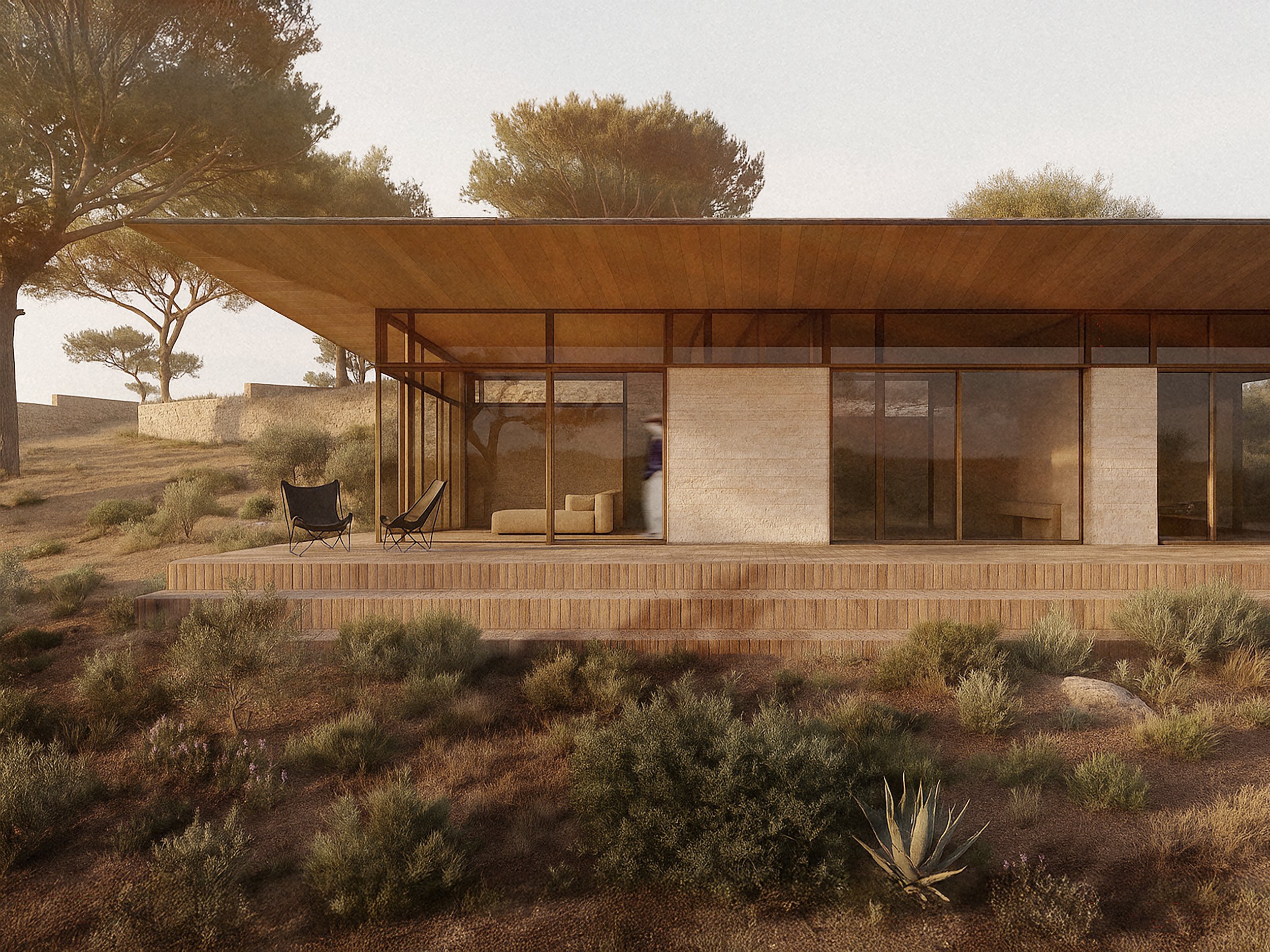
A new house in the hills above Loulé in the Algarve.
The house is set within a hollow in the landscape, allowing it to sit low within its site and respond to the surrounding topography. A deep overhanging roof extends beyond the walls to provide shelter from the summer sun, creating shaded external areas and reinforcing the relationship between building and ground. The form is simple and grounded, with the building shaped by climate, orientation and views.
Materials are drawn from the local context, including Portuguese limestone, clay tiles and clay plaster, with an oak-lined soffit and a copper roof providing durability and weather protection. Large metal-framed openings are positioned to capture long views across the surrounding hills and valleys towards the Atlantic, while maintaining a sense of enclosure within the landscape.
A series of terraces steps down the hillside, allowing the house to extend outward and form a clear connection to its setting. A swimming pool is set within this sequence, integrated into the slope. Low-impact systems, including ground-sourced water, ground source cooling, photovoltaics and battery storage, support a low-energy approach and form part of the wider Alfeição estate project.
Project page
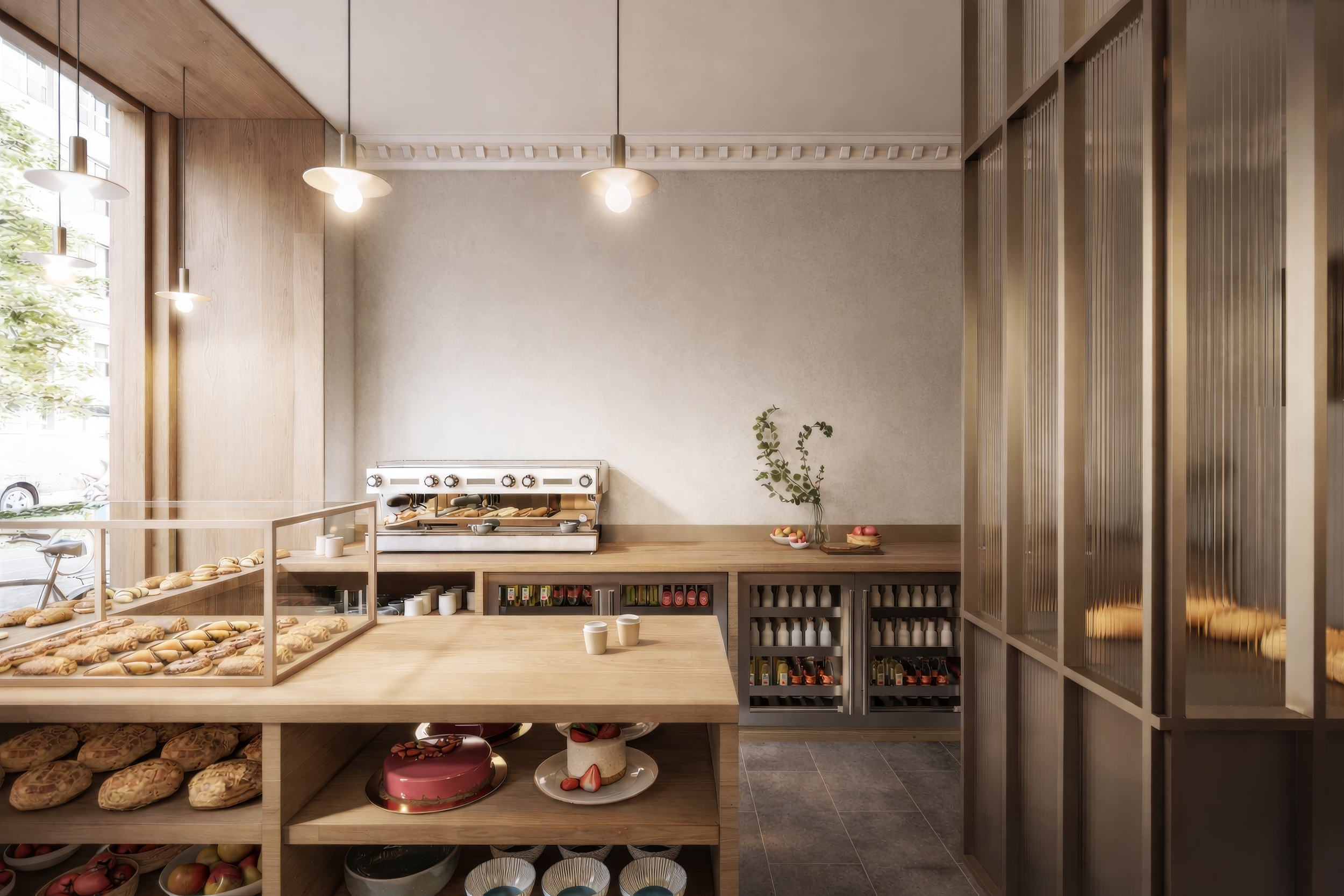
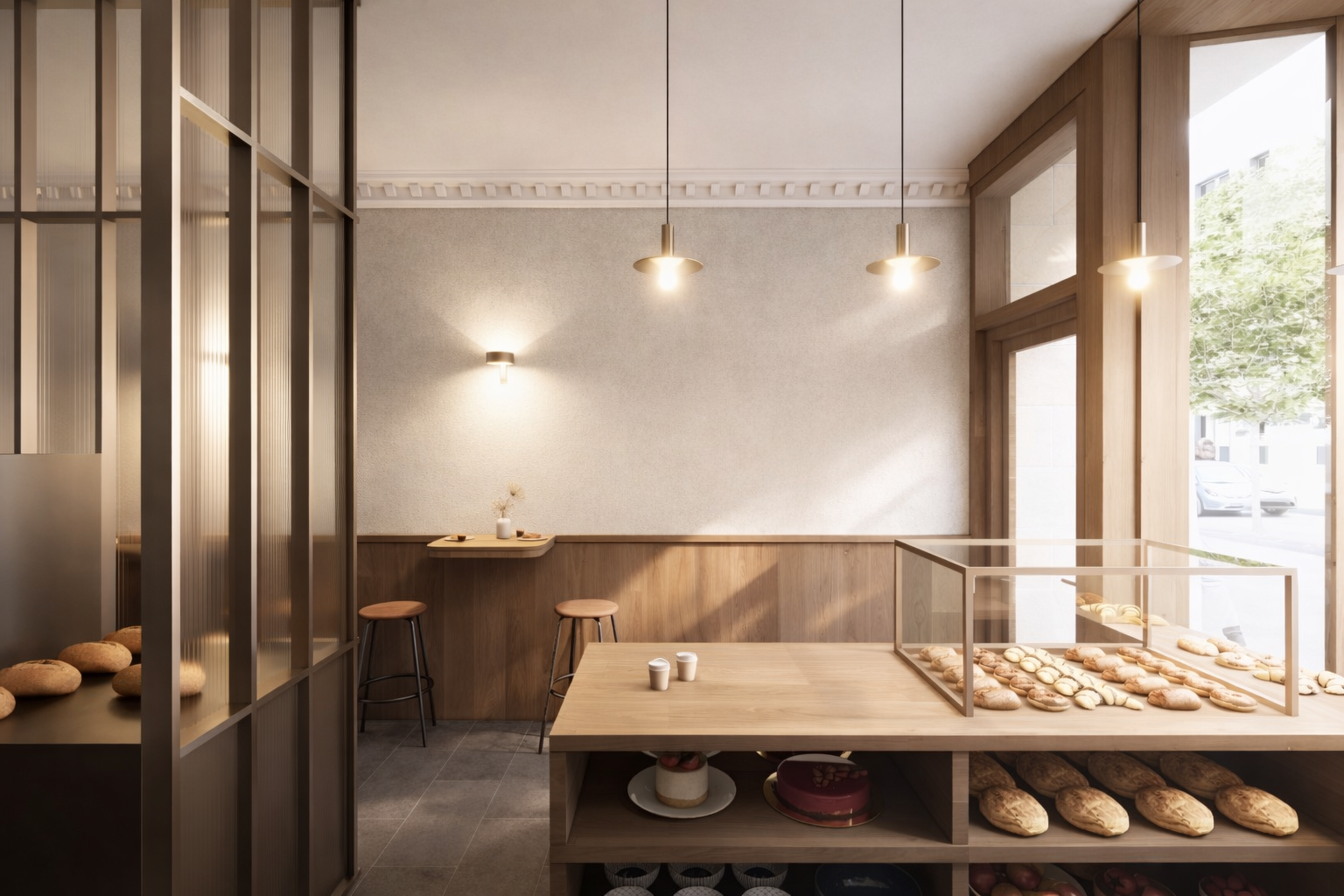
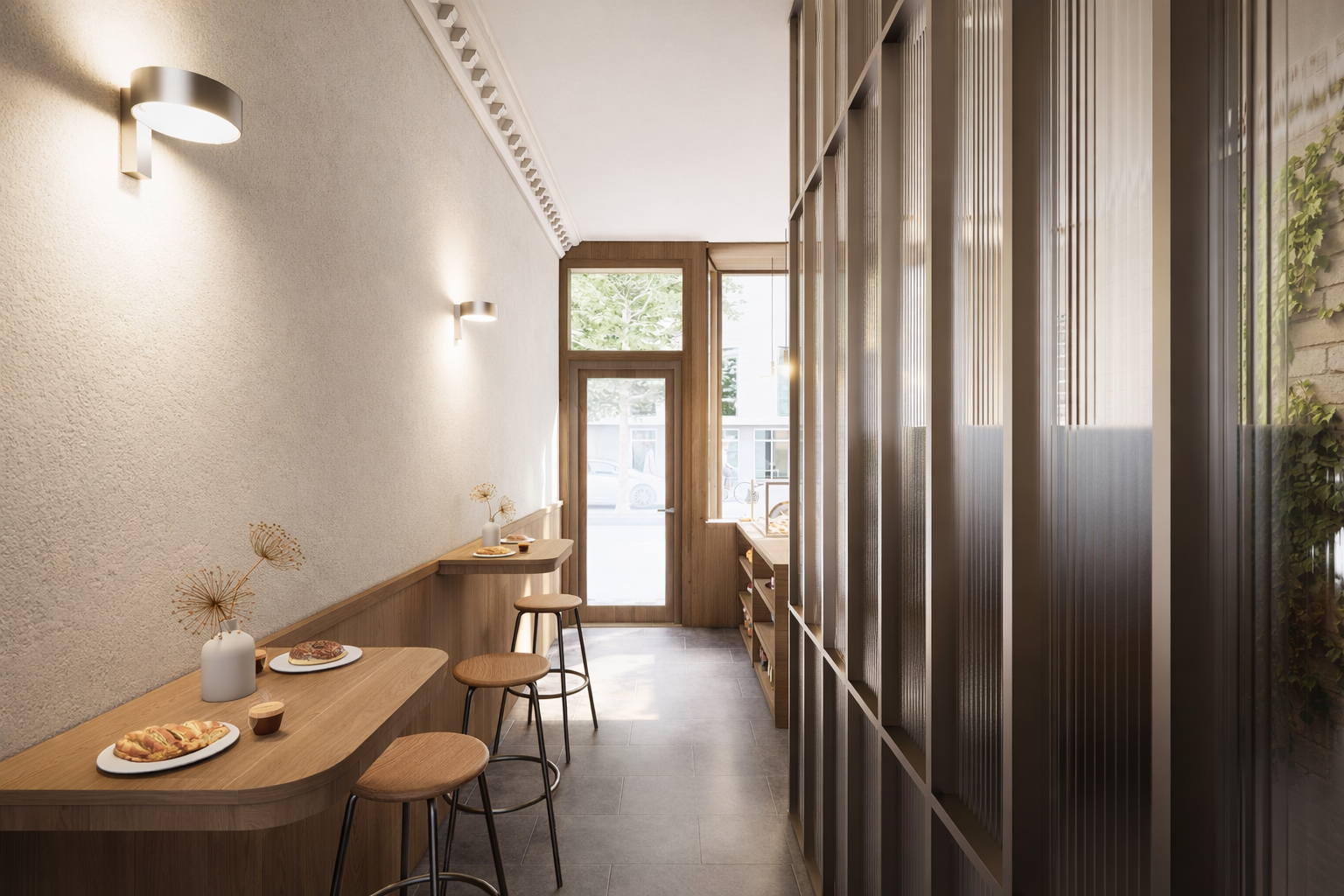
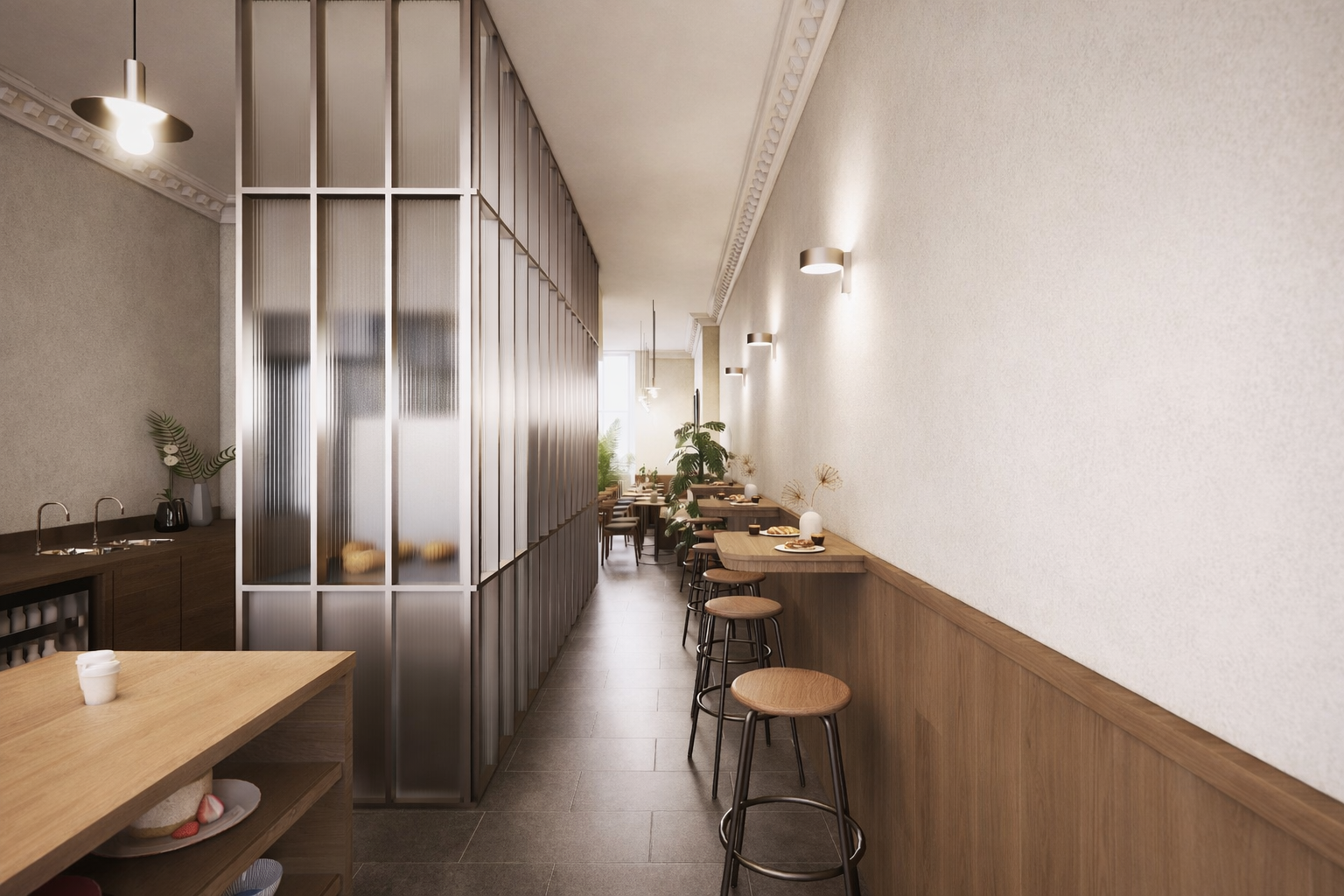
The refurbishment of a café interior in Haymarket, Edinburgh.
The project reworks an existing space to create a clear and durable interior suited to everyday use. The layout is simplified to improve flow between customer and working areas, while maintaining a sense of openness within the plan. The intervention is restrained, allowing the proportions of the existing building to remain legible.
A minimal palette of robust natural materials defines the space, including walnut counters, wall panelling and tables, paired with stone floors and bronze metalwork. A bronze screen separates the kitchen from the customer area, incorporating fluted glass to allow light to pass through while maintaining a degree of privacy. This element provides a clear threshold within the plan while retaining a visual connection between spaces.
Existing features, including the shopfront and cornices, are restored and integrated into the design. Walls and ceilings are finished in a simple palette of warm greys and whites, allowing the timber, stone and bronze elements to take prominence. Bronze is used consistently throughout, from the screen and signage to ironmongery and lighting, giving the interior a cohesive and understated character.
Project page
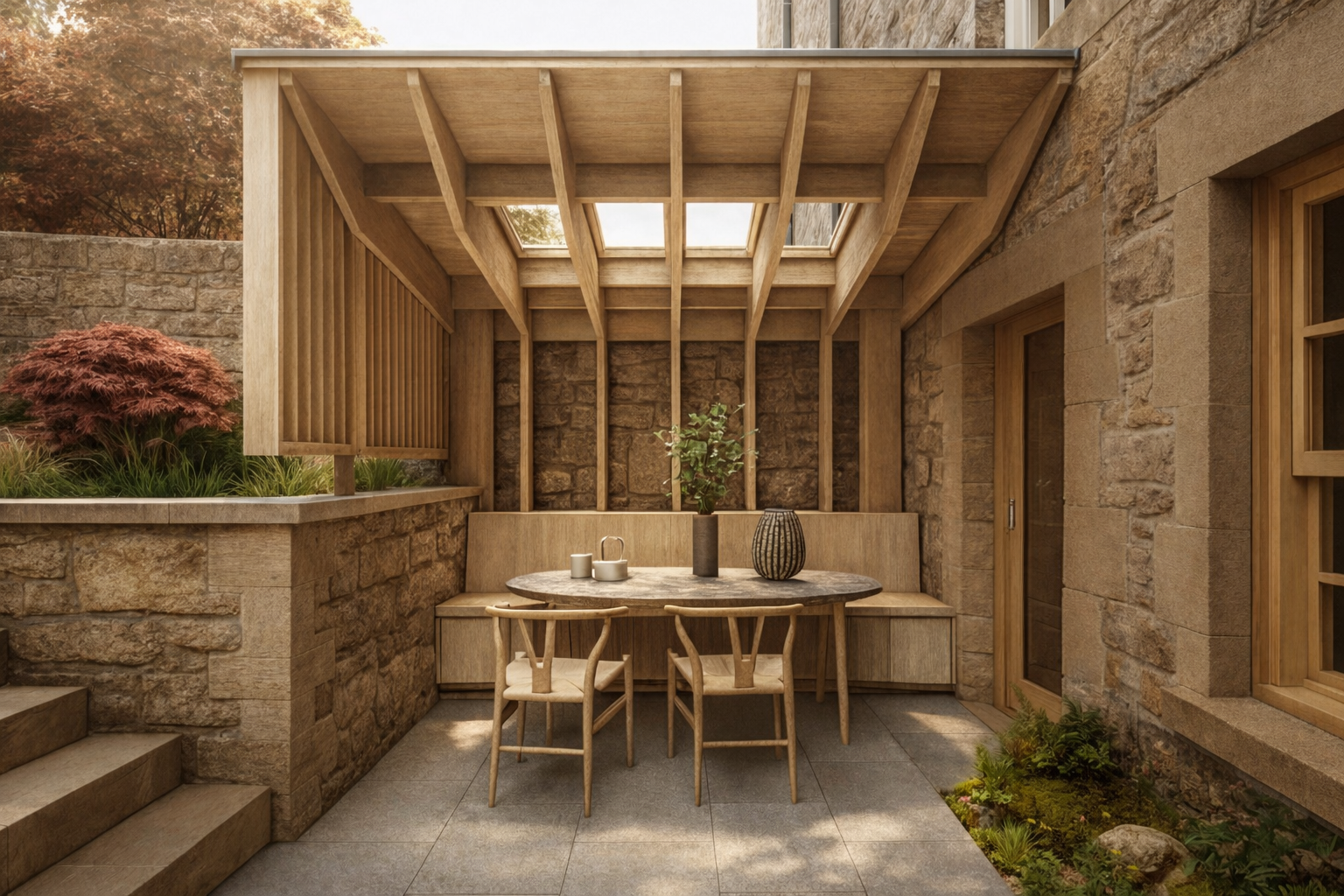

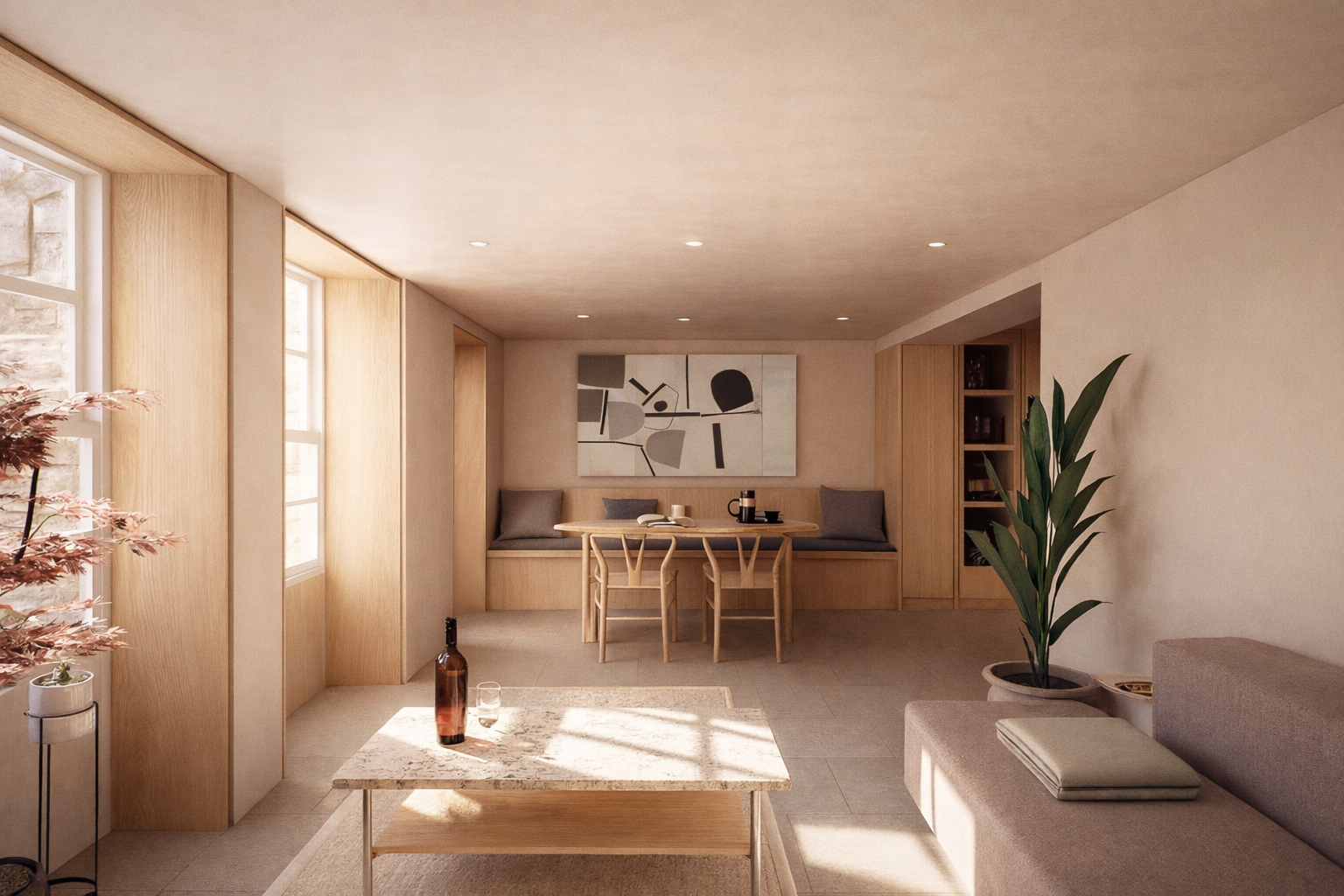
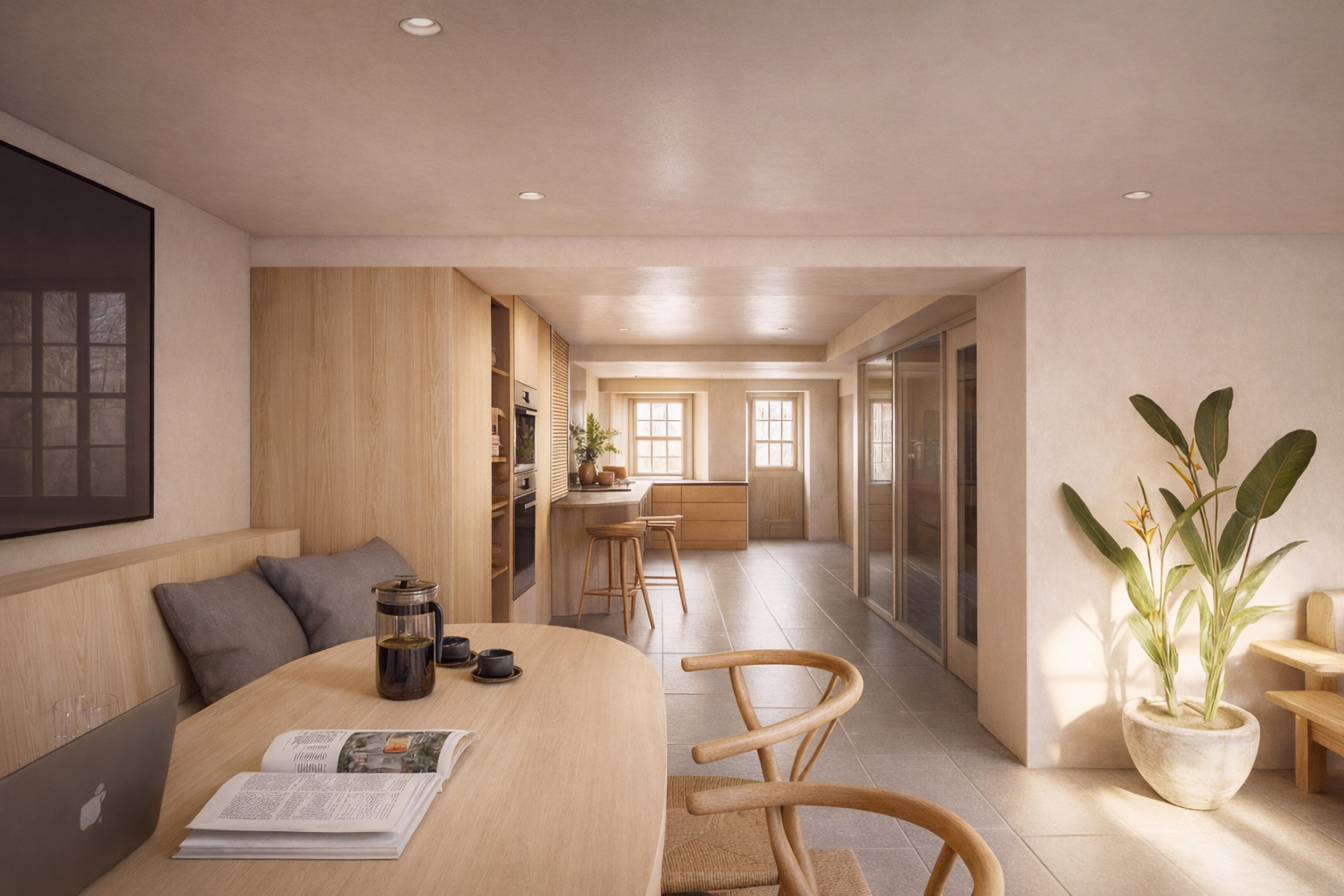
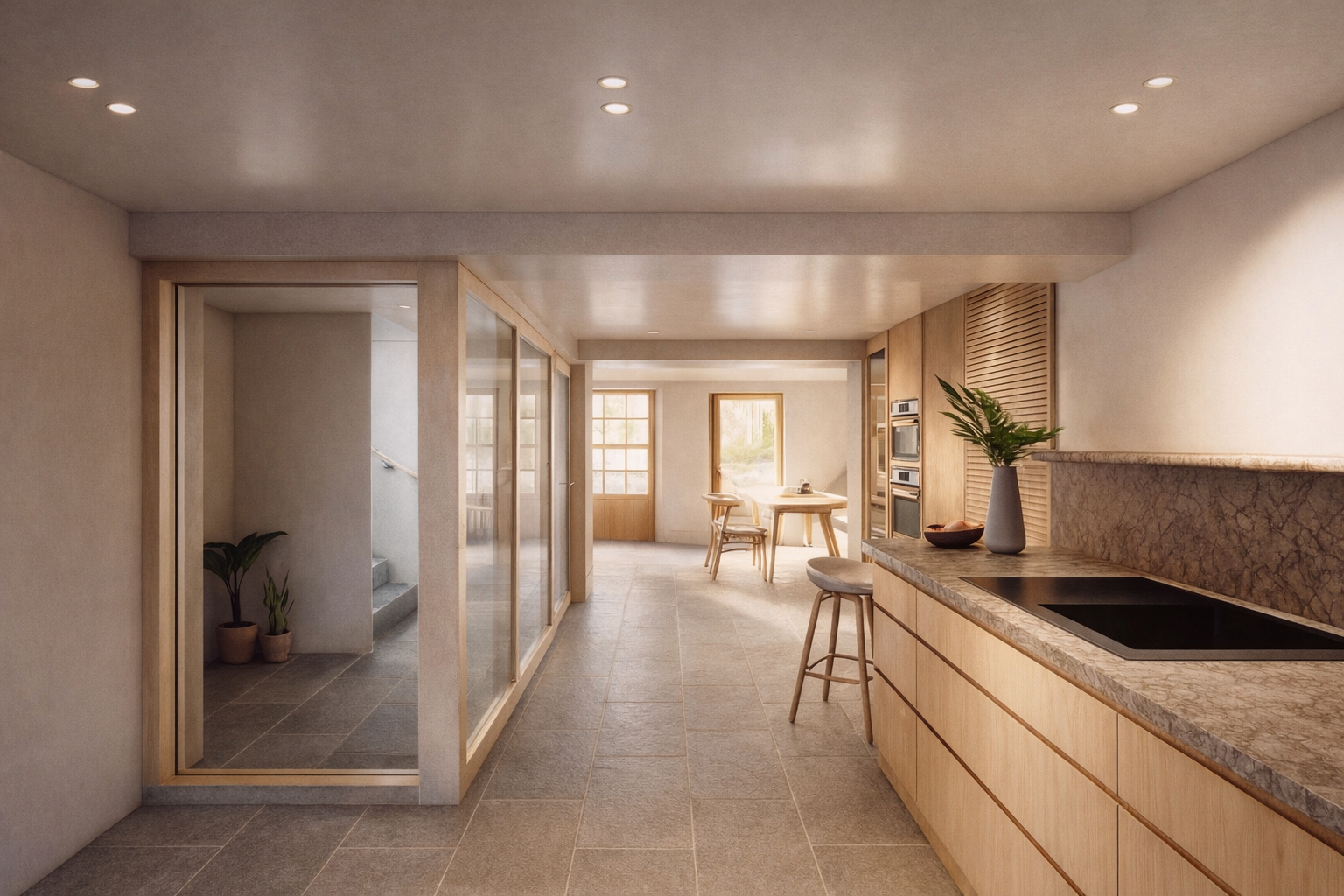
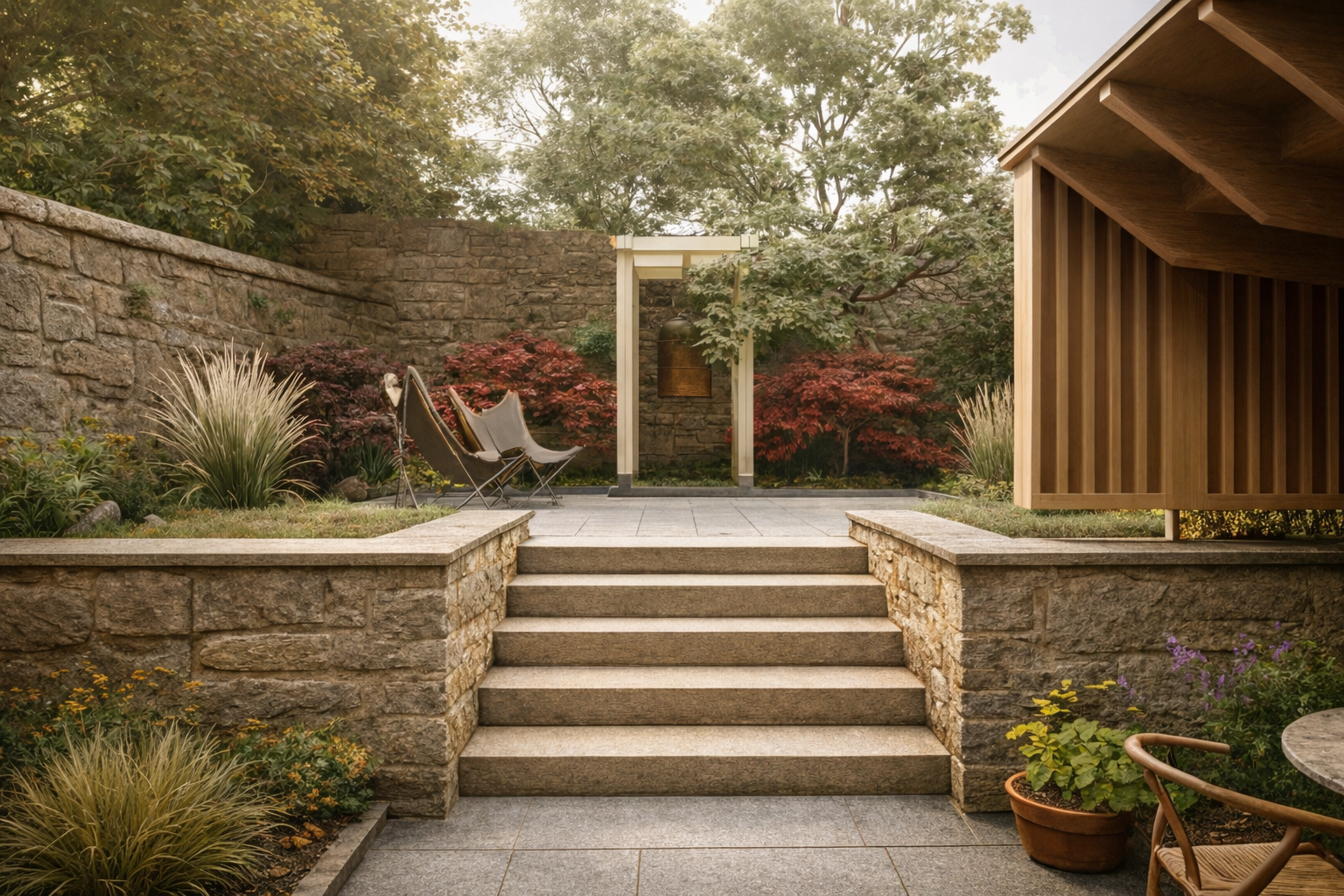
The reworking of the lower ground floor and garden of a Category A listed townhouse in Stockbridge, Edinburgh.
The project reshapes the relationship between house and garden, opening up the lower level to form a more generous and connected set of spaces. Working with a landscape architect, the garden is extensively remodelled, with three timber-framed structures introduced to provide sheltered areas for sitting and outdoor use. Together, these elements extend the living space outward and create a more continuous connection between interior and exterior.
Internally, the lower ground floor is reconfigured to form a distinct environment within the house, set in contrast to the more traditional rooms above. Light is drawn deeper into the plan, and the arrangement is simplified to create a calm and legible sequence of spaces suited to everyday living. Openings are carefully positioned to strengthen the connection to the garden and to frame views across the new landscape.
The building fabric is upgraded to improve comfort and performance, including a new insulated ground-bearing slab, underfloor heating and improved glazing. Natural materials are used throughout, including limestone floors, light oak linings, Douglas fir structures and clay plaster finishes, giving the spaces a durable and consistent character.
Project page
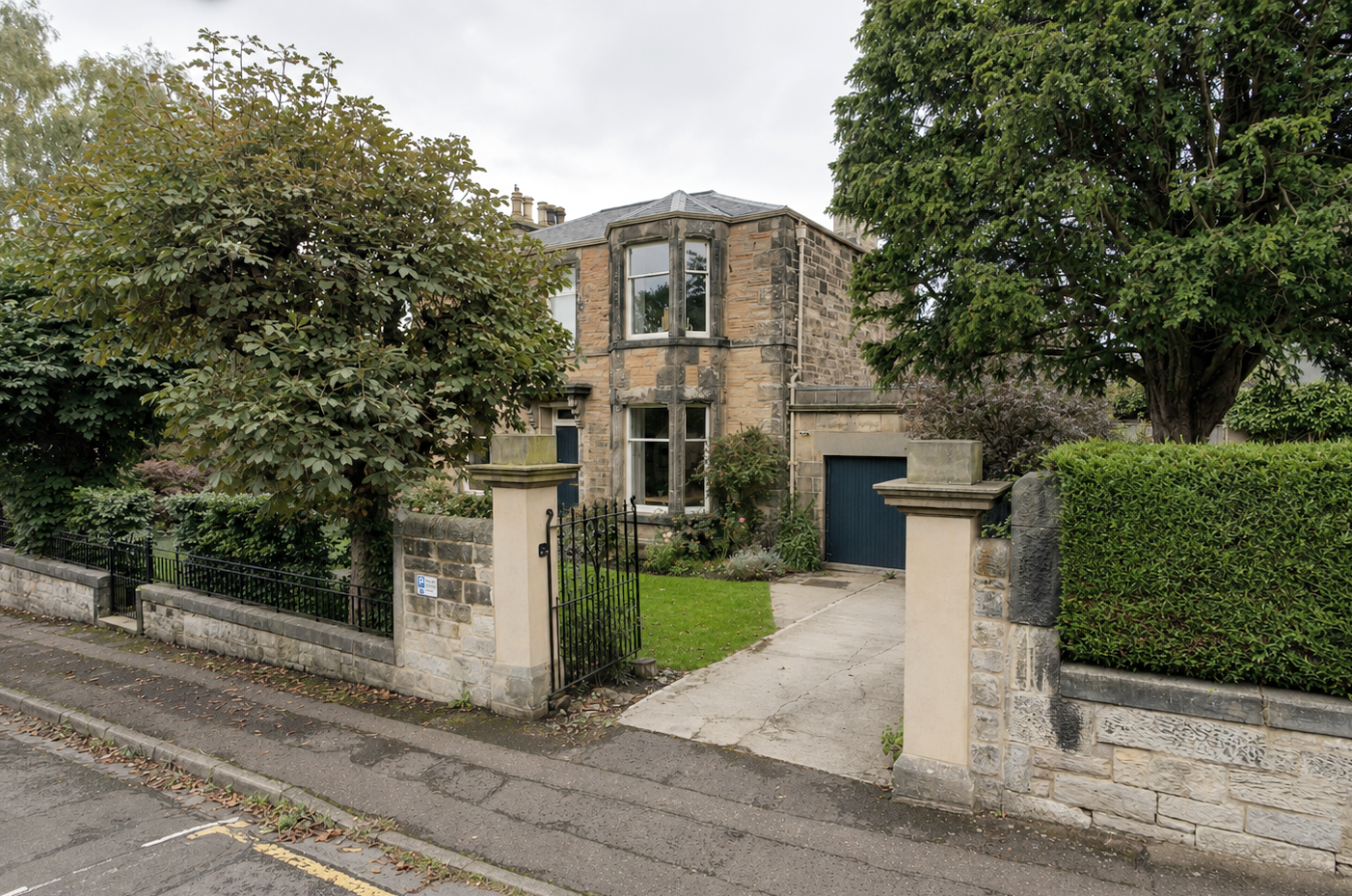
A new garden extension to a family house in Edinburgh’s Grange Conservation Area.
This detached villa sits within Edinburgh’s Grange Conservation Area. A dilapidated single-storey addition, affected by damp and rot, is removed and replaced with a new garden extension designed around the practical needs of family life.
The new volume provides an improved utility space, secure cycle storage and direct access into the house. It also opens the principal living spaces towards the rear garden. Painted timber-framed glazing faces a stepped stone terrace, creating a more direct connection between the interior and garden and allowing daylight further into the plan.
The extension has two distinct external characters. Towards the street, a buff stone wall relates to the material and tone of the existing villa. Timber doors provide separate pedestrian and cycle access without giving the practical spaces an overly domestic frontage. At the rear, the stonework is combined with painted timber glazing and a slim zinc fascia to create a lighter garden elevation.
The addition remains deliberately low and subservient to the original house. Its position and material treatment respond to the conservation area while clearly distinguishing the new work from the existing villa.
The project replaces an unsuccessful later addition with a useful and durable series of spaces, improving everyday circulation and establishing a clearer relationship between the house, terrace and garden.
Project page
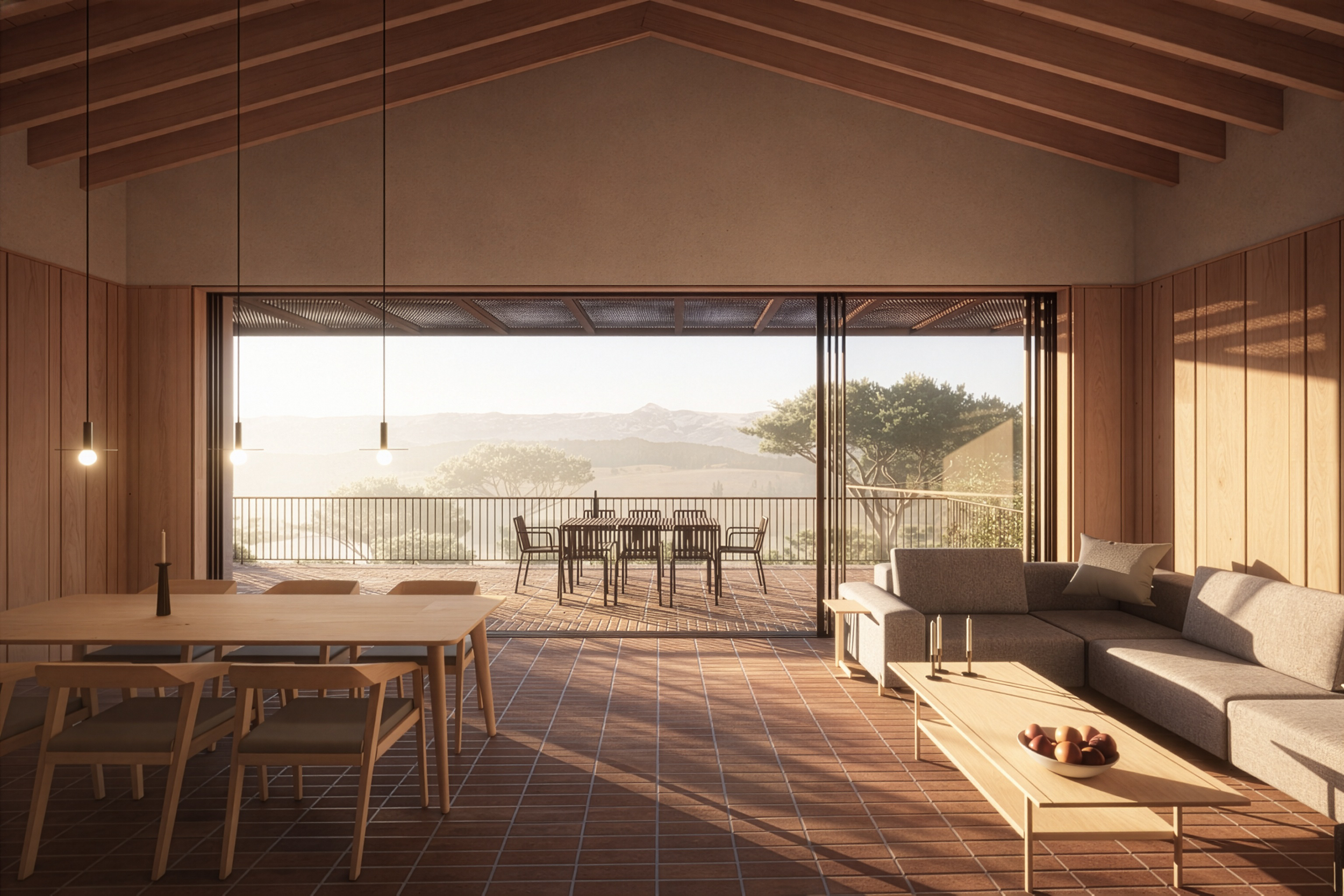
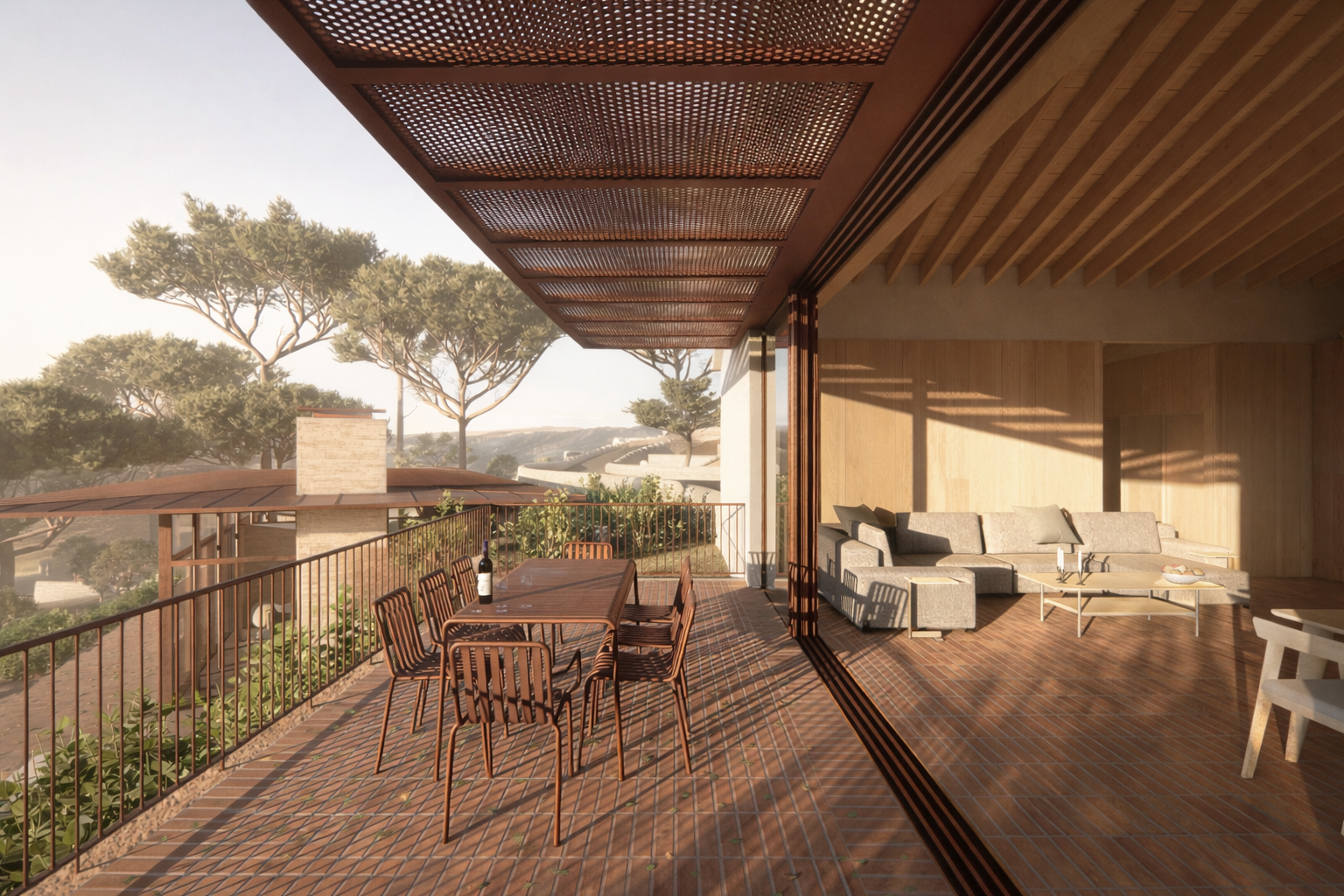
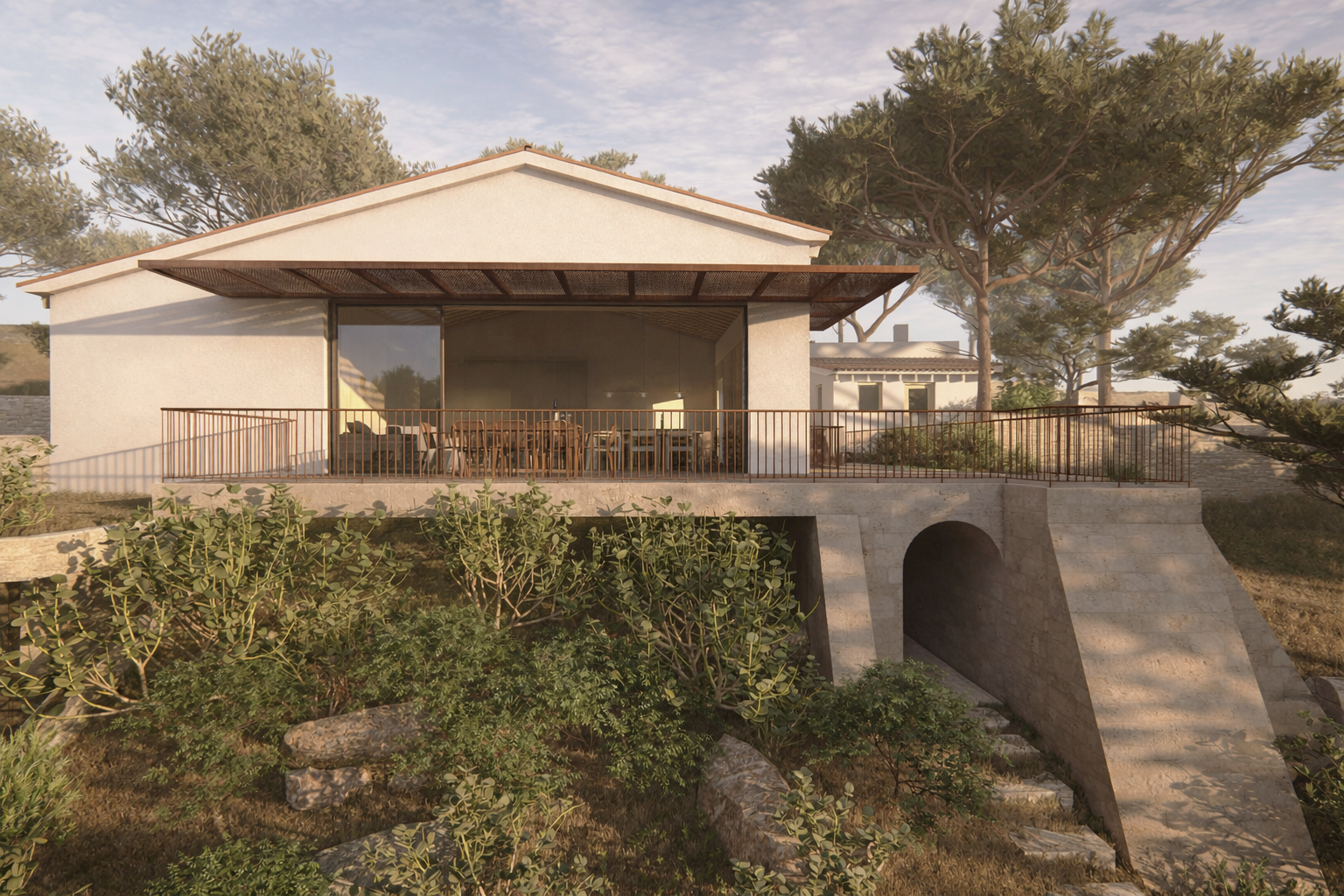
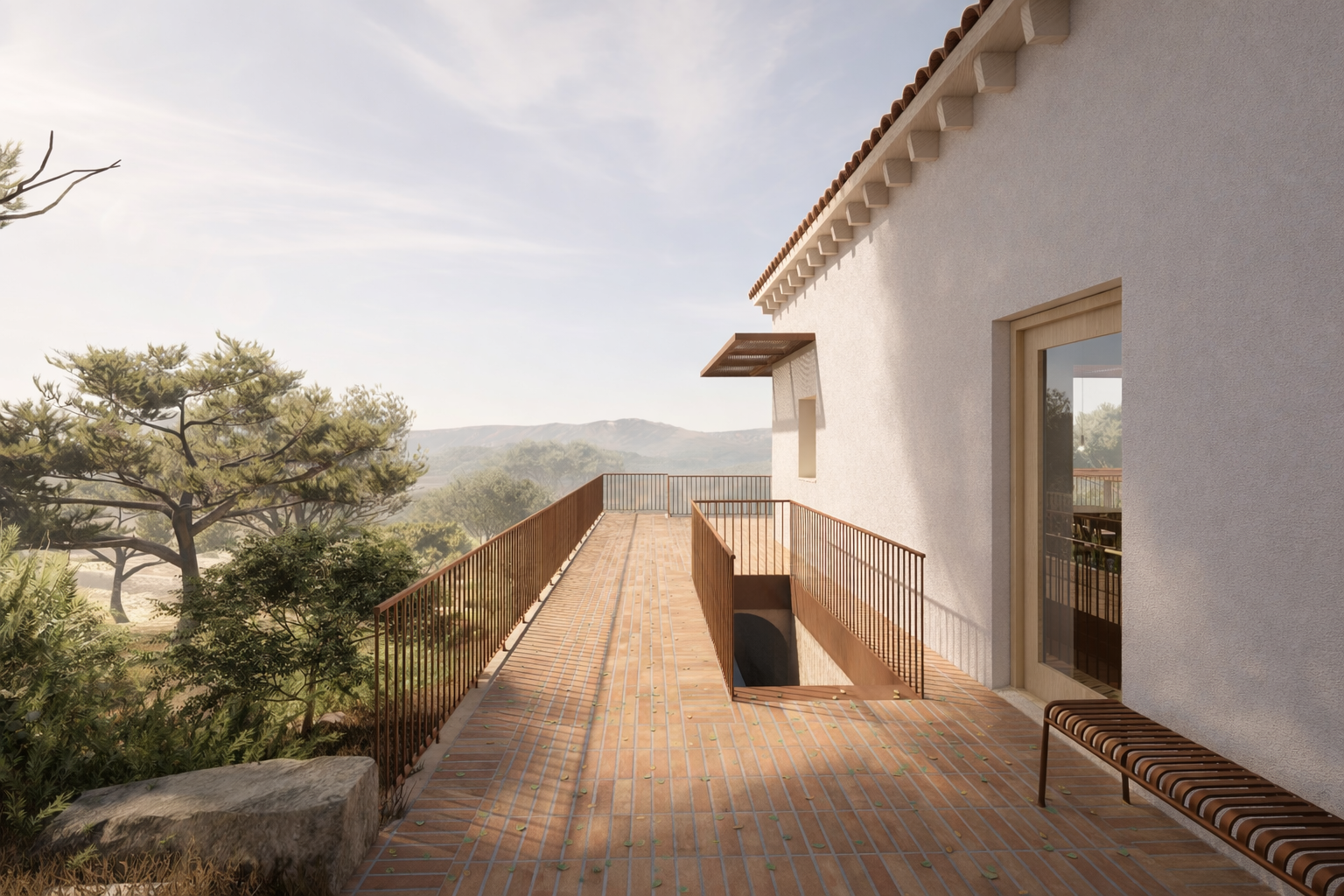
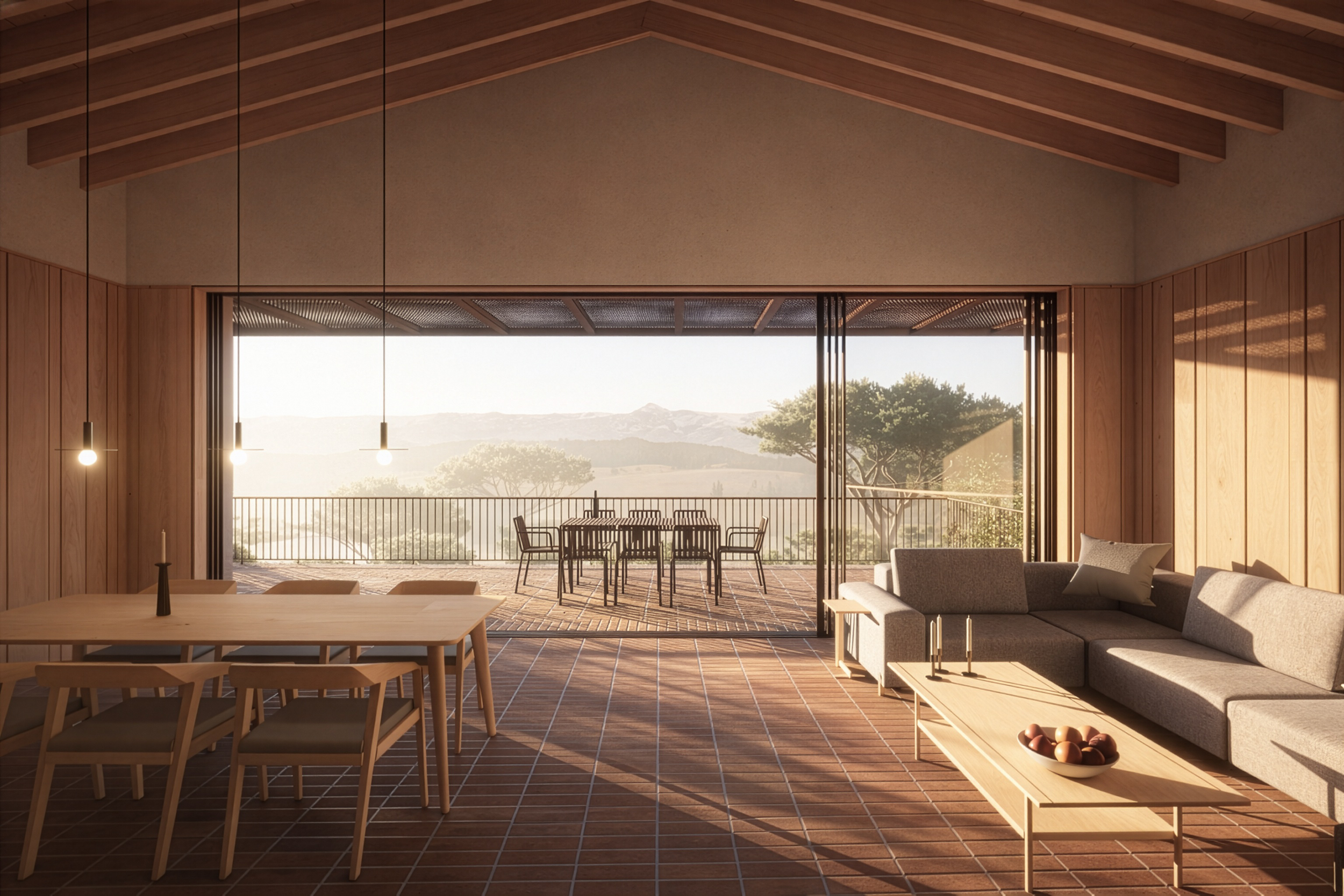
The refurbishment of an existing house in the hills above Loulé in the Algarve.
The house is reworked to strengthen its relationship to the surrounding landscape, with a new living and dining space introduced at first floor level to capture views across the valleys and towards the Atlantic. An existing terrace is extended to form an outdoor dining area, with clay tiles continuing from inside to outside to create a seamless connection between the two.
The building is refurbished using local natural materials, including clay tiles, clay plaster and oak joinery, reinforcing its connection to place. A perforated corten brise soleil is introduced to provide solar protection, reducing heat gain while maintaining outlook. The approach is restrained, allowing the character of the existing structure to remain legible.
Low-impact systems are integrated throughout, including well-sourced water, ground source cooling, photovoltaics and battery storage. The house forms part of a wider project across the Alfeição estate, which includes the refurbishment of several buildings and the addition of new elements, creating a cohesive and adaptable group of spaces within the landscape.
Project page
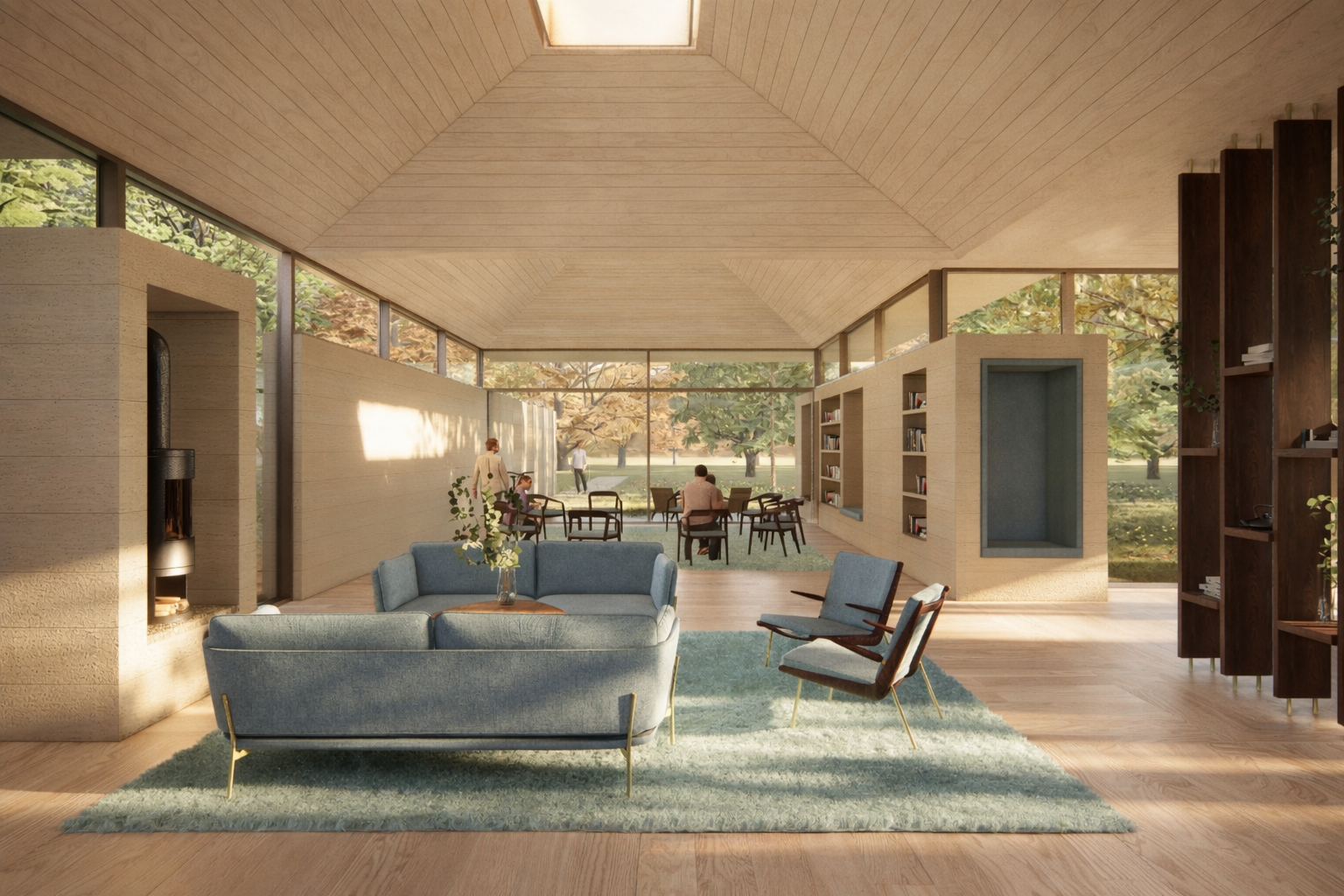
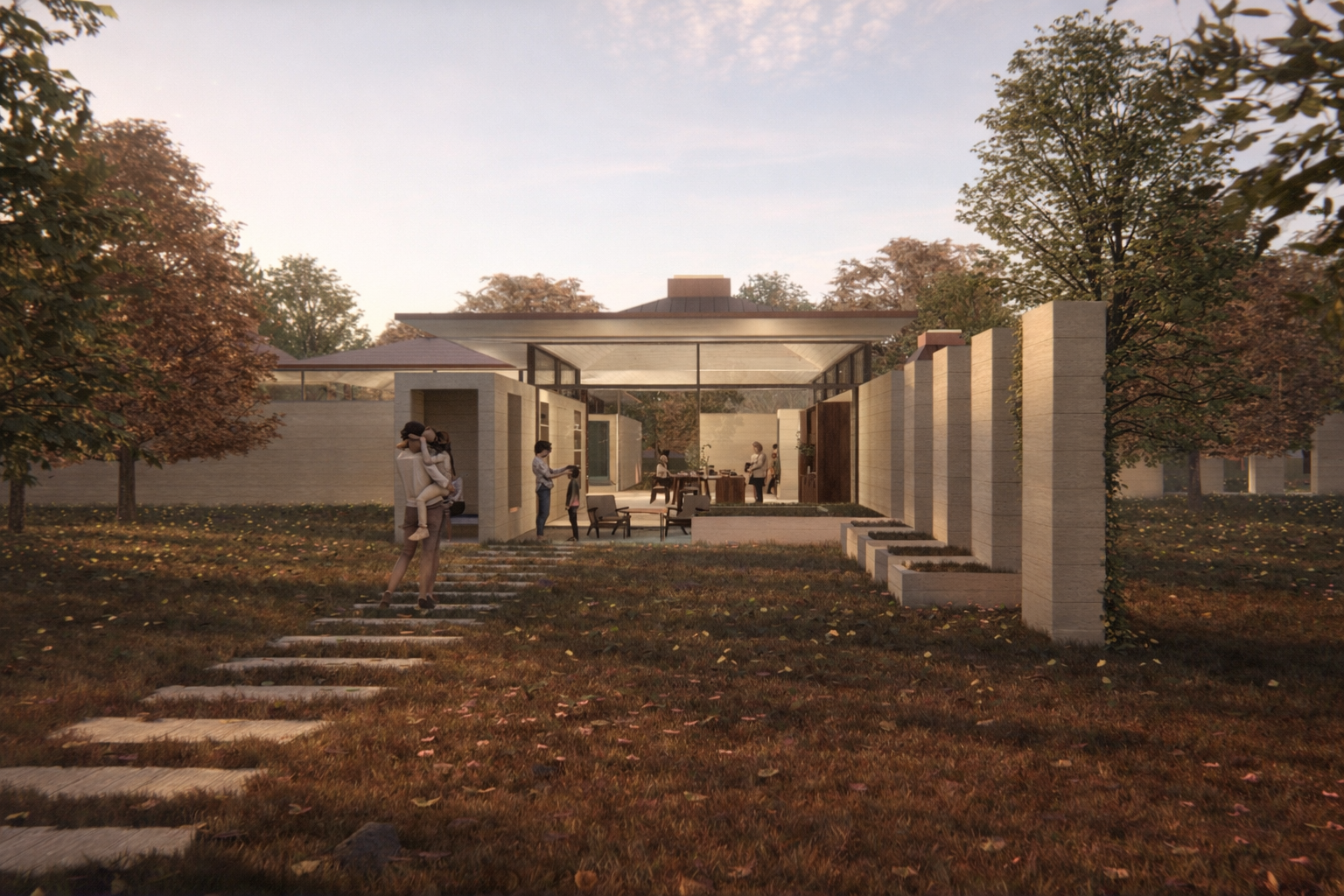
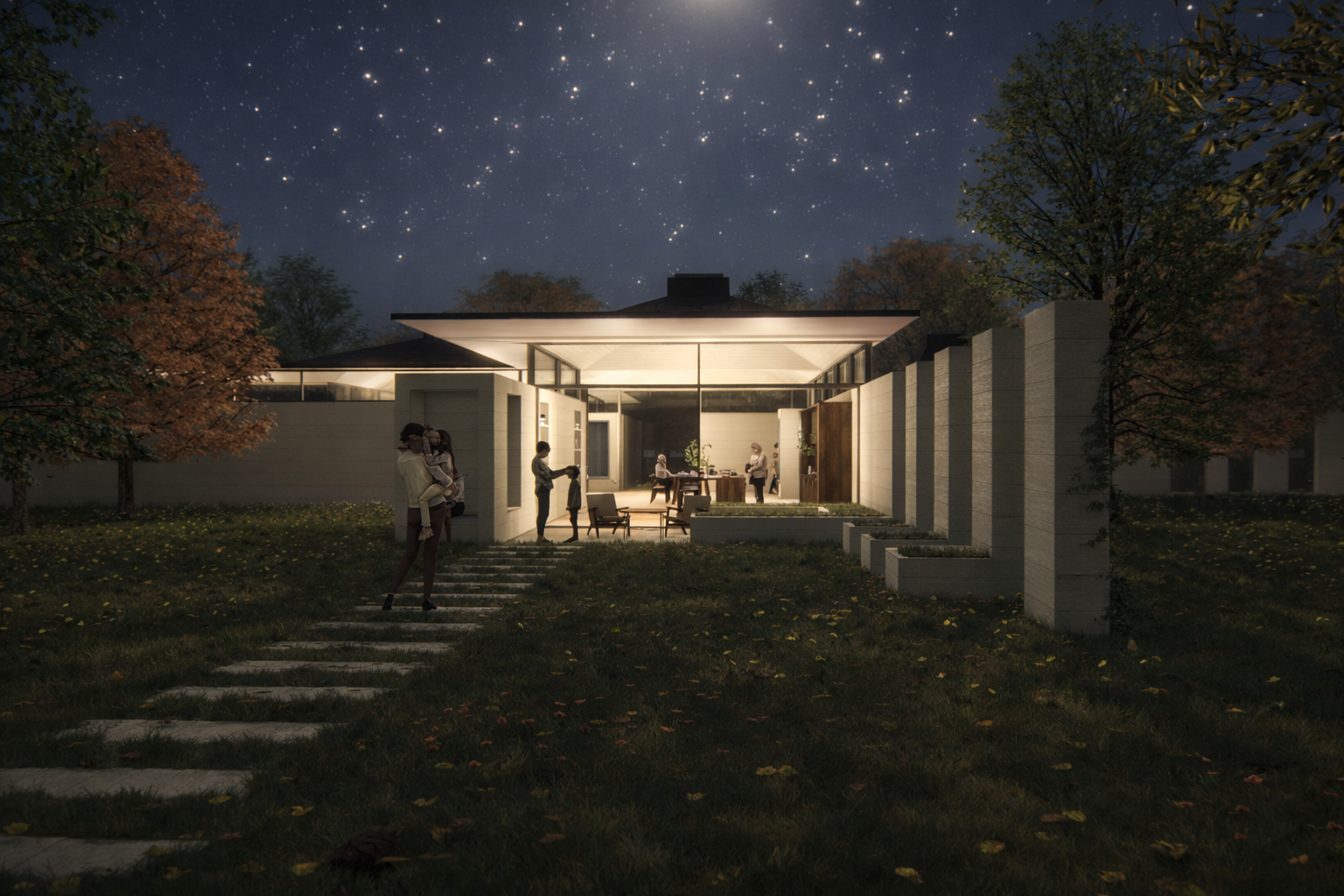
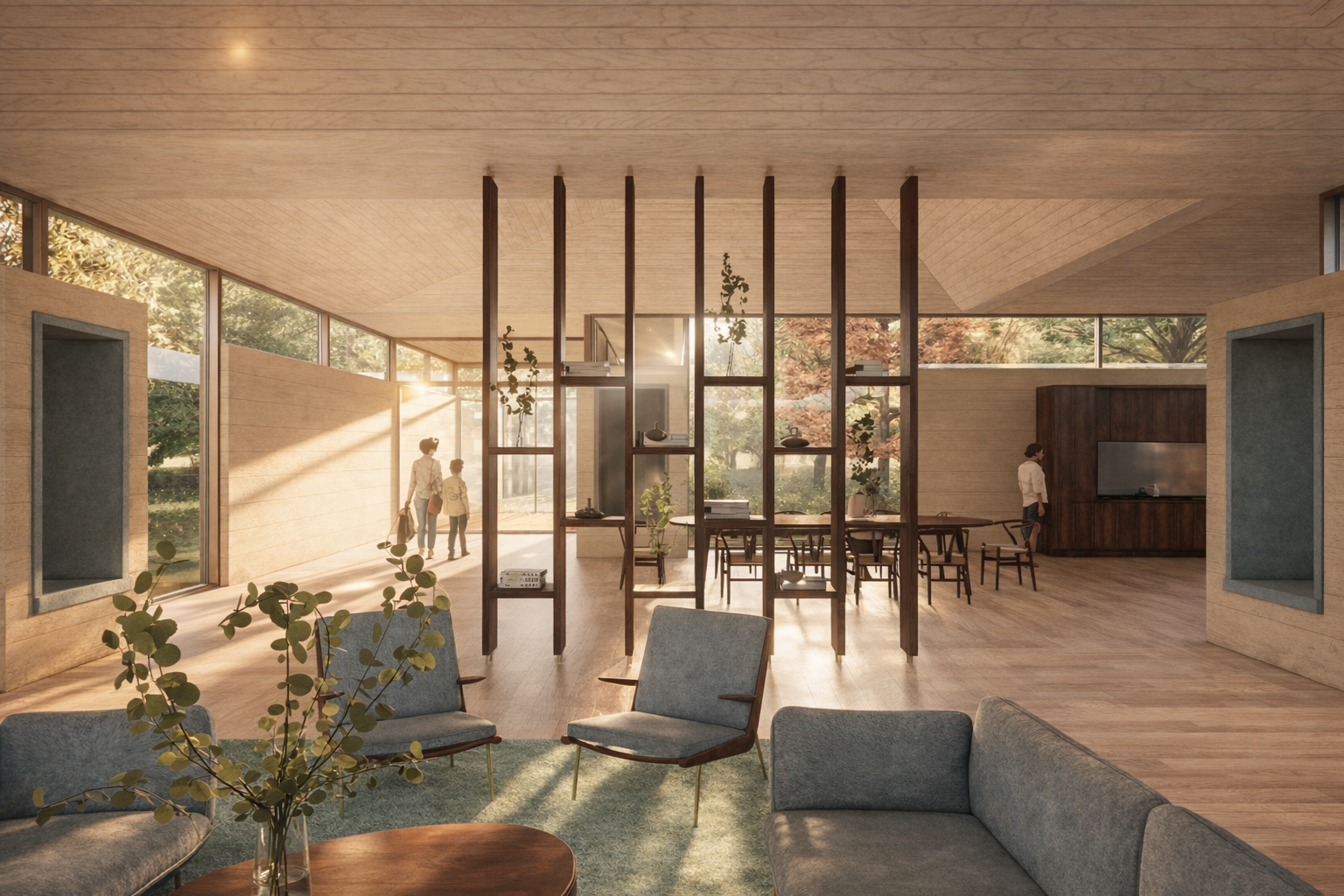
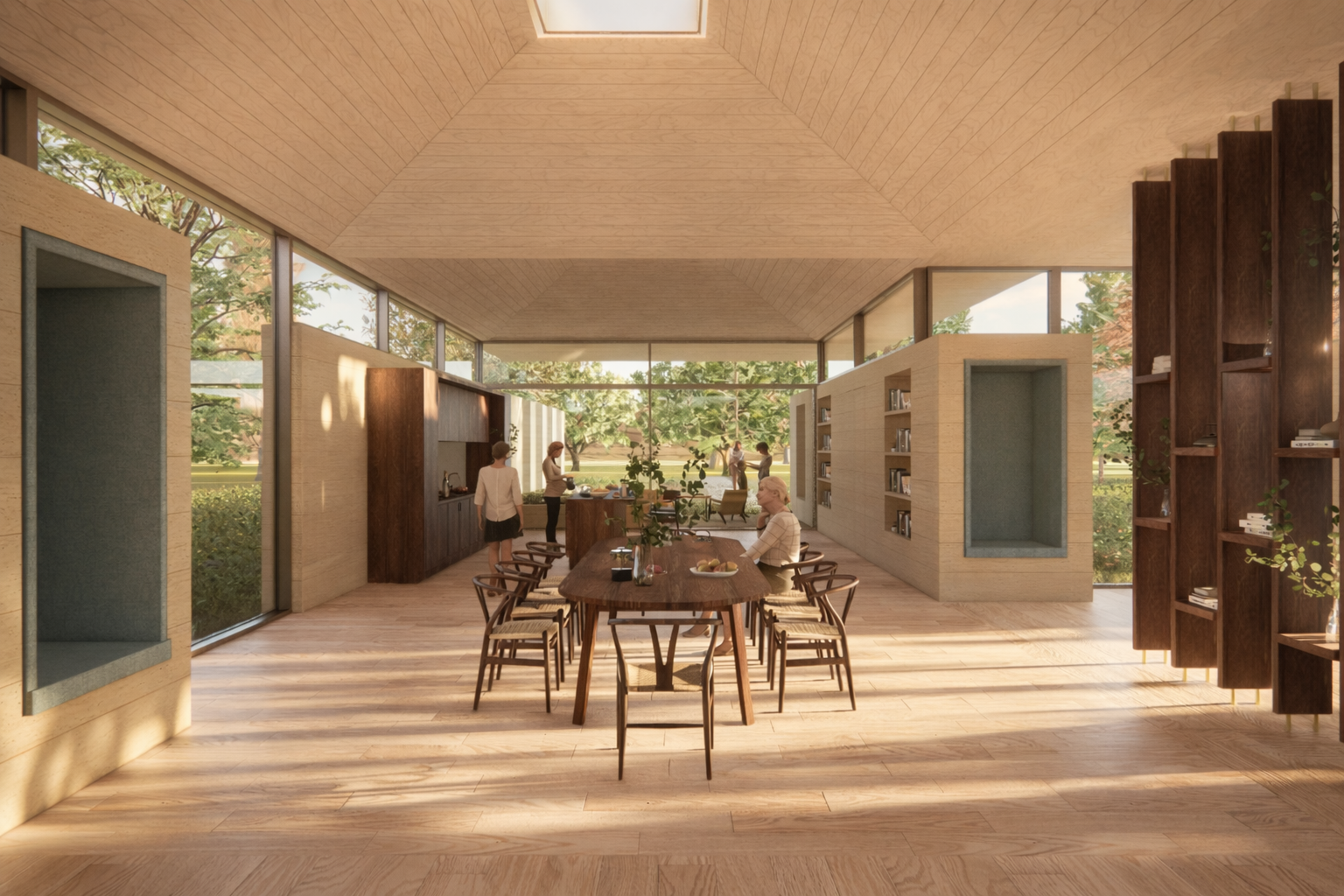
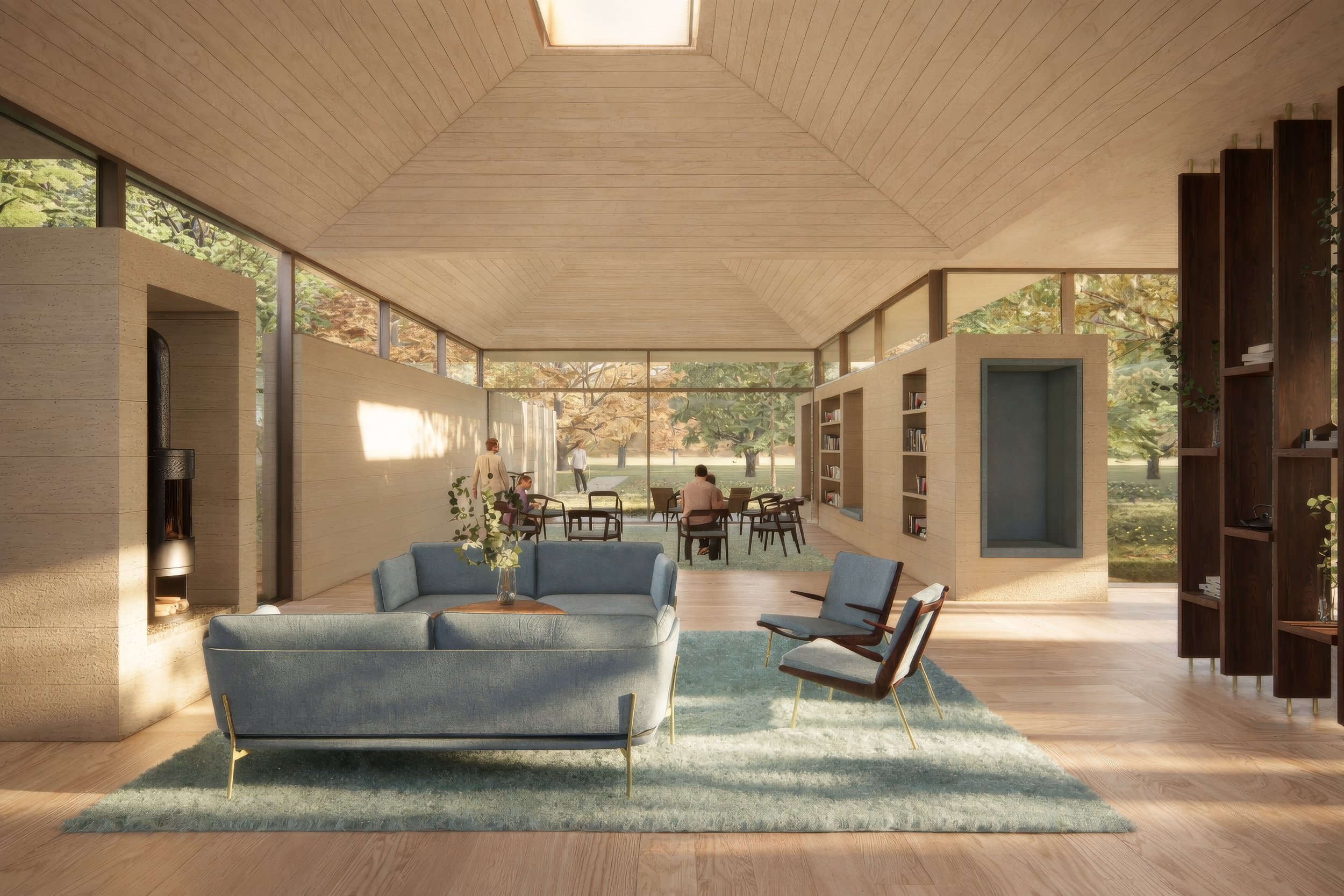
A concept design for a Maggie’s Centre, developed in response to an open competition.
The building is conceived as a calm and welcoming place, organised around a central social space with seating, a fireplace and a shared table. From this core, a series of smaller rooms radiate outward, creating a clear and legible plan that supports both communal activity and more private moments. Each space is connected visually and physically to the surrounding gardens, allowing the landscape to form part of the experience.
The architecture is defined by a simple and robust construction. Thick perimeter walls provide a sense of enclosure and stability, while accommodating storage and support spaces, including cloakrooms, kitchen areas and flexible partitions. This allows the primary rooms to remain open and uncluttered, reinforcing the clarity of the internal arrangement.
A timber vaulted roof brings height and warmth to the interior, with rooflights introducing daylight from above. Each room is given a direct relationship to the outside, with access to a sequence of gardens including entrance, sensory and kitchen spaces. Together, these elements create an environment that is light, grounded and closely connected to its setting.
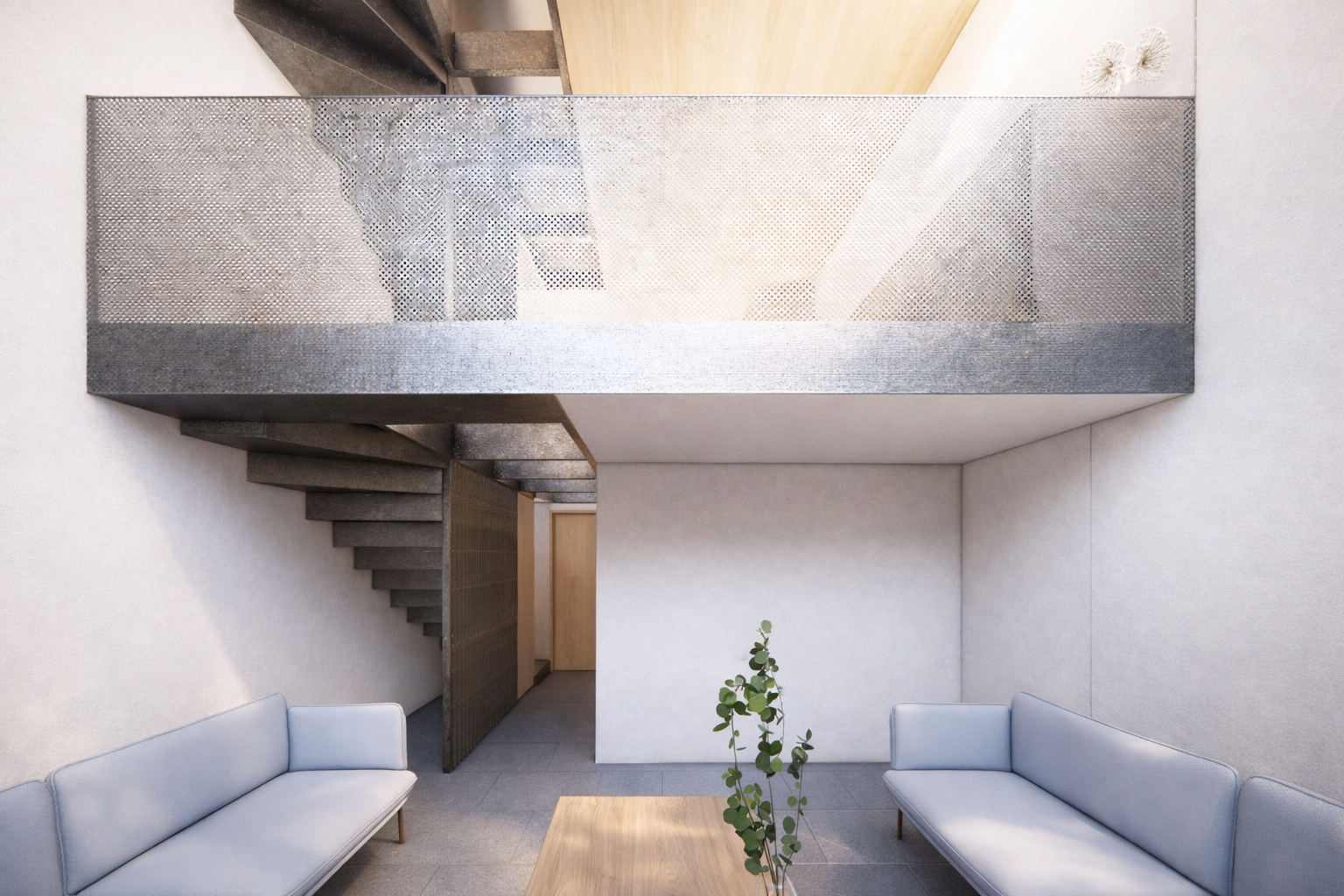
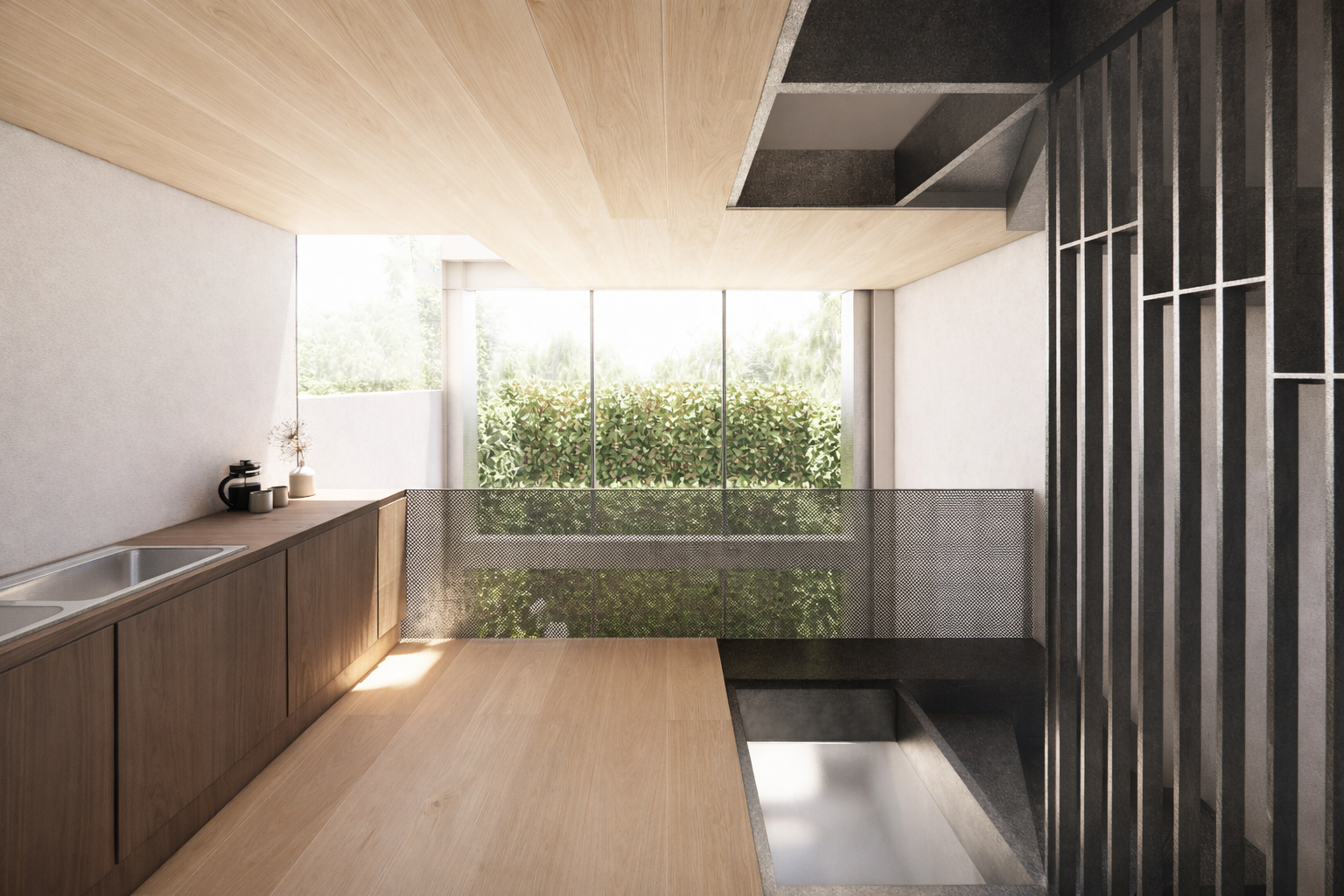
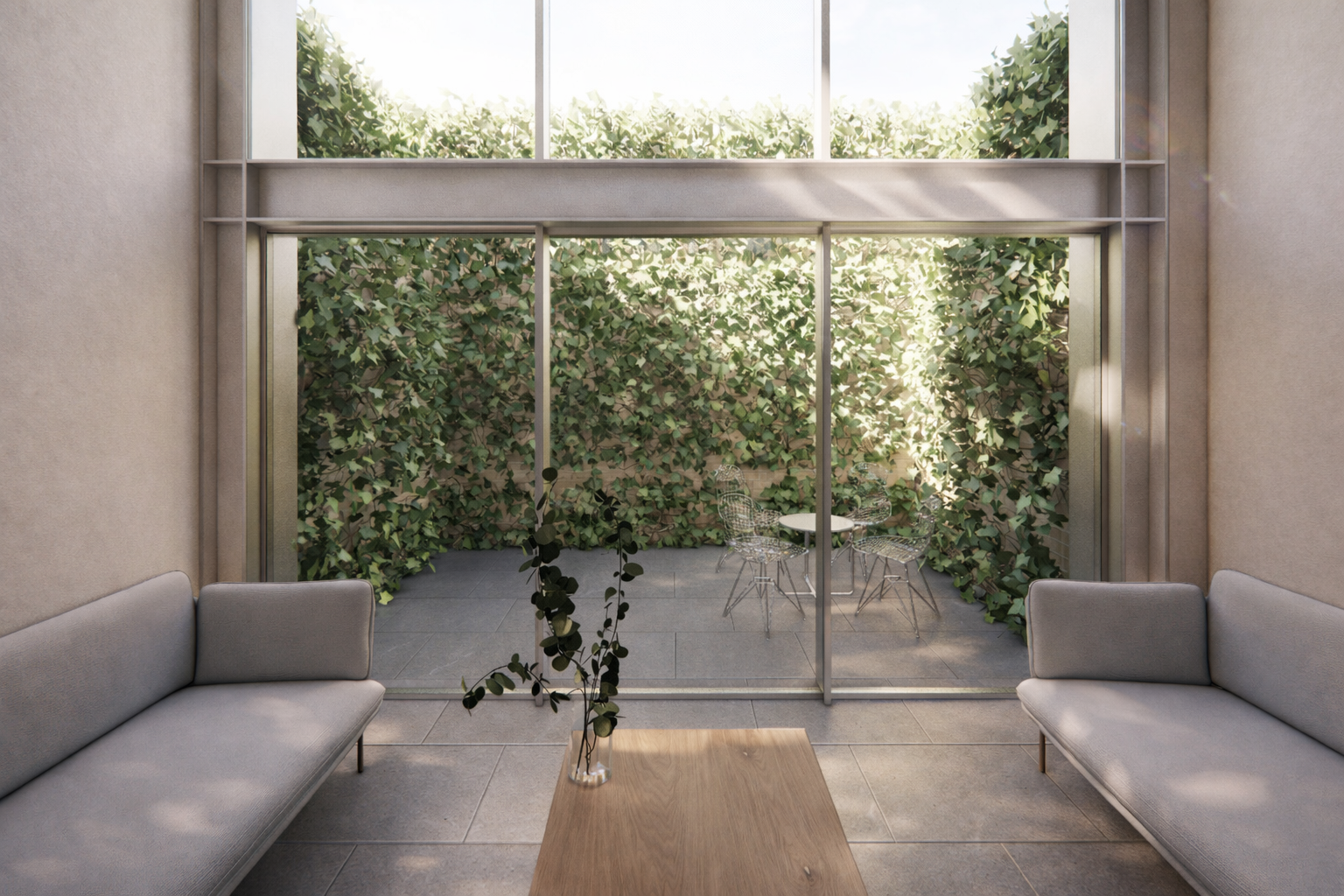
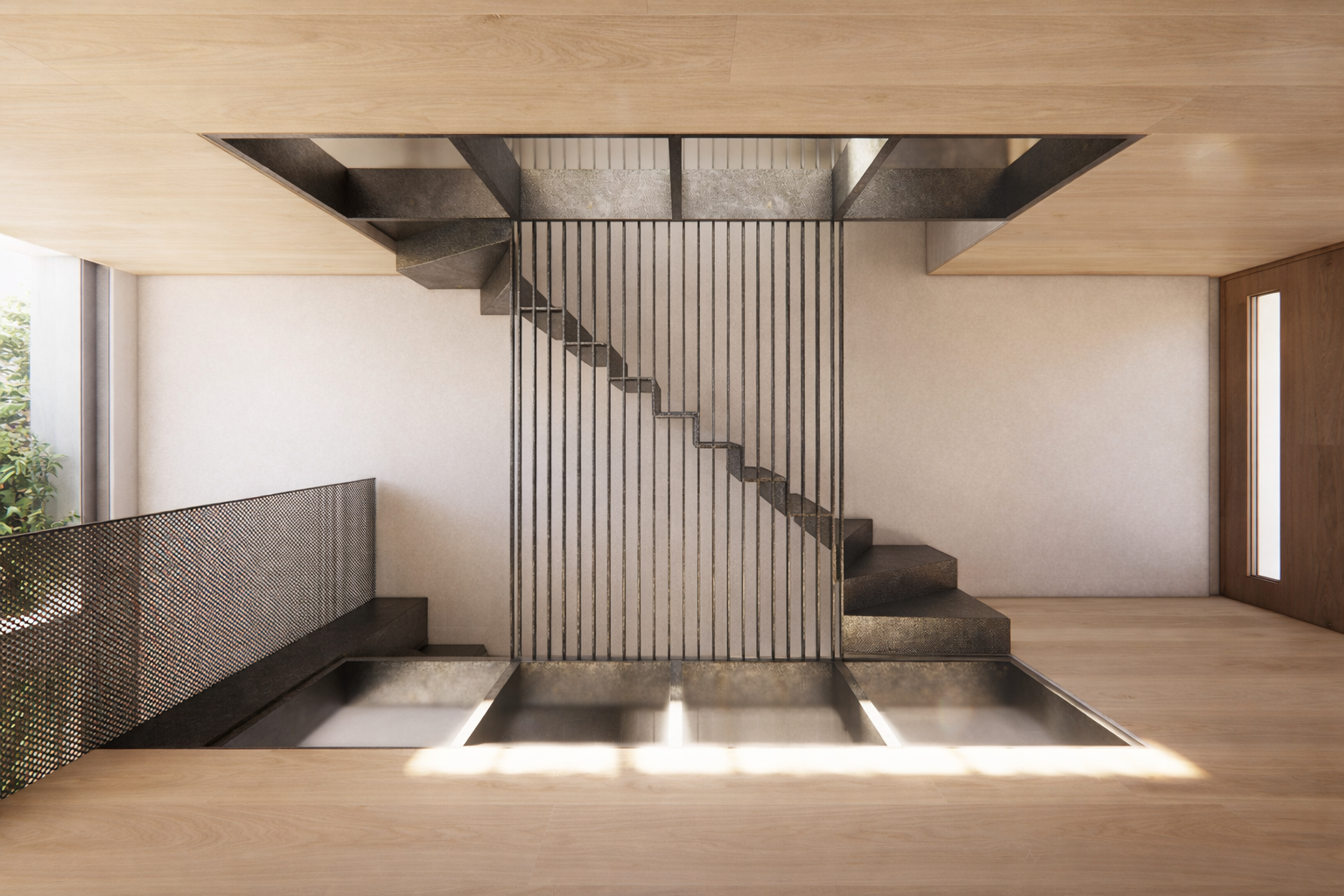
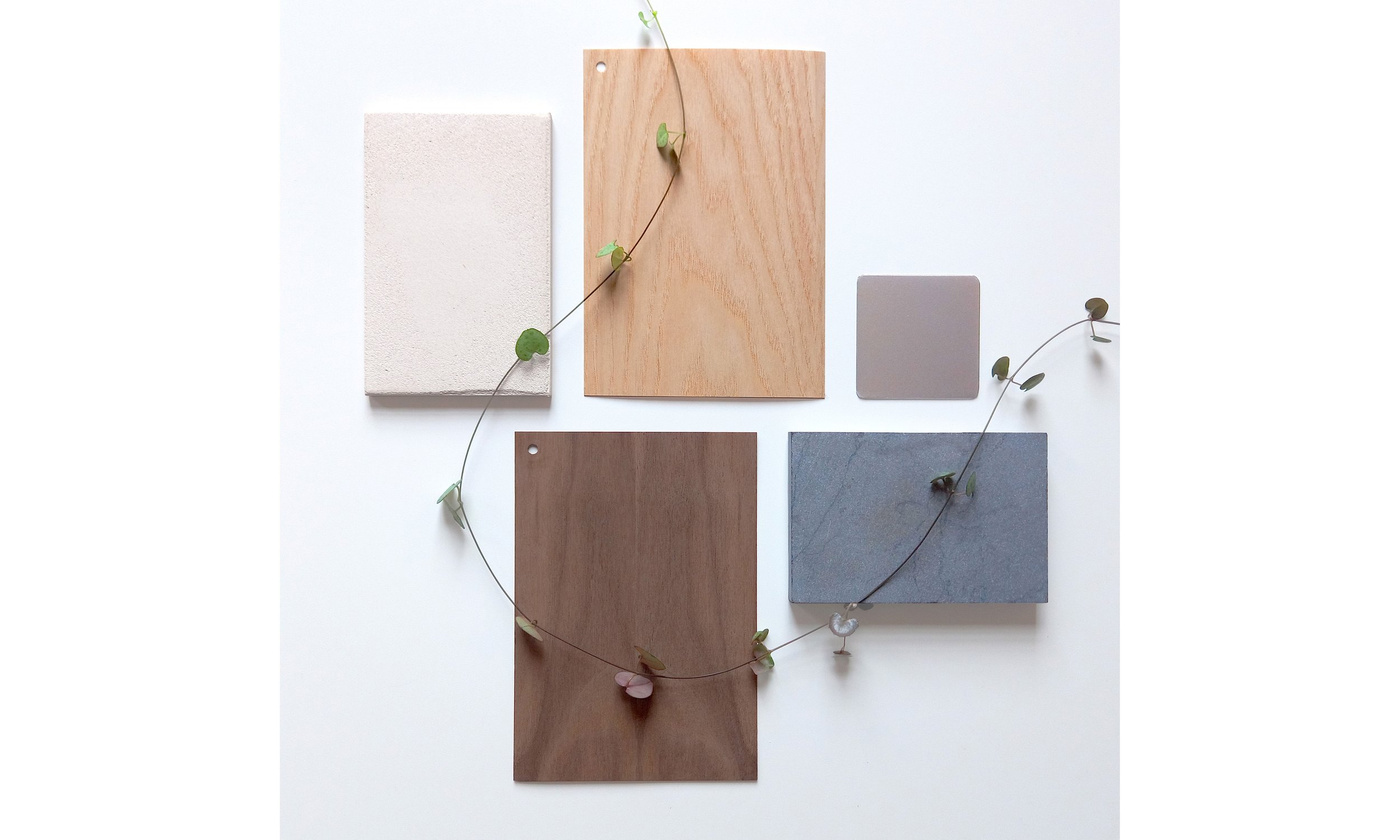
The refurbishment and extension of a terraced house in Fulham, west London.
The project reworks a dilapidated building to form a low-energy family home organised around light and material. Long altered and in poor condition, the house is reconfigured to restore clarity to the plan and establish a more legible sequence of spaces. New interventions bring daylight deeper into the interior and strengthen the relationship to the garden.
A double-height living space is formed at the rear, opening onto a sunken courtyard created by extending the basement into the plot. This new volume draws light into the lower levels and establishes a clear connection between inside and outside. At the centre of the plan, a new steel structure and staircase incorporates translucent glass floor panels, allowing light from a rooflight above to filter down through the house.
Energy performance is improved through an air source heat pump, mechanical ventilation with heat recovery and rainwater harvesting. Natural materials, including hardwood timber, clay plaster and limestone, are used throughout, giving the interior a consistent and durable character.
Project page
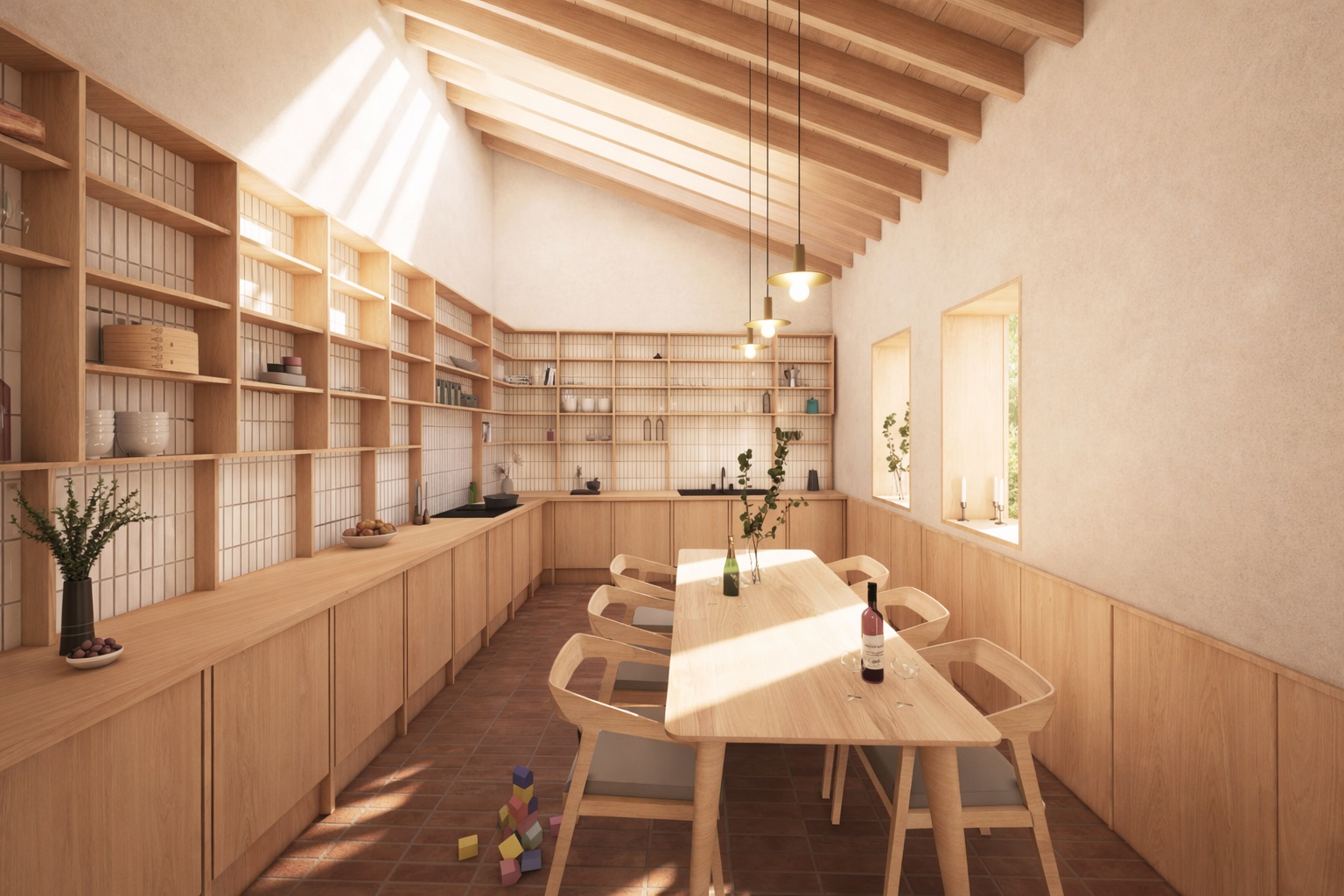
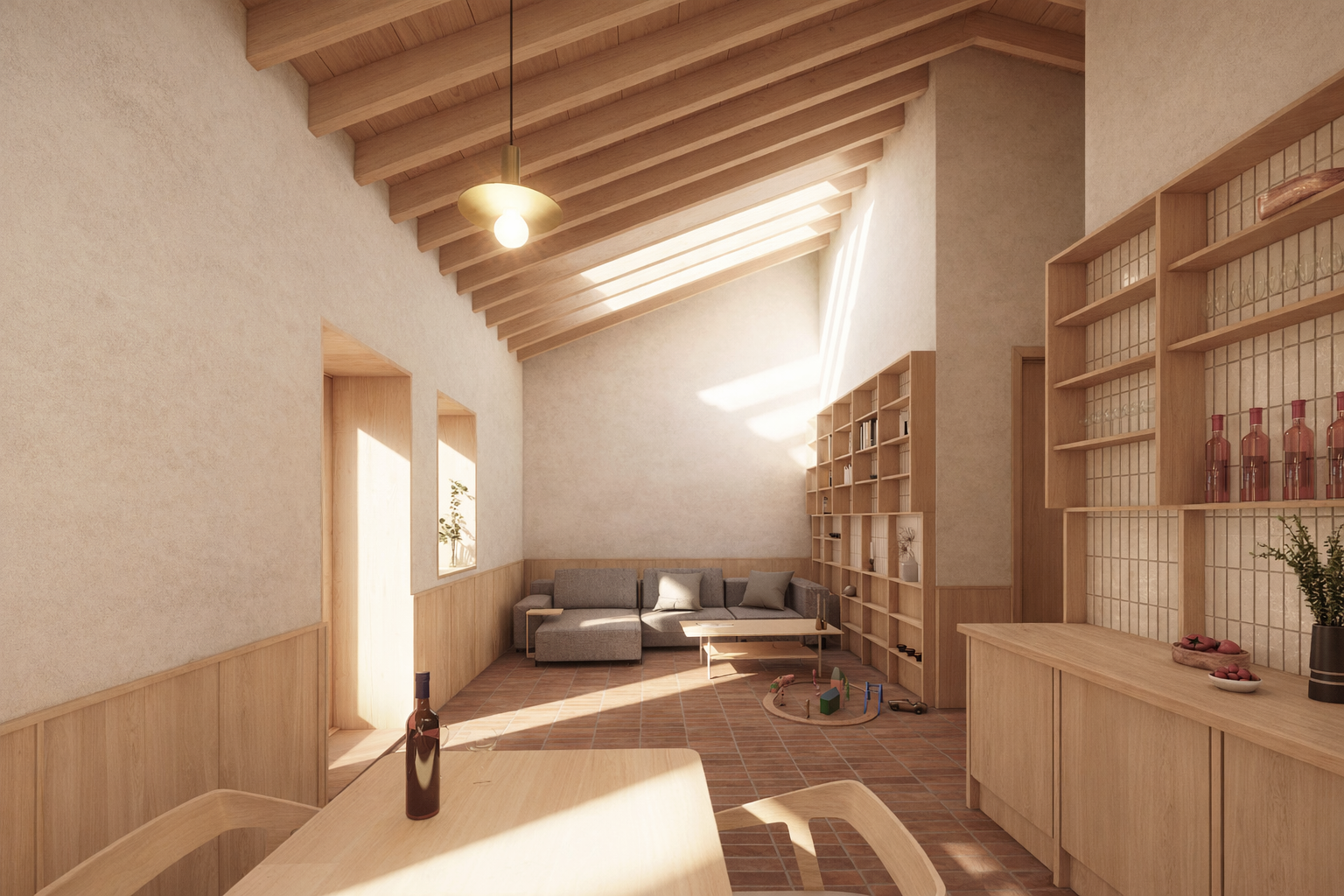
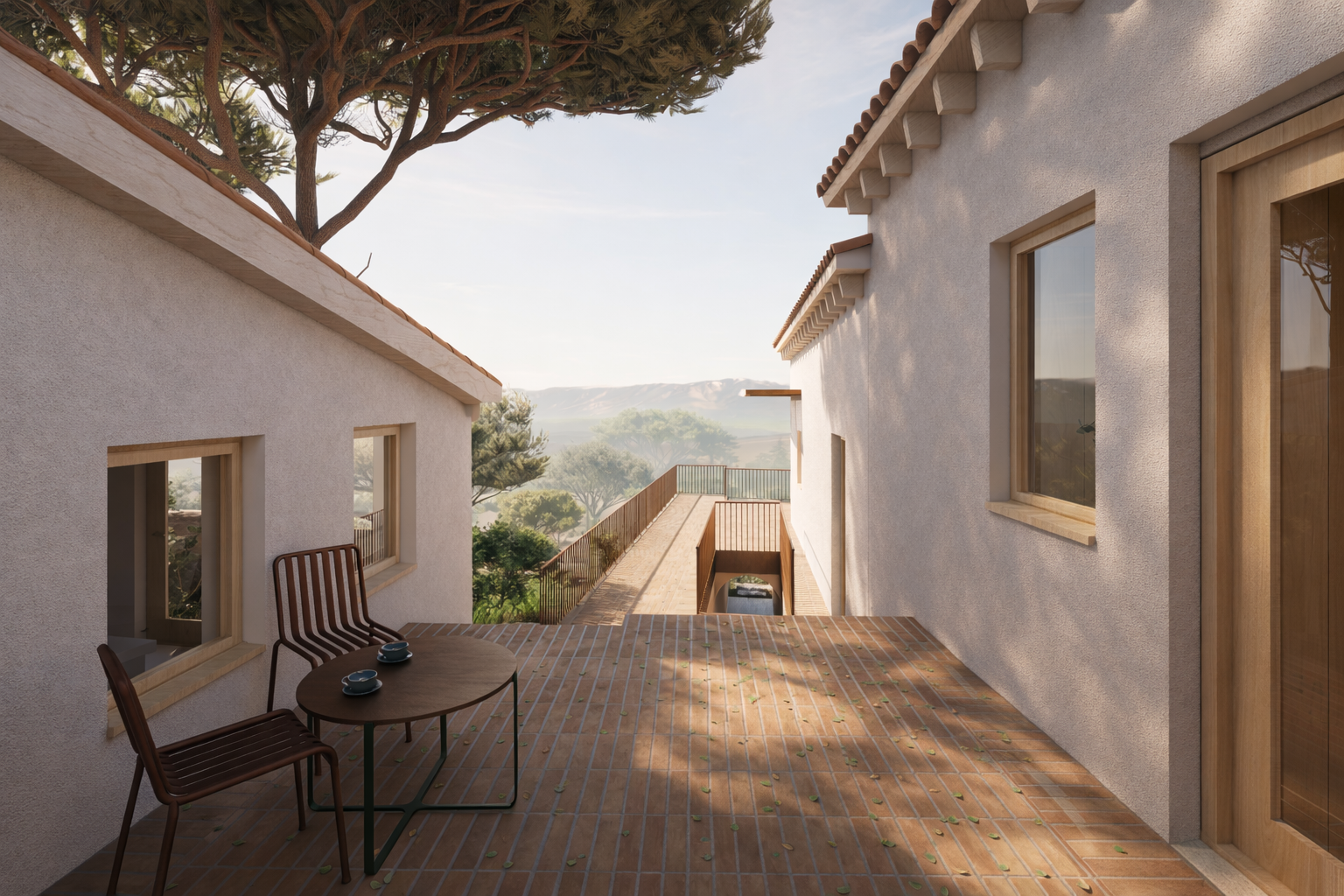
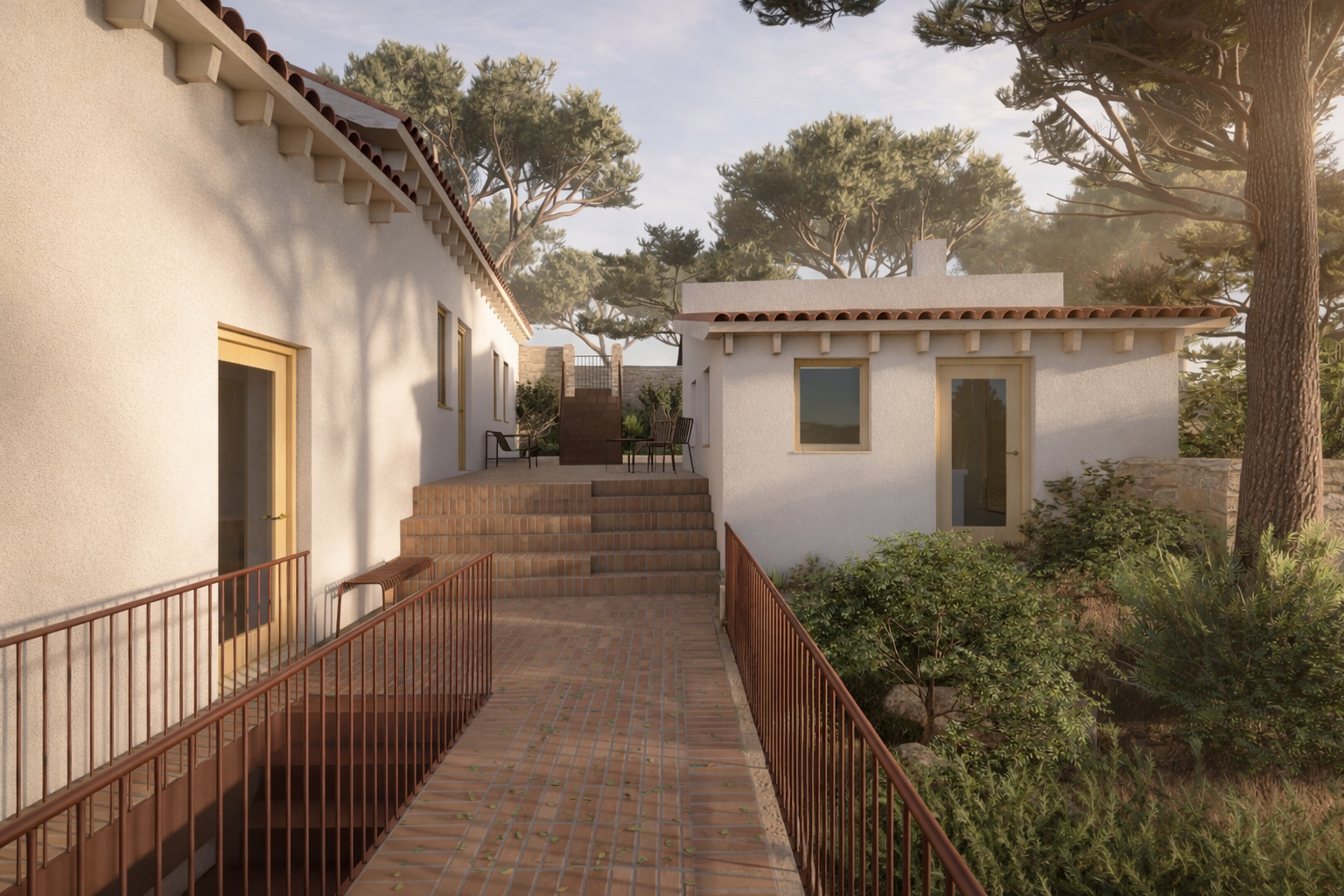
The refurbishment of a house in the hills above Loulé in the Algarve.
The building is reworked to create a more open and sociable plan, with a new living and dining space forming the centre of the house. Wall panelling establishes a consistent datum around the interior, integrating storage and display within the kitchen and living areas. The intervention is restrained, allowing the character of the existing structure to remain legible while improving its use and clarity.
The house is refurbished using local natural materials, including Portuguese limestone, clay tiles and clay plaster, alongside new oak-framed windows, rafters and joinery. This palette reinforces the connection between the building and its setting, giving the interior a consistent and durable character.
Externally, an existing outdoor space is extended to form part of a series of terraces stepping down the hillside, linking the house into the wider landscape. Low-impact systems, including well-sourced water, ground source cooling, photovoltaics and battery storage, support a low-energy approach. The house forms part of the wider Alfeição estate project, which brings together a number of buildings and outdoor spaces into a coherent whole.
Project page
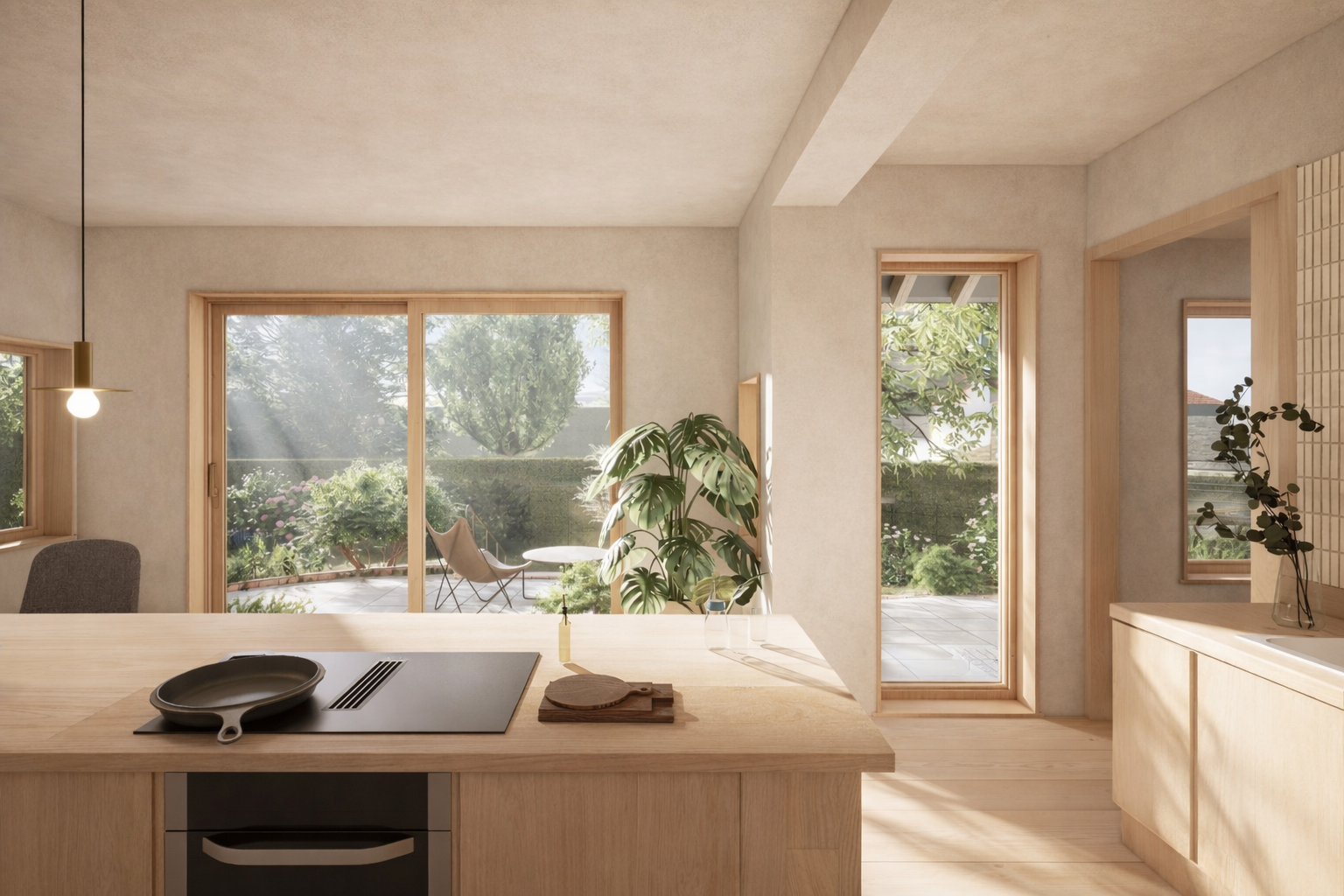
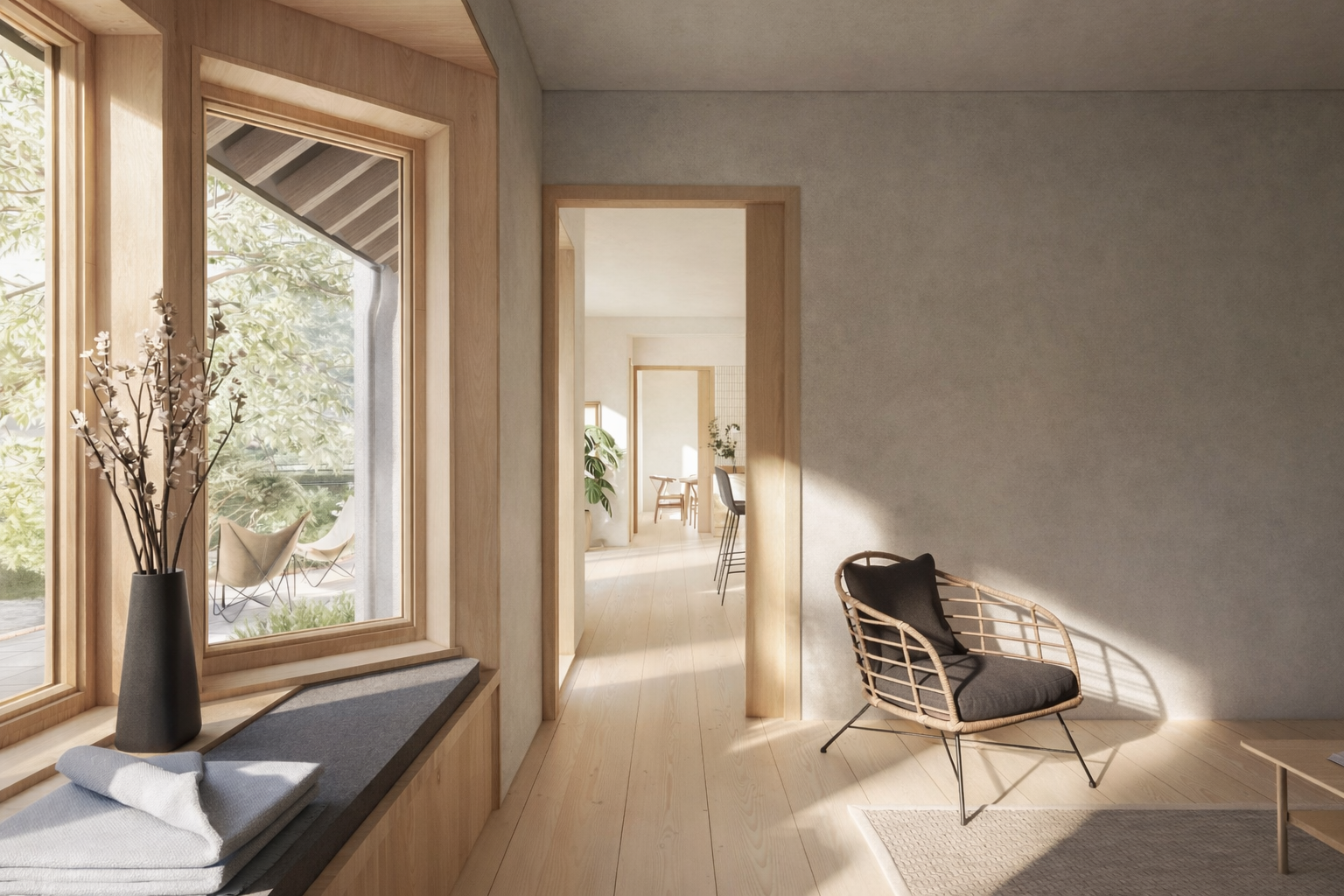
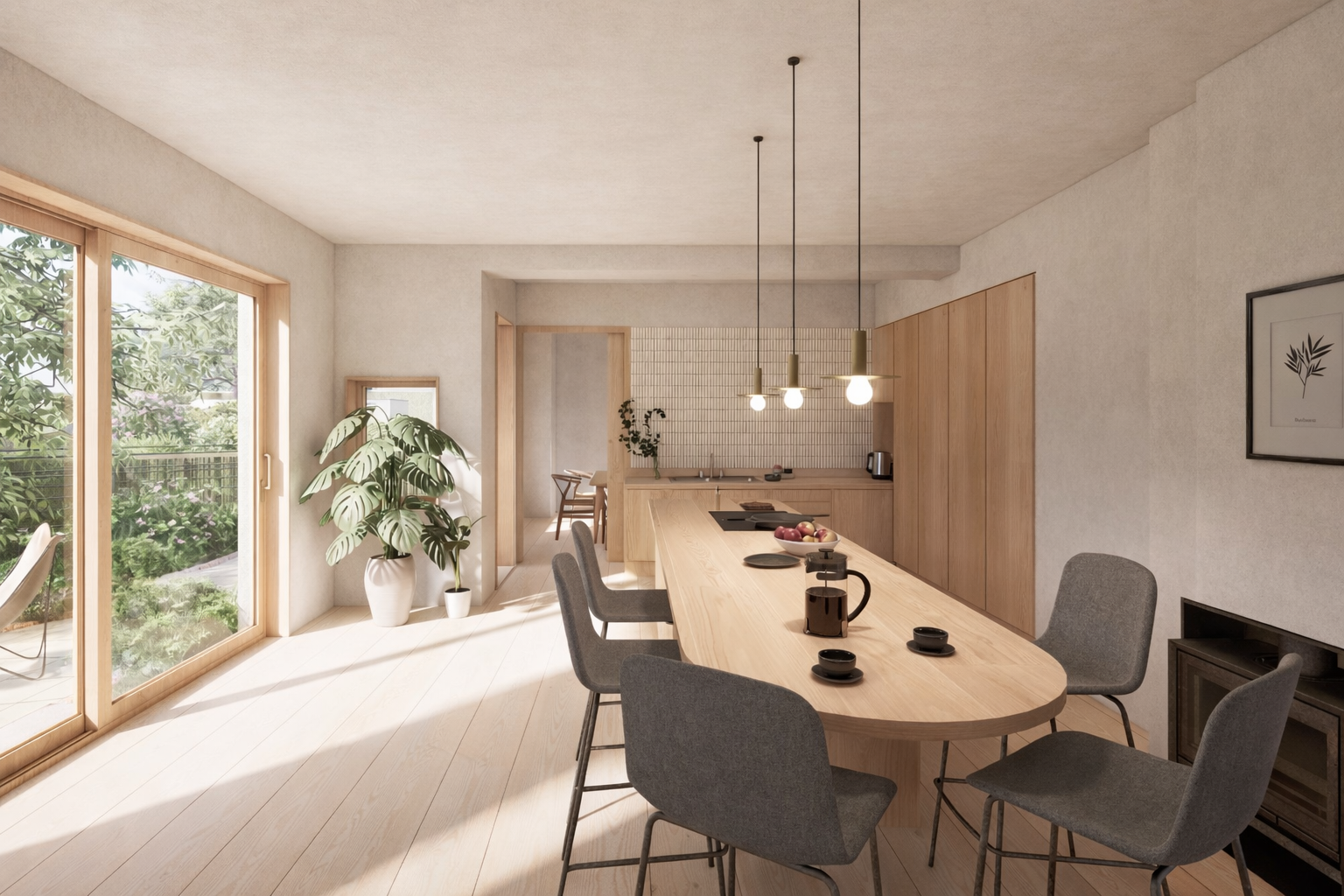
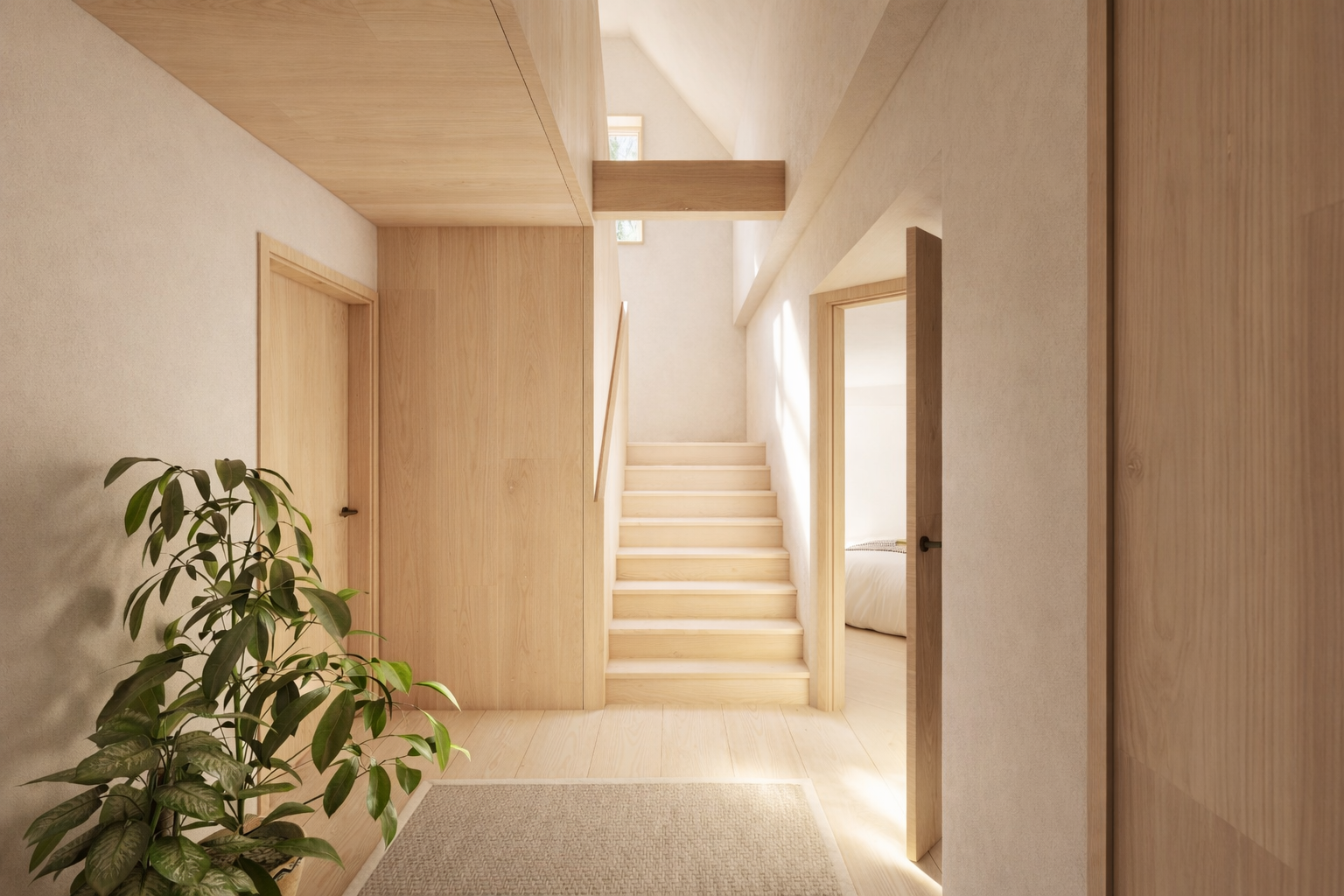
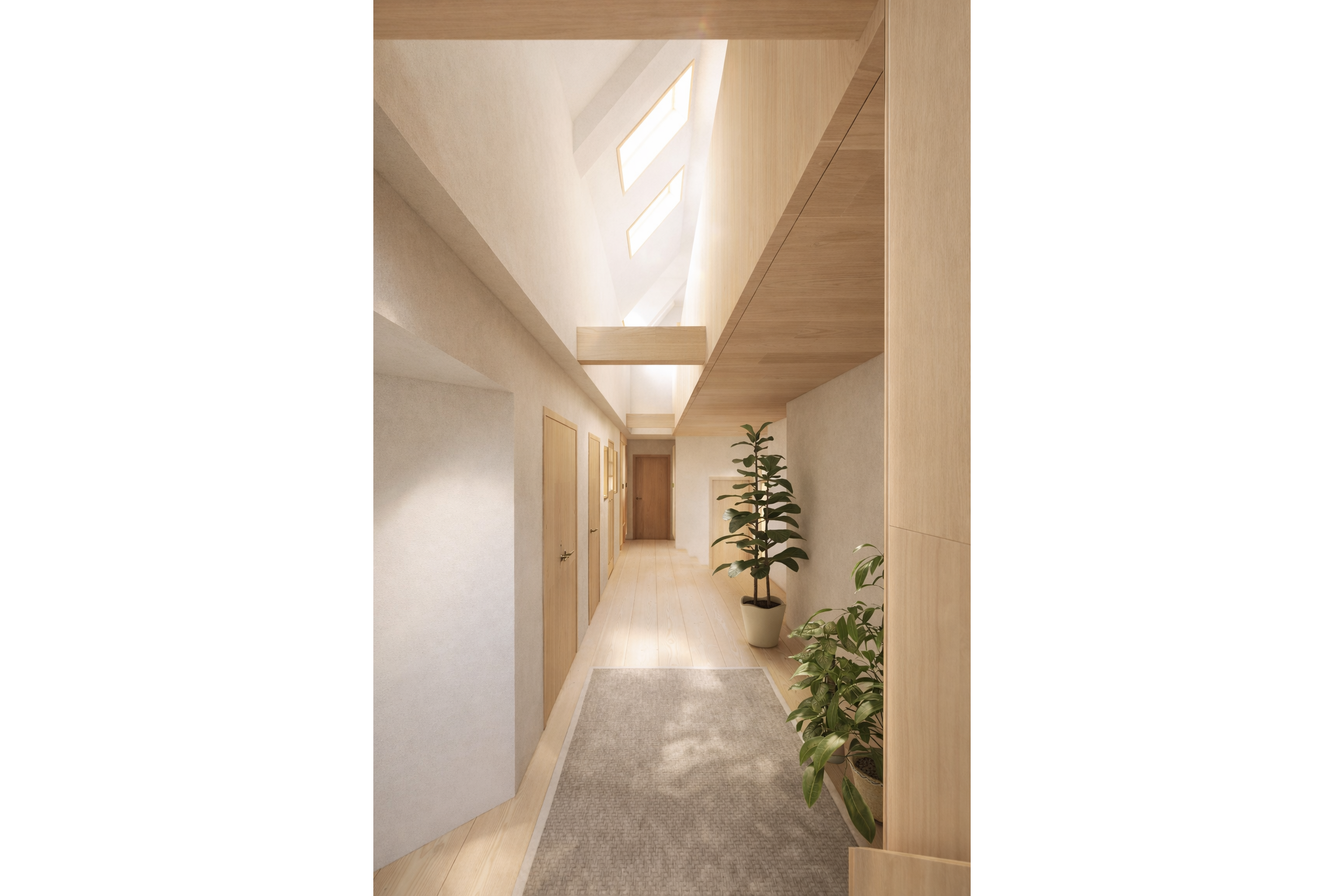
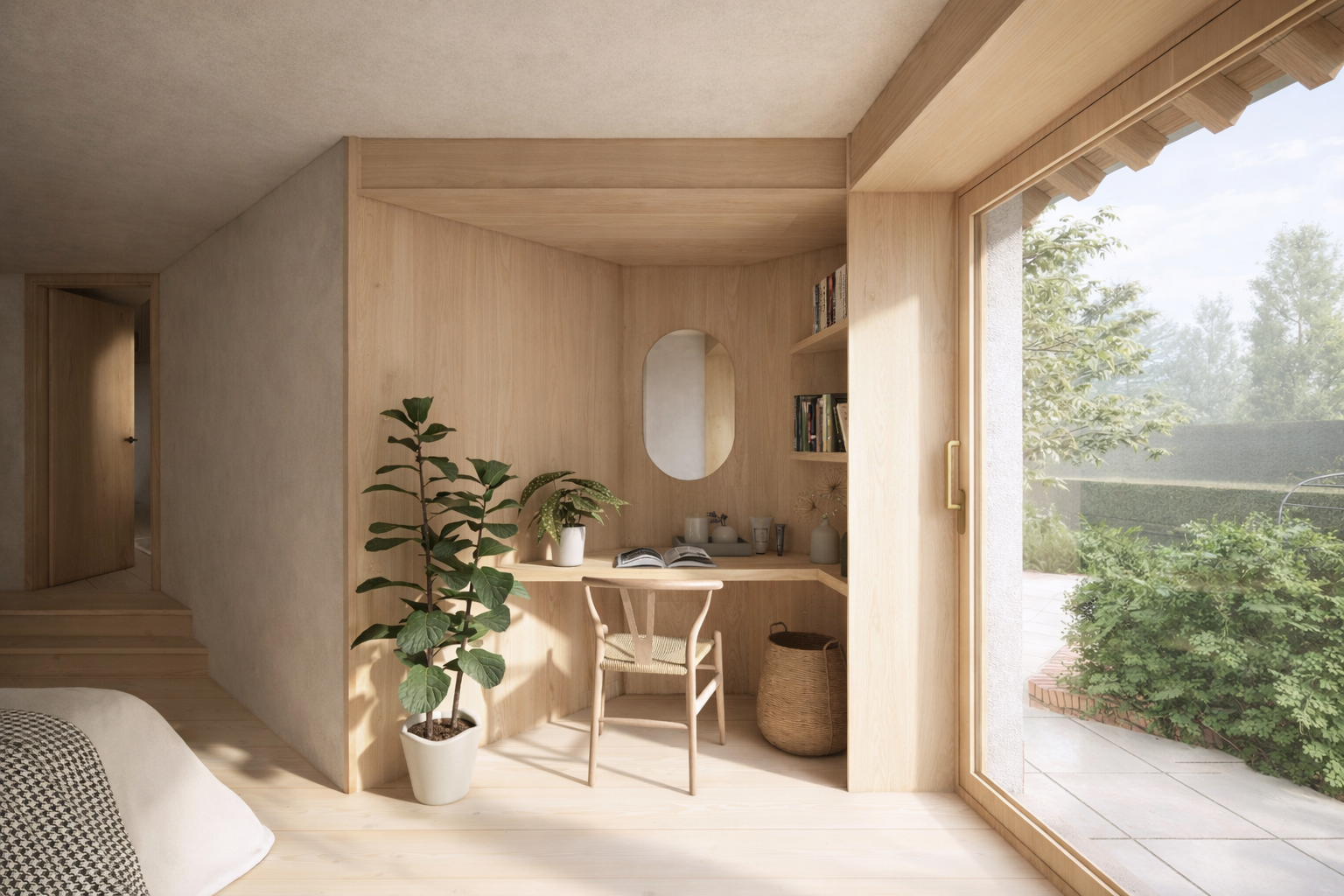
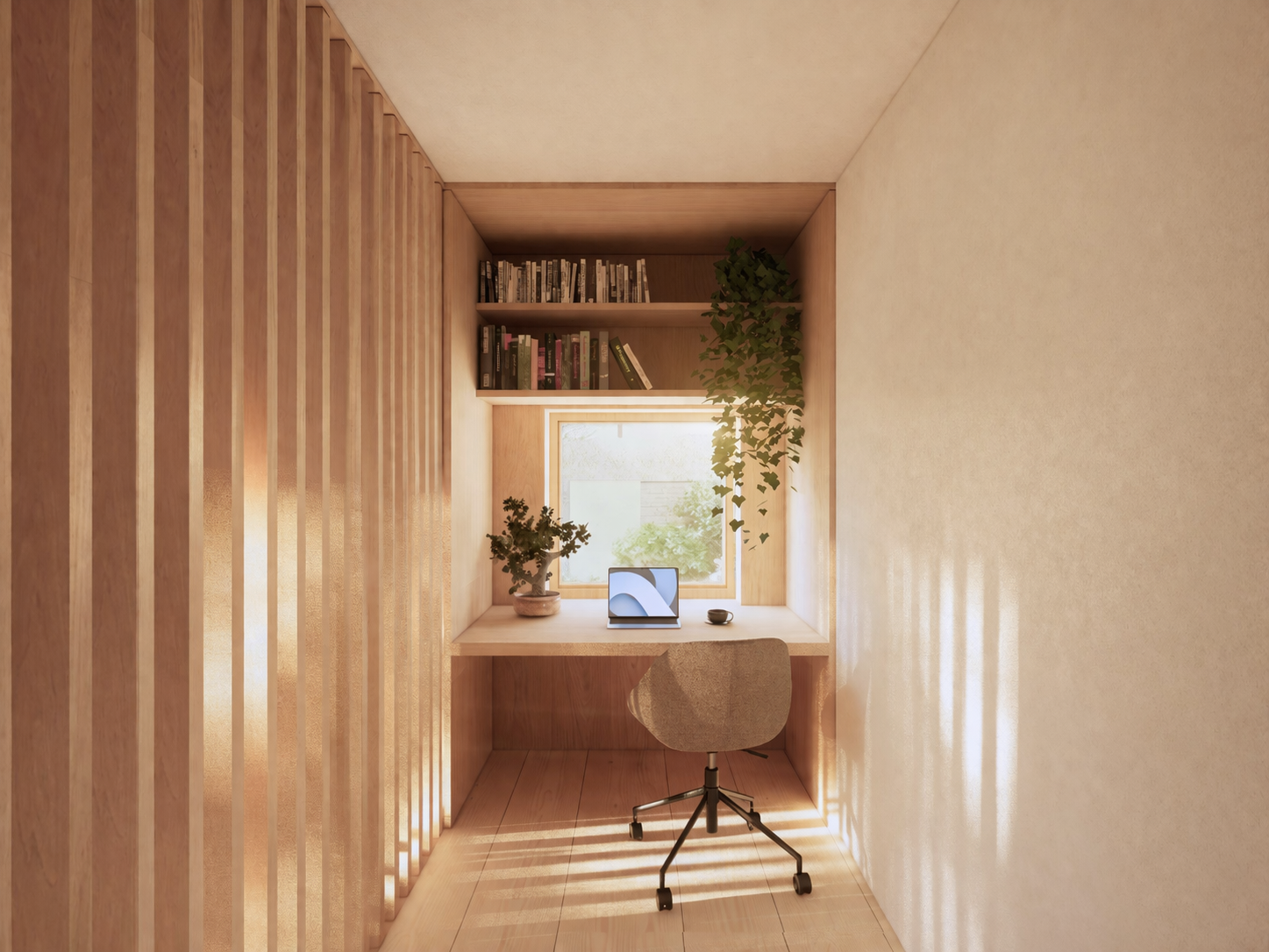
The remodelling and extension of an Arts and Crafts villa in the Bearsden Conservation Area, Glasgow.
The project reworks a 1980s house to improve the quality of space, layout and material throughout. The plan is reorganised to create a clearer sequence of rooms, with new interventions introduced to improve flow and bring greater coherence to the interior. The existing character is retained where appropriate, while the house is adapted to support contemporary living.
The building is extended, with the existing double garage converted into a principal bedroom suite and a new garage added to the side. These changes are integrated carefully within the existing form, allowing the house to grow while remaining consistent with its setting. Internally, a restrained palette of natural materials is introduced, including Douglas fir flooring and oak joinery to the stair, kitchen and cabinetry.
The building fabric is upgraded to improve energy performance, including new high-performance glazing, additional insulation and the introduction of underfloor heating. Sculptural works by Ian Hamilton Finlay are retained and integrated within both the house and the garden, forming part of the character and identity of the project.
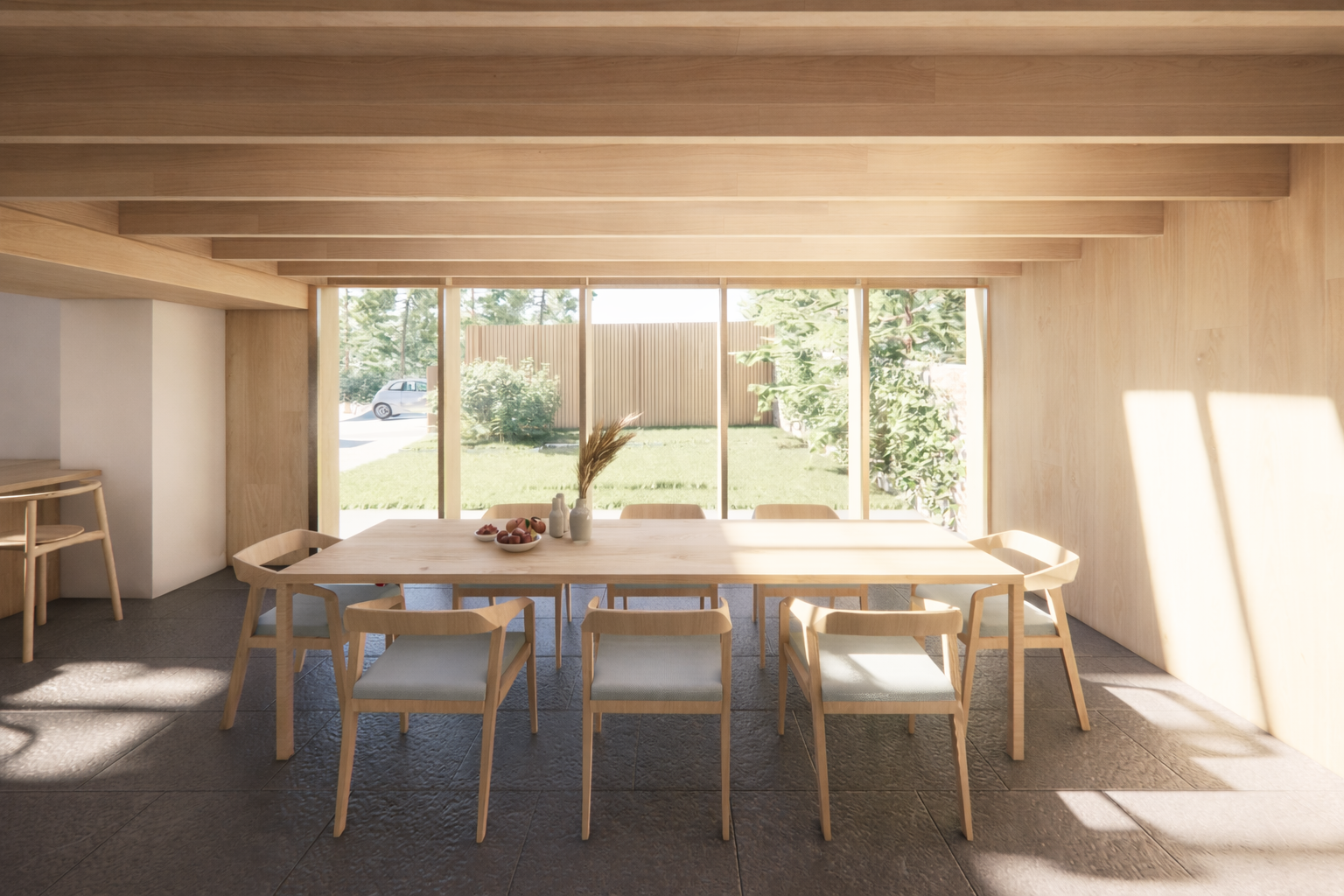
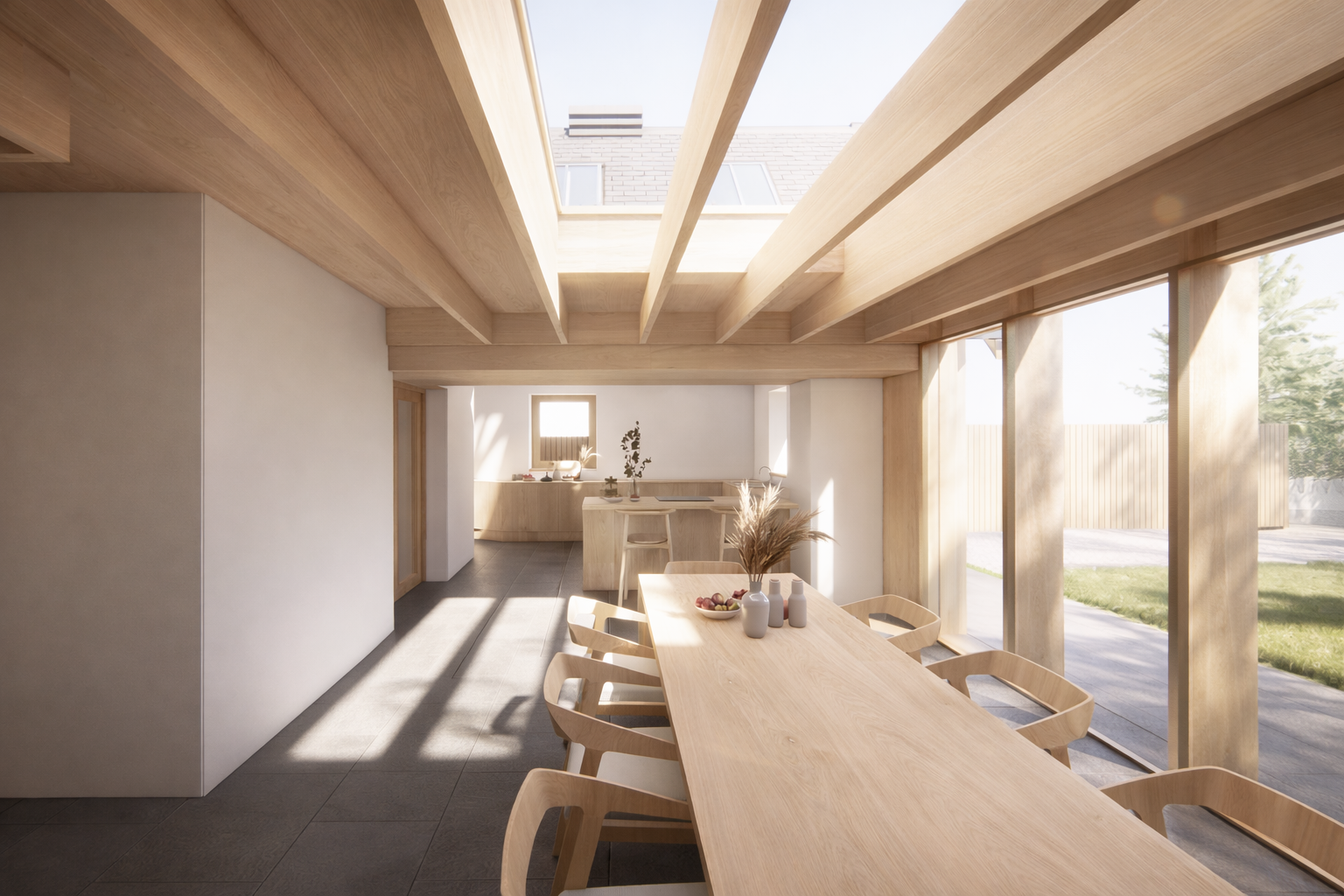
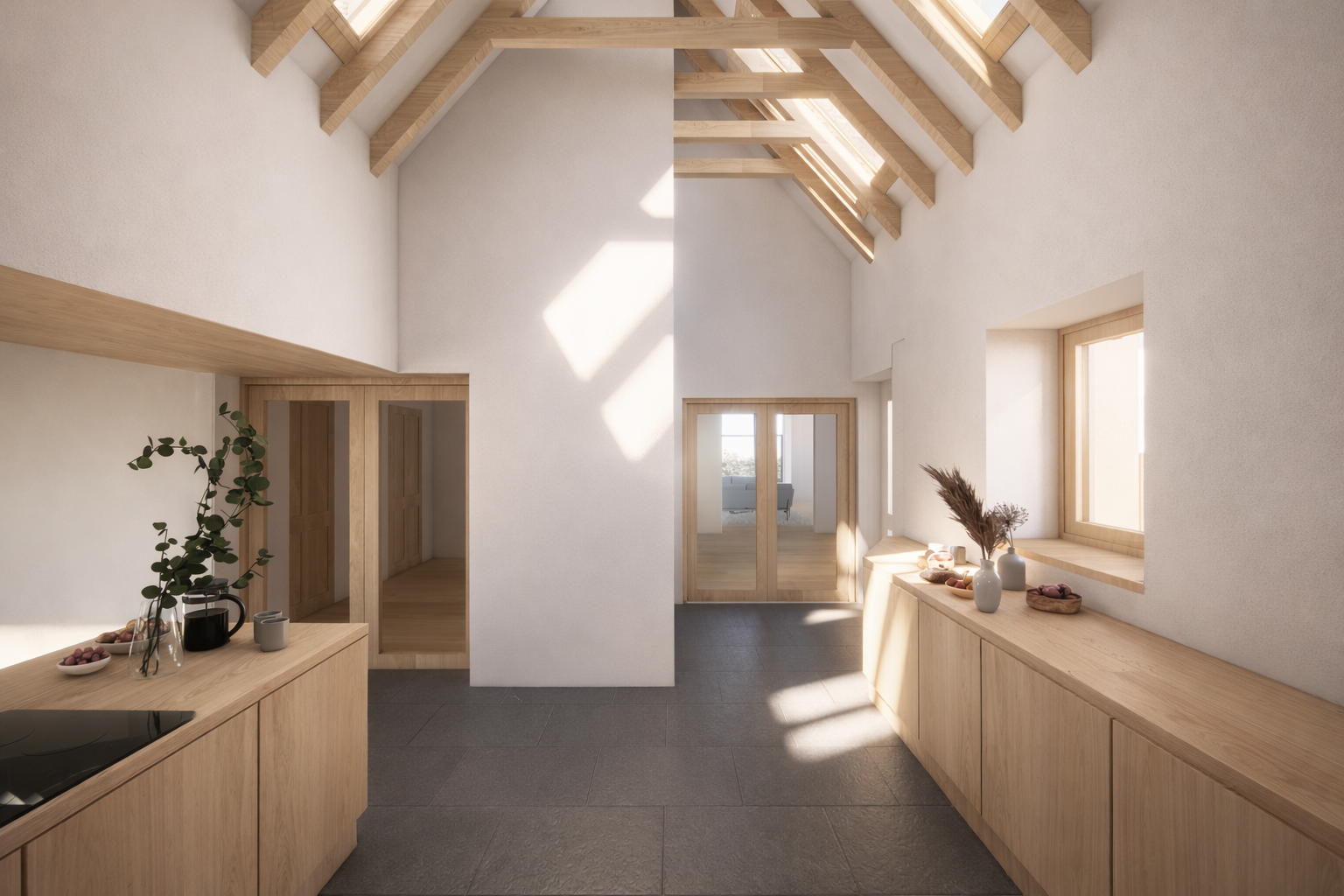
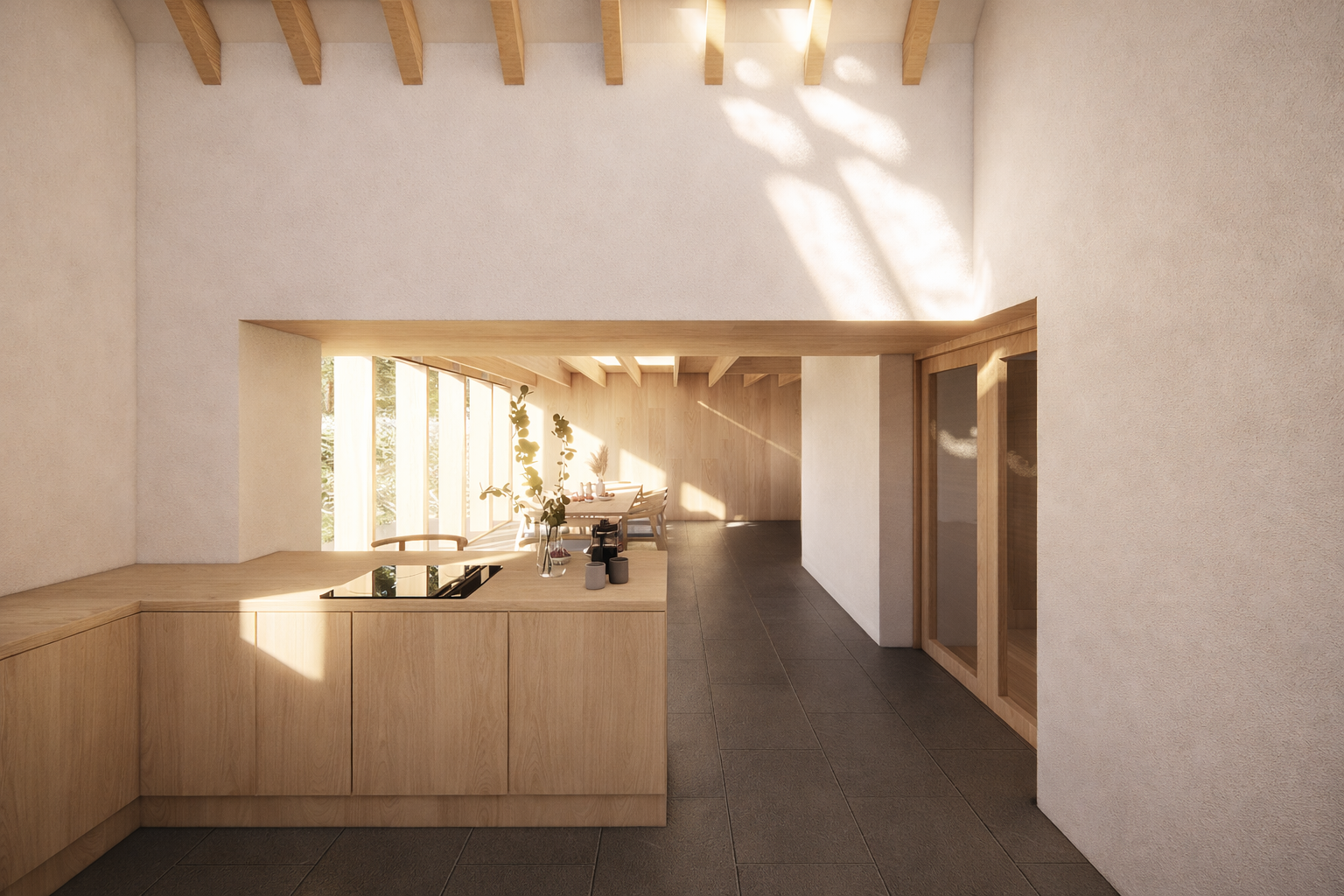
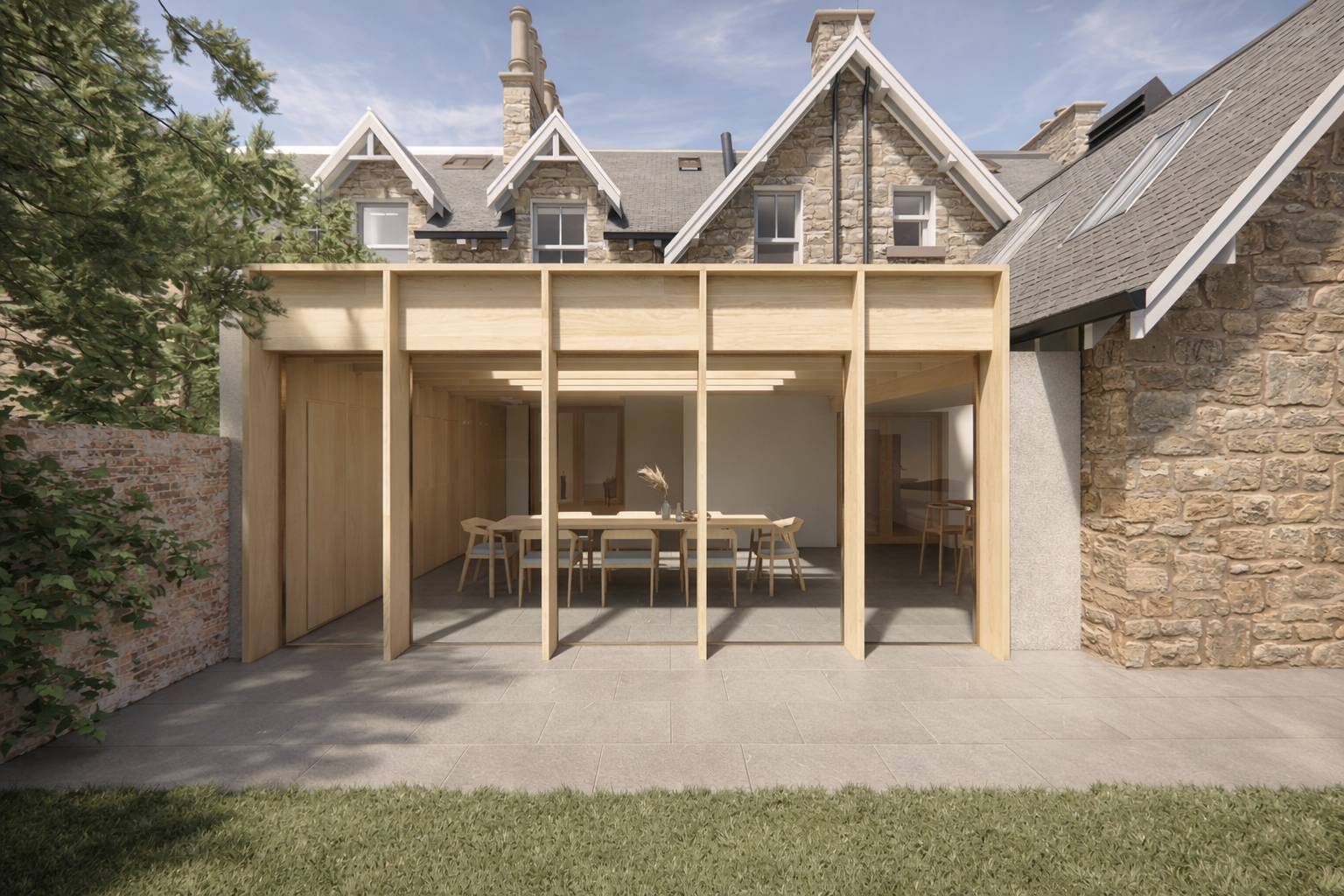

The refurbishment, reconfiguration and extension of a villa in Liberton.
The project restores the building’s Victorian character while introducing a contemporary kitchen and dining space that opens to the south-facing garden. Previously used as a nursery, the house had accumulated a number of later additions. These are selectively removed to reveal the original fabric beneath, including reconnecting an attached former stable and improving the relationship between the principal rooms and the garden.
A new dining space is formed at the rear, expressed as a highly insulated, timber-lined volume set against the existing house. A large rooflight and stone floor bring daylight deep into the plan, creating a calm and contemporary counterpoint to the painted finishes of the original rooms. The extension is arranged to strengthen the connection between inside and outside, allowing the garden to become part of daily life.
The building is comprehensively upgraded to improve thermal performance, including slimline double glazing to existing sash and case windows, insulation to the roof and ground floor, and high-performance glazing to the extension. Together, these interventions allow the house to perform efficiently while retaining its character and setting.
Project page
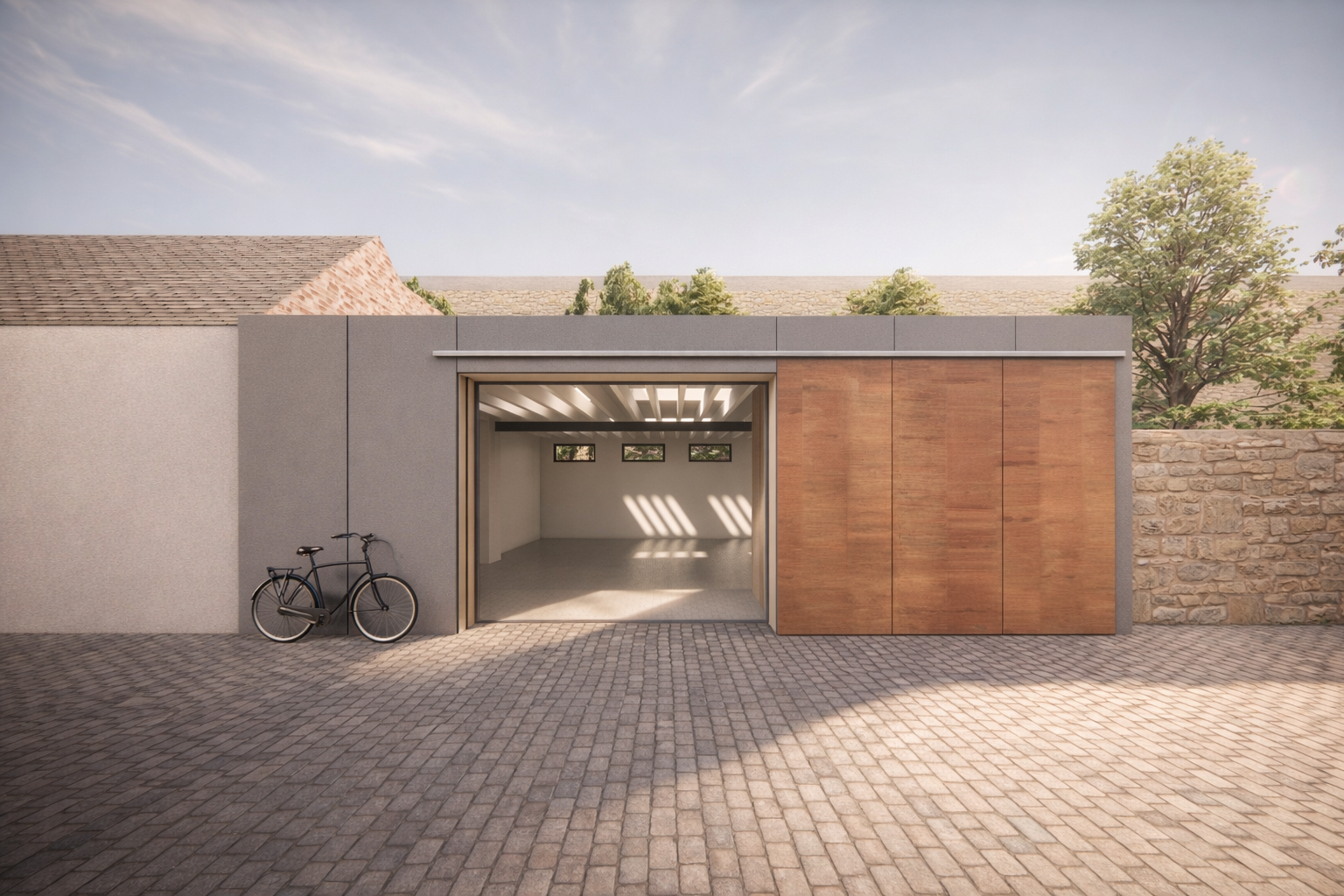
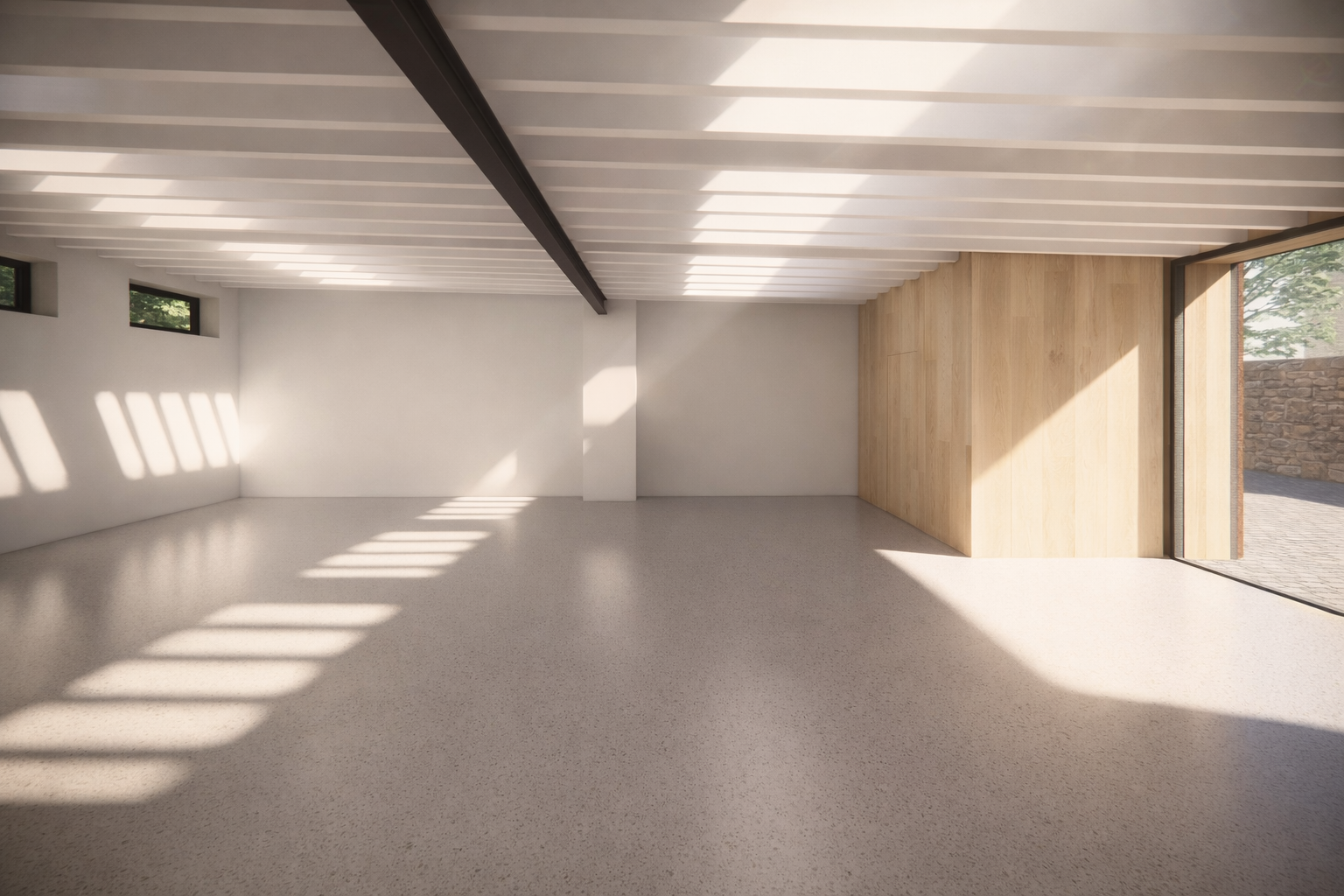
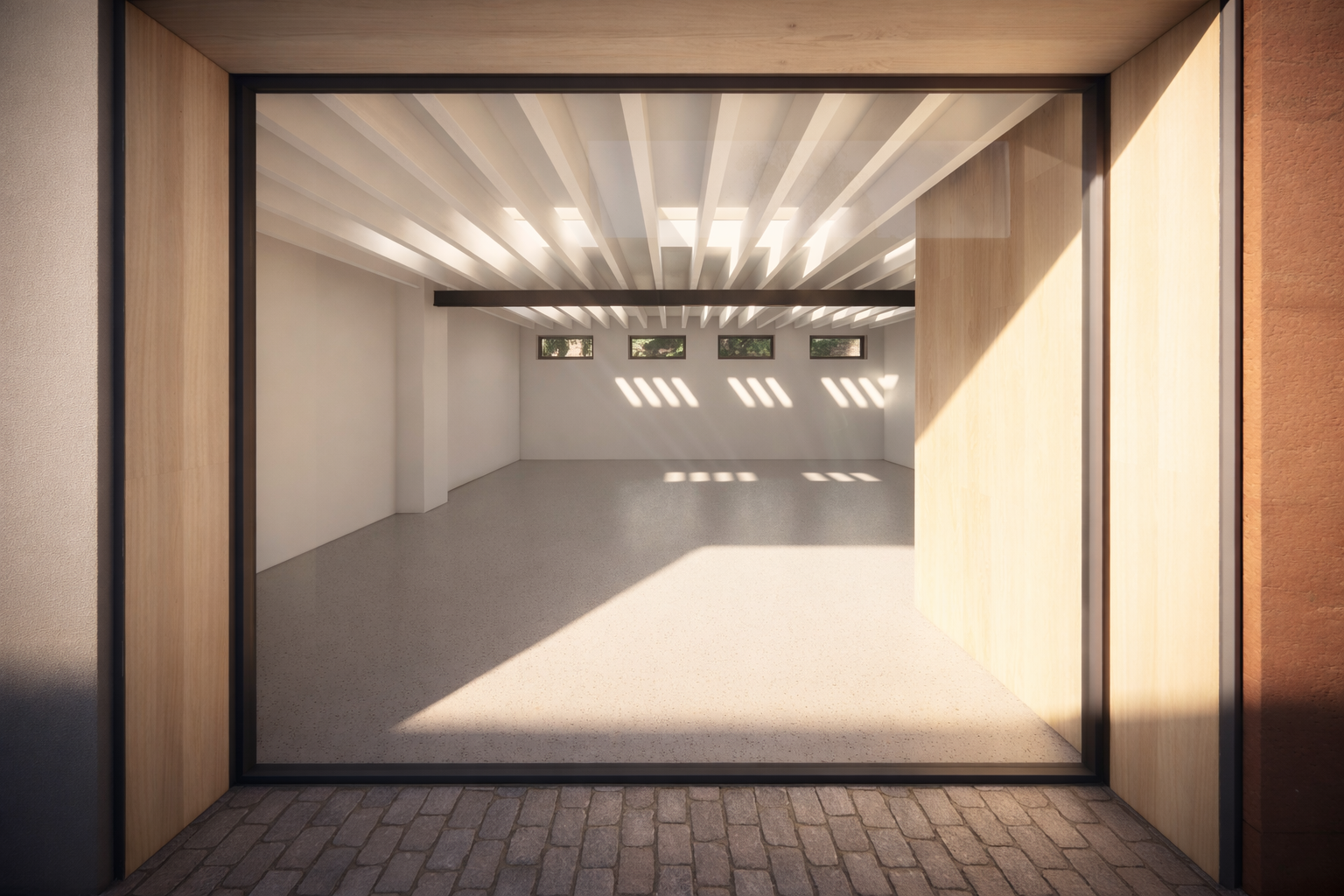
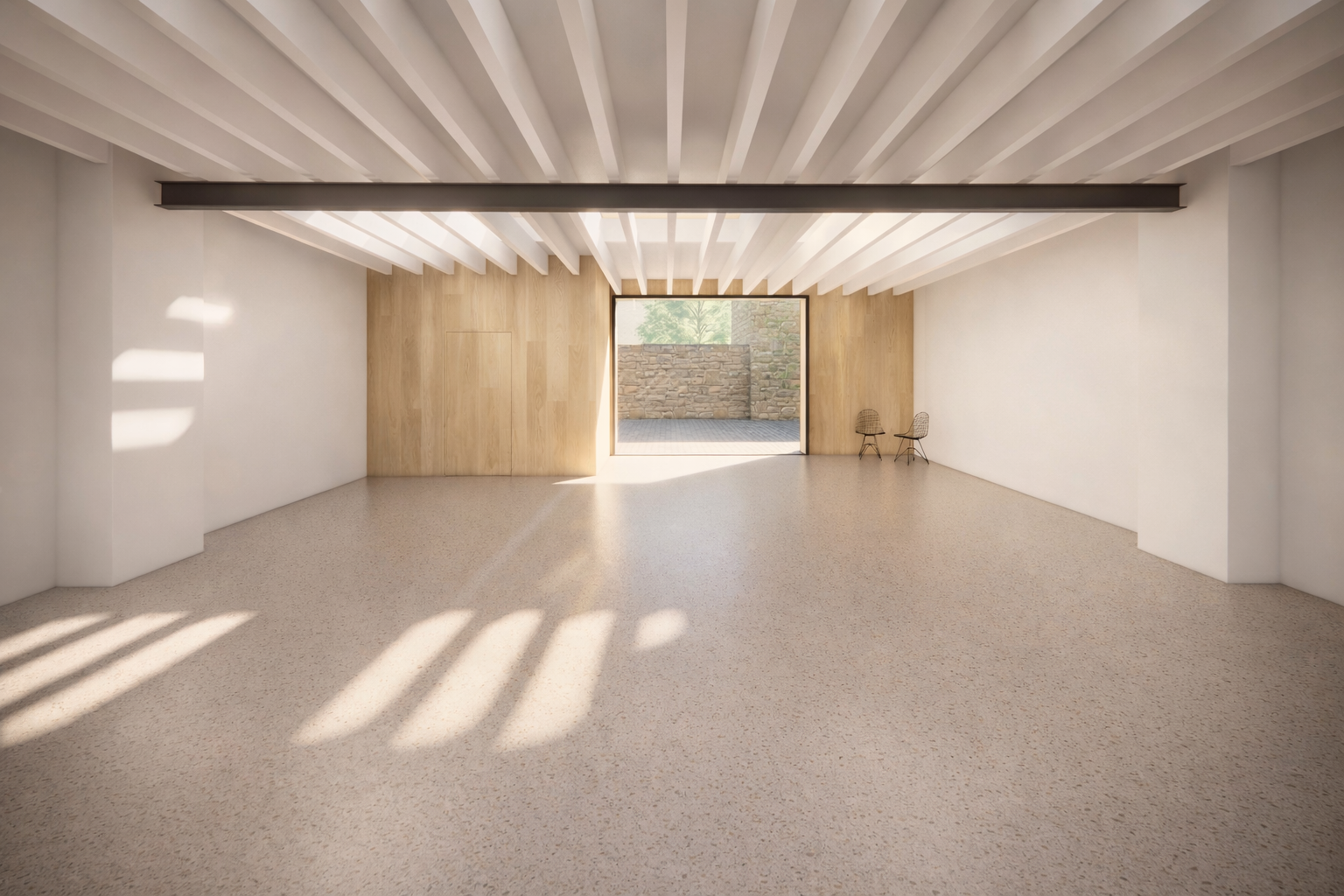

The refurbishment of a former vehicle repair workshop in Leith.
The project transforms a tired industrial unit into a light-filled, robust and energy-efficient space suited to a range of future uses. The existing building is retained and clarified, maintaining its straightforward, utilitarian character while improving performance and internal quality. The aim is to create a flexible space that can adapt over time without losing its industrial identity.
Externally, the building is redefined through a restrained palette of metal cladding and a large weathering steel sliding door, providing a durable and low-maintenance envelope. A new insulated roof and upgraded wall build-up form a continuous thermal jacket, improving performance while responding to the surrounding lane of working garages and workshops.
Internally, materials are kept simple and hardwearing. A terrazzo floor accommodates occasional vehicular use, while timber wall linings conceal a compact kitchenette and WC. Compressed wood fibre panels introduce warmth and acoustic control, and the existing roof structure is retained and painted to preserve a sense of the building’s past. New rooflights bring daylight deep into the space, supporting a bright and adaptable interior.
Project page
Contact
80 George Street
Edinburgh
EH2 3BU
0131 210 0185
studio@ossianarchitects.com